




Power Brake conversion
Thread Starter
Advanced

Joined: Jan 2012
Posts: 96
Likes: 1
From: Prague Europe
 Power Brake conversion
Hello folks,
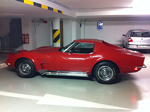
I have a '73 corvette with factory standard brakes (no power brakes). I'd like to convert to power brakes (not hydroboost) and as I got information that only the booster is needed to add, I also found several upgrade kits. These kits come with the master cylinder also, so I would like to ask several questions:
a) do I need the master cylinder from the kit when I have one on my car?
b) do I really need the aditional hardware from the kit
c) which kit would you recommend:
- first one
- second one
- other
Also, which things would you recomend to look for on the brakes BEFORE the conversion? The vette itself is in a pretty good shape but the braking is a problem - needs to push very hard on the pedal to do some braking.
Thank you.
I have a '73 corvette with factory standard brakes (no power brakes). I'd like to convert to power brakes (not hydroboost) and as I got information that only the booster is needed to add, I also found several upgrade kits. These kits come with the master cylinder also, so I would like to ask several questions:
a) do I need the master cylinder from the kit when I have one on my car?
b) do I really need the aditional hardware from the kit
c) which kit would you recommend:
- first one
- second one
- other
Also, which things would you recomend to look for on the brakes BEFORE the conversion? The vette itself is in a pretty good shape but the braking is a problem - needs to push very hard on the pedal to do some braking.
Thank you.

Melting Slicks


Joined: Oct 2011
Posts: 2,748
Likes: 90
From: Sacramento California
C2 of Year Finalist (performance mods) 2019
2018 C2 of Year Finalist
All you need is the booster, (and my 63 needed a different switch bracket..not sure about the C3)
Its pretty easy to do.
Swap the booster in, move the pivot to the lower hole in the pedal and be done.
Its pretty easy to do.
Swap the booster in, move the pivot to the lower hole in the pedal and be done.

Advanced

Joined: Sep 2004
Posts: 81
Likes: 16
From: Phoenix Arizona
You will need to use both the new master cylinder and the booster. As noted above, the power brake cars had master cylinders with 1 1/8" bores and I believe the manual master cylinders have 1" bores. I'm not certain but the manual master cylinder recess in the rear brake piston may be a different length. So, if I'm correct, using a manual master cylinder with a power brake booster will more than likely cause you all sorts of issues because the brakes will lock up on you if the brake booster pushrod doesn't release the master cylinder. If you look for a post from 71corvette on brake booster pushrod length, it explains the measurements. In my opinion, this conversion is a simple one but be sure to use both the correct master cylinder and booster together. In answer to your question, I've purchased a lot of items from Corvette Central and they have good stuff. I would purchase it from them and it has everything you need to make the sway. Yes, in my opinion, you will need the hardware they provide.
Last edited by 71corvette; May 11, 2013 at 01:15 PM.
Team Owner


Joined: Jun 2000
Posts: 38,923
Likes: 1,482
From: Southbound
Cruise-In II Veteran
...which kit would you recommend...


Race Director


Joined: Mar 2006
Posts: 14,112
Likes: 28
From: Florida
You will need to use both the new master cylinder and the booster. As noted above, the power brake cars had master cylinders with 1 1/8" bores and I believe the manual master cylinders have 1" bores. I'm not certain but the manual master cylinder recess in the rear brake piston may be a different length. So, if I'm correct, using a manual master cylinder with a power brake booster will more than likely cause you all sorts of issues because the brakes will lock up on you if the brake booster pushrod doesn't release the master cylinder. If you look for a post from 71corvette on brake booster pushrod length, it explains the measurements. In my opinion, this conversion is a simple one but be sure to use both the correct master cylinder and booster together. In answer to your question, I've purchased a lot of items from Corvette Central and they have good stuff. I would purchase it from them and it has everything you need to make the sway. Yes, in my opinion, you will need the hardware they provide.
You can't really mix them, one way won't fit and the other way will give no brakes at all.

Drifting

Joined: Mar 2011
Posts: 1,886
Likes: 9
I have a '74 with no power brakes. During normal to spirited driving, everything works fine. If I am behaving badly, only then will I miss the booster. I suspect your pads are the problem (too hard).
And yes, the power brake master cylinder has a larger bore than the manual master cylinder. This reduces the amount of pedal travel required to push enough fluid into the wheel cylinders to effect a stop.
And yes, the power brake master cylinder has a larger bore than the manual master cylinder. This reduces the amount of pedal travel required to push enough fluid into the wheel cylinders to effect a stop.

Team Owner


Joined: Jan 2006
Posts: 37,637
Likes: 3,118
From: Crossville TN
Stopping ability is no different between the manual system or the power braking system. The only difference is the level of effort required by the driver's braking foot.
If you have concerns about braking performance, you need to address them FIRST. As mentioned, it could be that you have poor quality pads...or pads that are formulated for 'cleanliness', rather than best stopping power. Or, your master cylinder may have a problem with building the system pressure necessary to stop well. Another possibility is that the flex hoses between the hard brake lines and the calipers (at each wheel) might be very old and deteriorated on the inside, resulting in an internal blockage of line pressure.
Once you have good stopping performance, but you still think it requires too much pedal effort for you, THEN you might consider adding the P/B system to your car.
If you have concerns about braking performance, you need to address them FIRST. As mentioned, it could be that you have poor quality pads...or pads that are formulated for 'cleanliness', rather than best stopping power. Or, your master cylinder may have a problem with building the system pressure necessary to stop well. Another possibility is that the flex hoses between the hard brake lines and the calipers (at each wheel) might be very old and deteriorated on the inside, resulting in an internal blockage of line pressure.
Once you have good stopping performance, but you still think it requires too much pedal effort for you, THEN you might consider adding the P/B system to your car.
Corvette Stories
The Best of Corvette for Corvette Enthusiasts

Top 10 Most Expensive Corvettes Ever Sold on Bring A Trailer
Brett Foote
10 Things Every Corvette Owner Needs (2026 Edition)
Michael S. Palmer
8 Most "Only Corvette Owners Understand" Quirks and Problems
Pouria Savadkouei
10 Reasons the C6 Z06 is Still A Performance Benchmark After 20 Years
Joe Kucinski
How Much Horsepower Every Corvette Engine "LOST" in 1972
Joe Kucinski
Top 10 DOs and DON'Ts for Protecting Your Convertible Top!
Michael S. Palmer
Top 10 Most Explosive Corvettes Ever Made: Power-to-Weight Ratio Ranked!
Joe Kucinski
150 hp to 1,250 hp: Every Corvette Generation Compared by the Specs That Matter
Joe Kucinski
8 Coolest Corvette Pace Cars (and Replicas) of All Time
Verdad Gallardo
Thread Starter
Advanced
Joined: Jan 2012
Posts: 96
Likes: 1
From: Prague Europe
Thank you a lot for all your valuable advice guys, really appreciate it! I will check the brakes prior to buying the PB kit and get back to you with any additional questions that may pop up on the way.
I will check the brakes prior to buying the PB kit and get back to you with any additional questions that may pop up on the way.