





Technical question about a 'screw' up

Thread Starter
Intermediate

Joined: Oct 2012
Posts: 32
Likes: 0
 Technical question about a 'screw' up
I dropped a screw into my new carb when I was putting it on the engine. At the time I didn't know it. A few minutes later the engine sounded like a marble was being slammed around the bottom of the engine. Damn.
I found what was left of the screw sitting on top of the #8 piston. The engine is brand spanking new by the way. Damn.
I'm wondering what I have to do now. The piston is scarred up but not cracked. The walls have no scratch's or marks (visible). Can I just clean it up and put it back together? Or, do I need to buy a new replacement piston, and or, do I have to have the piston cylinder resurfaced? And or is it possible the piston is ok but I need to put on new rings?
Damn. (lol).
I appreciate any and all feedback or insights or general help. Thanks.
Larry
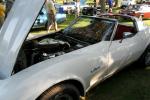
ps by the way the car is a really beautiful 1980 corvette. The new engine was beautiful too. damn.
I found what was left of the screw sitting on top of the #8 piston. The engine is brand spanking new by the way. Damn.
I'm wondering what I have to do now. The piston is scarred up but not cracked. The walls have no scratch's or marks (visible). Can I just clean it up and put it back together? Or, do I need to buy a new replacement piston, and or, do I have to have the piston cylinder resurfaced? And or is it possible the piston is ok but I need to put on new rings?
Damn. (lol).
I appreciate any and all feedback or insights or general help. Thanks.
Larry
ps by the way the car is a really beautiful 1980 corvette. The new engine was beautiful too. damn.

Burning Brakes


Joined: Mar 2006
Posts: 1,036
Likes: 2
From: Huntingburg Indiana
If the cylinder is not scarred, it should be okay. I would probably replace the piston. The irregular surface could possibly cause hot spots or detonation, maybe fatiguing the metal. Maybe I'm wrong. There are plenty of experts here who could chime in and give better advice. Good luck.
Advanced
Joined: Oct 2012
Posts: 92
Likes: 1
From: buckhorn Ontario
make sure you didn't bend a valve and scar up a seat too. if the cylinder didn't take a hit you may get away with just replacing that piston. hopefully the screw didn't break up and pieces go elsewhere.
Thread Starter
Intermediate
Joined: Oct 2012
Posts: 32
Likes: 0
If the cylinder is not scarred, it should be okay. I would probably replace the piston. The irregular surface could possibly cause hot spots or detonation, maybe fatiguing the metal. Maybe I'm wrong. There are plenty of experts here who could chime in and give better advice. Good luck.
Larry
Thread Starter
Intermediate
Joined: Oct 2012
Posts: 32
Likes: 0
I'm hoping the screw didn't go everywhere broken up. There was no metal in the oil when I drained it. And the other pistons and cylinders all look good and clean. Is there some way to flush the block before I put it back in? Or otherwise do I just put it back together with a new piston and hope for the best?
Thanks again,
Larry
Advanced
Joined: Oct 2012
Posts: 92
Likes: 1
From: buckhorn Ontario
Thanks for the input. The valve looks like it is seated well but do you know how I can tell for sure? Both that it is seated good and that it is not bent? Is it just a visual thing?
I'm hoping the screw didn't go everywhere broken up. There was no metal in the oil when I drained it. And the other pistons and cylinders all look good and clean. Is there some way to flush the block before I put it back in? Or otherwise do I just put it back together with a new piston and hope for the best?
Thanks again,
Larry
I'm hoping the screw didn't go everywhere broken up. There was no metal in the oil when I drained it. And the other pistons and cylinders all look good and clean. Is there some way to flush the block before I put it back in? Or otherwise do I just put it back together with a new piston and hope for the best?
Thanks again,
Larry

Le Mans Master


Joined: Oct 2006
Posts: 7,123
Likes: 433
From: Gladstone MO
C3 of Year Finalist (appearance mods) 2019
That piece may have gotten hung when it went thru the valve- I'd pull the valves and look at the seats very carefully and make sure the valve is seating properly.
Corvette Stories
The Best of Corvette for Corvette Enthusiasts

Top 10 Most Expensive Corvettes Ever Sold on Bring A Trailer
Brett Foote
10 Things Every Corvette Owner Needs (2026 Edition)
Michael S. Palmer
8 Most "Only Corvette Owners Understand" Quirks and Problems
Pouria Savadkouei
10 Reasons the C6 Z06 is Still A Performance Benchmark After 20 Years
Joe Kucinski
How Much Horsepower Every Corvette Engine "LOST" in 1972
Joe Kucinski
Top 10 DOs and DON'Ts for Protecting Your Convertible Top!
Michael S. Palmer
Top 10 Most Explosive Corvettes Ever Made: Power-to-Weight Ratio Ranked!
Joe Kucinski
150 hp to 1,250 hp: Every Corvette Generation Compared by the Specs That Matter
Joe Kucinski
8 Coolest Corvette Pace Cars (and Replicas) of All Time
Verdad Gallardo
Race Director


Joined: Apr 2007
Posts: 11,152
Likes: 890
From: South Western Ontario
You must have the head off so fill the ports with water and see if it leaks past the valves. If it leaks then you need to fix that valve. Obviously, make sure you dry it back up so nothing rusts before you get it back together.
I would replace the piston for sure. It could still have cracks you can't see. Well, maybe with a forged piston you could get away with smoothing the scars out and re-using but I wouldn't trust a cast one. The piston coming apart at a later date could mean the end of the block.
I wouldn't worry about screw parts getting into the oil side of the engine. I can't see any parts getting past an intact piston. The rest likely went out the exhaust.
I would replace the piston for sure. It could still have cracks you can't see. Well, maybe with a forged piston you could get away with smoothing the scars out and re-using but I wouldn't trust a cast one. The piston coming apart at a later date could mean the end of the block.
I wouldn't worry about screw parts getting into the oil side of the engine. I can't see any parts getting past an intact piston. The rest likely went out the exhaust.


Le Mans Master
Joined: Aug 2010
Posts: 9,272
Likes: 17
if...you have it apart you can do a water check on the valves for that cylinder, see if they leak through or not. even if you dont you may want to pull the springs off those two valves and do a gentle lap to see if you're getting good contact

Team Owner


Joined: Jan 2006
Posts: 37,637
Likes: 3,118
From: Crossville TN
Yep. With the head already off, pull the intake valve on that cylinder and look carefully at the mating seat surface on the valve and head. If that screw got caught by the intake valve, you will see some marking/nicks on the seating surfaces/edges. If not, put it back together.
It's unlikely that the exhaust valve was involved, as the screw never made it that far. But, at this point, it's pretty easy to take a quick look at that exhaust valve, too, if you want to make absolutely sure.
It's unlikely that the exhaust valve was involved, as the screw never made it that far. But, at this point, it's pretty easy to take a quick look at that exhaust valve, too, if you want to make absolutely sure.

Le Mans Master


Joined: Oct 2010
Posts: 6,937
Likes: 848
From: melbourne florida
2023 C3 of the Year Finalist - Modified
not sure how big the screw was , or what it was made of. but i agree check the valve seat for damage , dress up the damage on the piston , clean it up and run it. if the piston wasn't damaged badly i wouldn't worry about it.

Team Owner

Joined: Jul 1999
Posts: 65,492
Likes: 230
From: Orange Park Florida
Couple years ago a friend's 01 Ford Escort swallowed the #4 intake seat, as those engines are prone to do, it's a bit larger than any screw, but it shattered the skirts off the piston, when I dropped the pan, I found the piston hanging onto the wrist pin by only ONE end, yet when running the starter the piston went up/down just like the others, but being paranoid, I dropped the pan, and sure enough, huge chunks of piston in the pan....
put in a new stock piston, remachined the head and fixed it.....
so at the very least, drop the pan.....
put in a new stock piston, remachined the head and fixed it.....
so at the very least, drop the pan.....

Burning Brakes
Joined: Feb 2012
Posts: 925
Likes: 7
I would take the retainers and springs off the valves and before taking them out to inspect the seats, I would spin the valve stems in the guides. If either of the valves is bent even slightly, you should be able to see some wobble in the valve head in relation to the valve seat. I'd take the 2 associated pushrods and roll them on a piece of flat glass or some other flat surface (saw table top?) and see if they are still straight.
Racer
Joined: Aug 2009
Posts: 363
Likes: 72
From: Somers New York
You must have the head off so fill the ports with water and see if it leaks past the valves. If it leaks then you need to fix that valve. Obviously, make sure you dry it back up so nothing rusts before you get it back together.
I would replace the piston for sure. It could still have cracks you can't see. Well, maybe with a forged piston you could get away with smoothing the scars out and re-using but I wouldn't trust a cast one. The piston coming apart at a later date could mean the end of the block.
I wouldn't worry about screw parts getting into the oil side of the engine. I can't see any parts getting past an intact piston. The rest likely went out the exhaust.
I would replace the piston for sure. It could still have cracks you can't see. Well, maybe with a forged piston you could get away with smoothing the scars out and re-using but I wouldn't trust a cast one. The piston coming apart at a later date could mean the end of the block.
I wouldn't worry about screw parts getting into the oil side of the engine. I can't see any parts getting past an intact piston. The rest likely went out the exhaust.

Racer
Joined: Oct 2003
Posts: 424
Likes: 9
From: Killeen Texas
Run the engine and make the regular checks; compression, etc. If it checks out OK, run it like it is. If the engine runs OK, Why replace the piston or go thru more hastles. Run it like it is. All this hi-tech **** is bull. If the engine runs well, leave it alone and drive. Why take the engine apart if you can take the tests and they all pan out ok? I realize it's a new engine, but if the tests say it's ok, why go into it? Sometimes one can go overboard and get the same results.
Last edited by texas jim; Jun 27, 2013 at 01:48 PM.

Advanced
Joined: Jan 2013
Posts: 65
Likes: 0
From: Kennesaw Georgia
This !
Don't go nuts on the car till you KNOW you have a real problem.
Toughest part will be getting the screw out. Thru the Spark plug hole ?
Look to see if you can tell if the screw is complete. If it is and the compression checks out then I say Drive It!
TCT
Don't go nuts on the car till you KNOW you have a real problem.
Toughest part will be getting the screw out. Thru the Spark plug hole ?
Look to see if you can tell if the screw is complete. If it is and the compression checks out then I say Drive It!
TCT