







A little help w/70 Vette
Thread Starter
Safety Car


Joined: Sep 2013
Posts: 4,355
Likes: 2,633
From: Draper Utah
 A little help w/70 Vette
1970 Corvette
350/350
4 Speed
Factory air
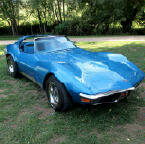
I have owned this car for about 3 month's (my first Corvette). Something I have learned is the previous owner had a habit of simply removing "unnecessary" items as they broke. So I have a couple of questions.
The first question, did this car originally come with a radiator overflow containment system? There is not one currently on the car and the owners manual seems to suggest some cars had them and some did not as it gives instructions for properly filling the radiator for both systems. Currently the vent tube (below radiator cap) just drains to the ground.
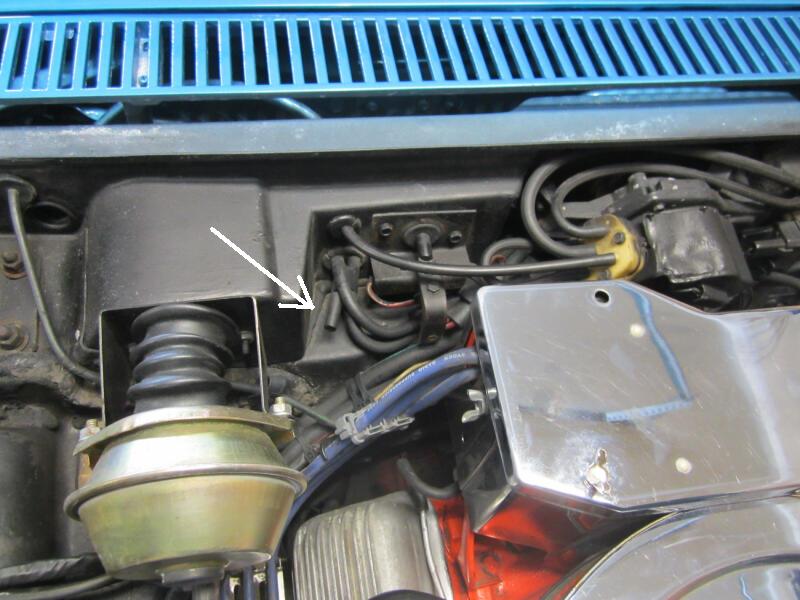
Second question is there is a hose that comes out of the firewall that has been cut off (see picture). What did this hose attach to?
And yes I have the AIM, sometimes it's really useful and sometimes I'm still trying to figure it out.
Thanks.
350/350
4 Speed
Factory air
I have owned this car for about 3 month's (my first Corvette). Something I have learned is the previous owner had a habit of simply removing "unnecessary" items as they broke. So I have a couple of questions.
The first question, did this car originally come with a radiator overflow containment system? There is not one currently on the car and the owners manual seems to suggest some cars had them and some did not as it gives instructions for properly filling the radiator for both systems. Currently the vent tube (below radiator cap) just drains to the ground.
Second question is there is a hose that comes out of the firewall that has been cut off (see picture). What did this hose attach to?
And yes I have the AIM, sometimes it's really useful and sometimes I'm still trying to figure it out.
Thanks.

Melting Slicks

Joined: Mar 2008
Posts: 2,023
Likes: 6
From: Austin Tx
In those two instances, the PO did not 'bubba' anything, they are both correct.
The hose that looks cut, is not cut, it's the vent for the wiper safty valve in the wiper bay. The valve makes sure that the wiper door does not close until the wipers are in the parked.
I have a 72 with AC, and at least in 72 AC cars did not have an overflow, it has the same release drain to the ground.
The hose that looks cut, is not cut, it's the vent for the wiper safty valve in the wiper bay. The valve makes sure that the wiper door does not close until the wipers are in the parked.
I have a 72 with AC, and at least in 72 AC cars did not have an overflow, it has the same release drain to the ground.

Race Director

Joined: Jul 2001
Posts: 15,892
Likes: 42
No Corvette prior to 1973 had an overflow container. Depending on model year, engine option and presence of A/C, some cars got a copper/brass rad with integral cap and some cars got an aluminum rad with no cap but paired with a pressurized expansion chamber.
Both types overflowed via a hose to the ground if overfilled.
Both types overflowed via a hose to the ground if overfilled.
Drifting

Joined: Oct 2005
Posts: 1,615
Likes: 150
From: Forth Worth TX
Does your L-46 A/C car still use a 6000rpm tach?
The reason I ask is the LT-1 uses a 6500rpm tach, but in 72 when A/C was installed, they used a 5600rpm tach.
If 6000rpm works for an A/C belt in an L-46 why would they use 5600rpm for the 72 LT-1?
The reason I ask is the LT-1 uses a 6500rpm tach, but in 72 when A/C was installed, they used a 5600rpm tach.
If 6000rpm works for an A/C belt in an L-46 why would they use 5600rpm for the 72 LT-1?

Team Owner


Joined: Jun 2000
Posts: 38,923
Likes: 1,481
From: Southbound
Cruise-In II Veteran
Corvette Stories
The Best of Corvette for Corvette Enthusiasts

Top 10 Most Expensive Corvettes Ever Sold on Bring A Trailer
Brett Foote
10 Things Every Corvette Owner Needs (2026 Edition)
Michael S. Palmer
8 Most "Only Corvette Owners Understand" Quirks and Problems
Pouria Savadkouei
10 Reasons the C6 Z06 is Still A Performance Benchmark After 20 Years
Joe Kucinski
How Much Horsepower Every Corvette Engine "LOST" in 1972
Joe Kucinski
Top 10 DOs and DON'Ts for Protecting Your Convertible Top!
Michael S. Palmer
Top 10 Most Explosive Corvettes Ever Made: Power-to-Weight Ratio Ranked!
Joe Kucinski
150 hp to 1,250 hp: Every Corvette Generation Compared by the Specs That Matter
Joe Kucinski