




timing question

Thread Starter
Intermediate


Joined: Jul 2010
Posts: 48
Likes: 2
 timing question
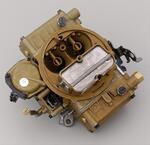
I am having a hard time figuring out my timing. I rebuilt my motor with a bigger cam and am having troubles with the vacum advance. When i hook my vacuum advance up to either manifold or ported vacuum on the carb, my timing does not advance. Before, i would set at zero and then plug in vacuum advance and it would move to 8. i cant seem to get the timing right. Mt vacuum guage reads 9 to 10 on the manifold. My question is, what is the required vacuum to advance the distributor at idle. Should the vaccum advance when plugging the vacuum advance to the carb. If i attach a mitty vac to the distributor, my weights and springs move. Do I just not understand the timing and vacuum advance or am i just missing everything. The motor is a mild built 350, cr 9.6:1. holley 6210 carb and a 4 speed. Any advice would be greatly appreciated. Sorry for long post.

Drifting


Joined: Feb 2005
Posts: 1,879
Likes: 38
From: Los Gatos CA
If you apply vacuum to your vacuum advance canister and it does not move after, say about 16", your canister is broken. Personally, I have only seen broken canisters that would not hold vacuum (and they would not advance).
I read your post wrong. I thought you said applying vacuum with MityVac had no effect.
I read your post wrong. I thought you said applying vacuum with MityVac had no effect.
Last edited by Jeff_Keryk; Dec 23, 2013 at 10:07 PM.

Race Director

Joined: Jul 2001
Posts: 15,892
Likes: 42
The vacuum can installed now is calibrated to open at much higher vacuum, probably at the stock values of 13-15 in/hg..
If you only have 9-10 in/hg. vacuum at idle, you need a can that activates at about 7-8.
If you only have 9-10 in/hg. vacuum at idle, you need a can that activates at about 7-8.
Burning Brakes

Joined: Feb 2012
Posts: 925
Likes: 7
I agree, you need the "B28" advance control. It is made for bigger cams. The NAPA/Echlin part number is VC-1810 and is all-in at 8"Hg. This is the non-HEI part. See Lars' paper on "Distributor Vacuum Advance Control units".
Thread Starter
Intermediate
Joined: Jul 2010
Posts: 48
Likes: 2
so if i do not plug the vacuum advance up, do i just need to figure out my springs to get the timing all in at 36 like i read. It looks like the way its set up is that my total timing is only 24 or 26 degrees. my inital timing is 12 now.

Race Director


Joined: Apr 2009
Posts: 19,294
Likes: 2,754
From: Charlotte NC
Even though GM did go to connecting the vacuum advance to manifold vacuum in later years...this manifold vacuum hose did not go directly from the carb to the vacuum advance pod directly....or at least none that I have ever seen. GM installed a ported vacuum switch in the coolant system...and when the engine warmed up enough ...the coolant temp would switch this ported vacuum switch to allow vacuum to go to the vacuum advance pod and keep the engine running. Having the vacuum advance pod being connected to manifold vacuum...without this switch...can cause it to be really temperamental when the engine is being cranked when it is cold.
I also use a vacuum gauge to set timing and use the timing light as an information source.....but to each his/her own.
DUB
Corvette Stories
The Best of Corvette for Corvette Enthusiasts

Top 10 Most Expensive Corvettes Ever Sold on Bring A Trailer
Brett Foote
10 Things Every Corvette Owner Needs (2026 Edition)
Michael S. Palmer
8 Most "Only Corvette Owners Understand" Quirks and Problems
Pouria Savadkouei
10 Reasons the C6 Z06 is Still A Performance Benchmark After 20 Years
Joe Kucinski
How Much Horsepower Every Corvette Engine "LOST" in 1972
Joe Kucinski
Top 10 DOs and DON'Ts for Protecting Your Convertible Top!
Michael S. Palmer
Top 10 Most Explosive Corvettes Ever Made: Power-to-Weight Ratio Ranked!
Joe Kucinski
150 hp to 1,250 hp: Every Corvette Generation Compared by the Specs That Matter
Joe Kucinski
8 Coolest Corvette Pace Cars (and Replicas) of All Time
Verdad Gallardo
Le Mans Master


Joined: Apr 2011
Posts: 6,284
Likes: 1,171
From: Hermosa
 Once you get that can then you'll need to set your initial timing to more like 16* to get a decent idle. This combined with 20* of mechanical advance will give you 36* all in at WOT. If you use manifold vacuum it will advance your idle timing more. I have found that this helps with a larger cam that produces low cylinder pressure at idle speeds as long as manifold vac is steady.
Last edited by REELAV8R; Dec 23, 2013 at 07:45 PM.

Burning Brakes
Joined: Sep 2012
Posts: 818
Likes: 0
From: coon rapids mn
you can also buy a after market adjustable vacuum canister .what carb do you have ?read Lars paper ,or a good carb book to set the carb correctly .maybe you can gain a little more vacuum at idle .
Le Mans Master
Joined: Mar 2008
Posts: 5,948
Likes: 72
From: Oxford MA-----You just lost the game!!!!
I am having a hard time figuring out my timing. I rebuilt my motor with a bigger cam and am having troubles with the vacum advance. When i hook my vacuum advance up to either manifold or ported vacuum on the carb, my timing does not advance. Before, i would set at zero and then plug in vacuum advance and it would move to 8. i cant seem to get the timing right. Mt vacuum guage reads 9 to 10 on the manifold. My question is, what is the required vacuum to advance the distributor at idle. Should the vaccum advance when plugging the vacuum advance to the carb. If i attach a mitty vac to the distributor, my weights and springs move. Do I just not understand the timing and vacuum advance or am i just missing everything. The motor is a mild built 350, cr 9.6:1. holley 6210 carb and a 4 speed. Any advice would be greatly appreciated. Sorry for long post.
You say in your post that the engine is a "mild built 350". The vacuum level you refer to is usually associated with pretty gnarly cams. Tell us what cam you are running, so we can get a better idea of what you're working with. It may be a matter of tuning. Any cam that can be referred to as "mild" should generate at least 15" of vacuum at idle.
Scott
Burning Brakes
Joined: Feb 2012
Posts: 925
Likes: 7
Not sure what you mean by "if I do not plug the vacuum advance up". Just to be safe, I'm stating that the vacuum advance should be disconnected and the vacuum source plugged when you are setting the timing. With your cam, you need plenty of initial, like 16 or so, but make sure you have 36 in by 3000 to match what seems like an aggressive cam from your 10" idle vacuum. That's what I have with 92 degrees of overlap.
Melting Slicks

Joined: Jan 2004
Posts: 3,247
Likes: 210
From: Detroit MI
You can if you choose...but I would rather... if it was in my shop...I would be installing the vacuum advance that earlier posts gave you part number for and install it and see what happens from there. And it would be connected to ported vacuum.
Even though GM did go to connecting the vacuum advance to manifold vacuum in later years...this manifold vacuum hose did not go directly from the carb to the vacuum advance pod directly....or at least none that I have ever seen. GM installed a ported vacuum switch in the coolant system...and when the engine warmed up enough ...the coolant temp would switch this ported vacuum switch to allow vacuum to go to the vacuum advance pod and keep the engine running. Having the vacuum advance pod being connected to manifold vacuum...without this switch...can cause it to be really temperamental when the engine is being cranked when it is cold.
I also use a vacuum gauge to set timing and use the timing light as an information source.....but to each his/her own.
DUB
Even though GM did go to connecting the vacuum advance to manifold vacuum in later years...this manifold vacuum hose did not go directly from the carb to the vacuum advance pod directly....or at least none that I have ever seen. GM installed a ported vacuum switch in the coolant system...and when the engine warmed up enough ...the coolant temp would switch this ported vacuum switch to allow vacuum to go to the vacuum advance pod and keep the engine running. Having the vacuum advance pod being connected to manifold vacuum...without this switch...can cause it to be really temperamental when the engine is being cranked when it is cold.
I also use a vacuum gauge to set timing and use the timing light as an information source.....but to each his/her own.
DUB

Tech Contributor
Joined: Jun 2004
Posts: 20,905
Likes: 962
From: I tend to be leery of any guy who doesn't own a chainsaw or a handgun.
That's nonsense. Your method sets the timing for a load/speed point where the engine spends 1% of its life, and ignores the low load/RPM points where it spends 99% of its life.

Safety Car

Joined: Jan 2009
Posts: 4,000
Likes: 299
From: New York
Read . learn , and try to relax .. I am not ignoring anything your just working off a flawed idea ... Lets not get into a huge debate , post after you look around and search how to set the timing ..
Race Director
Joined: Apr 2009
Posts: 19,294
Likes: 2,754
From: Charlotte NC
As I have always been told and experienced.
"Ported vacuum" is a port on the carb that when at idle has no vacuum coming out of it ( depending on how high the idle is set). When the throttle is increased...the vacuum beings to "come on" and supplies this vacuum to the vacuum advance pod or whatever you are controlling for this purpose.
"Manifold vacuum" is vacuum that the engine is creating at idle and is constantly there at idle. This value of vacuum will change during different throttle angles...but it still there and when idle is returned...it is there.
Why did you ask??? Something I wrote not make sense....which I know can occur.
DUB

Burning Brakes
Joined: Feb 2012
Posts: 925
Likes: 7
Ported vacuum was an emissions concept, the lack of vacuum advance, and thus less timing at idle, made for high exhaust gas temperatures, so when you pump air into the exhaust using the A.I.R. system there was additional burning of combustion byproducts. This is strictly an emissions, not a performance, concept. If you want the engine to have some performance, run cooler and idle cleaner, run full manifold vacuum. A big cam needs it more than a small one and it needs more initial timing also, due to increased exhaust gas dilution. The extension of this is that a single plane may need more initial timing than a dual-plane due to the dilution differences.
You don't want high exhaust gas temperature, that energy is better used in the combustion chamber as cylinder pressure to apply to the face of the piston making some torque. Read Lars's excellent paper and the associated paper on vacuum advance by Duke Williams.
Also, having the timing all in by 3000, but not paying attention to what your initial is, is leaving some performance on the table. Of two engines both with 36 degrees all in, which one will operate better, the one that has 4 degrees initial or the one at 15 degrees?
Yes, reading is good.
You don't want high exhaust gas temperature, that energy is better used in the combustion chamber as cylinder pressure to apply to the face of the piston making some torque. Read Lars's excellent paper and the associated paper on vacuum advance by Duke Williams.
Also, having the timing all in by 3000, but not paying attention to what your initial is, is leaving some performance on the table. Of two engines both with 36 degrees all in, which one will operate better, the one that has 4 degrees initial or the one at 15 degrees?
Yes, reading is good.
Race Director
Joined: Jul 2001
Posts: 15,892
Likes: 42
Ported vacuum was an emissions concept, the lack of vacuum advance, and thus less timing at idle, made for high exhaust gas temperatures, so when you pump air into the exhaust using the A.I.R. system there was additional burning of combustion byproducts. This is strictly an emissions, not a performance, concept. If you want the engine to have some performance, run cooler and idle cleaner, run full manifold vacuum. A big cam needs it more than a small one and it needs more initial timing also, due to increased exhaust gas dilution. The extension of this is that a single plane may need more initial timing than a dual-plane due to the dilution differences.
You don't want high exhaust gas temperature, that energy is better used in the combustion chamber as cylinder pressure to apply to the face of the piston making some torque. Read Lars's excellent paper and the associated paper on vacuum advance by Duke Williams.
Also, having the timing all in by 3000, but not paying attention to what your initial is, is leaving some performance on the table. Of two engines both with 36 degrees all in, which one will operate better, the one that has 4 degrees initial or the one at 15 degrees?
Yes, reading is good.
You don't want high exhaust gas temperature, that energy is better used in the combustion chamber as cylinder pressure to apply to the face of the piston making some torque. Read Lars's excellent paper and the associated paper on vacuum advance by Duke Williams.
Also, having the timing all in by 3000, but not paying attention to what your initial is, is leaving some performance on the table. Of two engines both with 36 degrees all in, which one will operate better, the one that has 4 degrees initial or the one at 15 degrees?
Yes, reading is good.
Thank you.
Safety Car
Joined: Jan 2009
Posts: 4,000
Likes: 299
From: New York
My understanding is mechanical advance adds 20 from initial . So if you set it at 4 degrees you will never hit more then 24 degrees total timing. I could be wrong but I think I am right on this. So if you set say 34 total as I have on my fast burn heads my initial is around 14.
Now if you have a stock motor running low quality gas the all in setting of 32 to 36 degrees may not work for you, and you may want to have initial timing at 4 degrees..
Now if you have a stock motor running low quality gas the all in setting of 32 to 36 degrees may not work for you, and you may want to have initial timing at 4 degrees..