




New Wiring Engine & Chassis

Thread Starter
Instructor

Joined: Oct 2013
Posts: 222
Likes: 4
From: Cameron Park California

Overall, yes what you describe for the chassis wiring is correct and it's really not all that complex.
One thing not mentioned yet. The voltage sensing wire for the alternator also goes to the junction block. So, the alternator is trying to regulate the junction block to 14.2V and then all the other parts of the car are powered from that point. It's not a big deal exactly how this is done if your wiring is heavy enough though.
The 2 fusible link black & black/white wires tapping off the wire between the junction block and the solenoid are for the ammeter. If you don't include those wires in the new charging circuit then the ammeter will always display a discharge. However, paralleling the old wires with a new wire to try and include the old wiring isn't be best way to do it.
What I would likely do to still make the ammeter work. I would run the new alternator wires (charging and voltage sensing) to the junction block (or a new heavy duty one) and upgrade the wire from the junction to the solenoid too. I believe the old wire is #10 and I would use #6 for the new wire so I would try to make the new wire between those 2 ammeter wires about 1.26 times as long as the original. That way, the ammeter would read 1/2 of the true current and it would not get pegged by the higher current. You could also go with the same length of wire and the ammeter would read about 2.5 times less current. Either way, it would still indicate a charge or discharge so you knew everything was working but just at a lower current than reality.
Then, I would power all the new electronics and such from the distribution block. Hence why updating the junction block might be a good idea. A multiple stud block could work well for the new power taps you need.
I would also stick a new fusible link on the original red wire powering the fuse block since it will no longer be protected by the original fusible link in the wire from the solenoid.
Now, if you don't care that the ammeter shows a discharge then run the new alternator wires to the solenoid and remove the old charging wires going to the junction block like you were thinking before.
One thing not mentioned yet. The voltage sensing wire for the alternator also goes to the junction block. So, the alternator is trying to regulate the junction block to 14.2V and then all the other parts of the car are powered from that point. It's not a big deal exactly how this is done if your wiring is heavy enough though.
The 2 fusible link black & black/white wires tapping off the wire between the junction block and the solenoid are for the ammeter. If you don't include those wires in the new charging circuit then the ammeter will always display a discharge. However, paralleling the old wires with a new wire to try and include the old wiring isn't be best way to do it.
What I would likely do to still make the ammeter work. I would run the new alternator wires (charging and voltage sensing) to the junction block (or a new heavy duty one) and upgrade the wire from the junction to the solenoid too. I believe the old wire is #10 and I would use #6 for the new wire so I would try to make the new wire between those 2 ammeter wires about 1.26 times as long as the original. That way, the ammeter would read 1/2 of the true current and it would not get pegged by the higher current. You could also go with the same length of wire and the ammeter would read about 2.5 times less current. Either way, it would still indicate a charge or discharge so you knew everything was working but just at a lower current than reality.
Then, I would power all the new electronics and such from the distribution block. Hence why updating the junction block might be a good idea. A multiple stud block could work well for the new power taps you need.
I would also stick a new fusible link on the original red wire powering the fuse block since it will no longer be protected by the original fusible link in the wire from the solenoid.
Now, if you don't care that the ammeter shows a discharge then run the new alternator wires to the solenoid and remove the old charging wires going to the junction block like you were thinking before.
I will have to unravel the harness tomorrow to get at the wire and of course order some new wire to replace the old. Any recommendations for a source of quality wire? The old wire to the starter is looking kind of tired.

Le Mans Master


Joined: May 2003
Posts: 8,877
Likes: 3,556
From: Fernandina Beach FL
2023 Restomod of the Year finalist
2020 C3 of the Year Winner - Modified
Go to a local car stereo shop- they can pull some wire off the rolls they have in the bays. Versus the hit and miss stuff on eBay...And they can get you some terminals that will handle the larger wire.
The other thing is go to a junkyard- and you can cut up harness of a say BMW/M-B and use the interwoven sheathing for cheap. I also used the BMW injector connectors and wire tray from a parts car. It's really nice quality stuff.
Here's also what I recommend for covering your wire- cloth tape- from the same guys that make it for BMW but a LOT cheaper (dealer wants a $1 ft for this stuff). However don't cover wire till last- this stuff is a pain to take off!!!
http://www.ebay.com/itm/180637405593...84.m1423.l2649
I used this stuff to make up my injector/coil/sensor wiring harness


And I wouldn't mess w/ trying to get the ammeter to supposedly work correctly- you can get it converted to a voltmeter and not have to rewire anything.
Replacing the fusabile link w/ another one? I'd much rather replace it w/ a fuse. If you're unfortunate to have a problem- it makes a mess of your harness.
Richard
The other thing is go to a junkyard- and you can cut up harness of a say BMW/M-B and use the interwoven sheathing for cheap. I also used the BMW injector connectors and wire tray from a parts car. It's really nice quality stuff.
Here's also what I recommend for covering your wire- cloth tape- from the same guys that make it for BMW but a LOT cheaper (dealer wants a $1 ft for this stuff). However don't cover wire till last- this stuff is a pain to take off!!!
http://www.ebay.com/itm/180637405593...84.m1423.l2649
I used this stuff to make up my injector/coil/sensor wiring harness


And I wouldn't mess w/ trying to get the ammeter to supposedly work correctly- you can get it converted to a voltmeter and not have to rewire anything.
Replacing the fusabile link w/ another one? I'd much rather replace it w/ a fuse. If you're unfortunate to have a problem- it makes a mess of your harness.
Richard


Race Director


Joined: Apr 2007
Posts: 11,152
Likes: 890
From: South Western Ontario
MAD Electrical has some good wire, but their sizes are limited. The terminals and eye loops and such they have are also good quality.
I'm not sure American Autowire sells wire pieces but you could check with them.
Your local NAPA could be a good source.
Boat supply places would be a good source. If the wire has the ratings and such for a boat then it's good enough for your car.
I tend to think the car audio stuff can be over priced and some of it is questionable too. I'd much rather use a tin coated steel crimp-on lug then a flashy gold plated lug with a set screw to terminate a wire. Either use the proper crimp tools or solder the lug onto the wire. And no, don't stand the lug on end so you can heat the lug and fill it with solder and then "dip" the cable into the mess. That is one stupid way to terminate which is almost guaranteed to cause bad solder joints. Put them together and heat the lug until the solder will melt on the wire and wick up into the lug.
I'm not sure American Autowire sells wire pieces but you could check with them.
Your local NAPA could be a good source.
Boat supply places would be a good source. If the wire has the ratings and such for a boat then it's good enough for your car.
I tend to think the car audio stuff can be over priced and some of it is questionable too. I'd much rather use a tin coated steel crimp-on lug then a flashy gold plated lug with a set screw to terminate a wire. Either use the proper crimp tools or solder the lug onto the wire. And no, don't stand the lug on end so you can heat the lug and fill it with solder and then "dip" the cable into the mess. That is one stupid way to terminate which is almost guaranteed to cause bad solder joints. Put them together and heat the lug until the solder will melt on the wire and wick up into the lug.
Thread Starter
Instructor
Joined: Oct 2013
Posts: 222
Likes: 4
From: Cameron Park California
You guys are great! Richard454, you do nice work!
So, here is the wiring after taking off the wrapping. Note the state of the fusible links? Definitely going with fuses. The wiring that went to the starter was wrapped in some white tape and the glue was still milky. Overall other than the fusible links the wires look good.
There are several wires that look like they plug into bulbs but are just hanging.
Is the black wire running off the red with fusible link going to the ammeter?
I checked my wiring diagram but not certain what the Green/Beige wires are for?
So, here is the wiring after taking off the wrapping. Note the state of the fusible links? Definitely going with fuses. The wiring that went to the starter was wrapped in some white tape and the glue was still milky. Overall other than the fusible links the wires look good.
There are several wires that look like they plug into bulbs but are just hanging.
Is the black wire running off the red with fusible link going to the ammeter?
I checked my wiring diagram but not certain what the Green/Beige wires are for?
Race Director
Joined: Apr 2007
Posts: 11,152
Likes: 890
From: South Western Ontario
Yup, that will be the second tap for the ammeter. There will also be one off the junction block you posted pics of earlier. I guess you need to decide if you want it to remain or change to a voltmeter. You could just put another junction block there and replace that fusible link with a fuse pigtail if you keep the ammeter.
Do you think a fuse block would have survived 40 years of use down by the starter? I very much prefer fusible links for those main power taps. Fusible links are much more rugged and much less likely to fail for no good reason. Solder or properly crimp them in place and use the dual wall heat shrink to seal the joints.
Now, that fusible link for the ammeter - I would use a fuse there no problem.
Overall, your wires do look in good shape. You're checking for stiff wires indicating brittle insulation as well as cracks due to brittle insulation, correct?
FYI, here's why I don't like the set screw lugs for the fine wire. At my work place we build high powered 3-phase electrical equipment. Anything up to 1000A or so. We use fine stranded wire as well and none of the electrical codes allow set-screw lugs for the wire. The problem is the fine strands are soft so you cause a lot of strand damage and the strands also "flow" around in the connector making it hard to keep tight.
Do you think a fuse block would have survived 40 years of use down by the starter? I very much prefer fusible links for those main power taps. Fusible links are much more rugged and much less likely to fail for no good reason. Solder or properly crimp them in place and use the dual wall heat shrink to seal the joints.
Now, that fusible link for the ammeter - I would use a fuse there no problem.
Overall, your wires do look in good shape. You're checking for stiff wires indicating brittle insulation as well as cracks due to brittle insulation, correct?
FYI, here's why I don't like the set screw lugs for the fine wire. At my work place we build high powered 3-phase electrical equipment. Anything up to 1000A or so. We use fine stranded wire as well and none of the electrical codes allow set-screw lugs for the wire. The problem is the fine strands are soft so you cause a lot of strand damage and the strands also "flow" around in the connector making it hard to keep tight.
Thread Starter
Instructor
Joined: Oct 2013
Posts: 222
Likes: 4
From: Cameron Park California
lionelhutz,
I have been checking the wire for brittleness and they feel flexible, not stiff and brittle. All insulation looks good as well. From what I have read by looking at alternator wiring kits such as one from Painless, they use 6 gauge wire with a 200 amp fuse.
http://www.painlesswiring.com/webcat...rchField=30700
Do you know the size of the fusible link that goes from the junction block to the fuse panel?
Thanks again!
I have been checking the wire for brittleness and they feel flexible, not stiff and brittle. All insulation looks good as well. From what I have read by looking at alternator wiring kits such as one from Painless, they use 6 gauge wire with a 200 amp fuse.
http://www.painlesswiring.com/webcat...rchField=30700
Do you know the size of the fusible link that goes from the junction block to the fuse panel?
Thanks again!
Race Director
Joined: Apr 2007
Posts: 11,152
Likes: 890
From: South Western Ontario
If you can find a good fuse holder and put it in a place that is fairly well protected against heat and water then the fuse can work. I just don't see the point for the main wires when a link will protect it too. Just make sure to have spare fuses in case you blow one working on the car.
Fusible links are based on the wire they are protecting. The fusible link is typically 4 gauges smaller then the wire being protected. So, 10 gauge wire would use a 14 gauge fusible link for example.
Fusible links are based on the wire they are protecting. The fusible link is typically 4 gauges smaller then the wire being protected. So, 10 gauge wire would use a 14 gauge fusible link for example.
Last edited by lionelhutz; Jan 15, 2014 at 11:38 PM.
Thread Starter
Instructor
Joined: Oct 2013
Posts: 222
Likes: 4
From: Cameron Park California
Corvette Stories
The Best of Corvette for Corvette Enthusiasts

Top 10 Most Expensive Corvettes Ever Sold on Bring A Trailer
Brett Foote
10 Things Every Corvette Owner Needs (2026 Edition)
Michael S. Palmer
8 Most "Only Corvette Owners Understand" Quirks and Problems
Pouria Savadkouei
10 Reasons the C6 Z06 is Still A Performance Benchmark After 20 Years
Joe Kucinski
How Much Horsepower Every Corvette Engine "LOST" in 1972
Joe Kucinski
Top 10 DOs and DON'Ts for Protecting Your Convertible Top!
Michael S. Palmer
Top 10 Most Explosive Corvettes Ever Made: Power-to-Weight Ratio Ranked!
Joe Kucinski
150 hp to 1,250 hp: Every Corvette Generation Compared by the Specs That Matter
Joe Kucinski
8 Coolest Corvette Pace Cars (and Replicas) of All Time
Verdad Gallardo
Thread Starter
Instructor
Joined: Oct 2013
Posts: 222
Likes: 4
From: Cameron Park California
I am having second thoughts about replacing the entire wiring harness with new. I am thinking by doing this I can have the necessary additional circuits pre-wired as well as the larger alternator/starter/ cables. I was also thinking about going with a later year harness to omit the seat belt interlock circuit. This way I can get rid of the relay in the engine bay and eliminate some wires?
Or I could just go with a generic harness with enough circuits / relays?
Thoughts?
Or I could just go with a generic harness with enough circuits / relays?
Thoughts?

Melting Slicks


Joined: Sep 2004
Posts: 2,655
Likes: 19
Since I was adding electric fans, stereo, Vintage Air, electric wiper door, etc to my LSx swap, I went with an aftermarket generic fuse panel with a lot more circuits mounted behind the passenger dash panel. If you have the whole dash out, might as well rewire. My old harness was rough, hacked up, and brittle. Easy choice.
You can also make it modular for the console and dash pad.Molex connectors under the dash, weatherpack under the hood.
Btw, I was able to wire in the original ammeter by trying different resistors.
Pic of fuse panel and relays. I cleaned it up quite a bit from this pic.

You can also make it modular for the console and dash pad.Molex connectors under the dash, weatherpack under the hood.
Btw, I was able to wire in the original ammeter by trying different resistors.
Pic of fuse panel and relays. I cleaned it up quite a bit from this pic.


Heel & Toe
Joined: Jan 2014
Posts: 16
Likes: 0
black with orange stripe wire
i have an 82 restore going on and ran across 2 wires i'm not sure where they go. on the drivers side just past the radiator support there are 2 wire coming out of a harness one is black with the end broke off (prob ground) other is black with orange stripe wire single female spade connector

Thread Starter
Instructor
Joined: Oct 2013
Posts: 222
Likes: 4
From: Cameron Park California
Since I was adding electric fans, stereo, Vintage Air, electric wiper door, etc to my LSx swap, I went with an aftermarket generic fuse panel with a lot more circuits mounted behind the passenger dash panel. If you have the whole dash out, might as well rewire. My old harness was rough, hacked up, and brittle. Easy choice.
You can also make it modular for the console and dash pad.Molex connectors under the dash, weatherpack under the hood.
Btw, I was able to wire in the original ammeter by trying different resistors.
Pic of fuse panel and relays. I cleaned it up quite a bit from this pic.
You can also make it modular for the console and dash pad.Molex connectors under the dash, weatherpack under the hood.
Btw, I was able to wire in the original ammeter by trying different resistors.
Pic of fuse panel and relays. I cleaned it up quite a bit from this pic.
Gary - you are a wiring artist! Plus you answered my question as to where to locate the panel!
Thread Starter
Instructor
Joined: Oct 2013
Posts: 222
Likes: 4
From: Cameron Park California
i have an 82 restore going on and ran across 2 wires i'm not sure where they go. on the drivers side just past the radiator support there are 2 wire coming out of a harness one is black with the end broke off (prob ground) other is black with orange stripe wire single female spade connector
Melting Slicks
Joined: Sep 2004
Posts: 2,655
Likes: 19
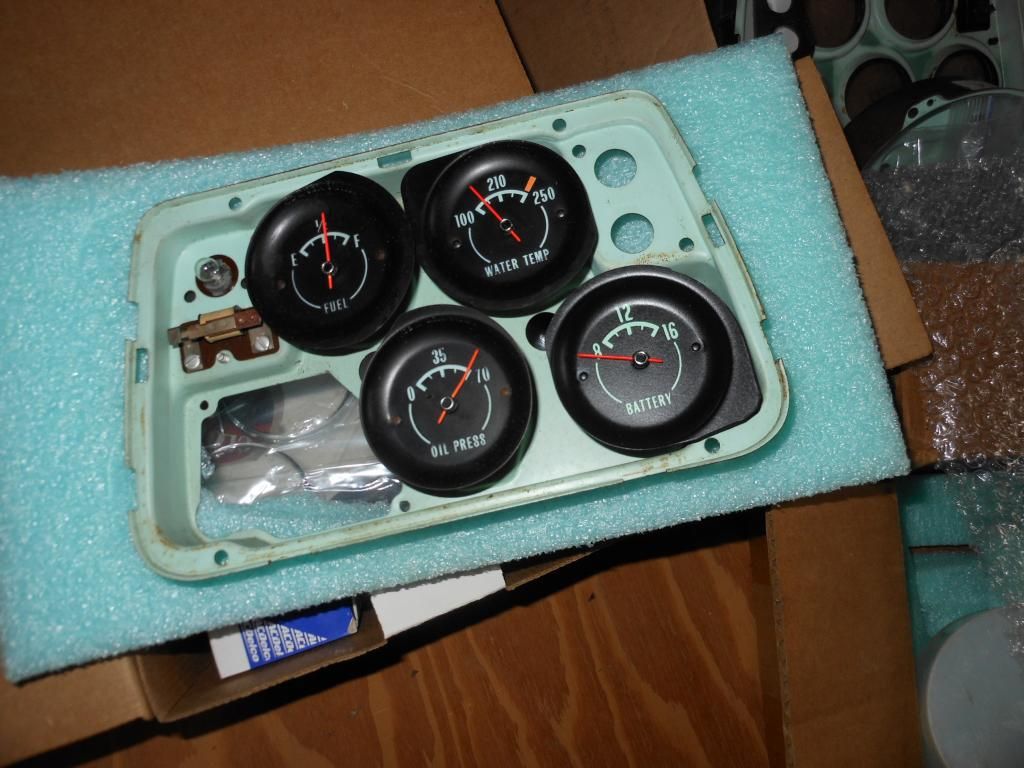
A couple pics. The center gauge cluster. The molex connector makes it easy to plug in vs running a dozen individual wires.

The drivers dash pad is set up the same way. Not the vette, but the dash on my 72 Olds.


The drivers dash pad is set up the same way. Not the vette, but the dash on my 72 Olds.

Thread Starter
Instructor
Joined: Oct 2013
Posts: 222
Likes: 4
From: Cameron Park California
I see you have a later model C3? I like the square dash panel and thought about trying to find one to replace what I have or make a flat dash panel out of aluminum? Looks like you kept your center gauges stock based on the connectors?
Thanks again for sharing photos and knowledge.
Melting Slicks
Joined: Sep 2004
Posts: 2,655
Likes: 19
Mine's a 68. I wanted to keep everything looking stock from the outside and interior. All gauges are original, even wired in the ammeter to work correctly. I found the 67 Hurst shifter handle even bolted to the Richmond 6 speed, so that still looks like the Muncie.
Well, the radio was updated.

Well, the radio was updated.

Thread Starter
Instructor
Joined: Oct 2013
Posts: 222
Likes: 4
From: Cameron Park California
Mine's a 68. I wanted to keep everything looking stock from the outside and interior. All gauges are original, even wired in the ammeter to work correctly. I found the 67 Hurst shifter handle even bolted to the Richmond 6 speed, so that still looks like the Muncie.
Well, the radio was updated.
Well, the radio was updated.