




Top Plug Alternator??

Thread Starter
Instructor


Joined: Feb 2010
Posts: 150
Likes: 8
From: Pelham Alabama
 Top Plug Alternator??
I've got a 1969 Corvette with a 390hp 427 that has a rare K66 transistorized ignition. Transistorized ignition is even more rare on a 390hp than 400hp or 435hp versions where it was much more common and required on L-88 cars.
My question is about the alternator socket position. I've looked at 100 pictures ob BB cars and some cars have the plug at almost the 12 o'clock position while others have the plug pointing down towards the upper control arm on the driver's side. TI cars had 61 amp alternators although I'm not sure if this was the same for non TI big block cars or if there is a difference in plug location between different big block alternator styles. Also my alternator restorer put the plug on top as well.
Is there something about TI specifically that changes the location of the alternator plug or is the rear case just rotated incorrectly? The main harness should be the same for all cars and the TI harness is totally separate so why tilt the alternator differently?
I got knocked on this in NCRS judging back before I knew about it, and I've seen some 435hp cars that are "top flight" in both configurations. I just want to know which one is right and why??
My question is about the alternator socket position. I've looked at 100 pictures ob BB cars and some cars have the plug at almost the 12 o'clock position while others have the plug pointing down towards the upper control arm on the driver's side. TI cars had 61 amp alternators although I'm not sure if this was the same for non TI big block cars or if there is a difference in plug location between different big block alternator styles. Also my alternator restorer put the plug on top as well.
Is there something about TI specifically that changes the location of the alternator plug or is the rear case just rotated incorrectly? The main harness should be the same for all cars and the TI harness is totally separate so why tilt the alternator differently?
I got knocked on this in NCRS judging back before I knew about it, and I've seen some 435hp cars that are "top flight" in both configurations. I just want to know which one is right and why??

Team Owner


Joined: Sep 2006
Posts: 31,109
Likes: 4,170
From: Westminster Maryland
Hi sck,
I believe the 68-69 TIM&JG indicates that on BB cars with power steering the alternator was installed 'upside-down'.
Would that put the 'socket' in the position you describe?
Regards,
Alan
I believe the 68-69 TIM&JG indicates that on BB cars with power steering the alternator was installed 'upside-down'.
Would that put the 'socket' in the position you describe?
Regards,
Alan

2nd Gear
Joined: Jul 2011
Posts: 2
Likes: 0
Hmm... mine has PS so maybe that's why it's positioned up. I suppose it might be to keep the wires away from the PS belt??
Team Owner
Joined: Sep 2006
Posts: 31,109
Likes: 4,170
From: Westminster Maryland
Hi sck,
I read it to be just the opposite … on bb, p/s cars the plug is down?
But????
Could it be the rear case is 'clocked' incorrectly on the front case?
Regards,
Alan
Here's a 69 SB with the plug in what I would call the 'up' position.

I read it to be just the opposite … on bb, p/s cars the plug is down?
But????
Could it be the rear case is 'clocked' incorrectly on the front case?
Regards,
Alan
Here's a 69 SB with the plug in what I would call the 'up' position.

Team Owner
Joined: Sep 2006
Posts: 31,109
Likes: 4,170
From: Westminster Maryland
Hi Ed,
I still don't understand.
If I'm looking at the drawing correctly the alternator had been installed with the 'plug' that sck1 is talking about at the 6:00 position. Then the end frame was re-clocked so the 'plug' in question was at the 9:00 position.
Is that so? Was the alternator still to be considered installed up-side down? Was the stamped information on the case still on the underside of the alternator?
Regards,
Alan
I still don't understand.
If I'm looking at the drawing correctly the alternator had been installed with the 'plug' that sck1 is talking about at the 6:00 position. Then the end frame was re-clocked so the 'plug' in question was at the 9:00 position.
Is that so? Was the alternator still to be considered installed up-side down? Was the stamped information on the case still on the underside of the alternator?
Regards,
Alan
Last edited by Alan 71; Apr 16, 2014 at 04:09 PM.
Burning Brakes


Joined: Dec 2010
Posts: 848
Likes: 60
From: CA
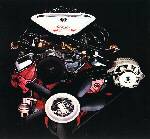
You are correct regarding the plug (old - 6:00 / new - 9:00), and the reason is because of the way the alternator adjusts on 427's with power steering (up and down instead of the "normal" left and right for non-power steering cars - see below), the BAT (battery) power connector (which was originally located about an inch away from the valve cover!) could hit the valve cover if you weren't careful when replacing the belt. All they did was to clock the rear of the alternator housing 90 degrees counter clockwise so it moved the BAT connector farther toward the driver's side fender and away from the valve cover. The front of the alternator (the mounting points) stayed the same.
Since the numbers are stamped on the front housing, they didn't move and yes, they face the ground, so you need a mirror to see them.
You'll notice that my alternator doesn't have the correct "heat fins". That's because I refuse to pay stupid prices for the "correct" one. However, the idea is the same...
Ed
Since the numbers are stamped on the front housing, they didn't move and yes, they face the ground, so you need a mirror to see them.
You'll notice that my alternator doesn't have the correct "heat fins". That's because I refuse to pay stupid prices for the "correct" one. However, the idea is the same...
Ed
Last edited by restoman1; Apr 16, 2014 at 04:48 PM.
Corvette Stories
The Best of Corvette for Corvette Enthusiasts

10 Most Common Corvette Problems of the Last 20 Years!
Joe Kucinski
5 MOST and 5 LEAST Popular Corvette Model Years in History!
Joe Kucinski
2027 Corvette Buyer's Guide: Everything You Need to Know!
Joe Kucinski
10 Things C8 Corvette Owners Hate (But Won't Tell You)
Joe Kucinski
10 Best Corvettes Coming to Barrett-Jackson Palm Beach 2026!
Brett Foote
Every Corvette Grand Sport Explained! (C2, C4, C6, C7, & C8)
Joe Kucinski
Grand Sport & Grand Sport X Launch Alongside All-New 535hp LS6 V8!
Michael S. Palmer
5 Reasons Bad Drivers Crash & 5 Ways to Avoid a Costly Mistake!
Joe Kucinski
7 Bolt-On Upgrades From Extreme Online Store to Level Up Your C6 Corvette
Pouria Savadkouei
Le Mans Master


Joined: Oct 2006
Posts: 7,123
Likes: 433
From: Gladstone MO
C3 of Year Finalist (appearance mods) 2019
Restoman's picture is showing the same "clock" position as my 69. With the support on the harness. The wires to the plug will break over time and with the vibrations. Broken wire= no charge. And just because it can, it will be the small "excite" wire that breaks first.
Burning Brakes
Joined: Dec 2010
Posts: 848
Likes: 60
From: CA
Remember though, the change didn't occur until the late October, November or early December, 1968 time frame.
It's first mentioned in the January, 1969 Chevrolet Service News, and typically it took them one or two months from first draft to publication and distribution, so cars assembled before this time period will still have the old alternator configuration (unless the dealer made the change). Exactly when the change took place on the assembly line is impossible to know since these records aren't available. The AIM is of no use since it doesn't mention anything about it, but even if it did, the revision dates in the AIM don't necessarily reflect the date the change was actually made. It only indicates when the drafting room released that particular sheet, which was created as a result of an engineer submitting an ECR (Engineering Change Request) to Drafting. The change could have actually been implimented a few months before, or a few months after any date you see in the AIM.
Ed
It's first mentioned in the January, 1969 Chevrolet Service News, and typically it took them one or two months from first draft to publication and distribution, so cars assembled before this time period will still have the old alternator configuration (unless the dealer made the change). Exactly when the change took place on the assembly line is impossible to know since these records aren't available. The AIM is of no use since it doesn't mention anything about it, but even if it did, the revision dates in the AIM don't necessarily reflect the date the change was actually made. It only indicates when the drafting room released that particular sheet, which was created as a result of an engineer submitting an ECR (Engineering Change Request) to Drafting. The change could have actually been implimented a few months before, or a few months after any date you see in the AIM.
Ed
Last edited by restoman1; Apr 16, 2014 at 09:03 PM.
Thread Starter
Instructor
Joined: Feb 2010
Posts: 150
Likes: 8
From: Pelham Alabama
This is GREAT guys!
I guess I'll have to split my alternator case to get it positioned correctly. As for that service bulletin, it's going in my resto-book just in case I need some "back-up" come judging time.

Thanks Again,
Sum
I guess I'll have to split my alternator case to get it positioned correctly. As for that service bulletin, it's going in my resto-book just in case I need some "back-up" come judging time.
Thanks Again,
Sum