




Oil burner
Burning Brakes


Joined: Jan 2012
Posts: 943
Likes: 73

I have seen engines after the heads were redone burn some oil due to increased sealing and compression, but not like that. If the intake is not the source of the problem, maybe a cylinder leakdown test is in order.
Thread Starter
Safety Car


Joined: Jan 2008
Posts: 3,795
Likes: 435
From: Aarhus, Denmark
That is what I've been telling Peter, I think Peter is a 2000-3000rpm here, not even much!
Thread Starter
Safety Car
Joined: Jan 2008
Posts: 3,795
Likes: 435
From: Aarhus, Denmark
The modulator seems O.K.
Now that the intake is removed, clean all the gasket surfaces......
then set the intake in place WITHOUT GASKETS.
Is any part of the intake or engine surface preventing the intake from sitting properly in place?
Do the intake gaskets look/measure to be thick enough to seal the gaps between the intake and the engine?
Can you post pics of the front/ rear/ left-side/ right-side/ gaps between the intake and the engine block with NO gaskets installed?
Check the compression of each cylinder and post the results?
Now that the intake is removed, clean all the gasket surfaces......
then set the intake in place WITHOUT GASKETS.
Is any part of the intake or engine surface preventing the intake from sitting properly in place?
Do the intake gaskets look/measure to be thick enough to seal the gaps between the intake and the engine?
Can you post pics of the front/ rear/ left-side/ right-side/ gaps between the intake and the engine block with NO gaskets installed?
Check the compression of each cylinder and post the results?
I will ask him for a leakdown test.

Le Mans Master


Joined: Feb 1999
Posts: 8,351
Likes: 75
From: Tampa Bay FL
It is possible that the new (used) intake has warped rails. Good idea to check that first. If somebody took it off, they may have had issues with sealing.
Definitely blue oil smoke. If the cylinder heads were not decked, I would guess the engine is ingesting oil via the intake ports via the oil galley under the intake OR via leaking valve seals/guides.
Be sure the gaskets are right for your heads/intake. Most take equivalent of Fel-Pro 1204; maybe 1205. My heads call for 1204 and intake calls for Edelbrock 7201 (equivalent to Fel-Pro 1205). When I mocked them up, the 1204's had more 'meat' where I felt they needed them around the outside of each intake port. The ports on my DART heads are just a bit smaller than the intake's. So, I went with the 1204's.
I cleaned all metal surfaces on engine/heads/intake and even went as far as to use a paper towel with paint thinner to remove any trace of oil/gunk once I scraped all surfaces. Then, I used the high-tack gasket glue on all of the surfaces and on both sides of the gaskets to make sure I got the added sealing benefit. Torqued the intake to 30ft lbs. I have some minimal blue smoke now but am watching consumption and it appears to consume much less since I swapped the 2101 in for the 3701 (both Edelbrock Performers) intake.
What is the condition of the valve guides? If you find it is not the intake, I wonder if you have guide wear.
What type of seals did you install on the valves? If running single valve springs with damper, consider umbrella seals if running the basic scraper seal. My PC seals required (new) guides to be machined. I also run dual springs with damper on my retro roller so the umbrella seals were not an option.
Definitely blue oil smoke. If the cylinder heads were not decked, I would guess the engine is ingesting oil via the intake ports via the oil galley under the intake OR via leaking valve seals/guides.
Be sure the gaskets are right for your heads/intake. Most take equivalent of Fel-Pro 1204; maybe 1205. My heads call for 1204 and intake calls for Edelbrock 7201 (equivalent to Fel-Pro 1205). When I mocked them up, the 1204's had more 'meat' where I felt they needed them around the outside of each intake port. The ports on my DART heads are just a bit smaller than the intake's. So, I went with the 1204's.
I cleaned all metal surfaces on engine/heads/intake and even went as far as to use a paper towel with paint thinner to remove any trace of oil/gunk once I scraped all surfaces. Then, I used the high-tack gasket glue on all of the surfaces and on both sides of the gaskets to make sure I got the added sealing benefit. Torqued the intake to 30ft lbs. I have some minimal blue smoke now but am watching consumption and it appears to consume much less since I swapped the 2101 in for the 3701 (both Edelbrock Performers) intake.
What is the condition of the valve guides? If you find it is not the intake, I wonder if you have guide wear.
What type of seals did you install on the valves? If running single valve springs with damper, consider umbrella seals if running the basic scraper seal. My PC seals required (new) guides to be machined. I also run dual springs with damper on my retro roller so the umbrella seals were not an option.
Thread Starter
Safety Car
Joined: Jan 2008
Posts: 3,795
Likes: 435
From: Aarhus, Denmark
It is possible that the new (used) intake has warped rails. Good idea to check that first. If somebody took it off, they may have had issues with sealing.
Definitely blue oil smoke. If the cylinder heads were not decked, I would guess the engine is ingesting oil via the intake ports via the oil galley under the intake OR via leaking valve seals/guides.
Be sure the gaskets are right for your heads/intake. Most take equivalent of Fel-Pro 1204; maybe 1205. My heads call for 1204 and intake calls for Edelbrock 7201 (equivalent to Fel-Pro 1205). When I mocked them up, the 1204's had more 'meat' where I felt they needed them around the outside of each intake port. The ports on my DART heads are just a bit smaller than the intake's. So, I went with the 1204's.
I cleaned all metal surfaces on engine/heads/intake and even went as far as to use a paper towel with paint thinner to remove any trace of oil/gunk once I scraped all surfaces. Then, I used the high-tack gasket glue on all of the surfaces and on both sides of the gaskets to make sure I got the added sealing benefit. Torqued the intake to 30ft lbs. I have some minimal blue smoke now but am watching consumption and it appears to consume much less since I swapped the 2101 in for the 3701 (both Edelbrock Performers) intake.
What is the condition of the valve guides? If you find it is not the intake, I wonder if you have guide wear.
What type of seals did you install on the valves? If running single valve springs with damper, consider umbrella seals if running the basic scraper seal. My PC seals required (new) guides to be machined. I also run dual springs with damper on my retro roller so the umbrella seals were not an option.
Definitely blue oil smoke. If the cylinder heads were not decked, I would guess the engine is ingesting oil via the intake ports via the oil galley under the intake OR via leaking valve seals/guides.
Be sure the gaskets are right for your heads/intake. Most take equivalent of Fel-Pro 1204; maybe 1205. My heads call for 1204 and intake calls for Edelbrock 7201 (equivalent to Fel-Pro 1205). When I mocked them up, the 1204's had more 'meat' where I felt they needed them around the outside of each intake port. The ports on my DART heads are just a bit smaller than the intake's. So, I went with the 1204's.
I cleaned all metal surfaces on engine/heads/intake and even went as far as to use a paper towel with paint thinner to remove any trace of oil/gunk once I scraped all surfaces. Then, I used the high-tack gasket glue on all of the surfaces and on both sides of the gaskets to make sure I got the added sealing benefit. Torqued the intake to 30ft lbs. I have some minimal blue smoke now but am watching consumption and it appears to consume much less since I swapped the 2101 in for the 3701 (both Edelbrock Performers) intake.
What is the condition of the valve guides? If you find it is not the intake, I wonder if you have guide wear.
What type of seals did you install on the valves? If running single valve springs with damper, consider umbrella seals if running the basic scraper seal. My PC seals required (new) guides to be machined. I also run dual springs with damper on my retro roller so the umbrella seals were not an option.
So when you say it is blue smoke, and not black, then it can only be the top right?
I know that Peter did spend a lot of time cleaning all surfaces. He installed new O-rings and umbrella seals (again Fel-Pro)
I don't know the status of the valve guides.
I'm starting to believe that it is warped rails, he will get a new (used) Edelbrock Torker II tomorrow, that we know came from a working engine !

Instructor

Joined: Jul 2014
Posts: 163
Likes: 2
when you put the new aluminum intake on what did you use for gaskets on the front and back? ive always used a 1/4 inch bead of silicone gasket cement. you can not use the front and rear stock gaskets on those aluminum intakes they dont work as they are either too thick and the intake wont seat or too thin and they will suck air. when you use the silicone make sure it has cured overnight before starting the engine. did you tourque all the intake and head bolts to the mfg specs? the aluminum specs are different then cast iron.

Pro

Joined: Apr 2013
Posts: 535
Likes: 8
From: London Ontario
Since you eliminated the transmission module, it is most likely intake related. I would doubt even incorrectly installed valve seals would leak that badly.
Check the intake gasket thickness, as suggested, and reinstall using the RTV sealant as above.
Another possible source is the PCV system. Are the valve covers baffled, is the PCV valve getting enough vacuum to close the valve? Some people have had to install catch cans to eliminate the PCV system from sucking up all of the oil in the engine!
Check the intake gasket thickness, as suggested, and reinstall using the RTV sealant as above.
Another possible source is the PCV system. Are the valve covers baffled, is the PCV valve getting enough vacuum to close the valve? Some people have had to install catch cans to eliminate the PCV system from sucking up all of the oil in the engine!
Thread Starter
Safety Car
Joined: Jan 2008
Posts: 3,795
Likes: 435
From: Aarhus, Denmark
when you put the new aluminum intake on what did you use for gaskets on the front and back? ive always used a 1/4 inch bead of silicone gasket cement. you can not use the front and rear stock gaskets on those aluminum intakes they dont work as they are either too thick and the intake wont seat or too thin and they will suck air. when you use the silicone make sure it has cured overnight before starting the engine. did you tourque all the intake and head bolts to the mfg specs? the aluminum specs are different then cast iron.
The silicone is for engines, water pumps ec ec. See picture.


Corvette Stories
The Best of Corvette for Corvette Enthusiasts

Top 10 Most Expensive Corvettes Ever Sold on Bring A Trailer
Brett Foote
10 Things Every Corvette Owner Needs (2026 Edition)
Michael S. Palmer
8 Most "Only Corvette Owners Understand" Quirks and Problems
Pouria Savadkouei
10 Reasons the C6 Z06 is Still A Performance Benchmark After 20 Years
Joe Kucinski
How Much Horsepower Every Corvette Engine "LOST" in 1972
Joe Kucinski
Top 10 DOs and DON'Ts for Protecting Your Convertible Top!
Michael S. Palmer
Top 10 Most Explosive Corvettes Ever Made: Power-to-Weight Ratio Ranked!
Joe Kucinski
150 hp to 1,250 hp: Every Corvette Generation Compared by the Specs That Matter
Joe Kucinski
8 Coolest Corvette Pace Cars (and Replicas) of All Time
Verdad Gallardo
Thread Starter
Safety Car
Joined: Jan 2008
Posts: 3,795
Likes: 435
From: Aarhus, Denmark
Burning Brakes
Joined: Jan 2012
Posts: 943
Likes: 73


Le Mans Master

Joined: Oct 2002
Posts: 7,098
Likes: 378
From: Las Vegas - Just stop perpetuating myths please.
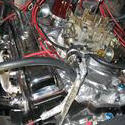
Looks like a bad seal all the way around the intake. Its wetted on the lower side of the intake runners and all around the coolant passages. Thats why its blowing blue and white smoke. It buring oil and coolant.
For some reason that intake doesnt seal at all. I learned the hard way to use a small bead of RTV around the coolant passages (square holes) - on both sides of gasket. Then at least a 1/4" bead (larger wont hurt but will ooze out) along the block ends china walls (instead of the flimsy end gasket seals) - oh and wait 10 min for the larger beads to "skin". Follow your torque sequence and specs for the intake.
All u can do is try again. But please post your results,
cardo0
For some reason that intake doesnt seal at all. I learned the hard way to use a small bead of RTV around the coolant passages (square holes) - on both sides of gasket. Then at least a 1/4" bead (larger wont hurt but will ooze out) along the block ends china walls (instead of the flimsy end gasket seals) - oh and wait 10 min for the larger beads to "skin". Follow your torque sequence and specs for the intake.
All u can do is try again. But please post your results,
cardo0
Last edited by cardo0; Aug 9, 2014 at 07:50 AM. Reason: add the skin time
Thread Starter
Safety Car
Joined: Jan 2008
Posts: 3,795
Likes: 435
From: Aarhus, Denmark
Looks like a bad seal all the way around the intake. Its wetted on the lower side of the intake runners and all around the coolant passages. Thats why its blowing blue and white smoke. It buring oil and coolant.
For some reason that intake doesnt seal at all. I learned the hard way to use a small bead of RTV around the coolant passages (square holes) - on both sides of gasket. Then at least a 1/4" bead (larger wont hurt but will ooze out) along the block ends china walls (instead of the flimsy end gasket seals) - oh and wait 10 min for the larger beads to "skin". Follow your torque sequence and specs for the intake.
All u can do is try again. But please post your results,
cardo0
For some reason that intake doesnt seal at all. I learned the hard way to use a small bead of RTV around the coolant passages (square holes) - on both sides of gasket. Then at least a 1/4" bead (larger wont hurt but will ooze out) along the block ends china walls (instead of the flimsy end gasket seals) - oh and wait 10 min for the larger beads to "skin". Follow your torque sequence and specs for the intake.
All u can do is try again. But please post your results,
cardo0
I will go to Peter tomorrow (the silicone must dry for 24 hours), he is waiting 10 min. after placing the silicon on the engine block, to make a skin.
We think, that "somebody" before Peter got the intake, grinded in the intake, but why, we don't know. I will post again tomorrow.


Thread Starter
Safety Car
Joined: Jan 2008
Posts: 3,795
Likes: 435
From: Aarhus, Denmark
Update !!
New (used) intake was installed, and silicone was used rear and front.
We started the engine up yesterday evening, and this time it looks "good" compared to last start up.
After idle to get the engine up in temperature, Peter re-torqued to intake bolts again, that also gave a bit.
So now I would say, with the "old" engine, it is "ok" (it is a 1971 std. bores engine)
Thanks for your help all !!
New (used) intake was installed, and silicone was used rear and front.
We started the engine up yesterday evening, and this time it looks "good" compared to last start up.
After idle to get the engine up in temperature, Peter re-torqued to intake bolts again, that also gave a bit.
So now I would say, with the "old" engine, it is "ok" (it is a 1971 std. bores engine)
Thanks for your help all !!

Pro


Joined: May 2011
Posts: 722
Likes: 58
From: Karlsruhe (Germany)
The reason is that you have to do this if you have machined your heads. Otherwise the intake would not fit right into the "V".
The sad thing is that this intake can not be used on another new engine. Disadvantage of a V-engine.
Thread Starter
Safety Car
Joined: Jan 2008
Posts: 3,795
Likes: 435
From: Aarhus, Denmark
You wanted an explaination why somebody would machine the intake.
The reason is that you have to do this if you have machined your heads. Otherwise the intake would not fit right into the "V".
The sad thing is that this intake can not be used on another new engine. Disadvantage of a V-engine.
The reason is that you have to do this if you have machined your heads. Otherwise the intake would not fit right into the "V".
The sad thing is that this intake can not be used on another new engine. Disadvantage of a V-engine.
But what doesn't kill you, makes you stronger
