




clip and bolt rust protection coating

Thread Starter
Advanced

Joined: Nov 2013
Posts: 63
Likes: 0
From: Twin Bridges Montana
 clip and bolt rust protection coating
In doing this frame off restoration I am at the point of replacing the brake and fuel lines. I have the new lines and I did buy a clip set to go with in case I wanted to use them.
In this process I did sandblast the old bolts and the old clips just to see what I had. The old clip set is actually in great shape and I did notice some part identification stamping into the original clips that the replacement clips do not have. So I thought I'd like to use the original clips since structurally the old ones are fine.
But, the clips, and the bolts, now that they have been blasted are going to be susceptible to rust. I don't want to paint them as they were not painted originally, (but the clips may have been zinc coated or something), but would like to protect them in some way from rusting. I've thought about something like SP400 but wondered if there is something else you all have found that works for this kind of part?
Thanks for thoughts and advice as always.
In this process I did sandblast the old bolts and the old clips just to see what I had. The old clip set is actually in great shape and I did notice some part identification stamping into the original clips that the replacement clips do not have. So I thought I'd like to use the original clips since structurally the old ones are fine.
But, the clips, and the bolts, now that they have been blasted are going to be susceptible to rust. I don't want to paint them as they were not painted originally, (but the clips may have been zinc coated or something), but would like to protect them in some way from rusting. I've thought about something like SP400 but wondered if there is something else you all have found that works for this kind of part?
Thanks for thoughts and advice as always.

Team Owner


Joined: Sep 2006
Posts: 31,283
Likes: 4,374
From: Westminster Maryland
Hi gb,
I guess to answer your question it would be good to know what you're doing with other parts on your car that were 'natural' or plated originally.
But to reply….buying the material needed, and the process of dipping your bolts in black oxide, and then a sealer, will give them an original appearance and good protection, and is pretty quick and easy.
For the clips anything short of plating will appear somewhat different than original so perhaps just wire brush them to a uniform appearance and spray with semi-flat clear.
Regards,
Alan
Here's an example of a black oxide coated line clip bolt.


I guess to answer your question it would be good to know what you're doing with other parts on your car that were 'natural' or plated originally.
But to reply….buying the material needed, and the process of dipping your bolts in black oxide, and then a sealer, will give them an original appearance and good protection, and is pretty quick and easy.
For the clips anything short of plating will appear somewhat different than original so perhaps just wire brush them to a uniform appearance and spray with semi-flat clear.
Regards,
Alan
Here's an example of a black oxide coated line clip bolt.

Team Owner

Joined: Jan 2006
Posts: 37,637
Likes: 3,118
From: Crossville TN
Are you wanting to have the car judged by some official body? If so, send the bolts and clips off to a plater (they will fit in a small padded mailer) and get them done as needed.
If you aren't having the car judged, why not just paint them with an appropriate color of metallic paint? No one will see them but you.
If you aren't having the car judged, why not just paint them with an appropriate color of metallic paint? No one will see them but you.
Thread Starter
Advanced
Joined: Nov 2013
Posts: 63
Likes: 0
From: Twin Bridges Montana
Hi gb,
I guess to answer your question it would be good to know what you're doing with other parts on your car that were 'natural' or plated originally.
But to reply….buying the material needed, and the process of dipping your bolts in black oxide, and then a sealer, will give them an original appearance and good protection, and is pretty quick and easy.
For the clips anything short of plating will appear somewhat different than original so perhaps just wire brush them to a uniform appearance and spray with semi-flat clear.
Regards,
Alan
I guess to answer your question it would be good to know what you're doing with other parts on your car that were 'natural' or plated originally.
But to reply….buying the material needed, and the process of dipping your bolts in black oxide, and then a sealer, will give them an original appearance and good protection, and is pretty quick and easy.
For the clips anything short of plating will appear somewhat different than original so perhaps just wire brush them to a uniform appearance and spray with semi-flat clear.
Regards,
Alan
I hadn't really had to approach the plating aspect yet, as most of the parts I was dealing with there I am replacing. But this is something I am going to have to figure out as there are certainly more of these parts to deal with, especially in the clips and brackets area.
I looked at Caswell's black oxide kit, which I'll probably go with for the bolts, but am not sure on doing something like their copy cad&zinc plating kit. I'm not sure how much of the zinc coating and cad parts there are here versus other coatings. I was things most are zinc or cad but I don't know that for sure. If parts like the brake backing plates which I was going to get new but I may rethink some of that if these kits work well.
Team Owner
Joined: Sep 2006
Posts: 31,283
Likes: 4,374
From: Westminster Maryland
Hi gb,
There are really 3 different finishes needed if you're going to try to duplicate the original finishes in the engine compartment and on the chassis and running gear.
The black oxide is suitable for many fasteners and is relatively inexpensive and easy to do.
Next is zinc and manganese phosphate which while fairly inexpensive is a bit more involved to do since the bath needs to be in a glass or ss container and heated to about 200 degrees.
The zinc and copy cad is much more expensive to set up, and quite complicated to do well.
Casswell is a good source for the supplies and equipment.
It really depends what your goal is and how much time, effort, and $$ you want to put into this part of restoration.
Regards,
Alan
Phosphate
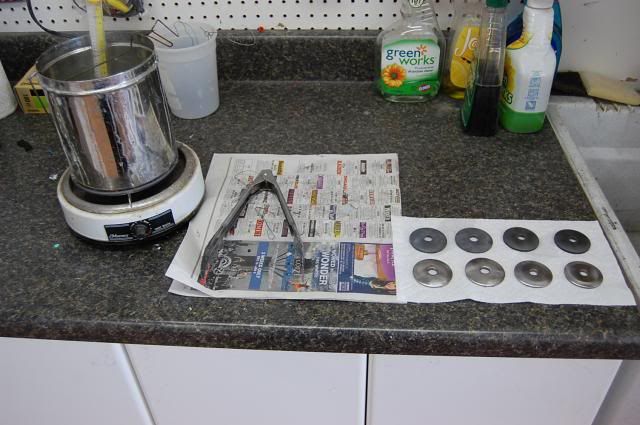
Zinc
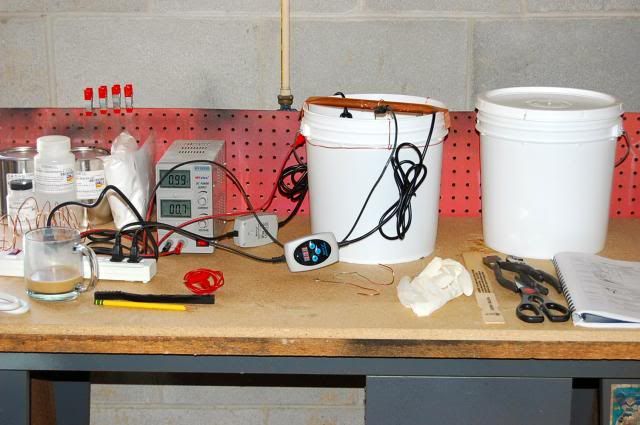
There are really 3 different finishes needed if you're going to try to duplicate the original finishes in the engine compartment and on the chassis and running gear.
The black oxide is suitable for many fasteners and is relatively inexpensive and easy to do.
Next is zinc and manganese phosphate which while fairly inexpensive is a bit more involved to do since the bath needs to be in a glass or ss container and heated to about 200 degrees.
The zinc and copy cad is much more expensive to set up, and quite complicated to do well.
Casswell is a good source for the supplies and equipment.
It really depends what your goal is and how much time, effort, and $$ you want to put into this part of restoration.
Regards,
Alan
Phosphate
Zinc
Thread Starter
Advanced
Joined: Nov 2013
Posts: 63
Likes: 0
From: Twin Bridges Montana
Hi gb,
There are really 3 different finishes needed if you're going to try to duplicate the original finishes in the engine compartment and on the chassis and running gear.
The black oxide is suitable for many fasteners and is relatively inexpensive and easy to do.
Next is zinc and manganese phosphate which while fairly inexpensive is a bit more involved to do since the bath needs to be in a glass or ss container and heated to about 200 degrees.
The zinc and copy cad is much more expensive to set up, and quite complicated to do well.
Casswell is a good source for the supplies and equipment.
It really depends what your goal is and how much time, effort, and $$ you want to put into this part of restoration.
Regards,
Alan
There are really 3 different finishes needed if you're going to try to duplicate the original finishes in the engine compartment and on the chassis and running gear.
The black oxide is suitable for many fasteners and is relatively inexpensive and easy to do.
Next is zinc and manganese phosphate which while fairly inexpensive is a bit more involved to do since the bath needs to be in a glass or ss container and heated to about 200 degrees.
The zinc and copy cad is much more expensive to set up, and quite complicated to do well.
Casswell is a good source for the supplies and equipment.
It really depends what your goal is and how much time, effort, and $$ you want to put into this part of restoration.
Regards,
Alan
I think I will go ahead in these, I did some further searching on your various threads here on this once I knew the processes and there are actually more parts than I was thinking about here, besides chassis. All of the other parts I have like latches, hinges, inner-door working, etc, are either very dirty, corroded, or the finish is marred to some degree, and once one gets something like the frame all shined up it's really hard to put a crappy looking part back on it.
So I see from the pics it appears you have the cad&zinc plating kit I was looking at from Caswell, and I found the zinc&manganese phosphate kit from Palmetto.
So, yet another side-trip in the restoration. Kind of the fun part though, learning something new along the way.

Melting Slicks


Joined: Feb 2004
Posts: 2,111
Likes: 32
From: Damascus MD
Thanks again Alan.
I think I will go ahead in these, I did some further searching on your various threads here on this once I knew the processes and there are actually more parts than I was thinking about here, besides chassis. All of the other parts I have like latches, hinges, inner-door working, etc, are either very dirty, corroded, or the finish is marred to some degree, and once one gets something like the frame all shined up it's really hard to put a crappy looking part back on it.
So I see from the pics it appears you have the cad&zinc plating kit I was looking at from Caswell, and I found the zinc&manganese phosphate kit from Palmetto.
So, yet another side-trip in the restoration. Kind of the fun part though, learning something new along the way.
I think I will go ahead in these, I did some further searching on your various threads here on this once I knew the processes and there are actually more parts than I was thinking about here, besides chassis. All of the other parts I have like latches, hinges, inner-door working, etc, are either very dirty, corroded, or the finish is marred to some degree, and once one gets something like the frame all shined up it's really hard to put a crappy looking part back on it.
So I see from the pics it appears you have the cad&zinc plating kit I was looking at from Caswell, and I found the zinc&manganese phosphate kit from Palmetto.
So, yet another side-trip in the restoration. Kind of the fun part though, learning something new along the way.
I have used it on my differential and all bolts and clips that have been either zinc or manganese phosphated. I prefer to apply the RPM on the bolts immediately after they come out of the phosphate solution while they are hot.
Frankly I coat almost anything that might rust with RPM. Pretty sure one of the forum vendors will have RPM in stock.
Bill

Thread Starter
Advanced
Joined: Nov 2013
Posts: 63
Likes: 0
From: Twin Bridges Montana
After plating you may want to look at using RPM (Rust Prevention Magic) It is a wax like substance that you melt on to the part(s). It protects bare castings, metal, and plating when applied correctly and does not need re-coating as frequently as some other stuff. If done well it leaves a very natural appearance unlike cosmoline.
I have used it on my differential and all bolts and clips that have been either zinc or manganese phosphated. I prefer to apply the RPM on the bolts immediately after they come out of the phosphate solution while they are hot.
Frankly I coat almost anything that might rust with RPM. Pretty sure one of the forum vendors will have RPM in stock.
Bill
I have used it on my differential and all bolts and clips that have been either zinc or manganese phosphated. I prefer to apply the RPM on the bolts immediately after they come out of the phosphate solution while they are hot.
Frankly I coat almost anything that might rust with RPM. Pretty sure one of the forum vendors will have RPM in stock.
Bill
Corvette Stories
The Best of Corvette for Corvette Enthusiasts

Top 10 Most Expensive Corvettes Ever Sold on Bring A Trailer
Brett Foote
10 Things Every Corvette Owner Needs (2026 Edition)
Michael S. Palmer
8 Most "Only Corvette Owners Understand" Quirks and Problems
Pouria Savadkouei
10 Reasons the C6 Z06 is Still A Performance Benchmark After 20 Years
Joe Kucinski
How Much Horsepower Every Corvette Engine "LOST" in 1972
Joe Kucinski
Top 10 DOs and DON'Ts for Protecting Your Convertible Top!
Michael S. Palmer
Top 10 Most Explosive Corvettes Ever Made: Power-to-Weight Ratio Ranked!
Joe Kucinski
150 hp to 1,250 hp: Every Corvette Generation Compared by the Specs That Matter
Joe Kucinski
8 Coolest Corvette Pace Cars (and Replicas) of All Time
Verdad Gallardo
Thread Starter
Advanced
Joined: Nov 2013
Posts: 63
Likes: 0
From: Twin Bridges Montana
Are you wanting to have the car judged by some official body? If so, send the bolts and clips off to a plater (they will fit in a small padded mailer) and get them done as needed.
If you aren't having the car judged, why not just paint them with an appropriate color of metallic paint? No one will see them but you.
If you aren't having the car judged, why not just paint them with an appropriate color of metallic paint? No one will see them but you.
Thanks.
Thread Starter
Advanced
Joined: Nov 2013
Posts: 63
Likes: 0
From: Twin Bridges Montana
[QUOTE=Alan 71;1588484528]Hi gb,
There are really 3 different finishes needed if you're going to try to duplicate the original finishes in the engine compartment and on the chassis and running gear.
The black oxide is suitable for many fasteners and is relatively inexpensive and easy to do.
Next is zinc and manganese phosphate which while fairly inexpensive is a bit more involved to do since the bath needs to be in a glass or ss container and heated to about 200 degrees.
The zinc and copy cad is much more expensive to set up, and quite complicated to do well.
Casswell is a good source for the supplies and equipment.
It really depends what your goal is and how much time, effort, and $$ you want to put into this part of restoration.
Regards,
Alan
Alan,
Thanks again for the great info here, it solved the issue. I did go full-scale into this, got the copy cad/zinc kit, the black oxide and the phosphate/manganese. So far have used the black oxide for bolts and the copy cad for these gas/brake line clips and while it took a couple tries to get that one working properly the end result was perfect.
I have attached a few pics here of my copy cad system (which I will be expanding on the next go round to deal with some larger parts), a couple clip bolts treated with the black oxide, one of the first clips (which is a bit rough due to not polishing is a little after sandblasting) and then a shot of the new gas/brake lines attached to the frame using the refinished parts.
There are really 3 different finishes needed if you're going to try to duplicate the original finishes in the engine compartment and on the chassis and running gear.
The black oxide is suitable for many fasteners and is relatively inexpensive and easy to do.
Next is zinc and manganese phosphate which while fairly inexpensive is a bit more involved to do since the bath needs to be in a glass or ss container and heated to about 200 degrees.
The zinc and copy cad is much more expensive to set up, and quite complicated to do well.
Casswell is a good source for the supplies and equipment.
It really depends what your goal is and how much time, effort, and $$ you want to put into this part of restoration.
Regards,
Alan
Alan,
Thanks again for the great info here, it solved the issue. I did go full-scale into this, got the copy cad/zinc kit, the black oxide and the phosphate/manganese. So far have used the black oxide for bolts and the copy cad for these gas/brake line clips and while it took a couple tries to get that one working properly the end result was perfect.
I have attached a few pics here of my copy cad system (which I will be expanding on the next go round to deal with some larger parts), a couple clip bolts treated with the black oxide, one of the first clips (which is a bit rough due to not polishing is a little after sandblasting) and then a shot of the new gas/brake lines attached to the frame using the refinished parts.
Team Owner
Joined: Sep 2006
Posts: 31,283
Likes: 4,374
From: Westminster Maryland
Hi gb,
I'm glad you're having some good results.
I happen to have all 3 finishes going on right now and am learning that besides some skill/experience, it's a bit of an art to get the results you want.
I've also learned that having the part extremely well prepared and clean, along with being careful to not polute the baths, is very, very important.
Good Luck as you continue!
Regards,
Alan
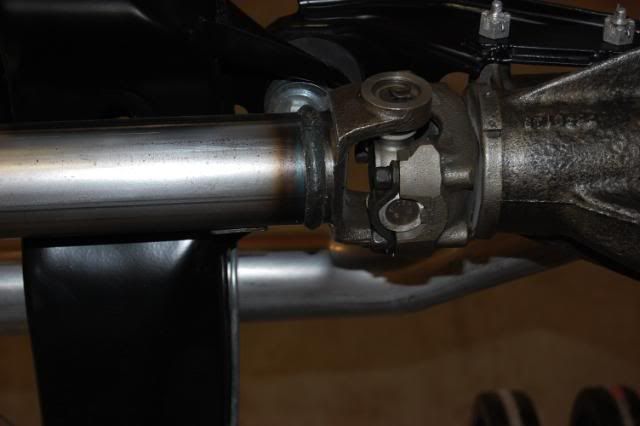
I'm also playing around with the appearance of the tubes on the drive shaft and sb half shafts, and especially working on duplicating the heat zone that the originals exhibited.
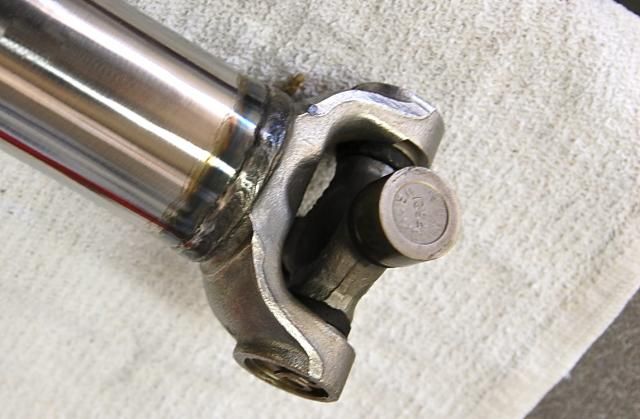
I'm glad you're having some good results.
I happen to have all 3 finishes going on right now and am learning that besides some skill/experience, it's a bit of an art to get the results you want.
I've also learned that having the part extremely well prepared and clean, along with being careful to not polute the baths, is very, very important.
Good Luck as you continue!
Regards,
Alan
I'm also playing around with the appearance of the tubes on the drive shaft and sb half shafts, and especially working on duplicating the heat zone that the originals exhibited.
Thread Starter
Advanced
Joined: Nov 2013
Posts: 63
Likes: 0
From: Twin Bridges Montana
Hi gb,
I'm glad you're having some good results.
I happen to have all 3 finishes going on right now and am learning that besides some skill/experience, it's a bit of an art to get the results you want.
I've also learned that having the part extremely well prepared and clean, along with being careful to not polute the baths, is very, very important.
Good Luck as you continue!
Regards,
Alan
I'm also playing around with the appearance of the tubes on the drive shaft and sb half shafts, and especially working on duplicating the heat zone that the originals exhibited.
I'm glad you're having some good results.
I happen to have all 3 finishes going on right now and am learning that besides some skill/experience, it's a bit of an art to get the results you want.
I've also learned that having the part extremely well prepared and clean, along with being careful to not polute the baths, is very, very important.
Good Luck as you continue!
Regards,
Alan
I'm also playing around with the appearance of the tubes on the drive shaft and sb half shafts, and especially working on duplicating the heat zone that the originals exhibited.
Those shafts look impressive, now, did you actually heat the shafts to get the bluing, or did you use something like the gun bluing chemicals or those from Steel-FX? Also, did you polish those shaft out first?
This stuff is just too much fun... making me wonder if I'll ever get the car put back together in this lifetime though. https://www.corvetteforum.com/forums...milies/lol.gif
Team Owner
Joined: Sep 2006
Posts: 31,283
Likes: 4,374
From: Westminster Maryland
Hi gb,
The tubes are an interesting challenge.
Once I get the method a little more perfected I'll discuss what I do. I 'think' Quanta's process involves removing material from the tube with a lathe. I'm using hand tools. I'm amazed how much like chrome the tube can be made to look.
Black oxide is one of the things I'm using to try to get the dark band. It's odd to me because I don't know about these kind of things, but the heated area must actually have been changed molecularly because the oxide reacts very differently close to the u-joint carrier as opposed to 3/4" away.
It really is big fun trying to figure out how to restore things at home with limited tools and equipment.
Regards,
Alan
The tubes are an interesting challenge.
Once I get the method a little more perfected I'll discuss what I do. I 'think' Quanta's process involves removing material from the tube with a lathe. I'm using hand tools. I'm amazed how much like chrome the tube can be made to look.
Black oxide is one of the things I'm using to try to get the dark band. It's odd to me because I don't know about these kind of things, but the heated area must actually have been changed molecularly because the oxide reacts very differently close to the u-joint carrier as opposed to 3/4" away.
It really is big fun trying to figure out how to restore things at home with limited tools and equipment.
Regards,
Alan
Last edited by Alan 71; Jan 23, 2015 at 05:43 PM.
Thread Starter
Advanced
Joined: Nov 2013
Posts: 63
Likes: 0
From: Twin Bridges Montana
Hi gb,
The tubes are an interesting challenge.
Once I get the method a little more perfected I'll discuss what I do. I 'think' Quanta's process involves removing material from the tube with a lathe. I'm using hand tools. I'm amazed how much like chrome the tube can be made to look.
Black oxide is one of the things I'm using to try to get the dark band. It's odd to me because I don't know about these kind of things, but the heated area must actually have been changed molecularly because the oxide reacts very differently close to the u-joint carrier as opposed to 3/4" away.
It really is big fun trying to figure out how to restore things at home with limited tools and equipment.
Regards,
Alan
The tubes are an interesting challenge.
Once I get the method a little more perfected I'll discuss what I do. I 'think' Quanta's process involves removing material from the tube with a lathe. I'm using hand tools. I'm amazed how much like chrome the tube can be made to look.
Black oxide is one of the things I'm using to try to get the dark band. It's odd to me because I don't know about these kind of things, but the heated area must actually have been changed molecularly because the oxide reacts very differently close to the u-joint carrier as opposed to 3/4" away.
It really is big fun trying to figure out how to restore things at home with limited tools and equipment.
Regards,
Alan
Team Owner
Joined: Sep 2006
Posts: 31,283
Likes: 4,374
From: Westminster Maryland
Hi gb,
That's what I suspected but wasn't quite sure what I was seeing.
Can that area be reheated to make the heat zone again?
How high does the temp need to be? Does the tube need to be 'red hot' again?
If so what are the strength implications?
Always more questions than answers!! The story of my life!
Regards,
Alan
That's what I suspected but wasn't quite sure what I was seeing.
Can that area be reheated to make the heat zone again?
How high does the temp need to be? Does the tube need to be 'red hot' again?
If so what are the strength implications?
Always more questions than answers!! The story of my life!
Regards,
Alan
Thread Starter
Advanced
Joined: Nov 2013
Posts: 63
Likes: 0
From: Twin Bridges Montana
Hi gb,
That's what I suspected but wasn't quite sure what I was seeing.
Can that area be reheated to make the heat zone again?
How high does the temp need to be? Does the tube need to be 'red hot' again?
If so what are the strength implications?
Always more questions than answers!! The story of my life!
Regards,
Alan
That's what I suspected but wasn't quite sure what I was seeing.
Can that area be reheated to make the heat zone again?
How high does the temp need to be? Does the tube need to be 'red hot' again?
If so what are the strength implications?
Always more questions than answers!! The story of my life!
Regards,
Alan
One can never go all the way backwards with steel, without re-smelting it. One can re-heat, and in fact for most steel like this the temp is yellow hot to make it flow. One would have to look at the critical temperature charts for the type of metal to know exactly what temp that is. The strength implications are that the harder metal becomes, the brittler it becomes, so getting it too hot too much will weaken it for flexing, which in a drive shaft like this would not be a good thing.
And mysteries are good things, life would be really boring if there was nothing new to learn.
BTW, I'm Ed, Greybull is a name of one of my favorite areas, happened to be on my mind when I registered... I never know how to select a name for these forum/blog things.
Team Owner
Joined: Sep 2006
Posts: 31,283
Likes: 4,374
From: Westminster Maryland
Hi Ed,
Thanks for the very interesting information. I just don't know ANYTHING about what I'm doing.
In appearance the heat zone seems to disappear when I surface the tube.
It comes back to some degree when I 'stain' the steel with the black oxide.
On the second picture… how was that look obtained in your opinion.
I 'don't' think that's a new shaft.
Thanks,
Alan
Heat zone no longer visible.
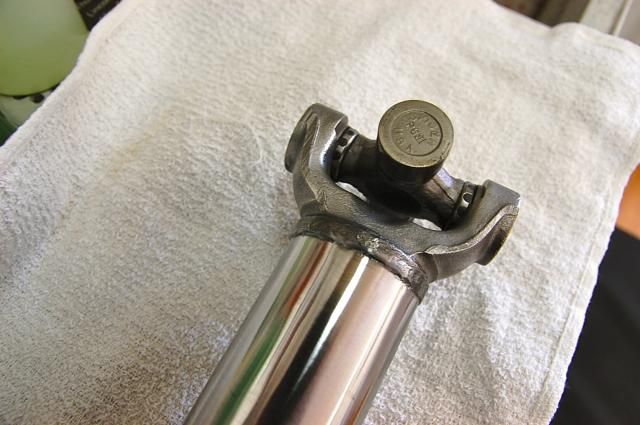
Striving for this (I think).
Thanks for the very interesting information. I just don't know ANYTHING about what I'm doing.
In appearance the heat zone seems to disappear when I surface the tube.
It comes back to some degree when I 'stain' the steel with the black oxide.
On the second picture… how was that look obtained in your opinion.
I 'don't' think that's a new shaft.
Thanks,
Alan
Heat zone no longer visible.
Striving for this (I think).

Advanced
Joined: Feb 2014
Posts: 97
Likes: 16
From: Green Bay Wi.
Hi Ed,
Thanks for the very interesting information. I just don't know ANYTHING about what I'm doing.
In appearance the heat zone seems to disappear when I surface the tube.
It comes back to some degree when I 'stain' the steel with the black oxide.
On the second picture… how was that look obtained in your opinion.
I 'don't' think that's a new shaft.
Thanks,
Alan
Heat zone no longer visible.
Striving for this (I think).
Thanks for the very interesting information. I just don't know ANYTHING about what I'm doing.
In appearance the heat zone seems to disappear when I surface the tube.
It comes back to some degree when I 'stain' the steel with the black oxide.
On the second picture… how was that look obtained in your opinion.
I 'don't' think that's a new shaft.
Thanks,
Alan
Heat zone no longer visible.
Striving for this (I think).
This has been some good and interesting reading, One question, What book would i look for when researching the different coatings or the finish on all the different c-3 parts?
Thanks,John
Team Owner
Joined: Sep 2006
Posts: 31,283
Likes: 4,374
From: Westminster Maryland
Hi John,
There really is no single source for the finish specs for both paint and plating on the chassis and running gear.
I think probably the NCRS has compiled the most information.
Certainly their Technical Information Manual & Judging Guide for your year car would be a good place to begin.
Also keeping an eye on the topics on the NCRS Discussion Board and searching old posts is a helpful source too.
There is always some conflicting information but the useful info is there to be gleaned too.
There were really just a couple of paint finishes on the chassis, and just 4 plated finishes on the fasteners, but figuring out what was what is a bit of work.
There also were parts and fasteners left natural which need to be dealt with too.
It can be fun or drive you crazy… it depends!
Regards,
Alan
There really is no single source for the finish specs for both paint and plating on the chassis and running gear.
I think probably the NCRS has compiled the most information.
Certainly their Technical Information Manual & Judging Guide for your year car would be a good place to begin.
Also keeping an eye on the topics on the NCRS Discussion Board and searching old posts is a helpful source too.
There is always some conflicting information but the useful info is there to be gleaned too.
There were really just a couple of paint finishes on the chassis, and just 4 plated finishes on the fasteners, but figuring out what was what is a bit of work.
There also were parts and fasteners left natural which need to be dealt with too.
It can be fun or drive you crazy… it depends!
Regards,
Alan