





Why a spreader bar?

Racer


Joined: Oct 2013
Posts: 362
Likes: 11
From: MARSHALLVILLE OHIO

Put Speed Direct in my 79, still need to put the A/C compressor back in to finish up. I had my buddy help me. The install did take some patience. We had to pull the compressor off, as we loosened things up we found the alignment shims started to fall out. We lifted the front end which put pressure on the shims. That allowed us to install the brackets and tighten them. We let it back down on the ramps, installed the brace. I just finish tightening things up. The one thing I'm not sure of is the tightness when I turned the bars out, I think I did get almost a half turn and I heard the car creak a bit.
It is tricky to get the hands in to install, can't wait till the roads get the salt washed off to see what difference it makes. Hope this makes sense.
It is tricky to get the hands in to install, can't wait till the roads get the salt washed off to see what difference it makes. Hope this makes sense.

Safety Car

Joined: Jan 2009
Posts: 4,000
Likes: 299
From: New York
I must own a special c-3 . It spent months and months on 2 post lift 5 feet off the ground. At least 20 corvette guys I know ALL when seeing it on the lift like that said "good luck opening those doors ha ha" Funny my door gaps are as always perfect.
And the spreader bars are for cornering , where the frame will flex but not downward , the flex is more a twist or a movement inwards toward the opposite side . That bar just minimizes that action making the car handle better keeping the tire planted in a hard turn. IT DOES not offer frame support from sagging as the kind described by several members in this topic.
I hate to be contrary but if your coup sags or needs doors opened before it is lifted you have issues Not Built into the car from GM. But a myth spread by may owners of a C-3 who had issues they where unaware of which can range from body mounts to the bird cage being rotted .
And the spreader bars are for cornering , where the frame will flex but not downward , the flex is more a twist or a movement inwards toward the opposite side . That bar just minimizes that action making the car handle better keeping the tire planted in a hard turn. IT DOES not offer frame support from sagging as the kind described by several members in this topic.
I hate to be contrary but if your coup sags or needs doors opened before it is lifted you have issues Not Built into the car from GM. But a myth spread by may owners of a C-3 who had issues they where unaware of which can range from body mounts to the bird cage being rotted .

Le Mans Master


Joined: Oct 2007
Posts: 7,461
Likes: 980
From: RI, Now Franklin/Nashville TN
I agree....The spreader bar does not prevent frame sag. All C3 frames will sag to some extend when put on a lift with the wheels hanging which is not permanent and will not effect the stance once back on the ground. Jacking or lifting my car does NOT prevent the doors/hood from opening/closing but I can detect a difference in the operation of such when the car is jacked/lifted. The reason there are very specific recommendations for C3 additional bracing is that the frame flexes more than what is considered ideal for this type of sports car...The C4/5/6/7 Vettes have MUCH stiffer frames than the C3 since GM knew that this area was a weakness of the C3.
Last edited by jb78L-82; Jan 25, 2016 at 09:30 AM.
Safety Car
Joined: Jan 2009
Posts: 4,000
Likes: 299
From: New York
I agree....The spreader bar does not prevent frame sag. All C3 frames will sag to some extend when put on a lift with the wheels hanging which is not permanent and will not effect the stance once back on the ground. Jacking or lifting my car does NOT prevent the doors/hood from opening/closing but I can detect a difference in the operation of such when the car is jacked/lifted. The reason there are very specific recommendations for C3 additional bracing is that the frame flexes more than what is considered ideal for this type of sports car...The C4/5/6/7 Vettes have MUCH stiffer frames than the C3 since GM knew that this area was a weakness of the C3.
Someone show me on this pic where there frame is allowing the front end to sag when you are on a lift , causing your doors to not open properly . . . . . Please just point it out
Le Mans Master


Joined: Oct 2007
Posts: 9,702
Likes: 3,472
From: Akron Ohio
2025 Corvette of the Year Finalist - Modified
2024 C5 of the Year Winner - Modified
2023 C5 of the Year Finalist - Modified
2022 C5 of the Year Finalist - Modified
St. Jude Donor '09-'10-'11
I must own a special c-3 . It spent months and months on 2 post lift 5 feet off the ground. At least 20 corvette guys I know ALL when seeing it on the lift like that said "good luck opening those doors ha ha" Funny my door gaps are as always perfect.
I hate to be contrary but if your coup sags or needs doors opened before it is lifted you have issues Not Built into the car from GM. But a myth spread by may owners of a C-3 who had issues they where unaware of which can range from body mounts to the bird cage being rotted .
I hate to be contrary but if your coup sags or needs doors opened before it is lifted you have issues Not Built into the car from GM. But a myth spread by may owners of a C-3 who had issues they where unaware of which can range from body mounts to the bird cage being rotted .

I bought my '71 coupe back in September last year. The previous owner let it sit on jackstands for 31 years. When I put it on the ground I was expecting to see the door gaps change a lot, but they stayed straight. When I jack it up or have it on the ground I do not see any sag or change in gaps. I can open both doors and take the tops out with it on jackstands too. The frame has some light surface rust in areas, but otherwise still very solid.

Race Director


Joined: Apr 2000
Posts: 17,676
Likes: 201
From: Who says "Nothing is impossible" ? I've been doing nothing for years.
If I have mine on 4 jacks I use a scissor jack under the front crossmember to support this weight on front.

Le Mans Master
Joined: Oct 2007
Posts: 7,461
Likes: 980
From: RI, Now Franklin/Nashville TN
For those that think there no chassis flex issues with a C3 frame, read this:\
http://www.c3vr.com/vrforums/c3-body...s-flex/141596/
And this link which details all the weak areas of the C3 frame:
http://www.duntovmotors.com/Corvette...wer%20Book.pdf
http://www.c3vr.com/vrforums/c3-body...s-flex/141596/
And this link which details all the weak areas of the C3 frame:
http://www.duntovmotors.com/Corvette...wer%20Book.pdf
Last edited by jb78L-82; Jan 25, 2016 at 11:51 AM.

Safety Car

Joined: Oct 2008
Posts: 4,022
Likes: 30
From: Los Angeles CA
For those that think there no chassis flex issues with a C3 frame, read this:\
http://www.c3vr.com/vrforums/c3-body...s-flex/141596/
And this link which details all the weak areas of the C3 frame:
http://www.duntovmotors.com/Corvette...wer%20Book.pdf
http://www.c3vr.com/vrforums/c3-body...s-flex/141596/
And this link which details all the weak areas of the C3 frame:
http://www.duntovmotors.com/Corvette...wer%20Book.pdf
my 89 c4 did that too..
Corvette Stories
The Best of Corvette for Corvette Enthusiasts

Every 2027 Corvette Engine Explained
Joe Kucinski
Designer Imagines A Corvette That Looks More Like a Corvette Than the Corvette
Verdad Gallardo
10 Ugly Corvettes That We Still Kinda Love
Joe Kucinski
Top 10 Most Expensive Corvettes Ever Sold on Bring A Trailer
Brett Foote
10 Things Every Corvette Owner Needs (2026 Edition)
Michael S. Palmer
8 Most "Only Corvette Owners Understand" Quirks and Problems
Pouria Savadkouei
10 Reasons the C6 Z06 is Still A Performance Benchmark After 20 Years
Joe Kucinski
How Much Horsepower Every Corvette Engine "LOST" in 1972
Joe Kucinski
Top 10 DOs and DON'Ts for Protecting Your Convertible Top!
Michael S. Palmer
Le Mans Master
Joined: Oct 2007
Posts: 9,702
Likes: 3,472
From: Akron Ohio
2025 Corvette of the Year Finalist - Modified
2024 C5 of the Year Winner - Modified
2023 C5 of the Year Finalist - Modified
2022 C5 of the Year Finalist - Modified
St. Jude Donor '09-'10-'11
For those that think there no chassis flex issues with a C3 frame, read this:\
http://www.c3vr.com/vrforums/c3-body...s-flex/141596/
http://www.c3vr.com/vrforums/c3-body...s-flex/141596/
I know there is some felx, but not as bad as some people are saying. Especially when peopl say it sat on a lift or jackstands over the weekend and got all out of shape. Mine sat for 31 years and isnt that bad. I have seen big block cars that completely lose the door gap at the front bottom when jacked, but for the most part small block coupes should not be that bad.
And this link which details all the weak areas of the C3 frame:
http://www.duntovmotors.com/Corvette...wer%20Book.pdf
http://www.duntovmotors.com/Corvette...wer%20Book.pdf
Le Mans Master
Joined: Oct 2007
Posts: 7,461
Likes: 980
From: RI, Now Franklin/Nashville TN
I know there is some felx, but not as bad as some people are saying. Especially when peopl say it sat on a lift or jackstands over the weekend and got all out of shape. Mine sat for 31 years and isnt that bad. I have seen big block cars that completely lose the door gap at the front bottom when jacked, but for the most part small block coupes should not be that bad.
C3 frame is a noodle torsionally, but that doesnt have to do with the flex when lifting. Lots of good info in that book though.
C3 frame is a noodle torsionally, but that doesnt have to do with the flex when lifting. Lots of good info in that book though.
Last edited by jb78L-82; Jan 25, 2016 at 12:20 PM.
Safety Car
Joined: Jan 2009
Posts: 4,000
Likes: 299
From: New York
[QUOTE=jb78L-82;1591398040]For those that think there no chassis flex issues with a C3 frame, read this:\
http://www.c3vr.com/vrforums/c3-body...s-flex/141596/
EVERY ONE READ that link to the c3vr forum LMAO
Every one in that topic has a C-3 with issues .. Big issues ..
Hey Joe .. Ya
I lifted Vittos car
(Joe) YA SO
Well the dome light came on and the doors don't open now
(Joe) ya no big deal its a C-3 corvette
If that is how you see it more power to you..
But If my C-3 did that I would get it checked and fixed ASAP ..
http://www.c3vr.com/vrforums/c3-body...s-flex/141596/
EVERY ONE READ that link to the c3vr forum LMAO
Every one in that topic has a C-3 with issues .. Big issues ..
Hey Joe .. Ya
I lifted Vittos car
(Joe) YA SO
Well the dome light came on and the doors don't open now
(Joe) ya no big deal its a C-3 corvette
If that is how you see it more power to you..
But If my C-3 did that I would get it checked and fixed ASAP ..
Melting Slicks


Joined: Dec 1999
Posts: 2,116
Likes: 156
From: Mid West
Cruise-In III Veteran
I welded extra stiffeners along the frame rails years ago. I just place the jack just forward of the transmission x-member and lift her up. No flex, no door gap issues, nothing.
Later I welded in a 4 point roll bar in the back. Both mods did wonders for stiffening the chassis and reducing squeeks & rattles.
Later I welded in a 4 point roll bar in the back. Both mods did wonders for stiffening the chassis and reducing squeeks & rattles.


Race Director
Joined: Apr 2009
Posts: 19,294
Likes: 2,754
From: Charlotte NC
YES!!! Convertibles can do this. If you have any doubt....any people out there with a 1963 to 1975 raise up your car by the differential...put jack stand under the frame right in front of the rear tire. Begin letting the floor jack down a WATCH your door gap OPEN up. Depending on how 'bad' the frames steel integrity...you might find that you just about have a heart attack and begin jacking up the car again. Also consider many of these cars coming to me have a darn near fuel tank...equate that weight into the equation.
I have seen them sag so much that a GOOD cigar would fall out at the top of the door to the quarter if ti was slid in there.
ALSO...the same can occur at the front end also. If the front clip is raised under the cradle and jack stands are placed at your door peeing...ALL THAT WEIGHT of you front clip can pull down on the cowl...and problems can occur. I have seen the top section of top hood surround break away on 1968-1982's.
I have the tall safety stands that I put under the car so I can lift up and support the engine cradle and also the differential.
Hard to say YES..because I do not know where you have the frame being picked up and supported.
DUB
I have seen them sag so much that a GOOD cigar would fall out at the top of the door to the quarter if ti was slid in there.
ALSO...the same can occur at the front end also. If the front clip is raised under the cradle and jack stands are placed at your door peeing...ALL THAT WEIGHT of you front clip can pull down on the cowl...and problems can occur. I have seen the top section of top hood surround break away on 1968-1982's.
I have the tall safety stands that I put under the car so I can lift up and support the engine cradle and also the differential.
Hard to say YES..because I do not know where you have the frame being picked up and supported.
DUB
Race Director
Joined: Apr 2009
Posts: 19,294
Likes: 2,754
From: Charlotte NC
People can believe what they want to believe and if they read what I wrote....I was referring to CONVERTIBLES...and the rear sag.
Coupes really do not sap in the rear UNLESS there is MAJOR issues in the frame and the NUMBER 3 body mount areas due to bad rust.
SO...in PERFECT WORLD where NOTHING wears out, fatigues, rusts, etc....then this would not even be a subject of conversation because we would be just ( fill in your own thoughts).
AS for showing in the photo that was posted by diehard. Stop and think about where the jack stand is positioned IN FRONT of the rear wheel on the frame....and all the weight AFTER it. Logic would tell you where the problem is occurring. And how to reverse the forces that caused the problem....a downward pull is required with supports to put it back where it needs to be....or jacking it up while the frame is anchored in the problem area.
DUB
Coupes really do not sap in the rear UNLESS there is MAJOR issues in the frame and the NUMBER 3 body mount areas due to bad rust.
SO...in PERFECT WORLD where NOTHING wears out, fatigues, rusts, etc....then this would not even be a subject of conversation because we would be just ( fill in your own thoughts).
AS for showing in the photo that was posted by diehard. Stop and think about where the jack stand is positioned IN FRONT of the rear wheel on the frame....and all the weight AFTER it. Logic would tell you where the problem is occurring. And how to reverse the forces that caused the problem....a downward pull is required with supports to put it back where it needs to be....or jacking it up while the frame is anchored in the problem area.
DUB

Burning Brakes

Joined: Apr 2013
Posts: 1,194
Likes: 109
From: Las Vegas NV
Chassis flex is a thing. If you do enough searching around on the web you should be able to find photos of pick up trucks with their beds and cabs not aligned while the truck is flexing over a rock or something. Chassis flex is part of what makes a 4x4 truck capable of keeping the tires planted. Of course, suspension flex is much more important, but where suspension flex is lacking, chassis flex can help.

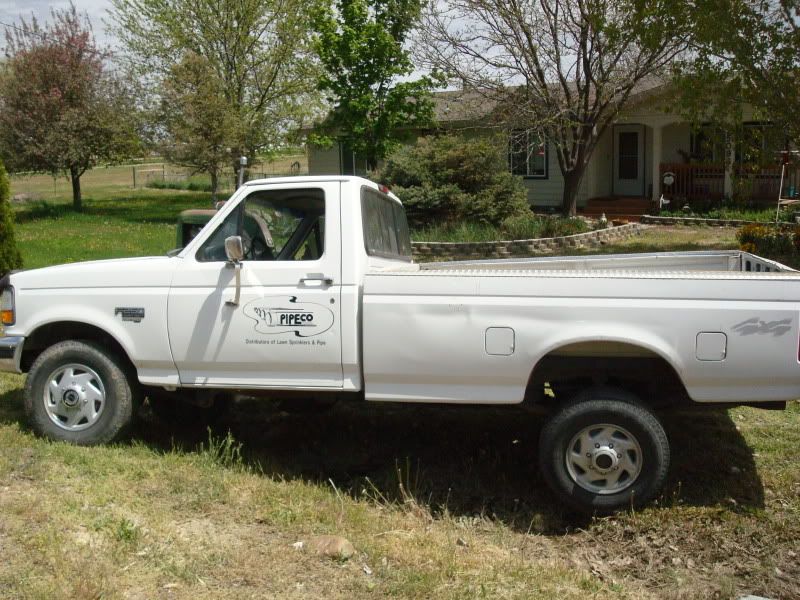


I'm inclined to believe that if the frames in those big trucks can flex, so can the frame on my C3.
It just so happens that the drivers side door of my C3 is stuck shut, too. So there's that.
I'm inclined to believe that if the frames in those big trucks can flex, so can the frame on my C3.
It just so happens that the drivers side door of my C3 is stuck shut, too. So there's that.

Drifting

Joined: Oct 2006
Posts: 1,875
Likes: 779
From: Persona Non Grata
2022 C3 of the Year Finalist - Unmodified
Not known as a 'Flexible Flyer' for nothing. It's very apparent with my '70 roadster when jacking.
Safety Car
Joined: Jan 2009
Posts: 4,000
Likes: 299
From: New York
Maybe I lift my car differently ? Here is how my car was lifted this photo was after 4 plus months on a lift , from December until April .. The lift arm was always placed below the fender vent at approx the front of the S bend in the frame.
Melting Slicks
Joined: Dec 1999
Posts: 2,116
Likes: 156
From: Mid West
Cruise-In III Veteran
"In this new frame [1963], torsional rigidity has been increased nearly 50 percent over the previous model [1962] as shown"
"In the course of the frame development, the point arose that if stiff was good, stiffer was better. Consequently, a frame was built with torsional stiffness considerably greater than the production design. Evaluation of a vehicle equipped with the stiffer frame proved the ride to be unacceptable. This approach was quickly abandoned."
"In the course of the frame development, the point arose that if stiff was good, stiffer was better. Consequently, a frame was built with torsional stiffness considerably greater than the production design. Evaluation of a vehicle equipped with the stiffer frame proved the ride to be unacceptable. This approach was quickly abandoned."
Last edited by Jason Staley; Jan 26, 2016 at 06:28 AM.