



L-88
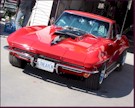
Le Mans Master


Joined: Dec 2000
Posts: 7,245
Likes: 4
 Re: L-88 (hubes)
Was rated at 430 not 435.
It's generally accepted that in racing trim (for which it was designed) it achieves 560hp. Racing trim on that engine? Add headers and pull off the trim rings and caps. :lol:
It's generally accepted that in racing trim (for which it was designed) it achieves 560hp. Racing trim on that engine? Add headers and pull off the trim rings and caps. :lol:

Melting Slicks


Joined: Apr 2000
Posts: 3,286
Likes: 8
From: San Jose California
Re: L-88 (hubes)
There are two recent Chassis dyno tests with factory spec L88's. Mine made 483 horsepower at the rear wheels; Jay's made 471, but his had a miss and surely has another 10-20 hp more when corrected.
Jay's L88 was also run on a bench dyno and made 539hp at the flywheel.
Jay's car is a factory built L88 with a freshly rebuilt motor, mine is an L88 clone with a new L88 crate motor. You can check my web site for more information and pictures.
Chuck
Jay's L88 was also run on a bench dyno and made 539hp at the flywheel.
Jay's car is a factory built L88 with a freshly rebuilt motor, mine is an L88 clone with a new L88 crate motor. You can check my web site for more information and pictures.
Chuck
Pro


Joined: Aug 2002
Posts: 503
Likes: 1
From: Georgia
Re: L-88 (hubes)
The L88 was always factory rated at 430HP. Recently some of the numbers books have published an error, rating it at 435 horsepower, which was the L71 & the L71/L89 ONLY. Even the newer GM Performance Parts Catalogue, as well as the Crane Cam catalogue to name a few have picked up this L88/435 error and publish it.
Back to your question: Chevy's intent was to put the L88's in the hands of racers and they downplayed the car's potential in several ways, so the average guy would go for the L71/435 engines, thinking at a glance that they were the top of the line. The 430 HP rating came far below the engine's peak power RPM, I think in the upper 4's if my memory serves me right. Again, this was Chevy's way of downplaying the car's potential. There have been many reports of L88's dynoing in the range of 560 HP when operated within their intended powerband with open headers.
A little more history: The L88 was factory installed in production Corvettes for 3 years, 67, 68, & 69. There were 20-67's, 80-68's, & 116-69's. The 67, 68, & early 69's were virtually identical engines. In mid 69 production, the engines were changed from the previous closed chamber design heads to open chamber heads with a corresponding change in piston dome design. There was also a change in the camshaft. The "second design" L88 was essentially a ZL1 with a cast iron block. The Corvette was the only car that GM factory installed L88's in and offered them to the public, as opposed to the ZL1 which was offered in Corvette (2 reportedly) and Camaro (69 reportedly) The second design L88 as well as the ZL1 had a rated compression ratio of 12:1 as opposed to the earlier closed chambered engine's 12.5:1 comp. ratio. All L88's prior to 69 had the M22 "rock crusher" transmission. Some time in later 69 there were a few equipped with Turbo 400's with the high shift point and 6 bolt torque converter which was also available on the L71 & L71/L89. I don't recall the number of Turbo 400 L88's. No L88 Corvette was ever equipped with a radio from the factory and the 67's weren't available with heaters either. In another effort to make them less sociable as street cars, GM also furnished them without fan shrouds, making them prone to overheating in traffic.
My L88 is one of the 116 made in 69. It's one of the earlier closed chamber cars which seem by far to be the most common. Incredibly, GM chose to choke them with 2" exhaust systems in both undercar and side exhaust cars by the time my car was made. I know the 67's had 2 1/2" systems and I'm not sure when the change was made, whether in 68 or 69. They're not brutally fast with stock exhaust systems by today's standards, (although a set of headers will wake one up), but they're still incredible vehicles.
Edit: Sorry if it looks like my post is a duplicate of some of the above comments. At the time I started typing it there were no replies, then when it posted there were 3 others already.
[Modified by Solidlifters, 3:32 AM 9/17/2002]
[Modified by Solidlifters, 10:23 PM 9/17/2002]
Back to your question: Chevy's intent was to put the L88's in the hands of racers and they downplayed the car's potential in several ways, so the average guy would go for the L71/435 engines, thinking at a glance that they were the top of the line. The 430 HP rating came far below the engine's peak power RPM, I think in the upper 4's if my memory serves me right. Again, this was Chevy's way of downplaying the car's potential. There have been many reports of L88's dynoing in the range of 560 HP when operated within their intended powerband with open headers.
A little more history: The L88 was factory installed in production Corvettes for 3 years, 67, 68, & 69. There were 20-67's, 80-68's, & 116-69's. The 67, 68, & early 69's were virtually identical engines. In mid 69 production, the engines were changed from the previous closed chamber design heads to open chamber heads with a corresponding change in piston dome design. There was also a change in the camshaft. The "second design" L88 was essentially a ZL1 with a cast iron block. The Corvette was the only car that GM factory installed L88's in and offered them to the public, as opposed to the ZL1 which was offered in Corvette (2 reportedly) and Camaro (69 reportedly) The second design L88 as well as the ZL1 had a rated compression ratio of 12:1 as opposed to the earlier closed chambered engine's 12.5:1 comp. ratio. All L88's prior to 69 had the M22 "rock crusher" transmission. Some time in later 69 there were a few equipped with Turbo 400's with the high shift point and 6 bolt torque converter which was also available on the L71 & L71/L89. I don't recall the number of Turbo 400 L88's. No L88 Corvette was ever equipped with a radio from the factory and the 67's weren't available with heaters either. In another effort to make them less sociable as street cars, GM also furnished them without fan shrouds, making them prone to overheating in traffic.
My L88 is one of the 116 made in 69. It's one of the earlier closed chamber cars which seem by far to be the most common. Incredibly, GM chose to choke them with 2" exhaust systems in both undercar and side exhaust cars by the time my car was made. I know the 67's had 2 1/2" systems and I'm not sure when the change was made, whether in 68 or 69. They're not brutally fast with stock exhaust systems by today's standards, (although a set of headers will wake one up), but they're still incredible vehicles.
Edit: Sorry if it looks like my post is a duplicate of some of the above comments. At the time I started typing it there were no replies, then when it posted there were 3 others already.
[Modified by Solidlifters, 3:32 AM 9/17/2002]
[Modified by Solidlifters, 10:23 PM 9/17/2002]
Melting Slicks
Joined: Apr 2000
Posts: 3,286
Likes: 8
From: San Jose California
Re: L-88 (Solidlifters)
Edit: Sorry if it looks like my post is a duplicate of some of the above comments. At the time I started typing it there were no replies, then when it posted there were 3 others already.
No problem, you dun great! :cheers:
Chuck

Senior Member since 1492


Joined: Aug 2000
Posts: 87,959
Likes: 156
From: Just because I'm paranoid doesn't mean people aren't out to get me...
St. Jude Donor '09
Re: L-88 (Solidlifters)
My L88 is one of the 116 made in 69.

Safety Car


Joined: Dec 1999
Posts: 3,609
Likes: 841
From: PA
Re: L-88
Edit: Sorry if it looks like my post is a duplicate of some of the above comments. At the time I started typing it there were no replies, then when it posted there were 3 others already.
I gather that your reference to "furnished without heater cores" in fact meant fan shrouds, which as you noted, made them difficult to drive in stop and go traffic. Interestingly enough, while the M-22 cars had aluminum radiators and lacked fan shrouds, the M-40 cars used a copper radiator with a fan shroud. The copper radiator was necessary because the aluminum units did not have provisions for the coolant lines for the automatic transmission. The only L-88/M-40 car that I am aware of that did not have a shroud was the Daytona yellow convertible that was used as a test car by Hot Rod, Car Life, and SS&DI (though it DID use a copper radiator).
With regard to your exhaust question, the change to 2" diameter exhaust for all engines was solely during the 1969 model year. 1968 still used the 2½" system for big block applications and 1970 saw the return of the 2½" system in big blocks and LT-1s... I always wondered why this change was made in 1969... If anyone has documentation as to why this occured, I'd sure like to hear about it!
Regards,
Corvette Stories
The Best of Corvette for Corvette Enthusiasts

5 Best & 5 Worst Corvette Daily Drivers
Joe Kucinski
The Headlights of Every Corvette Generation Explained
Joe Kucinski
5 Best & 5 Most Overrated Corvette Track Packages of All Time!
Joe Kucinski
Every 2027 Corvette Engine Explained
Joe Kucinski
Designer Imagines A Corvette That Looks More Like a Corvette Than the Corvette
Verdad Gallardo
10 Ugly Corvettes That We Still Kinda Love
Joe Kucinski
Top 10 Most Expensive Corvettes Ever Sold on Bring A Trailer
Brett Foote
10 Things Every Corvette Owner Needs (2026 Edition)
Michael S. Palmer
8 Most "Only Corvette Owners Understand" Quirks and Problems
Pouria Savadkouei
Safety Car
Joined: Dec 1999
Posts: 3,609
Likes: 841
From: PA
Re: L-88
Joe,
[Rodney Dangerfield] "I tell ya, I get no respect....":) [/Rodney Dangerfield]
Forgot about that one myself... Actually, they used a vacuum secondary 4054 Holley on the closed chamber head L-88s (at least the 1968-69s)... Basically all but a few pre-strike 1969 L-88s. I think the double pumper that came late in 1969 on the open chamber head engines was a 4296, but to be honest, I'm going from memory on that one... Someone needs to verify that.
Joe, wasn't there an issue with the initial delivery of ZL-1 Camaros... Came through with the vacuum secondary carburetor instead of the double pumper causing some "issues" with NHRA tech inspectors?
Regards,
[Rodney Dangerfield] "I tell ya, I get no respect....":) [/Rodney Dangerfield]
Forgot about that one myself... Actually, they used a vacuum secondary 4054 Holley on the closed chamber head L-88s (at least the 1968-69s)... Basically all but a few pre-strike 1969 L-88s. I think the double pumper that came late in 1969 on the open chamber head engines was a 4296, but to be honest, I'm going from memory on that one... Someone needs to verify that.
Joe, wasn't there an issue with the initial delivery of ZL-1 Camaros... Came through with the vacuum secondary carburetor instead of the double pumper causing some "issues" with NHRA tech inspectors?
Regards,
Pro
Joined: Aug 2002
Posts: 503
Likes: 1
From: Georgia
Re: L-88 (Rowdy Rat)
"I gather that your reference to "furnished without heater cores" in fact meant fan shrouds, which as you noted, made them difficult to drive in stop and go traffic."
Good eye Rowdy. That's exacty what I meant. It's amazing how many times my fingers don't say what my mind's spittin' out. This old age/pre Alzheimers thing is gettin' to be a drag. I edited my original post to show the correction.
As far as the vacuum secondary issue, I've always been of the opinion that all the pre open chamber L88's had the vacuum secondaries, although I have no experience with 68's and limited exposure to known correct 67's. One of my friends here did buy a late, open chambered, original paint, original engine 8800 mile L88 in the late 80's. We took this car to Bloomington and it was the first L88 ever awarded the "Survivor" status there. It had also previously been in Special Collection there. This car was a wealth of information, because almost all of the original components were intact except for the exhaust system and smog. (Kustom dealer installed sidepipe headers when car was new) My friend sold this car about 3 years ago and it went to Alabama and I've lost track of it now. It was Monaco Orange.
Good eye Rowdy. That's exacty what I meant. It's amazing how many times my fingers don't say what my mind's spittin' out. This old age/pre Alzheimers thing is gettin' to be a drag. I edited my original post to show the correction.
As far as the vacuum secondary issue, I've always been of the opinion that all the pre open chamber L88's had the vacuum secondaries, although I have no experience with 68's and limited exposure to known correct 67's. One of my friends here did buy a late, open chambered, original paint, original engine 8800 mile L88 in the late 80's. We took this car to Bloomington and it was the first L88 ever awarded the "Survivor" status there. It had also previously been in Special Collection there. This car was a wealth of information, because almost all of the original components were intact except for the exhaust system and smog. (Kustom dealer installed sidepipe headers when car was new) My friend sold this car about 3 years ago and it went to Alabama and I've lost track of it now. It was Monaco Orange.

Safety Car
Joined: Jan 2000
Posts: 4,143
Likes: 0
Re: L-88 (hubes)
It'd be very safe to say 500+ HP straight from the factory.....
There were only 20 L-88s made in 1967
......only 80 L-88s made in 1968
.....and yes only 116 made in 1969 ....which is just shy of 220 total for 3 years ! :eek:
Of course good luck finding one....and at a decent price since most retail for $100k plus !!! :lol:
*Might I note that 500+ hp was on high octane gas ? ...Sunoco 260 ! :D
There were only 20 L-88s made in 1967
......only 80 L-88s made in 1968
.....and yes only 116 made in 1969 ....which is just shy of 220 total for 3 years ! :eek:
Of course good luck finding one....and at a decent price since most retail for $100k plus !!! :lol:
*Might I note that 500+ hp was on high octane gas ? ...Sunoco 260 ! :D
Pro
Joined: Aug 2002
Posts: 503
Likes: 1
From: Georgia
Re: L-88 (verskel)
With 12 or 12.5:1 compression, depending on early or late engine, there's no question that high octane gas was a requirement. These cars were equipped with a sticker on the console specifying a minimum of 103 octane. I run straight race gas in mine now, because no more than it gets driven the cost isn't significant and it just seems to crank an run better that way, even more so than with the 50/50 race gas & super unleaded mix I previously ran.
Unfortunately, with the choking factory exhaust, with the 69's 2" system being by far the worst, none of these cars made 500+ horsepower as delivered but it was widely thought at the time that a set of open headers was worth 100 HP on an otherwise pure stock L88.
Unfortunately, with the choking factory exhaust, with the 69's 2" system being by far the worst, none of these cars made 500+ horsepower as delivered but it was widely thought at the time that a set of open headers was worth 100 HP on an otherwise pure stock L88.

Thread Starter
Burning Brakes

Joined: Jul 2002
Posts: 1,137
Likes: 100
From: Nova Scotia
Re: L-88 (hubes)
This is the place to find out any thing about corvettes, thanks, i didnt realize there were so few made, i just cant believe the information at this one site, keep up the good work :cheers:
Melting Slicks
Joined: Apr 2000
Posts: 3,286
Likes: 8
From: San Jose California
Re: L-88 (Solidlifters)
My L88 runs ok with premium unleaded plus Real Lead 130 additive for driving around town and on the highway. For continuous power runs, like a dyno day, I run the 118 stuff. Even with 12:1 compression the effective cylinder pressure is actually less than lower compression engines below 5000 rpm because of the large valve overlap. Above 5000rpm is a different story!
What makes the biggest difference is getting rid of the back pressure. The car is sooo much easier to drive with headers and free flowing exhaust compared to running through more restrictive mufflers. My uncapped JCL spiral baffles do a credible job in quieting the car, but cost virtually no horsepower in doing so. Removing the caps increased the noise by about 4.5 db's at 1250rpm idle and 2500 rpm free revs. There was only 6 hp difference between open headers and running with the baffles. Rejetting the carb will get all 6 hp back. Based on Jay's car making 539 flywheel horse power and 471rwhp with no engine changes, my 483rwhp should equal about 555 gross horse power. With better tuning.... ;)
Driving with 2" pipes and mufflers must be a much greater chore.
Chuck
[Modified by Chuck Harmon, 6:55 PM 9/17/2002]
What makes the biggest difference is getting rid of the back pressure. The car is sooo much easier to drive with headers and free flowing exhaust compared to running through more restrictive mufflers. My uncapped JCL spiral baffles do a credible job in quieting the car, but cost virtually no horsepower in doing so. Removing the caps increased the noise by about 4.5 db's at 1250rpm idle and 2500 rpm free revs. There was only 6 hp difference between open headers and running with the baffles. Rejetting the carb will get all 6 hp back. Based on Jay's car making 539 flywheel horse power and 471rwhp with no engine changes, my 483rwhp should equal about 555 gross horse power. With better tuning.... ;)
Driving with 2" pipes and mufflers must be a much greater chore.
Chuck
[Modified by Chuck Harmon, 6:55 PM 9/17/2002]
Melting Slicks
Joined: Apr 2000
Posts: 3,286
Likes: 8
From: San Jose California
Re: L-88 ('79ProwlerOrange)
should we get into the ZL-1 or ZL-2 (or was it ZR-2 ???, the 454 ver. or the ZL-1) :D
Comments by others would be very welcome!
Chuck
[Modified by Chuck Harmon, 7:26 PM 9/17/2002]

Safety Car
Joined: Feb 2002
Posts: 3,556
Likes: 0
From: Seattle WA
Re: L-88 (Chuck Harmon)
In case anyone was wondering, Chuck is an Official Guru, im sure he can even tell us how much horsepower the quad rotor wenkel engine vettes made :lol: im not a guru yet but im workin on it! Go Chuck! :cheers:
Pro
Joined: Aug 2002
Posts: 503
Likes: 1
From: Georgia
Re: L-88 (Chuck Harmon)
I've got an LS7 crate motor in a 69 Camaro also. The difference is, that it's got Hooker Super Comps and 3" exhausts with Flowmasters. One of these days I'm gonna chassis dyno it, but the seat of the pants feel between it and my stock exhaust manifold'd/2" exhausted L88 Corvette is night and day.
Melting Slicks
Joined: Apr 2000
Posts: 3,286
Likes: 8
From: San Jose California
Re: L-88 (Solidlifters)
I've got an LS7 crate motor in a 69 Camaro also. The difference is, that it's got Hooker Super Comps and 3" exhausts with Flowmasters. One of these days I'm gonna chassis dyno it, but the seat of the pants feel between it and my stock exhaust manifold'd/2" exhausted L88 Corvette is night and day.
But that would be one great dyno comparrison I would love to see!
Chuck
Chuck