


Install parts on chassis


Thread Starter
Instructor

Joined: Apr 2012
Posts: 243
Likes: 3
From: Sydney Australia
 Install parts on chassis
I am just finishing installing all parts on my powder coated frame.
Nothing is full tight yet and I know I shouldn't full tighten suspension until body if back on.
So before I tighten the things, I will do. Should I use locktite ( I think It comes in blue and red) on anything. Or just to manual specs nothing else.
Nothing is full tight yet and I know I shouldn't full tighten suspension until body if back on.
So before I tighten the things, I will do. Should I use locktite ( I think It comes in blue and red) on anything. Or just to manual specs nothing else.

Team Owner


Joined: May 2001
Posts: 87,375
Likes: 1,593
From: Western NY
I am just finishing installing all parts on my powder coated frame.
Nothing is full tight yet and I know I shouldn't full tighten suspension until body if back on.
So before I tighten the things, I will do. Should I use locktite ( I think It comes in blue and red) on anything. Or just to manual specs nothing else.
Nothing is full tight yet and I know I shouldn't full tighten suspension until body if back on.
So before I tighten the things, I will do. Should I use locktite ( I think It comes in blue and red) on anything. Or just to manual specs nothing else.


Safety Car


Joined: Jun 2013
Posts: 4,399
Likes: 793
I would just tighten to the specs as provided in the manual. VERY FEW parts were treated with Locktite from the factory. And just for the sake of information, "blue" Locktite is a medium strength thread locker, used where you might need to remove the parts at a later date. "Red" Locktite is used where you'll most likely want the parts to stay together forever. (however, red Locktite can be broken down by using a torch to heat the parts)
RVZIO

Team Owner


Joined: Jan 2006
Posts: 37,637
Likes: 3,118
From: Crossville TN
There is no harm in adding a little 'medium' grade Loctite to bolt threads, as long as you know it will take a bit more effort to remove them later. The Loctite will assure fasteners stay together over the years.
I would not recommend using it on bolts that you will regularly need to loosen (adjustment bolts on alternator, A/C, etc). I would HIGHLY recommend that you use some for installing fasteners for interior parts. Those are the screws that are most likely to come loose on their own.
I would not recommend using it on bolts that you will regularly need to loosen (adjustment bolts on alternator, A/C, etc). I would HIGHLY recommend that you use some for installing fasteners for interior parts. Those are the screws that are most likely to come loose on their own.

Team Owner

Joined: Sep 2006
Posts: 31,283
Likes: 4,374
From: Westminster Maryland
Hi D,
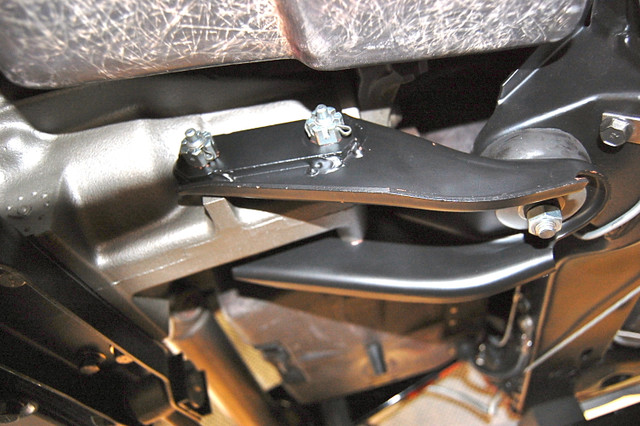
I'm sure you realize that many of the steering and some of the front suspension fasteners are secured by slotted nuts that require a cotter pin.
The same is true for many of the rear suspension parts.
So I'd encourage you to understand the procedure for setting the torque on nuts that will be secured with a cotter pin. And then also note the proper way to install and set the cotter pins.
Also be conscience of nuts that are 'prevailing torque' nuts so that they are used in the proper locations.
The front and rear suspension and steering sections of the Chassis Service Manual contains cautions about the fasteners you need to be aware of to ensure you're applying the proper torque values.
Regards,
Alan
An example of slotted nuts and cotter pins.
I'm sure you realize that many of the steering and some of the front suspension fasteners are secured by slotted nuts that require a cotter pin.
The same is true for many of the rear suspension parts.
So I'd encourage you to understand the procedure for setting the torque on nuts that will be secured with a cotter pin. And then also note the proper way to install and set the cotter pins.
Also be conscience of nuts that are 'prevailing torque' nuts so that they are used in the proper locations.
The front and rear suspension and steering sections of the Chassis Service Manual contains cautions about the fasteners you need to be aware of to ensure you're applying the proper torque values.
Regards,
Alan
An example of slotted nuts and cotter pins.

Race Director


Joined: Mar 2016
Posts: 14,406
Likes: 8,212
From: Napa Valley California
I like to put a small dab of locktite on all fasteners except those with nylock nuts installed. I will put on a single drop where the nut will tighten and then wipe most off with my finger tip. It takes just a small amount. The locktite will slightly increase the breaking force when you want to loosen a nut but I like it to help keep corrosion from building between the threads over time and a little insurance in high stress and vibration areas where I don't want things to loosen up. I would recommend using it on all bolts going into a threaded hole in thin metals or into the frame.









