When you click on links to various merchants on this site and make a purchase, this can result in this site earning a commission. Affiliate programs and affiliations include, but are not limited to, the eBay Partner Network.
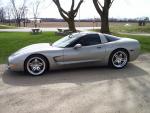
Thanks, yes the car is a blast to drive around solo through curvy roads, and then blow away every wanna be import racer than Ive ran into. The tire height on the blue Vette in that picture is 28.25 inches (Nitto NT05 295/45r18). They are pretty much the tallest tire you can go with, and I still had some rubbing issues. I now have my 255/50r17 Nitto Invos (27.0 inches tall) tires back on the rear, and no rubbing issues at all.
Can't beat the chrome bumpered C-3s with side pipes......Nicest looking sports car ever made in my opinion....The nicest.......I have owned my 73 for almost 16 years now....Its far from stock, just can't beat the look of the 69....
The big balloon 255s.....Lol....Costco specials..
The ride of my Impala didn't get all harsh and annoying after the switch from 15" to the 17"/18" combo. It rides just as smoothly with the plus of feeling more connected to the road instead of feeling floating.
If your car becomes so harsh that you don't like driving it then I suggest you look at the springs and shocks being used because something isn't right with the whole combination. There is really no reason a 45 to 55 ratio sidewall profile must ride rough. Going from a 60 to 50 ratio is just not that big a change. Now, if you change to a 25 ratio sidewall then ya it can ride rougher compared to a 50 or 60 ratio.
Last edited by lionelhutz; Jan 10, 2018 at 02:59 PM.
Yeah, but you can find some good "dinosaur" tires with a good contact patch and which stick even better than modern 17-18in tires; Mickey Thompson's new Street S/S and R drag radials perform like a street tire, but with a much stickier compound. I would actually enjoy driving my Vette around more by not having to cringe at every bump in the road with having skinny and stiff sidewalls with 17-18 tire sizes; Plus you get worse acceleration and braking due to a heavier wheel/tire combo with more rotational mass. Its more about the tread compound/design rather than the wheel size that makes the traction difference (handling, braking, acceleration). Plus if you want good straight line traction, your much better off having some give in the sidewall with a 15 inch tire to help transfer the weight and power, rather than spin too easily on a stiff tire.
Can't argue with your logic - however careful selection of tyre and suspension/damper selection can give the best of both worlds (well, almost!)
Go back to my post #19 please. My car has a VERY sport suspension with 255/45/17 ZR Front and 255/50/17 ZR ultra high performance summer only tires and the car rides SO MUCH BETTER than it did with the 255/60/15 BFG TA's and rides BETTER than almost all my modern daily drivers with sport suspensions....again by far.
I'll say this, again, as well as a few others now on this post, if you switch to a 17/18 45/50/55 aspect ratio ZR tire and your car's ride deteriorates badly, SOMETHING IS NOT RIGHT WITH THE SUSPENSION. ITS NOT THE TIRES!!!!!!!!!!!!!
Holy smokes..............some of this stuff is really incredible...............
Go back to my post #19 please. My car has a VERY sport suspension with 255/45/17 ZR Front and 255/50/17 ZR ultra high performance summer only tires and the car rides SO MUCH BETTER than it did with the 255/60/15 BFG TA's and rides BETTER than almost all my modern daily drivers with sport suspensions....again by far.
I'll say this, again, as well as a few others now on this post, if you switch to a 17/18 45/50/55 aspect ratio ZR tire and your car's ride deteriorates badly, SOMETHING IS NOT RIDE WITH THE SUSPENSION. ITS NOT THE TIRES!!!!!!!!!!!!!
Holy smokes..............some of this stuff is really incredible...............
Or get some Mickey Thompson 255/60r15 ET Street S/S drag radials for the rear and 245/60r15 sportsman S/T (better than BFGs) for front, and you can skip the harsh ride and mismatched looks of larger wheels with skinny side wall tires on your C3. Nascar and other race cars/venues still use 15 inch wheels/tires for good reasons.
I went from 15 inch BFGs to 255/50r17 (Nitto Invo) on my 68 due to traction issues, but I did not notice a significant difference in side wall flex/swaying when cornering. Yes it handled better, but mostly due to the grip of a modern tire design; The tire/wheel swap was a trade off of a harsher ride for better traction. By the way, I bought and built my Vette not just for looks; I have a 400whp LS/T56 swap with 3.73 gears, and about 500lbs in weight reductions, and love to push the limits. After having the 17s for a few years, I then wanted more traction and tried 295/45r18 Nitto NT05 on the rear; they did stick very well, but the very noticeably harsher ride and extra rotating weight (slower acceleration) quickly got to me.
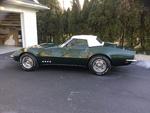
There is always going to be different opinions on wheel/tire looks, but I personally think old school on old school looks the best. Compare my 17/18 inch set-up with this classic 15 inch set-up. I think they both look good, but the 15 inch looks/fits better IMO. By the way, I was born over 10 years after my 68 Vette, but I have never been a fan of the contemporary trend of big and flashy aftermarket wheels.
COMPLETELY DISAGREE with your opinion on which looks better.
The CORRECT LOOK for a restoration is the 15" wheel.......but our over all expectation of what we like does get skewed by what is normal at the time.
Today few people would argue that any car from the 1960s looks best with it's skinny bias ply tires that are CORRECT. We've got a newer more up-to-date expectation of what tire width looks BEST.....and the wider tires typically seen on cars today means "best look" is considerably wider than in the past.
To my mind same thing can be said of ride height and side wall height.
Back in the the 1968-82 time period cars rode HIGHER than today, big wheel gap between the top of a tire and the fender and taller sidewalls were the norm.
Today both a lower look and shorter sidewall are the new "look" of performance and sporty. The fact that this all works better doesn't hurt the argument either.
I look at a CORRECT set up on a C3 and I see a car with balloon tires and it sits like it's conflicted as to it's role as sports car vs 4 wheel drive.
Ultimately though.....get the ride height down just a bit and then replace a 255/60/15 for a 255/50/17 and you really haven't changed tire circumference at all.....at least not in anyway that looks different in how fills in the wheel opening of the fender.
All you've really done is modernize the look a little bit and improved the grip a lot through a lower center of gravity and the use of modern performance rubber.
COMPLETELY DISAGREE with your opinion on which looks better.
The CORRECT LOOK for a restoration is the 15" wheel.......but our over all expectation of what we like does get skewed by what is normal at the time.
Today few people would argue that any car from the 1960s looks best with it's skinny bias ply tires that are CORRECT. We've got a newer more up-to-date expectation of what tire width looks BEST.....and the wider tires typically seen on cars today means "best look" is considerably wider than in the past.
To my mind same thing can be said of ride height and side wall height.
Back in the the 1968-82 time period cars rode HIGHER than today, big wheel gap between the top of a tire and the fender and taller sidewalls were the norm.
Today both a lower look and shorter sidewall are the new "look" of performance and sporty. The fact that this all works better doesn't hurt the argument either.
I look at a CORRECT set up on a C3 and I see a car with balloon tires and it sits like it's conflicted as to it's role as sports car vs 4 wheel drive.
Ultimately though.....get the ride height down just a bit and then replace a 255/60/15 for a 255/50/17 and you really haven't changed tire circumference at all.....at least not in anyway that looks different in how fills in the wheel opening of the fender.
All you've really done is modernize the look a little bit and improved the grip a lot through a lower center of gravity and the use of modern performance rubber.
Some of you guys throw out these BOLD words as if they should be treated as the final word of absolute truth. I was simply offering my opinion, and as you and I have both stated that there are always going to be different OPINIONS!
I don't have a correct/numbers matching Vette, and never wanted mine that way. I have a highly modified Vette under the body, but one of the main reasons I bought it in the first place for the beautiful and classic look. I don't like the look of the original skinny tires, but I do prefer a more classic fitting wide white letter 15 inch tire to fit the Vette better, and I was informing people that there are actually some good performance tires being made in 15 inch now, like the Mickey Thompsons.
I like the look of modern tires/wheels on modern cars, but I don't want to be another trendy person who follows the modern crowd, because I don't prefer putting modern wheels/tires on a classic. I do like the look of some modern wheels/tires on these Vettes, and appreciate the performance upgrade if done right, I just prefer the classic look more.
The ride of my Impala didn't get all harsh and annoying after the switch from 15" to the 17"/18" combo. It rides just as smoothly with the plus of feeling more connected to the road instead of feeling floating.
If your car becomes so harsh that you don't like driving it then I suggest you look at the springs and shocks being used because something isn't right with the whole combination. There is really no reason a 45 to 55 ratio sidewall profile must ride rough. Going from a 50 to 34 ratio is just not that big a change. Now, if you change to a 25 ratio sidewall then ya it can ride rougher compared to a 50 or 60 ratio.
It also depends on the load rating (sidewall stiffness) of the tire. I noticed a pretty big difference in comfort and rattles when I switched out my 255/50r17 to 295/45r18 in the rear. The 295/45r18 had an XL load rating probably because it was a stock Ford Lightning size, but as a typical rule of thumb more sidewall means more give and comfort.
If all you do is change tires/wheels and then notice a harsher ride, I don't see how you can blame the suspension! Yes, you can do things with the suspension to compensate like softer springs and shocks, but then your kind of defeating a point of a handling performance upgrade when doing the the swap in the first place by countering the shorter/stiffer sidewall with a softer suspension.
That being said, I found that a softer suspension with stiffer sway bars is the best set up as long as you have adequate suspension travel, you just don't wan't to lower the car too much and stuff the max size tire under, because you will usually bottom out and/or have rubbing issues. The problem is there are hardly any options for softer springs and shocks for our Vettes.
I dropped over 500 lbs off my 68's curb weight due to my many mods (losing weight was a main goal), and I knew the ride was going to be stiffer and higher with the stock springs and shocks, and with the new poly bushings. When I got the car all together it looked like it was ready to off-road because the fender gaps were so big. I bought the softest front springs I could find that would fit (made for 1st generation 6cl Nova) and cut a coil off, which fixed the ride height in the front. I kept the stock 80-82 rear mono leaf spring in the rear and bought long bolts to fix the ride height back there. I then started with Biltstein HD shocks because that was the premium shock everyone was recommending, but I found the ride too harsh, and tried swapping those out for softer (and half the price) KYB Excel-G shocks. My Vette rides awesome now with those and the 255/50r17 tires. My brother in law was shocked at how comfortable the ride was, and said it was better than his fathers brand new Camaro. With the softer suspension, the car transfers weight to the rear very nicely for hard take offs, but with the thick 1 1/8 inch sway bar up front and less over-all weight on the car it also stays very flat handling the curves like a sports car should.
The fact still remains that if you switch from a 255/60/15 to a 255/50/17 and then find a huge change in how rough the car rides it means you've got something wrong.
The general consensus on Mickey Thompson ET Street S/S tires is they feel squirrelly at higher speeds. They're not very good in rain either. But, they are a drag radial purposely built to hook in a straight line. I wouldn't consider them anything close to being equivalent to the Nitto tire's I'm running for the way I use my car. They are a good tire, but not for the use I need.
Can't argue with your logic - however careful selection of tyre and suspension/damper selection can give the best of both worlds (well, almost!)
Originally Posted by SHIFT A
Yeah, but you can find some good "dinosaur" tires with a good contact patch and which stick even better than modern 17-18in tires; Mickey Thompson's new Street S/S and R drag radials perform like a street tire, but with a much stickier compound. I would actually enjoy driving my Vette around more by not having to cringe at every bump in the road with having skinny and stiff sidewalls with 17-18 tire sizes; Plus you get worse acceleration and braking due to a heavier wheel/tire combo with more rotational mass. Its more about the tread compound/design rather than the wheel size that makes the traction difference (handling, braking, acceleration). Plus if you want good straight line traction, your much better off having some give in the sidewall with a 15 inch tire to help transfer the weight and power, rather than spin too easily on a stiff tire.
I just remembered the first time I installed the 18's and on a fast sweeping road at higher speeds and comparing the old 235/60/15 BFG's that would 'wobble' around!
Mine had F40 Slalom suspension fitted from new so perhaps the deterioration in ride comfort and addition noise when on poorly surfaced roads was less of a issue for me. Once on good roads and over 40/50 mph the ride is fine. I recently replaced the dampers with a new set of Koni's expecting a dramatic change in ride - not so. Have kept OEM ride height to allow maximum sit-down/weight transfer at rear end when leaving the line - and yes with 285's in the rear traction is improved.
The fact still remains that if you switch from a 255/60/15 to a 255/50/17 and then find a huge change in how rough the car rides it means you've got something wrong.
The general consensus on Mickey Thompson ET Street S/S tires is they feel squirrelly at higher speeds. They're not very good in rain either. But, they are a drag radial purposely built to hook in a straight line. I wouldn't consider them anything close to being equivalent to the Nitto tire's I'm running for the way I use my car. They are a good tire, but not for the use I need.
So if you make a change somewhere and notice an immediate difference, you blame a different component?
All the reviews that I have read, watched on Youtube, and from what Mickey Thompson's website and reps say; the new ET Street S/S is built like a regular radial/street tire but with a high grip compound and large contact patch. I have not found anyone complaining about a "squirrely" or wandering feeling at high speeds as long as they had proper air pressure. You may have gotten confused with bias ply drag radials or the older ET Street tire they made before these new S/S tires came out.
That being said, the ET Street S/S tires were in fact designed with straight line performance in mind like you said, but I don't see why they couldn't handle high speeds and curves if its just the stickier compound and wider/fuller contact patch that separates them from regular street tires. The MT rep I talked to said they would handle their own and drive like a street radial (hopefully he's right, and not just an uninformed salesman). I am waiting for Discount Tire Direct's next big sale in February to try them out myself. I'm excited for the increased grip for cornering/acceleration/braking, and increased acceleration/braking by dropping some rotational resistance/mass, and for a slightly more comfortable ride.
Twist what is written much? How is saying "something wrong with the combo" equal to saying "the tires didn't cause the ride change"?????
I've seen whole threads here where everyone who owned them said the same thing about them. Obviously you're not looking in the right places.
The weight of various 255 width tires are typically similar, but you can easily find lighter weight tires in the low profile sizes since the tread part is the same but there is less sidewall. So, is moving the barrel of the rim inwards why you're expecting an inertia change?
Last edited by lionelhutz; Jan 10, 2018 at 03:02 PM.
I admit that I know very little about Mickey Thompson drag radials but I would never bet a penny that it could evenly remotely handle like an ultra high Performance summer only 17/18 inch tire
Twist what is written much? How is saying "something wrong with the combo" equal to saying "the tires didn't cause the ride change"?????
I've seen whole threads here where everyone who owned them said the same thing about them. Obviously you're not looking in the right places.
The weight of various 255 width tires are typically similar, but you can easily find lighter weight tires in the low profile sizes since the tread part is the same but there is less sidewall. So, is moving the barrel of the rim inwards why you're expecting an inertia change?
"If your car becomes so harsh that you don't like driving it then I suggest you look at the springs and shocks being used because something isn't right with the whole combination. There is really no reason a 45 to 55 ratio sidewall profile must ride rough. Going from a 60 to 50 ratio is just not that big a change. Now, if you change to a 25 ratio sidewall then ya it can ride rougher compared to a 50 or 60 ratio."
From what you said here, it sounded like you were saying sidewall height does not make hardly any difference in ride comfort, and that you were blaming suspension components for change in ride comfort after just a wheel/tire swap was done. I may have miss-understood you or exaggerated beyond your point, and I really am sorry if I did so.
Like I said before I noticed a pretty big difference just going from a 255/50r17 to a 295/45r18. The 2 tires have very similar sidewall heights, but the wheel to tire size ratio change, load rating, and over-all tire design definitely made it a harsher ride that I didn't like at all. I am just trying to help others that are deciding on what to do, not put down people that have already bought larger wheels/tires (I am one of them). I have learned from experience and have heard pretty much everyone else say who went with larger wheels with shorter sidewall tires say its a trade off of more handling performance for less comfort; and we all know a stock C3 Vette's ride is not very comfortable to begin with, especially when you have to drive on some crappy public roads like I do.
My Larger wheel with tire combo also added 5.7 pounds per wheel and it put that weight more towards the outside of the assembly which noticeably cut down my acceleration. Yes 255/60r15 has a very similar weight to a 255/50r17 but a 17 inch wheel will always weigh more than a 15 inch wheel by at least a couple pounds and that weight gets shifted more towards the outside of the assembly adding rotational resistance. This also effects Gas millage if any one who drives a Vette is concerned about that. Yes small changes make small differences, but they do in fact make differences.
My main point is that there are benefits to consider either way, and that 15 inch set ups with good tires might be more beneficial for some very liable reasons, and just following the trend of "bigger is better," may leave others disappointed like me.
I admit that I know very little about Mickey Thompson drag radials but I would never bet a penny that it could evenly remotely handle like an ultra high Performance summer only 17/18 inch tire
Ok, then without actual experience to back that up, let me ask you this; why does Nascar still use 15 inch wheel/tire combos?
The idea of upgrading is to pick better parts. I can't help that you went to a truck tire or something like that instead of a high performance tire. I also can't help that you used some 17" rim that was as heavy as the factory rims. You can find lots of good high performance 17" tires and rims that are light weight.
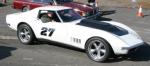
You posted pictures of a 15" steel rally wheel car and a 17" AL wheel car. Are you sure the steel wheels are lighter?
But you'd also be hard pressed to claim the 19" CCW wheels on my C5 are hurting performance because they add so much inertia...
This subject gets beat to death, and I have respect for JB78-L82 on this matter, as he has adamantly stated his feelings and experience with the difference between any currently available 15 inch tire versus his 17 inch tires. I would love to have the chance to drive my car, or his car as he has offered, to feel the difference. I do not like the looks of these bigger wheels at all, but could stomach a 17 inch Torq Thrust wheel, even though I hate to give up my factory YJ8 wheels because they look so right.
Thing is that I always feel the need to add is the reality of the needs of a particular owner / driver. If you are not pushing the car on the street in any way, the 15 inch Goodrich Radial TA's are more than adequate. I would argue against any imiplied "safety" accusation with these tires...its strictly BS. I push mine pretty hard in the Pennsylvania country roads, and the car does very well. Would it do better with 17 inch wheels and better tires....I suspect it may. But does it really matter to me? No. What matters more is the look I have created with the factory mags.
Again,....I would like to try 17's if money was not an object. Wish someone local would let me throw a set on and take it for a drive. I also think it would be only be a fair experiment if it was does this way WITHOUT other mods to really feel the difference that is so adamantly stated. Once you start talking about changing shocks and springs to make the larger wheels work.....I shut off my ears....not interested.
Last edited by Shovels and Vettes; Jan 10, 2018 at 05:35 PM.