When you click on links to various merchants on this site and make a purchase, this can result in this site earning a commission. Affiliate programs and affiliations include, but are not limited to, the eBay Partner Network.
The idea of upgrading is to pick better parts. I can't help that you went to a truck tire or something like that instead of a high performance tire. I also can't help that you used some 17" rim that was as heavy as the factory rims. You can find lots of good high performance 17" tires and rims that are light weight.
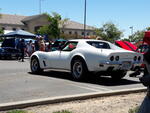
You posted pictures of a 15" steel rally wheel car and a 17" AL wheel car. Are you sure the steel wheels are lighter?
But you'd also be hard pressed to claim the 19" CCW wheels on my C5 are hurting performance because they add so much inertia...
So the Nascar rule book that has changed over the years adding more safety rules, and allowing more modern performance parts, has kept with the same "unsafe" and "low performance" 15 inch wheel/tire sizing just because. Come on, do some real research before just blowing out a response.
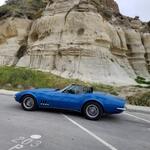
The blue Vette is mine and has 295/45r18 Nitto NT05 tires; do some research on those too. They hold traction great, but noticeably hurt my ride comfort and acceleration. There many people who note having a harsher ride with bigger wheels and shorter sidewall tires, so if its not just me, there must be some truth to it.
And yes there are companies that make light weight bigger wheels, but the 15 inch versions are always going to be lighter, The fact is that more weight is harder to turn, and pushing that weight out from the center more with taller wheels is even harder to turn.
You seem like you are just in denial that there are any downsides to bigger wheels. I really don't know why I waste my time debating this topic, but hopefully some people who have been trying to decide which size wheels/tires to go with can see more of the benefits and downsides of either choice from my posts.
If someone made 15 inch alloy Rally wheels, and some 15 inch sized white letter summer UHP tires, they would go straight on my classic Vette. But I am left to compromise like most others in this decision.
This subject gets beat to death, and I have respect for JB78-L82 on this matter, as he has adamantly stated his feelings and experience with the difference between any currently available 15 inch tire versus his 17 inch tires. I would love to have the chance to drive my car, or his car as he has offered, to feel the difference. I do not like the looks of these bigger wheels at all, but could stomach a 17 inch Torq Thrust wheel, even though I hate to give up my factory YJ8 wheels because they look so right.
Thing is that I always feel the need to add is the reality of the needs of a particular owner / driver. If you are not pushing the car on the street in any way, the 15 inch Goodrich Radial TA's are more than adequate. I would argue against any imiplied "safety" accusation with these tires...its strictly BS. I push mine pretty hard in the Pennsylvania country roads, and the car does very well. Would it do better with 17 inch wheels and better tires....I suspect it may. But does it really matter to me? No. What matters more is the look I have created with the factory mags.
Again,....I would like to try 17's if money was not an object. Wish someone local would let me throw a set on and take it for a drive. I also think it would be only be a fair experiment if it was does this way WITHOUT other mods to really feel the difference that is so adamantly stated. Once you start talking about changing shocks and springs to make the larger wheels work.....I shut off my ears....not interested.
Nice Vette, thank-you for stepping in and being a fellow admirer of the classic 15 inch with white letter look. I always feel like I am getting teamed up on by everyone else when I defend factory/classic 15 inch wheels. By the way, I put the 17/16 inch TT2 on my Vette strictly due to needing more traction and I did not find any real street performance 15 inch tire in our size at the time. If you lived close to me I would gladly let you take a spin on my wheels.
I'll just chime in here.
I have 15" BFG's with the factory wheels.
I love the classic look, and think classic tires and wheels belong on a classic car.
The ride and handling is great. I have no complaints.
I am going through a complete resto/mod on my 73 BB with many performance mods.
I tried for almost a year to find 15" wheels that would work with the 6 piston brake calipers I'll be running as one of my upgrades. Several came close but the wheel to caliper clearances were just too tight and I was "forced" to go to a larger wheel. I did find a 17" classic wheel that will work with my upgrades where I can run a 27" tall tire and keep as much of the classic look as possible.
I love the classic looks of a classic car.
I don't care for the look of large wheels on classics, but I've seen some that look very nice, when the stance of the car is set right, they are matched with classic style 17" and 18" wheels and taller profile tires.
The next time your at a car show, take notice of all the different size wheels and tires on a model A roadster or coupe.
I believe you'll find they are all smaller diameter than what came on an original Model A.
Go Figure????
Last edited by OldCarBum; Jan 10, 2018 at 07:53 PM.
So the Nascar rule book that has changed over the years adding more safety rules, and allowing more modern performance parts, has kept with the same "unsafe" and "low performance" 15 inch wheel/tire sizing just because. Come on, do some real research before just blowing out a response.
WOW. It is in the rule book. The rules require 15" diameter as well as the width and offset, which I believe is 9.5" wide and 0mm offset.
You have to take it up with NASCAR if you want to know why they won't change these rules.
However, just because NASCAR makes it work doesn't mean that the 15" tire is the best choice for racing. I'd bet the teams would love to use larger rims on short tracks and road courses. They'd love to use positive offset wheels too.
For one, a larger diameter and offset change would allow a lot more freedom in the brake package designs. The 15" tires and 0mm offset both limit the diameter of the rotor, location of the rotor and how much caliper and pad thickness you can fit between the wheel and the spindle.
For another, look at most other top tier road race series like Indy Car, Formula 1, Lower Formula series, Le Mans etc and tell me how many of those series run 15" tires. Then still try to claim the 15" tire NASCAR uses is the best option and all those other series have been mandated to use those inferior larger diameter tires.
As for the rest, the point you're trying to make about 15" racing tires being unsafe makes ABSOLUTELY no sense.
Race cars use racing tires. You can get fairly cheap 15" racing tires that are good performers ON THE TRACK. But, racing tires are NOT safe for use on the street.
Talking appropriate street use tires, there isn't a 15" tire that is nearly as good as an equivalently priced 17"+ or larger sized performance tires. The only 15" tires that exist at the same price point are lower performance tires. This isn't an opinion, it's a fact that anyone can easily prove by comparing available tires.
Last edited by lionelhutz; Jan 10, 2018 at 11:51 PM.
WOW. It is in the rule book. The rules require 15" diameter as well as the width and offset, which I believe is 9.5" wide and 0mm offset.
You have to take it up with NASCAR if you want to know why they won't change these rules.
However, just because NASCAR makes it work doesn't mean that the 15" tire is the best choice for racing. I'd bet the teams would love to use larger rims on short tracks and road courses. They'd love to use positive offset wheels too.
For one, a larger diameter and offset change would allow a lot more freedom in the brake package designs. The 15" tires and 0mm offset both limit the diameter of the rotor, location of the rotor and how much caliper and pad thickness you can fit between the wheel and the spindle.
For another, look at most other top tier road race series like Indy Car, Formula 1, Lower Formula series, Le Mans etc and tell me how many of those series run 15" tires. Then still try to claim the 15" tire NASCAR uses is the best option and all those other series have been mandated to use those inferior larger diameter tires.
As for the rest, the point you're trying to make about 15" racing tires being unsafe makes ABSOLUTELY no sense.
Race cars use racing tires. You can get fairly cheap 15" racing tires that are good performers ON THE TRACK. But, racing tires are NOT safe for use on the street.
Talking appropriate street use tires, there isn't a 15" tire that is nearly as good as an equivalently priced 17"+ or larger sized performance tires. The only 15" tires that exist at the same price point are lower performance tires. This isn't an opinion, it's a fact that anyone can easily prove by comparing available tires.
Indy uses 15 inch and formula 1 uses 13 inch! I don’t have time to respond to all your other misunderstandings, but just keep digging yourself a bigger hole(s).
Why don't you post the links to the 15" ULTRA HIGH PERFORMANCE street tires that are price competitive to the 17" and larger tires that are available? This is the ULTIMATE put your money where your mouth is test. Come on. Prove they exist.
I have never seen a group of people who love to argue for the sake of arguing more than this bunch...outside of my wife that is. I find it very tiring.
Since I have been on this forum only a relatively short time and seen this ridiculous argument 'discussed' no less than 3 times already, I think I am just going to keep cutting and pasting my response.
Originally Posted by PainfullySlow
God I really don't want to get in the middle of a pissing contest so I will try to explain as I know a bit about tire construction.
What he was trying to say was that a 15" wheel with a 27" tall total profile has a much larger sidewall than an 18" wheel would having that same 27" total profile.
(27-15)/2= 6" sidewall height on the 15" wheel
(27-18)/2= 4.5" sidewall height on the 18" wheel
The taller the sidewall, the more it moves around...this is basic physics. This is called 'carcass flex'.
So, it is actually true that a 15" wheel with 27" total profile will absorb bumps better because of that extra carcass flex. It also means that the 15" option will not handle as well as the 18" again because of that same carcass flex.
Assuming that we are still talking a total 27" circumference:
15"=softer ride, poorer handling
18"=harsher ride, better handling
I know a thing or two about how tires affect ride and performance =)
Maybe I need to be a bit more concise so I will try to make a guide that should help future visitors to this thread.
THE ULTIMATE WHEEL/TIRE DEBATE - 15" or 17+"
I am going to break this down into several categories. If too many words in a row put you to sleep you can try reading a section at a time.
APPEARANCE/AESTHETICS
Here is the crux: no one but you gives a giant, steaming pile of flying squirrel poo what you think. It is subjective, meaning you like what you like and the other person likes what they like. It is ok for everyone to not like the same thing. Please read that last sentence 3 (or 300) times until it sinks in. Some people like the original 'fat tire' look of the 15;s. Some people like the more modern, lower profile tire look and both are ok.
Screaming your opinion over and over does not make you 'right' and it isn't very likely to sway the other persons opinion either. All it does is make you an ***. How many people have converted to a different religion based on a pamphlet that an annoying person at your door gave you? I will wager, none.
ORIGINALTY
This is not open to debate (although on this forum I would not be shocked to see someone try) but our cars came with 15" factory wheels. This gives it the classic appearance and classic handling characteristics of that era.
If originality matters to you (and it is ok if it does or if it doesn't. Refer to the above section on opinions) you must have 15" wheels on your car.
PERFORMANCE
It is an irrefutable fact that all things being equal (tire compound, temperature, tire pressure, etc. (for LH: Earths gravity, road conditions, not in a vacuum, not in a volcano, etc., etc., etc.)) that the shorter the sidewall, the better the tire will handle. This has been proved time and again through science. I know a lot of people here tend to throw silly things like facts out the window when trying to make a point but if I have to I can go into this down to a basic physics level. Look up 'irrefutable' if you do not know the meaning and please do it before you click the 'reply' button.
The stiffer the sidewall (either through size or material composition), the better the car handles. In laymans terms that means that a 6" sidewall on a 15" tire must flex more than a 4" sidewall on an 18" tire, consequently the 15" tire must handle worse than an 18" tire of the same compound. If you need a visual aid, take a 4' section of 1x3 wood and bend it. Now take a 1' section if 1x3 and bend it. Note which one moves more? #becausephysics
As a final note on performance, it is also a well known fact that the more modern sized tires are also available in more aggressive tire compounds and with better tire construction methods. This will also aid in performance as well as mitigate the harsher ride from the shorter sidewall. Note that I said 'mitigate' and not 'negate'. More on this below.
RIDE QUALITY/COMFORT
It is also an irrefutable fact that all things being equal (tire compound, temperature, tire pressure, etc. (for LH: Earths gravity, road conditions, not in a vacuum, not in a volcano, etc., etc., etc.)) that the shorter the sidewall, the worse the ride quality will be. This is due to the same reason that detracts from the performance of the tire; sidewall (carcass) flex. The more that the sidewall flexes, the more it absorbs bumps/road imperfections and the less work the suspension has to do. Again, this has been proven through science. If you need a visual aid, try to compress a tennis ball and then try to compress a dodge ball. Which one compresses more? Larger sidewall=less bumps.
What this means is that the 15" tires with their large sidewalls will give a smoother, less bumpy ride than an 18" tire with its smaller sidewalls.
The only caveat to this is that the newer, more modern tires have better construction methodologies than the tires of yesteryear and there have been improvements in both chemistry and construction that allow those 18" tires to ride a bit better than you would think. This does not mean that they ride better than their 15" counterparts. They don't.
SAFETY
The third irrefutable fact that all things being equal (tire compound, temperature, tire pressure. etc. (for LH: Earths gravity, road conditions, not in a vacuum, not in a volcano, etc., etc., etc.)) that the better the tire compound, the shorter your stopping distance will be. This assumes that your brakes have sufficient stopping power to overcome the coefficient of friction and cause the tire to skid (locking the wheel).
Now, I cannot say for certain that the older 15" tires are made from a different compound than the more modern tires. I am certain that there must be tests out there with stopping distance but frankly I am too lazy to look it up. Until we know for certain what the stopping distances are or the chemical make up of each tire, discussing this subject is an exercise in futility.
'GOOD ENOUGH'
I see this argument a lot and it usually goes something like this: 'It worked just fine 50 years ago so there is no reason that it shouldn't work just fine now'.
While this is true, the biplane gave way to jet engines, the abacus to the calculator, and the telegraph to the telephone. Just because something is more modern does not automatically make it bad...or necessarily better although I think you will find evidence stating that the latter is true more than the former in most things.
There are two sides to this discussion: If you could make your car handle better, why wouldn't you?
To this crowd, the performance aspect of the tire outweighs the other factors such as aesthetics. This is a matter of preference, and it is an opinion. Read above regarding opinions.
The car looks better with 15" wheels and handles just fine from the factory
To this crowd, the aesthetics aspect of the tire outweighs the other factors such as performance. This is a matter of preference, and it is an opinion. Read above regarding opinions.
IN CLOSING
This is my personal opinion on the subject. I prefer the look of the 15" tires however I am not willing to give up the handling characteristics of the larger tires. As such I chose a compromise of 17" wheels which gives me a little bigger sidewall to get the appearance that I desire without giving up too much of the performance characteristics.
If I were to build a show car, or a car that never gets driven: I would go with 15" wheels strictly for the aesthetics.
If I were to build a race car or a purely performance car: I would go with the 18" wheels strictly for the performance.
If I were to build a daily driver: I am going with the 17" wheels as a compromise between all factors.
I am hoping to have my car roadworthy by the end of this coming summer at which time I will have a set of 15" wheels with new tires on them as well as a set of 17" wheels with my Nitto tires on them. I plan on doing a side by side comparison, including video, and scoring each one on the above characteristics. Hopefully that will help put an end to some of this lunacy.
In the end, do whatever the hell you want to your car, and let others do the same free of snide comments, nasty digs, and just plain douchebaggery.
Last edited by PainfullySlow; Jan 12, 2018 at 06:45 AM.
I am not arguing for the sake of arguing, I am simply stating some facts to help counter some BS that gets posted on this subject, offer my own opinion, and offer options for the people who like/wan't classic 15 inch wheels/tires.
I already have real life experience/comparisons of personally going from 15 to 16/17, and then to 17/18 inch, and then back to my 16/17 wheels/tires. I am posting to inform the people that are reading this thread for the purpose of deciding what to do with their own car; I'm not posting to put down those that have already gone either way. There are benefits and drawbacks to either choice; I am on neutral ground, because I can't even make up my mind which way to go.
The facts and my own experience pretty much sum up all that you wrote;
-More sidewall= more ride comfort
-Less sidewall= more handling performance
-No 15 inch ultra high performance summer tires are being made and probably never will be made (sucks).
-The closest to UHP in 15 in sizes are street/strip drag radials (like Mickey Thompson ET Street S/S and R) which stick better than any street ultra high performance tire, but will most likely not handle the curves as well.
-There are hardly any options for the stock 27 inch tire height or taller (255/50r17 is it) with bigger wheels. Most tire options are shorter, and that's where you get the thin side wall look and bigger fender gaps (of course you can lower the car to close the fender gaps, but then you run into potential ground clearance and bottoming out problems).
-Bigger wheels in the same style are always heavier and push weight out from the center more, causing more rolling resistance and extra weight in general, which cuts down on acceleration and braking (stickier tires are always better for braking either way).
-Its up to the Vette owner to decide if they would rather have more comfort, classic looks, and adequate traction/handling with 15 inch wheels/tires.
-Or if they want to sacrifice some ride comfort and ditch classic style for better choice of street performance handling/traction with bigger wheels.
I have been on both sides of the fence, and I am looking forward to going back over and trying some fresh 15 inch rubber to see how they compare to my current 245/50r16 front (Falken ZE95), and 255/50r17 rear (Nitto Invo) set-up (which by the way handles very well); But, I want/need more traction in the rear (look at my mods) and I prefer the classic looks, added ride comfort, and less rotational mass/resistance that 15 tires/wheels offer.
This is the set up I will go with in February when Discount Tire direct has their big president's day sale, and I will let you all know how the comparison goes;
245/60r15 Mickey Thompson Sportsman S/T (every comparison review that I've read said that these are the best pure street performer in that size)
255/60r15 Mickey Thompson ET Street S/S (street drag radial) "street tire for the drag strip." I will probably paint the raised black letters white to match the front, so I can have that classic raised white letter look.
on 15x8 American Racing Torq Thrust II polished wheels (VN5155861)
I have never seen a group of people who love to argue for the sake of arguing more than this bunch...outside of my wife that is. I find it very tiring.
Since I have been on this forum only a relatively short time and seen this ridiculous argument 'discussed' no less than 3 times already, I think I am just going to keep cutting and pasting my response.
Maybe I need to be a bit more concise so I will try to make a guide that should help future visitors to this thread.
THE ULTIMATE WHEEL/TIRE DEBATE - 15" or 17+"
I am going to break this down into several categories. If too many words in a row put you to sleep you can try reading a section at a time.
APPEARANCE/AESTHETICS
Here is the crux: no one but you gives a giant, steaming pile of flying squirrel poo what you think. It is subjective, meaning you like what you like and the other person likes what they like. It is ok for everyone to not like the same thing. Please read that last sentence 3 (or 300) times until it sinks in. Some people like the original 'fat tire' look of the 15;s. Some people like the more modern, lower profile tire look and both are ok.
Screaming your opinion over and over does not make you 'right' and it isn't very likely to sway the other persons opinion either. All it does is make you an ***. How many people have converted to a different religion based on a pamphlet that an annoying person at your door gave you? I will wager, none.
ORIGINALTY
This is not open to debate (although on this forum I would not be shocked to see someone try) but our cars came with 15" factory wheels. This gives it the classic appearance and classic handling characteristics of that era.
If originality matters to you (and it is ok if it does or if it doesn't. Refer to the above section on opinions) you must have 15" wheels on your car.
PERFORMANCE
It is an irrefutable fact that all things being equal (tire compound, temperature, tire pressure) that the shorter the sidewall, the better the tire will handle. This has been proved time and again through science. I know a lot of people here tend to throw silly things like facts out the window when trying to make a point but if I have to I can go into this down to a basic physics level. Look up 'irrefutable' if you do not know the meaning and please do it before you click the 'reply' button.
The stiffer the sidewall (either through size or material composition), the better the car handles. In laymans terms that means that a 6" sidewall on a 15" tire must flex more than a 4" sidewall on an 18" tire, consequently the 15" tire must handle worse than an 18" tire of the same compound. If you need a visual aid, take a 4' section of 1x3 wood and bend it. Now take a 1' section if 1x3 and bend it. Note which one moves more? #becausephysics
As a final note on performance, it is also a well known fact that the more modern sized tires are also available in more aggressive tire compounds and with better tire construction methods. This will also aid in performance as well as mitigate the harsher ride from the shorter sidewall. Note that I said 'mitigate' and not 'negate'. More on this below.
RIDE QUALITY/COMFORT
It is also an irrefutable fact that all things being equal (tire compound, temperature, tire pressure) that the shorter the sidewall, the worse the ride quality will be. This is due to the same reason that detracts from the performance of the tire; sidewall (carcass) flex. The more that the sidewall flexes, the more it absorbs bumps/road imperfections and the less work the suspension has to do. Again, this has been proven through science. If you need a visual aid, try to compress a tennis ball and then try to compress a dodge ball. Which one compresses more? Larger sidewall=less bumps.
What this means is that the 15" tires with their large sidewalls will give a smoother, less bumpy ride than an 18" tire with its smaller sidewalls.
The only caveat to this is that the newer, more modern tires have better construction methodologies than the tires of yesteryear and there have been improvements in both chemistry and construction that allow those 18" tires to ride a bit better than you would think. This does not mean that they ride better than their 15" counterparts. They don't.
SAFETY
The third irrefutable fact that all things being equal (tire compound, temperature, tire pressure) that the better the tire compound, the shorter your stopping distance will be. This assumes that your brakes have sufficient stopping power to overcome the coefficient of friction and cause the tire to skid (locking the wheel).
Now, I cannot say for certain that the older 15" tires are made from a different compound than the more modern tires. I am certain that there must be tests out there with stopping distance but frankly I am too lazy to look it up. Until we know for certain what the stopping distances are or the chemical make up of each tire, discussing this subject is an exercise in futility.
'GOOD ENOUGH'
I see this argument a lot and it usually goes something like this: 'It worked just fine 50 years ago so there is no reason that it shouldn't work just fine now'.
While this is true, the biplane gave way to jet engines, the abacus to the calculator, and the telegraph to the telephone. Just because something is more modern does not automatically make it bad...or necessarily better although I think you will find evidence stating that the latter is true more than the former in most things.
There are two sides to this discussion: If you could make your car handle better, why wouldn't you?
To this crowd, the performance aspect of the tire outweighs the other factors such as aesthetics. This is a matter of preference, and it is an opinion. Read above regarding opinions.
The car looks better with 15" wheels and handles just fine from the factory
To this crowd, the aesthetics aspect of the tire outweighs the other factors such as performance. This is a matter of preference, and it is an opinion. Read above regarding opinions.
IN CLOSING
This is my personal opinion on the subject. I prefer the look of the 15" tires however I am not willing to give up the handling characteristics of the larger tires. As such I chose a compromise of 17" wheels which gives me a little bigger sidewall to get the appearance that I desire without giving up too much of the performance characteristics.
If I were to build a show car, or a car that never gets driven: I would go with 15" wheels strictly for the aesthetics.
If I were to build a race car or a purely performance car: I would go with the 18" wheels strictly for the performance.
If I were to build a daily driver: I am going with the 17" wheels as a compromise between all factors.
I am hoping to have my car roadworthy by the end of this coming summer at which time I will have a set of 15" wheels with new tires on them as well as a set of 17" wheels with my Nitto tires on them. I plan on doing a side by side comparison, including video, and scoring each one on the above characteristics. Hopefully that will help put an end to some of this lunacy.
In the end, do whatever the hell you want to your car, and let others do the same free of snide comments, nasty digs, and just plain douchebaggery.
Agree 100%. The only thing I would comment on that you did not is the "safety" aspect in the detail I will add. There have been suggestions on this forum that BF Goodrich Radial T/A tires are "unsafe" because of their old technology. I do not concede or believe they are UNSAFE in the environment we need on the public roads. Are they less safe than later model tires because maybe in a braking or handling situation in extreme maneuvering? Possibly....but not UNSAFE. Suggesting to people who have purchased and drive on 15 inch BF Goodrich Radial TA tires that their choice is UNSAFE implies these same people are willing to drive an unsafe car,....and I for one, do not believe that is true, nor do I like the suggestion that I would drive an unsafe car.
As we know, our C3 Corvettes are in many way less safe than modern cars. Its not an argument with any validity......but are they UNSAFE....NO. Its an argument on relative levels of safety.
Last edited by Shovels and Vettes; Jan 11, 2018 at 12:55 PM.
18's get ya around the race track... and help you blow away C4,5,6 and 7's...
not going to do this on a sloppy 15...
Your are probably 100% correct, but your example is in a racing situation on a prepped track.
I don't believe most Vette owners race their Vettes, and they might not want the trade offs especially if they spend the majority, or all their time on bumpy public roads like I do.
Agree 100%. The only thing I would comment on that you did not is the "safety" aspect in the detail I will add. There have been suggestions on this forum that BF Goodrich Radial T/A tires are "unsafe" because of their old technology. I do not concede or believe they are UNSAFE in the environment we need on the public roads. Are they less safe than later model tires because maybe in a braking or handling situation in extreme maneuvering? Possibly....but not UNSAFE. Suggesting to people who have purchased and drive on 15 inch BF Goodrich Radial TA tires that their choice is UNSAFE implies these same people are willing to drive an unsafe car,....and I for one, do not believe that is true, nor do I like the suggestion that I would drive an unsafe car.
As we know, our C3 Corvettes are in many way less safe than modern cars. Its not an argument with any validity......but are they UNSAFE....NO. Its an argument on relative levels of safety.
Can you post links to these people saying BFG tires are unsafe? Well, besides you...
Saying an ultra high performance tire will make the car safer is not equal to saying BFG tires are unsafe.
Your are probably 100% correct, but your example is in a racing situation on a prepped track.
I don't believe most Vette owners race their Vettes, and they might not want the trade offs especially if they spend the majority, or all their time on bumpy public roads like I do.
Bolded... maybe,,, but to those, why buy a Vette? I mean.. you don't have to take it to the track... a little "spirited" canyon run is also a lot of fun...
I purchased my 1st one back when I was 21.. the one in the picture actually, and I wanted a sports car,,, not a cruiser... are a lot of vettes just cursers? maybe... pity though:-( as a Vette was made to race...
PainfullySlow, very well stated. Maybe if everybody reads your post carefully we can put an end to the bickering....nah, that's probably hoping for too much.
What this means is that the 15" tires with their large sidewalls will give a smoother, less bumpy ride than an 18" tire with its smaller sidewalls.
Saying a shorter sidewall always rides rougher is not an absolute.
#1. You generally don't change to 18" rims and use the same tire make and model as you were using on the 15" rims. If you're looking to improve the car then you generally buy a better tire.
#2. The construction of low performance, cheap 15" tires can be so bad that almost any performance 18" tires will roll smoother. The performance tire typically will be less out of round and have less variation in the construction which allows it to roll without introducing it's own movements into the suspension.
#3. The tire acting as suspension has no damping. So a tire with lots of "give" will bounce and wallow around. A little similar to what happens if you removed the shocks on your car. I personally don't like this feel over having a better damped package.
In the past, I've put the cheapest 15" tires I could fine onto a car and regretted it the whole time they stayed on the car. It simply rode badly on any road surface, even smooth roads. There was nothing technically wrong with the tires so no way to claim a tire defect. Overall, it got to the point I found the car hateful to drive.
18's get ya around the race track... and help you blow away C4,5,6 and 7's...
not going to do this on a sloppy 15...
Now here is a man who knows ultra high performance tires and their capabilities...no theory!
Racing will expose any weaknesses.....Having raced formula cars on STREET ULTRA HIGH PERFROMANCE all season/summer onlys as well as slicks (Michelins no less), there is zero possibility that a BFG or most of these other "street" tires mentioned in this thread would even be able to remotely compete...NONE!
All of these tires are reasonable for typical street driving, of course, but when pushed, excuse the pun, the rubber really meets the road, in terms of the performance differences.
Bolded... maybe,,, but to those, why buy a Vette? I mean.. you don't have to take it to the track... a little "spirited" canyon run is also a lot of fun...
I purchased my 1st one back when I was 21.. the one in the picture actually, and I wanted a sports car,,, not a cruiser... are a lot of vettes just cursers? maybe... pity though:-( as a Vette was made to race...
Race cars are made to race, street cars, including our Vettes, are usually modified (especially in the tire department) to race on tracks.
But I do agree with you that its a pity to see so many people just cruising around in their Vette or other high performance street car (maybe they bought it just for the looks), when they could have bought a Prius to do the same thing.
I bought and built my 68 with performance in mind (although the looks are killer too), and I drive it around the streets accordingly. I try not to break too many traffic laws and jeopardize others and my own safety; but when the performance is in my hands, its so hard to resist the urge to have fun and use it!
Saying a shorter sidewall always rides rougher is not an absolute.
#1. You generally don't change to 18" rims and use the same tire make and model as you were using on the 15" rims. If you're looking to improve the car then you generally buy a better tire.
#2. The construction of low performance, cheap 15" tires can be so bad that almost any performance 18" tires will roll smoother. The performance tire typically will be less out of round and have less variation in the construction which allows it to roll without introducing it's own movements into the suspension.
#3. The tire acting as suspension has no damping. So a tire with lots of "give" will bounce and wallow around. A little similar to what happens if you removed the shocks on your car. I personally don't like this feel over having a better damped package.
In the past, I've put the cheapest 15" tires I could fine onto a car and regretted it the whole time they stayed on the car. It simply rode badly on any road surface, even smooth roads. There was nothing technically wrong with the tires so no way to claim a tire defect. Overall, it got to the point I found the car hateful to drive.
Oh boy, here you go again;
yes different tires have different comfort aspects, but you cant argue the fact that more sidewall equals more flex/give/comfort in nearly all cases. That's one of the main reasons to move up to bigger wheels with less sidewall; to get rid of the flex and handle better!!!
































 Maybe if everybody reads your post carefully we can put an end to the bickering....nah, that's probably hoping for too much.