When you click on links to various merchants on this site and make a purchase, this can result in this site earning a commission. Affiliate programs and affiliations include, but are not limited to, the eBay Partner Network.
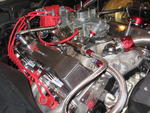
Nice setup. I am using the Jegs Aluminum catch can and the M/E Wagner adjustable PCV valve. I end up with about a tablespoon of oil per a tank of gas in the catch can at most (usually less).
Nice! That's a tablespoon of oil not baked to the back of your valves.
I like the looks of this and have done some part searches on EBay. Lots of choices.
I noticed you do not have any hose clamps on the catch can. Must be a tight seal. Have you taken a vacuum reading off of the carb since you installed this set-up? I would be curious if you lost any vacuum. This is a whole lot better than letting that oily crap go into the intake.
2020 Corvette of the Year Finalist (performance mods)
2019 C3 of Year Winner (performance mods)
2016 C3 of Year Finalist
Very nice. I went with a Moroso can from Summit. It has a petcock drain in the bottom. I just fired it up last night to break in the rebuild on the 327 and fried my wiring harness. I havent had a chance to go look at it today but I'm curious if theres any oil in it
I'm going to order it because when I've had the 850 DP on and off a few times and finally switched to my 1050 DP I noticed a light layer of oil on the floor of the intake as well as crap on the back of my intake valves (Took the intake off last night to go with a thinner Felpro gasket due to zero deck block etc). There are only a few reasons why oil can get to the floor of the intake is this is a cheap, nice looking add on to mitigate the PCV issue.
Out of curiosity I wonder if anyone has tried a quick way of seeing how much crap gets sucked in through the PCV such as a 3/8 plastic fuel filter for a couple of bucks? Just for test purposes. Drop the filter between the PCV and the Carb...right in series with the 3/8 PCV hose?
The problem with the PCV system is the "replacement" valves are flowing too much vacuum and thus pulling oil out of the valve covers.
The M/E Wagner adjustable PCV valve is the way to go. The other alternative is to run a 1/16 or 1/8 hose on the PCV line.
I had issues with my 85 which is a 383 roller motor - constantly fouling plugs. I sat down with an older racer ( a few years ago) and he immediately found the PCV was the issue. I pulled the PCV and the motor stopped fouling plugs.
I love the catch can idea , just have to drain it ... I thought about it but went with the 1/8 hose. It's only supposed to pull vapor out of the valve covers to keep the environment clean by burning the vapors. ( also to stop the oil from being vented to the road like pre PCV cars did - via a down draft tube. )
Last edited by BLUE1972; Jan 29, 2018 at 11:37 PM.
Reason: hate auto spell
I'm going to order it because when I've had the 850 DP on and off a few times and finally switched to my 1050 DP I noticed a light layer of oil on the floor of the intake as well as crap on the back of my intake valves (Took the intake off last night to go with a thinner Felpro gasket due to zero deck block etc). There are only a few reasons why oil can get to the floor of the intake is this is a cheap, nice looking add on to mitigate the PCV issue.
Out of curiosity I wonder if anyone has tried a quick way of seeing how much crap gets sucked in through the PCV such as a 3/8 plastic fuel filter for a couple of bucks? Just for test purposes. Drop the filter between the PCV and the Carb...right in series with the 3/8 PCV hose?
YouTube has some pretty interesting info on the amount of oil caught in a catch can. Anywhere from a Tsp to 4-6oz per month. This all depends on the amount of blowby of course. Most of the videos agreed you don't need a $200 unit. But shy away from anything under $25. Reason being they don't seperate oil / air like they should.
many cans on the market, especially the amazon/ebay type have literally nothing inside, so you could go ahead and make this yourself.
any can (even an empty one) can lessen oil consumption on the pcv suction line, such as all above are oriented, but for a vehicle combo with oil out of the clean side of the system, due to higher than stock power, or high blowby, it gets more complicated.
The MMS Gen4 has 4 layers of filtration and unmatched ventilation capability, as well as modular/reconfigurable construction and lifetime satisfaction guarantee, so you do get what you pay for here.
Have a dip stick on it and the bottom screws off to empty it. Nice aluminum construction, comes with both 3/8" and 1/2" ports depending on which you want to use.
The supplied Vinyl hosing is junk and will collapse once it gets hot but the can is Decent.
I throw a stainless steel pot scrubber in it to give the oil something to stick to.
Last edited by REELAV8R; Jan 30, 2018 at 11:25 AM.
as shipped these are about 15% less efficient than mine at oil trapping, and of course provide no increase in airflow control. they are far better than using nothing at all, unless you are trying to stick with american made
I'm going to order it because when I've had the 850 DP on and off a few times and finally switched to my 1050 DP I noticed a light layer of oil on the floor of the intake as well as crap on the back of my intake valves (Took the intake off last night to go with a thinner Felpro gasket due to zero deck block etc). There are only a few reasons why oil can get to the floor of the intake is this is a cheap, nice looking add on to mitigate the PCV issue.
Out of curiosity I wonder if anyone has tried a quick way of seeing how much crap gets sucked in through the PCV such as a 3/8 plastic fuel filter for a couple of bucks? Just for test purposes. Drop the filter between the PCV and the Carb...right in series with the 3/8 PCV hose?
I will tell you up front that you will need to seal the aluminum pieces that bolt onto the can and the fittings screw into. They have no seals. I just took a little black silicone and put it on the bottom of the pieces and then bolted them down. Just wipe off the excess and all is good.
The blue vinyl line they send fits plenty snug on the fitting to seal well. After all, it's vacuum not pressure they have to hold.
I'm assuming this is an open can without filtration? I like the Dodge cap idea - reminds of the 318-360 trucks. However I don't have room under my wiper door actuator on the right side or the alternator on my left because of the tall valve covers. So I'm thinking of a simple pot scrubber idea that someone mentioned to catch the oil.
I like the Vinyl hose - right, vacuum not pressure. If it collapses when warm is the worst thing to happen then easy enough is to run new 3/8" rubber hose or braided. Definitely worth the try.
only one thing left to do is measure the performance of your system. You can dial up or down the restricter on the fresh air inlet side to increase crankcase vacuum. The factory plumbing and air filter are sufficiently restrictive to act along this line, however many manufacturers also include slight restricters in this line as well. You can measure crankcase vacuum with a gauge which reads in inches of water. I believe we will want at least 1-2" of Hg or approx 13-30"" of water in the crankcase while driving.
I'm a firm believer that any PVC system is bad especially in any performance minded motor:
1. The worst systems use PVC. Because the highest vacuum is at the point of lowest blowby. WOT is max blowby and very little vacuum. It makes linear A/F ratios in a carbureted engine impossible because of a variable vacuum leak of contaminated air. The oil separation can is an improvement.
2. The next best is elimination of PVC and just using some kind of dual valve cover venting system like K&N breathers.
3. The next best which actually increases HP is some kind of vacuum pump with and oil separation can.
I'm a firm believer that any PVC system is bad especially in any performance minded motor:
1. The worst systems use PVC. Because the highest vacuum is at the point of lowest blowby. WOT is max blowby and very little vacuum. It makes linear A/F ratios in a carbureted engine impossible because of a variable vacuum leak of contaminated air. The oil separation can is an improvement.
2. The next best is elimination of PVC and just using some kind of dual valve cover venting system like K&N breathers.
3. The next best which actually increases HP is some kind of vacuum pump with and oil separation can.
I'm a firm believer that any PVC system is bad especially in any performance minded motor:
1. The worst systems use PVC. Because the highest vacuum is at the point of lowest blowby. WOT is max blowby and very little vacuum. It makes linear A/F ratios in a carbureted engine impossible because of a variable vacuum leak of contaminated air. The oil separation can is an improvement.
2. The next best is elimination of PVC and just using some kind of dual valve cover venting system like K&N breathers.
3. The next best which actually increases HP is some kind of vacuum pump with and oil separation can.
4. The ultimate is dry sump with a fresh air bleeder system designed to limit the max inches of vacuum within the block.
I agree that a vacuum pump or a dry sump system are by far the best for performance, especially in a racing use. On the street I use a PCV system for two reasons and it had nothing to do with creating a vacuum in the crankcase at WOT..
First pulling the vapors, which are combustion by products, out of the crankcase and pulling fresh air in keeps the oil cleaner. It reduces corrosive acids and moisture in the oil. This is good for the engine. With only breathers in the engine, there is no cross flow of air to remove the nasty vapors.
Another reason I use a PCV system is I can not stand the smell of crankcase fumes. Without a PCV I always can smell the fumes and they can't be good for you either.
I've been tuning with wideband sensors for many years and have never seen the PCV cause a tuning problem. It's never prevented me from arriving at the fuel curves and AFR's I was aiming for, carbureted or fuel injected applications.
On this particular engine I didn't have much oil getting into my intake with the PCV valve in my valve cover and run directly to my vacuum port on the back of the carb. With the Mopar breather and catch can, it should be pretty clean by the time it reaches the intake.
Again, for racing I would want a vacuum pump or dry sump system, but on the street I have and will always use a PCV system.
Mike
PS: I wanted to add one more thing. How much time do you spend at WOT on the street? Very little, unless you like tickets and jail time. The vast majority of the time you are at part throttle and high vacuum conditions, even for guys who drive hard. I've had data acquisition on customers vehicles before. Even with guys that beat the crap out of there vehicles, the time spent at part throttle is hundreds of times more than at WOT.
Last edited by v2racing; Jan 31, 2018 at 01:16 PM.
I'm assuming this is an open can without filtration? I like the Dodge cap idea - reminds of the 318-360 trucks. However I don't have room under my wiper door actuator on the right side or the alternator on my left because of the tall valve covers. So I'm thinking of a simple pot scrubber idea that someone mentioned to catch the oil.
I like the Vinyl hose - right, vacuum not pressure. If it collapses when warm is the worst thing to happen then easy enough is to run new 3/8" rubber hose or braided. Definitely worth the try.
Cheers,
Ryan
Yes, this is a cheapo can without baffles or filter media. The Mopar breather will remove most of the oil out of the airstream coming through the PCV. Making the inlet tube longer in the can and the exit tube shorter will help gravity keep most of the vapors in the can. The air is not moving very fast because of the PCV valve restriction. Any vapors going into the can should fall to the bottom and since there is not that much air speed, there shouldn't be enough energy to pick the heavier than air vapors back up and pull them out of the exit port of the can.
It will be easy to see if I am correct with the vinyl lines you can see through. If any oil makes it past the catch can, they will coat the inside of the tubing going to the vacuum port on the carb.
Mike
PS: The vinyl 3/8" hose is pretty thick wall. It would have to get awful hot and have a lot of vacuum to collapse it.
Last edited by v2racing; Jan 31, 2018 at 01:41 PM.
most of these will accelerate engine wear, and or require more frequent oil changes. hope that the 5hp is worth it!
It is hard to tell what to believe unless you see it for yourself, but during sprint car dyno runs and adjusting the amount of vacuum inside the block you could see up to about 25 hp changes under a constant rpm and load. (Shaffer Racing engines)
So what actually happens at high RPM during the combustion process, and how does a Vacuum Pump change that?
As RPM increases the rings start to get pushed upward on the outer ring edge due to the pressure behind them due to the blow-by build up in the pan, this causes a reduction in ring seal to the cylinder walls, this causes more blow-by. It also causes the rings to "flutter" which further increases blow-by.
The increased pressure in the pan (due to the fact that in a higher performance engine you cannot get all the excess air pressure out of the engine with just breathers (much less engines with PVC systems that are sealed) then PUSHES oil entrained in the air past the rings on the intakes stroke when the engine is SUCKING in air. During the intake stroke oil is also SUCKED past the valve guides. The net result is oil contamination of the fuel (the same way a PCV system contaminate the fuel by sucking oil into the intake), which effectively reduces the octane rating of the fuel. This reduces HORSEPOWER, and on a nitrous or power adder engine can actually burn a hole in the pistons from the increased heat in the chamber due to the faster flame front.
The vacuum pump can reverse every one of these problems by reducing, eliminating or even putting a negative pressure on the engine. The net result is better ring seal, less or no oil contamination, less oil leaks, cleaner oil, longer engine life and MORE HORSEPOWER. An added advantage is your engine builder can use lower friction ring packages because the resulting blow-by is mitigated by the Vacuum pump.
My assembly arrived today. What do you make of this? Open on on end and closed on the other. I'm guessing to either block off the PCV if you had to which doesn't make sense or possibly to drill the closed end out to regulate the airflow?
Not good pics but you have the same kit. One fitting is open and the other identical looking fitting is solid.
Thoughts?
Last edited by Ryan Menzies; Feb 5, 2018 at 11:39 PM.
My assembly arrived today. What do you make of this? Open on on end and closed on the other. I'm guessing to either block off the PCV if you had to which doesn't make sense or possibly to drill the closed end out to regulate the airflow?
Not good pics but you have the same kit. One fitting is open and the other identical looking fitting is solid.
Thoughts?
If you block the freshair inlet of crankcase, and pull suction via intake manifold to crankcase, it will pull on every oil seal into the engine and ruin them.
So if you want to run this on the fresh air inlet, the size of hole you need to drill is equal to the size necessary to pull 10-40" of Water on the crankcase during idle speed. Better to go a little too large than too small to account for buildup of sludge over the years so make it bigger than you think it needs to be.
On the other hand, you can put that on the intake manifold -> crankcase side to disable PCV for cruise and idle. It will make the oil quality worse faster, it will reduce ring seal, possibly lowering compression and reducing economy, but overall it may improve WOT horsepower 1% or something. Better to have it hooked up for those benefits, the cost is so small. So one again, drill a hole, but don't oversize this one too much. A smaller hole is probably smart, less than 3/8" probably to start with, smaller than the fresh air inlet for sure. See what the suction is like on the fresh air inlet (using a gauge, shooting for 10" to 40" of water usually) open up the hole till you see that suction present with the appropriate hole on the fresh air inlet balanced to that vacuum.