When you click on links to various merchants on this site and make a purchase, this can result in this site earning a commission. Affiliate programs and affiliations include, but are not limited to, the eBay Partner Network.
Mad electic tested the circuit of a functioning harness on a vette and could only muster up around 11 volts at the headlights when on.
There is a drastic light output increase when that voltage is boosted to 14 volts from the alternator
Its all in their writeup on their web sight.
HOW BAD IS THE EXISTING PERFORMANCE?
Lighting systems engineering data has it that if we drop the voltage delivered to a light by 10%, then illumination out-put is reduced by over 30%. Going from 14.0 volts down to 11.5 volts is a loss of nearly 18%! As we shall see in photos–No wonder those old cars and trucks have dim lights (when factory equipped). The goal with electrical systems is to keep voltage drops within a 2% loss.
If you're wondering how much the up-grade would help your favorite car or truck, it's really quite simple to do as we did and take measurements with a VOLTMETER. (The photo captions explain the voltage measurements recorded by these photos.)
If voltage measured at the back of the headlight, with High Beams ON, and engine running at highway cruise RPM, is less than 13.5 volts–Then this headlight/relay up-grade will be an improvement. Most factory built cars and trucks will not perform better than 12.0v - 12.8v range, and many will drop below 12.0v, even with perfect factory wiring.
In many cases, the thin factory wires are inadequate even for the stock headlamp equipment. Headlamp bulb light output is severely compromised with decreased voltage. The drop in light output is not linear, it is exponential with the power 3.4. For example, let's consider a 9006 low beam bulb rated 1000 lumens at 12.8 Volts and plug in different voltages:
A good example of the various bulbs and their lumen ratings: Note the ratings involve big +/- swings in lumens ratings..................I have been upgrading headlights on cars since 1978 with my family's car a 1972 Caprice being the first victim with 4 Cibie Euro lense! That would be 40 years ago.....I have done this a few times and for a long time.
AGAIN! The wattage or lumen rating is SECONDARY to the lense design and NOT a big determinant of maximum useable light.
12.8V : 1000 lumens ←Rated output voltage
13.0V : 1054 lumens
13.5V : 1198 lumens
14.0V : 1356 lumens ←Rated life voltage
14.5V : 1528 lumens
Increasing the lumens from 1000 to 1500 ^^^^in the same housing (50%), may net you 10% more useable light. Useable light is not a linear increase based on lumens and wattage.
Like most things involving electricity and physics, it is not as simple and easy as it appears...lots going on....
The H1 lamp was the first tungsten-halogen headlamp light source. It was introduced in 1962 by a consortium of European bulb and headlamp makers. This bulb has a single axial filament that consumes 55 watts at 12.0 volts, and produces 1550 lumens ±15% when operated at 13.2 V. H2 (55 W @ 12.0 V, 1820 lm @ 13.2 V) followed in 1964, and the transverse-filament H3 (55 W @ 12.0 V, 1450 lm ±15%) in 1966. H1 still sees wide use in low beams, high beams and auxiliary fog and driving lamps, as does H3. The H2 is no longer a current type, since it requires an intricate bulb holder interface to the lamp, has a short life and is difficult to handle. For those reasons, H2 was withdrawn[51] from ECE Regulation 37 for use in new lamp designs (though H2 bulbs are still manufactured for replacement purposes in existing lamps), but H1 and H3 remain current and these two bulbs were legalised in the United States in 1993.[52][53] More recent single-filament bulb designs include the H7 (55 W @ 12.0 V, 1500 lm ±10% @ 13.2 V), H8 (35 W @ 12.0 V, 800 lm ±15% @ 13.2 V), H9 (65 W @ 12.0 V, 2100 lm ±10% @ 13.2 V), and H11 (55 W @ 12.0 V, 1350 lm ±10% @ 13.2 V).[54] 24-volt versions of many bulb types are available for use in trucks, buses, and other commercial and military vehicles.
The first dual-filament halogen bulb to produce both a low and a high beam, the H4 (60/55 W @ 12 V, 1650/1000 lm ±15% @ 13.2 V),[54] was released in 1971[12] and quickly became the predominant headlamp bulb throughout the world except in the United States, where the H4 is still not legal for automotive use. In 1989, the Americans created their own standard for a bulb called HB2: almost identical to H4 except with more stringent constraints on filament geometry and positional variance,[55][56] and power consumption and light output expressed at the US test voltage of 12.8V.[57]
The first US halogen headlamp bulb, introduced in 1983, was the HB1/9004. It is a 12.8-volt, transverse dual-filament design that produces 700 lumens on low beam and 1200 lumens on high beam. The 9004 is rated for 65 watts (high beam) and 45 watts (low beam) at 12.8 volts. Other US approved halogen bulbs include the HB3 (65 W, 12.8 V), HB4 (55 W, 12.8 V), and HB5 (65/55 watts, 12.8 V).[58] All of the European-designed and internationally approved bulbs except H4 are presently approved for use in headlamps complying with US requirements.
So am I to understand that when I simply put Halogens in my 72, I did not accomplish anything, that I need to put these relays if I want the beams to be brighter? Sorry, I am a bit dim when it comes to 'lectricity, pun intended. Thanks
Halogens will always produce more light than the older non-halogen incandescent bulbs. Whether that's "good enough" depends on your expectations for "good enough," and on how good the wiring is in your car. We can't know that, and you shouldn't guess about that. When you're installing the halogen sealed beams, or with your existing light, with one of the low beam bulbs removed from the retainer, but still plugged in, turn on the headlights. With the lamp lit (still plugged in), measure the voltage at the back of the bulb, at the connector. Most likely you'll want to measure with the red probe from your volt meter on the tan wire at the connector, and the black probe from your meter on the black probe. GM almost universally used tan for the low beam power, green for the high beam power and black for the ground on almost all GM vehicles before the 1990's, when separate power fuses and DRL's made a mess of headlight wiring.
If you're getting 13.5 volts or higher at the connector with the lamp in the circuit making light, I probably wouldn't bother with relays. Also, with the engine idling, check voltage at the alternator output (BAT) post (or if your 72 Corvette still has the separate external voltage regulator, check at the horn relay "bus" point). That would be your power source point if you install relays, and with relays, you'll get within a couple tenths of a volt of the alternator voltage to the bulb connector socket.
Make sure your aim is good on the new lights.
If you want better light than the latest sealed beams (which have much better optics for the halogens than were available in the 1960's and 1970's), I'd go with Euro lights (Hella/Cibie) with good quality H4 and H1 bulbs (Phillips Xtreme-Vision are my current favorites). There are some "off road only" Hella bulbs that are up to 100W, and brighter. I would never run those in the H4 position, and I'd almost never run those on public roads in the high-beam (H1) position. I would also recommend against lighting both filaments simultaneously on the H4's for the high beam function. Light just the high beam filament on that bulb (the green wire) and the H1 inner high beam lamp. I know folks (some on this thread) who do that and claim they don't have issues. When I've used higher output bulbs (like the Philips Xtreme-Vision bulbs) with that setup, I've always had bulb life issues (bulbs burn out in weeks, not the usual 1 to 2 years). I do live in a remote, rural area, and I use high beams more than most folks because of that. Still, I'm usually happy with European high beams, even on dark, twisty, empty rural roads around here, especially on vehicles with a 4 light setup.
Last edited by C6_Racer_X; Mar 2, 2018 at 08:38 AM.
In many cases, the thin factory wires are inadequate even for the stock headlamp equipment. Headlamp bulb light output is severely compromised with decreased voltage. The drop in light output is not linear, it is exponential with the power 3.4. For example, let's consider a 9006 low beam bulb rated 1000 lumens at 12.8 Volts and plug in different voltages:
Installing relays is always a good idea. More than a few cars have burned down due to overheating of the headlight switch.
I have been impressed with the gain for so little an expense.
first I want to thank every one for the help plus the saving of dollars. I thought I had a bad switch in the 71 was thinking of led head lights but after reading your posts. I will do the relays first and will go from there. again thanks
2020 Corvette of the Year Finalist (performance mods)
2019 C3 of Year Winner (performance mods)
2016 C3 of Year Finalist
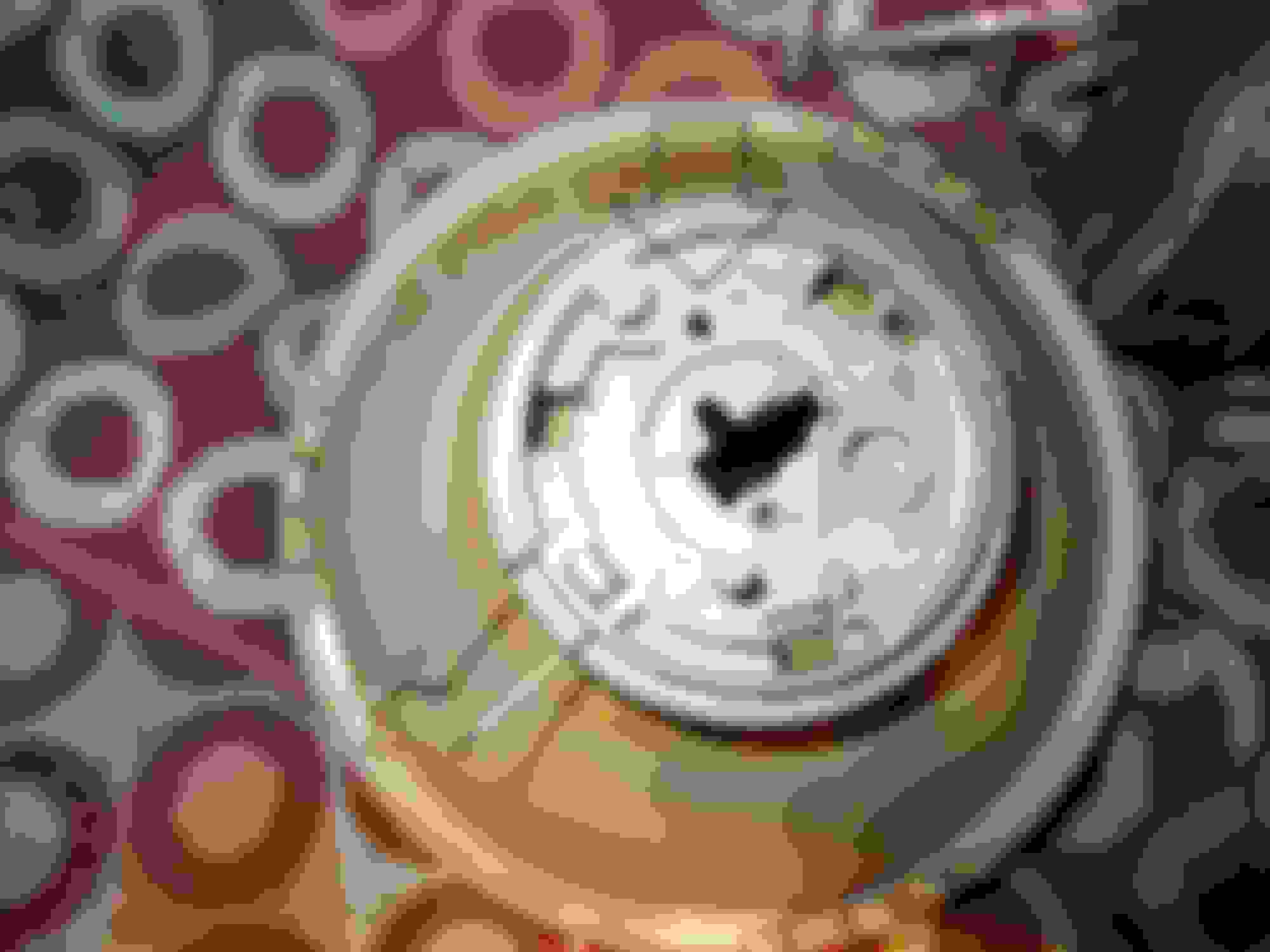
Heres the light output photos finally....
with the garage doors open and the ambient light shining in with the garage doors closed, just the lights from the windows when the sun was setting, just a little light coming in from the window in front of the dash
Designer Imagines A Corvette That Looks More Like a Corvette Than the Corvette
Slideshow: A Jaguar designer's personal project imagines what a modern front-engined Corvette might look like if Chevrolet revisited the golden age of the Stingray.