When you click on links to various merchants on this site and make a purchase, this can result in this site earning a commission. Affiliate programs and affiliations include, but are not limited to, the eBay Partner Network.
hi guys please help ....
backstory....
I have a 77 Corvette with a 350 small block with 6-al2 ignition box all lights on exterior are standard but eventually will convert to LEDs. Interior I have no dome light, no courtesy light, no plans for radio, no heat or AC or controls for heat and only cigarette lighter for cigarette powered speaker box. all dash lights have been converted to LED. I have replaced my old alternator (did not see how many amps) with new alternator 140 amps (proform chrome bowtie). I have found a few semi melted wires. this is my first build I thought more amps the better it is but came to realise the latter. I think I need a new alternator with less amps. 1st question, can someone please tell me how many amps is for the stock alternator or any recommendations for the need of amps. 2nd, I know there is a one wire setup available and three wire setup available can someone please explain the difference and which one is better (ex. Purchase extra wire (correct gauge) for one wire setup)
p.s. I have just purchase a brand new headlight harness (hence why I want to change alternator not to mess up new wires) I believe it comes with all new hook ups for 3 wire setup.
I just want something good & easy to install "don't we all" hahaha
p.p.s I have new engine harness and new entire Dash harness installed already on the car
thank you yet again
corvette forum rules
The alternator amperage CAPABILITY will not damage your wires or your system. You need to ensure that your wiring system is up to snuff. The alternator only supplies the demanded amperage.
Originally Posted by hardmansonfan
hi guys please help ....
backstory....
I have a 77 Corvette with a 350 small block with 6-al2 ignition box all lights on exterior are standard but eventually will convert to LEDs. Interior I have no dome light, no courtesy light, no plans for radio, no heat or AC or controls for heat and only cigarette lighter for cigarette powered speaker box. all dash lights have been converted to LED. I have replaced my old alternator (did not see how many amps) with new alternator 140 amps (proform chrome bowtie). I have found a few semi melted wires. this is my first build I thought more amps the better it is but came to realise the latter. I think I need a new alternator with less amps. 1st question, can someone please tell me how many amps is for the stock alternator or any recommendations for the need of amps. 2nd, I know there is a one wire setup available and three wire setup available can someone please explain the difference and which one is better (ex. Purchase extra wire (correct gauge) for one wire setup)
p.s. I have just purchase a brand new headlight harness (hence why I want to change alternator not to mess up new wires) I believe it comes with all new hook ups for 3 wire setup.
I just want something good & easy to install "don't we all" hahaha
p.p.s I have new engine harness and new entire Dash harness installed already on the car
thank you yet again
corvette forum rules
The alternator amperage CAPABILITY will not damage your wires or your system. You need to ensure that your wiring system is up to snuff. The alternator only supplies the demanded amperage.
Your original alternator was a 10si, with 42 or 63 amps (which one depended on how your 77 was accessorized - AC, RW defrost, received the higher capacity one). Two things to be aware of :
1) the alternator fed into 10 gauge wire(s), which is perfectly adequate for the original output. For much higher output alternators, this wiring should be upgraded to 8 or even 6 gauge (note: if your vehicle's electrical current demand is near stock, the alternator will rarely put out more amperage than the original stock alternator. The exception will be if your battery is depleted. Then your higher amperage alternator will put out a great deal more amperage than your stock 10 gauge wiring was designed for, potentially overloading it.
2) All of your 10si variants, whatever their rating, will put out a fairly modest amperage at idle or low rpm's. The output curve rises more steeply for the higher rated alternators than for stock, until it reaches it's rated capacity.
More modern alternators such as the CS130 and CS144 put out much more current at idle and low speeds than the earlier 10si and 12si alternators. This means that modern alternators tend to supply all of the current that your running vehicle requires without using the battery, while the older alternators will force the electrical system to 'dip into' the battery's electricity much more often. I feel that the use of a more modern alternator is desirable, and my 77 is equipped with a 140 amp CS130D with 6 gauge wiring to the starter, in order to support my Vintage Air system, TPI, sound system and numerous other electrical add-ons.
If you want to easily limit the amperage draw from your alternator, get one of theses and put it on the hot wire from the alternator.
Also available at auto parts stores. https://www.ebay.com/itm/VCB60-12-24...kAAOSwdGJasVAc
Last edited by REELAV8R; May 11, 2018 at 07:41 AM.
2020 Corvette of the Year Finalist (performance mods)
2019 C3 of Year Winner (performance mods)
2016 C3 of Year Finalist
I went to a 100 amp 12 SI and I bought a 10 si to 12 si conversion which just eliminates the external voltage regulator and has a plug conversion adapter. I run newer 4 bulb halogen headlamps, a 16 ich electric cooling fan and a 100 watt amp and a self powered 150 watt sub. I have more than enough amps wth that
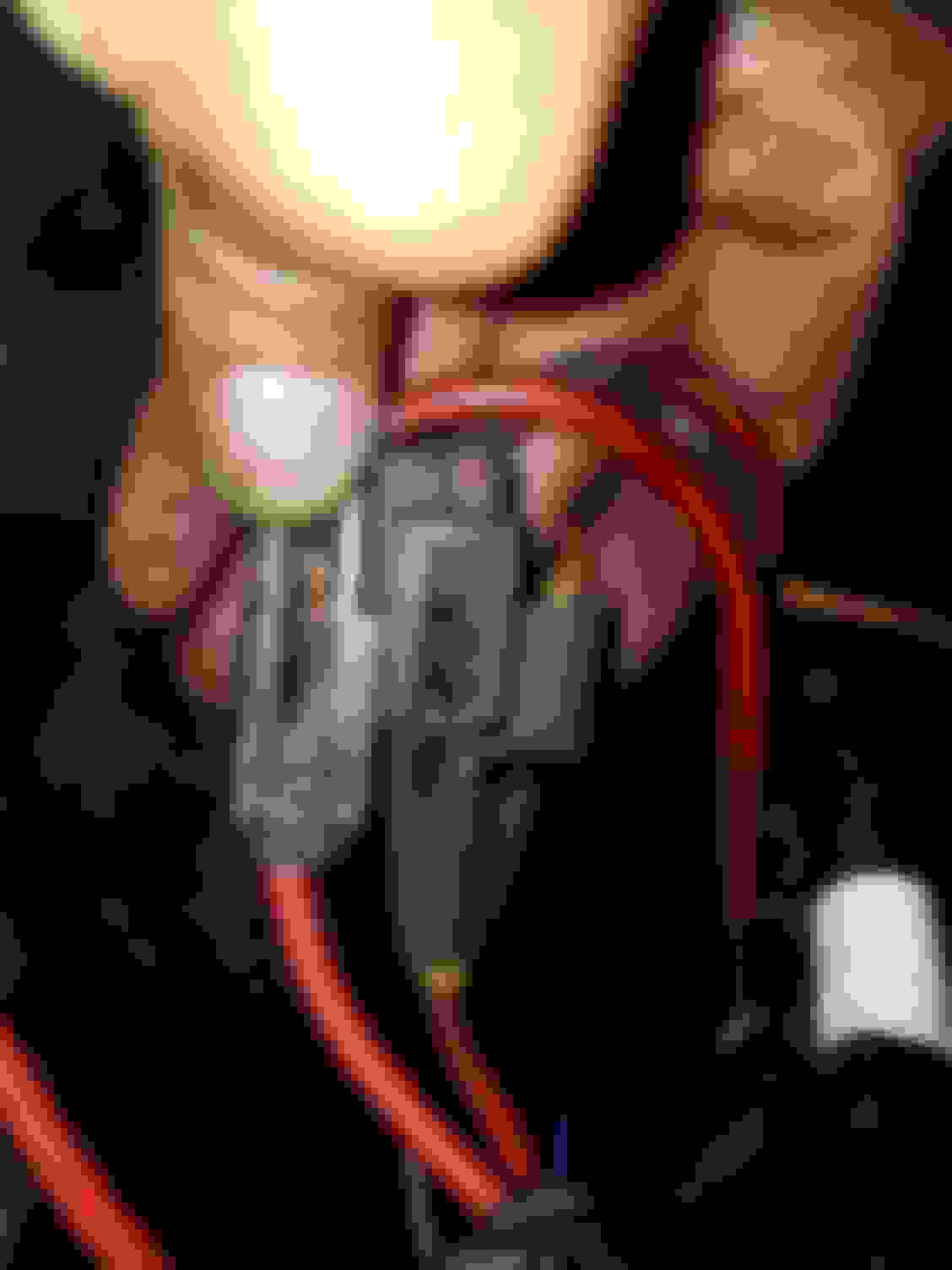
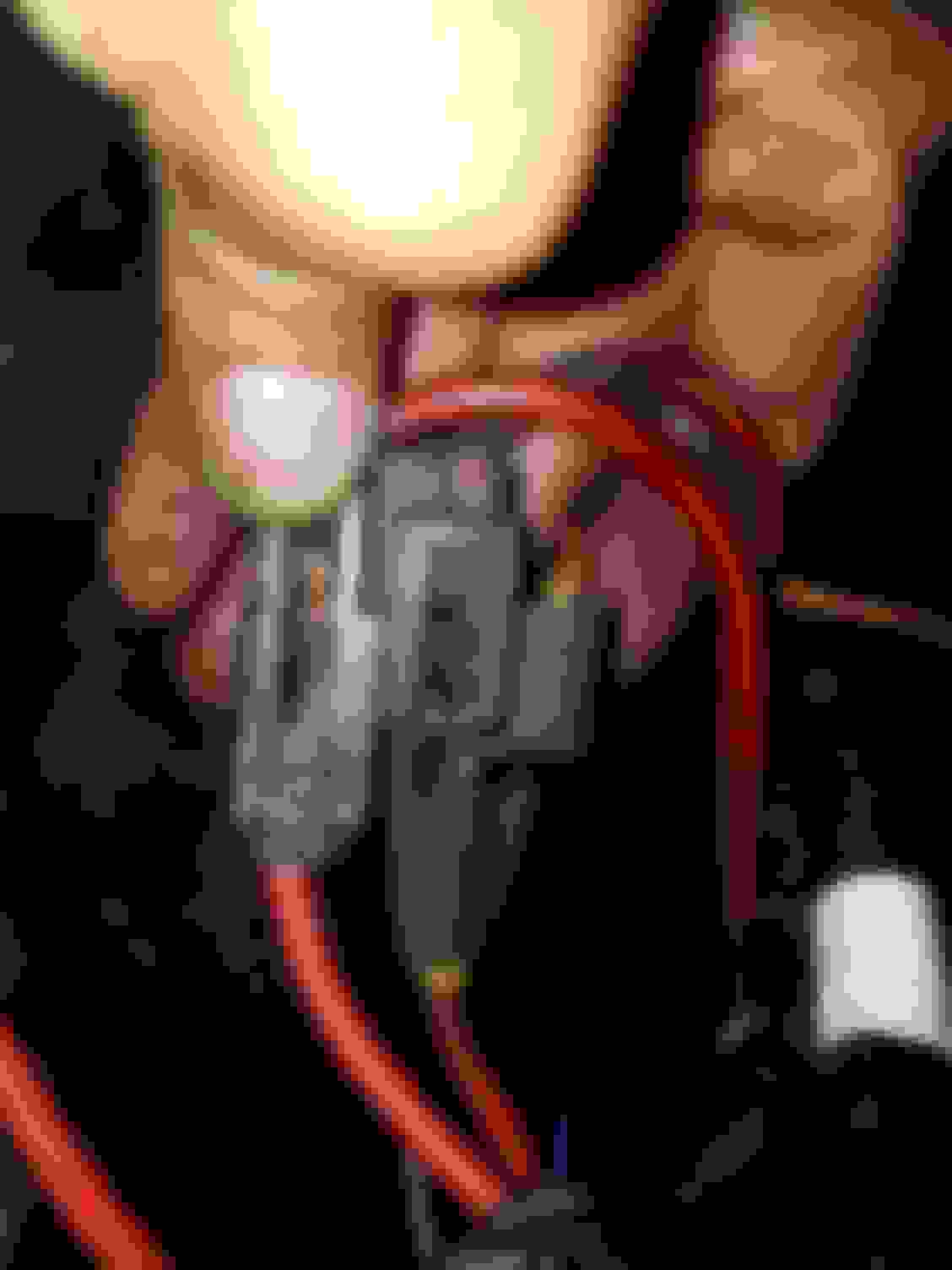
hey guys sorry for the delay I just did the headlight harness it was a splicing nightmare. I just put in all new harness. i forgot to mention that I do not have electric fans on my car, I only have waterpump belt fan. as for melting wires it was the connector between new engine harness & old headlight ( splicing nightmare) harness, it also had these other "2" wires spliced into one wire going to a.c. blower box area which I'm not using (previous owner eliminated lots of stuff I believe for quarter mile racing) see pictures. in order not to start splicing wires my self I want to get a alternator with less amps to use stock wiring harness without modification or purchasing extra wires. (I just know a little not much about wiring). I was thinking getting a 70 or 80 amp alt just to be safe ( I believe it's adequate for my setup)& safe for stock wiring because I read that stock wiring can only take a maximum of 100 amps at a time
p.s. i do not have rear defrost
what do you guys think ???????
update...
i did eliminate the wires going to the ac & connected the corresponding wires according to the instruction diagram that came with the harness & also the alternator that i have and if i purchase a new alt they all ready come with internal regulator
Last edited by hardmansonfan; May 15, 2018 at 09:31 PM.
If you want to easily limit the amperage draw from your alternator, get one of theses and put it on the hot wire from the alternator.
Also available at auto parts stores. https://www.ebay.com/itm/VCB60-12-24...kAAOSwdGJasVAc
Seriously?
What happens if your battery is low for whatever reason? This relay will keep tripping every time you reset it.
I put a 95 amp alternator on a 1974 and no wiring problems at all. This 'new' alternator conversion was due to many new electrical components that were installed.
You worrying about the wire for this era not being able to handle an alternator that is producing more power I feel is unwarranted. People with serious stereos often times my put in a 200 amp alternator and the cars wiring stays the same. What they do is add bigger wire to power up the amps for the stereo and so on and that generally comes off the battery terminal itself. If you look at a new Corvette...the wiring is the same and if not in many cases is much smaller. Now for those circuits on the new Corvettes that require a lot of current. YES...some of the power wires are increased and those are general from what I have seen is the huge cooling fan GM puts in them. Obviously do what you feel is best for you.
The problem that is going on in the photo below is not so much amps or voltage as much as it is a bad connection.
I have seen this issue on some connections in the engine compartment that carry a lot of current and it was due to the connectors were allowed to get dirty..and loose...thus not making a good solid connection. Current passed though this connection and it heats up. I have seen the high speed blower motor relay connection melt due to what I have just described. I have also had it occur on the blade type fuses that have dirty terminals.
Keep in mind that GM has changed their method in wiring over the years. Connections like the one in the photo below have more than likely been change to a method of attachment that is not allowing movement and dust, dirt and water to get into this connection. Dust, dirt and water are not that big of a deal but IF the connection can move and wiggle and low the dust, dirt and water to get inside the connection..that is where the problem originates. Think of it as how your starter solenoid has wires bolted to it and yet those terminals are exposed the dust, dirt and water but yet they work fine...and that area commands the greatest draw of current when you are cranking your engine and that is because the terminals are secured and can not move and allow contaminants to get in between the terminals due to they are tight.
Unless you are worried about judging. many times...connections like this I make a solid connection and not have it be capable of it being separated. OR..I install a junction block and attach the wires to the stud of the junction block so the eyelet terminals are now secured to the stud by a nut.
What happens if your battery is low for whatever reason? This relay will keep tripping every time you reset it.
This is more like an interrupter (circuit breaker). Should really fix the system instead of installing this thing. It's not a bad idea to have, but not to compensate for poorly designed system if it keeps tripping routinely.
Last edited by carriljc; May 16, 2018 at 10:42 AM.
This is more like an interrupter (circuit breaker). Should really fix the system instead of installing this thing. It's not a bad idea to have, but not to compensate for poorly designed system if it keeps tripping routinely.
Even when i just ran 100 amp i ran better larger gauge wires from the charge lug,
Now i have a 140 amp and going a little bigger wire likely 6 ga,
If you are gonna be skinny on electrical stuff and leds almost dont count even stock would have been fine.
And if stock isn't fine, for whatever reason, you can always run a second wire in parallel vs replacing the existing wire with a larger one. More than one way to skin that cat.
First and formost an alternator is not a battery charger. Neither your electrical system nor the wiring was designed as such.
Next, at 25% discharge or 75% charge remaining your TYPICAL battery internal resistance is 1.3 ohms typical not all. Different batteries will vary.
At 75%, your voltage will be about 9.6 volts, so dead as far as your starter is concerned and many other items in the car, With an internal resistance of 1.3 ohms. Guessing you know ohms law, Voltage is equal to current times resistance. So inversely, 9.6 volts divided by 1.3 ohms gives you an amperage (current) of roughly 7.4 amps.
Can a battery pull more amperage? Sure, briefly, but as soon as it starts to recover the amperage tapers off quickly.
V=IR
I=V/R
So what is the problem here?
For arguments sake lets say that we can pump oh.. 100 amps into a battery for lets say 30 minutes. What is going to happen to this battery, (which by the way sits directly behind you), in that period of time. Familiar with hydrogen gas?
Last edited by REELAV8R; May 16, 2018 at 01:39 PM.







 Picking correct alternator