When you click on links to various merchants on this site and make a purchase, this can result in this site earning a commission. Affiliate programs and affiliations include, but are not limited to, the eBay Partner Network.
Hi Gents, (are there any women here? No offense if I missed.)
I am a fan of a clean, uncluttered engine bay. In my mind I am plotting to put together an Edelbrock Pro-Flo XT with electric fans. I think that would look groovy and run even better.
Paradoxically I am not a fan of electric fans (heavy-handed pun intended) The potential for failure scares me. There is something to be said about the simplicity and reliability of OEM mechnical fans.
I also do not like my OEM steel shroud. It takes up a lot of real estate under the hood; and, the fact that the fan is so far way from the radiator, even with all the shroud seals in place, seems inefficient.
I would specifically like to hear people's thoughts and experiences on the reliability of electric fans. I believe all new cars have OEM electric fans, but are we yet at the point that we can trust them on our cars? I remember in my previous ride I was always hawkishly monitoring the temp gauge. In this car I want to relax and enjoy the ride. (I think I will add a safety that beeps if the temp goes beyond a certain threshold.)
So thoughts and experience on reliability... tips... set-ups that are bulletproof...
...or mechanical fans are the only way for true peace of mind 'n' forget the additional complexity... (from the dude who wants to install a Pro-Flo XT)
From: Some days your the dog and some days your the hydrant.
Royal Canadian Navy
I still use the oem mechanical clutch fan. In use for about 100K miles and replaced the clutch a few years back because the old one was showing signs of wear after 85K miles. It's seven blades push lots of cooling air over the hot top part of the engine. Electric fans attached directly to the radiator point towards the lower half of the engine so not much air removing the heat above. Newer cars use electric fans mostly for fuel ecomomy where every tenth of a mpg saved adds up to meet federal regulations for fuel efficiency. I won't convert to electric because I'm not concerned about fuel economy on a 450+ hp 70's vette nor cooling where I live. The advantage I see with electric fans is better cooling on a hot day in stop and go traffic. Again, I don't have that problem. If I ever have a cooling problem, I would first change out the rad for an aluminium one and keep my old scholl mechanical clutch fan.
I'll let you know when it is installed. The car is on the lift right now. My plan is to have separate circuits for both fans, so there won't be a single point of failure. As long as you follow the "Speed" rules (stay above 50 mph, or perhaps only 35 or so), you don't need a fan at all.
If you like the "clean, uncluttered look", by all means go to the electric fans. Just make sure that you install a good shroud with them and that you buy a fan system from a reliable source. The fans should be better quality than the least expensive models; better/larger motor windings equate to better reliability. It is also important to have a good control strategy.
A system with TWO fans gives you redundancy...especially if you control each fan with its own activation temperature. Set your primary fan to come on about 10 degrees hotter than the thermostat temp you are using. Set it to turn off when temp gets to 5 degrees warmer than stat.
Set the other fan to fire up at 20 degrees hotter than the stat (turn off at 10 degrees warmer than stat). Make sure that the shourd is sealed well to the backside of the radiator. Also look for ways that the hot air can escape from your engine compartment. That was done by 'brute force' from the stock fan arrangement. Anything you can do to exhaust engine heat is a plus.
Electric fans in my 72 Vette since 2011 with a Dart 400/TH400 for seven years and 11,000 miles with no issues.
The fans turn on when needed and turn off when not needed. Some custom fab and tweaking wad needed to get the new to fit properly. Good fit is important for best cooling. fan shroud. The fans are slightly offset from each other one is higher and the other lower. I like being able to turn the ignition off and keep the fans running for a bit more cooling. Mechanical fans can't do that.
This is my 72's Cooling System :
Griffin "High Capacity" 2-Row Aluminum Radiator..Griffin Custom Aluminum Fan Shroud w/Two Electric Cooling Fans..Custom Fabricated External Coolant Lines..Stewart "Stage-2" High Volume Water Pump..Robert Shaw Hi-Flow Thermostat..The negative for electric fans on an older is the cost of adding them.
Mechanical fan w/clutch - I would never run one by choice in any car under any circumstances. However each to their own some folks like them. I've have electric fans since in cars since 1985. They usually hold up better than mechanical fan clutch does in my experience. Have gotten. 200,000 + miles out of two electric fans. They do need to be checked on occasion like any other critical system on a car.
Last edited by 99 Black Bird TA; Mar 12, 2019 at 11:56 AM.
I don't care for clutch fans. They seem backwards to me. They spin the most at highway speeds where its not needed and slow down in city traffic where it is.
I have an aluminum radiator and electric fan in my 68 convert with 454 NOM. When I bought the car it also had the stock belt-driven fan with shroud and the PO had the electric fan so it ran all the time. Last year I removed the belt-driven fan and shroud and installed a thermostatically controlled on-off circuit for the electric fan. This allowed room to install a strut brace, since the stock fan previously was in the way. The car does not overheat and there is a lot more room in the engine bay.
Last edited by ronarndt; Mar 12, 2019 at 12:39 PM.
OEMs have been running electric fans for years now. With billions of miles on them I think they are pretty tried and true. Yes you can always have a failure but it is very rare. I run dual electric fans on both of my cars. I was caught in 95 degree day last year for an hour in traffic. The car stayed between 190 and 200 no problem. I on the other hand melted in the seat. Nothing like an open cockpit car in blazing sunshine on hot tarmac with no wind.
My 73 454 is completely stock with a newer radiator, water pump and fan clutch.
When I'm at cruising speed the temp runs normal, but when I sit in freeway traffic I watch the temp climb up to the red.
When I do my resto/mod I'll be swapping over to a DeWitts aluminum radiator and dual Spal electric fans, which in all my research should solve my cooling issue in traffic.
Growing up in the 60's and 70's cooling on most makes and model cars was an issue, especially on hot days in traffic or believe it or not, windy days driving on the highway with a strong tail wind.
You still see the signs on the roadways warning to "turn off air conditioning to avoid over heating".
Today the auto industry has solved these issues by developing new cooling designs like electric fans programmed to come on at a programmed temperature.
New cars come with electric fans. Have been for years. Never had a fan failure on any of my newer vehicles.....hundreds of thousands of miles over the years. I'd say they are pretty reliable. Get a good one and don't look back. (Yes, my '69 Vette has an electric fan.)
I have been running my Lincoln MKVIII fan for 9 years/25k miles, it’s a 1993 fan so it was 17 years old and who knows how many miles it had before I got it. To this day it still works like a champ and keeps my iron headed big block under 190* indefinitely at idle with the AC. The key is stick with either oem fans or a GOOD quality fan like a Spal, use GOOD relays and oversize wiring etc etc. Install it correctly and it will be very reliable.
You can get a Lincoln MKVIII fan for about $150 on eBay, and the wiring/relays another $75 or so. The fan and it’s built on shroud fits a C3 radiator perfect. You will need a good 100 amp alternator for pretty much any electric fan you run though.
I have been running my Lincoln MKVIII fan for 9 years/25k miles, it’s a 1993 fan so it was 17 years old and who knows how many miles it had before I got it. To this day it still works like a champ and keeps my iron headed big block under 190* indefinitely at idle with the AC. The key is stick with either oem fans or a GOOD quality fan like a Spal, use GOOD relays and oversize wiring etc etc. Install it correctly and it will be very reliable.
You can get a Lincoln MKVIII fan for about $150 on eBay, and the wiring/relays another $75 or so. The fan and it’s built on shroud fits a C3 radiator perfect. You will need a good 100 amp alternator for pretty much any electric fan you run though.
I'm not debating that brushless is better, for this and most other applications. But do you happen to know how much current your (single) fan draws? When I bench tested them, each of the brushed dual Spal fans, commonly sold via DeWitts, took about 12-13 Amps at 13.5V. I couldn't find anything in the DeltaPAG FAQ, other than that they are more efficient.
I'd also think that sitting on the 405 would be a better test of your car's cooling than racing around a track.
Here's my power supply starting to current limit. On the bench I'm testing a 40A PWM motor controller from Amazon. The motor controller lets me slow the motor down, to not be screamingly loud, and also to restrict the current usage while still turning smoothly. We'll see how it works in the car...
Last edited by Bikespace; Mar 12, 2019 at 05:37 PM.
OEMs have been running electric fans for years now. With billions of miles on them I think they are pretty tried and true. Yes you can always have a failure but it is very rare. I run dual electric fans on both of my cars. I was caught in 95 degree day last year for an hour in traffic. The car stayed between 190 and 200 no problem. I on the other hand melted in the seat. Nothing like an open cockpit car in blazing sunshine on hot tarmac with no wind.
imo you said the key word, OEM.
Im not impressed with my 16" Spal....its Ok but even with a DeWitts it struggles in anything over 80 deg weather
I bet an OEM on most cars (esp trucks and luxury cars) Are more powerful and durable. If I wasnt so electrically challenged Id buy a new Delco piece, figure ou the controller so it kept everything at a steady temp.
I'm not debating that brushless is better, for this and most other applications. But do you happen to know how much current your (single) fan draws? When I bench tested them, each of the brushed dual Spal fans, commonly sold via DeWitts, took about 12-13 Amps at 13.5V. I couldn't find anything in the DeltaPAG FAQ, other than that they are more efficient.
I'd also think that sitting on the 405 would be a better test of your car's cooling than racing around a track.
Here's my power supply starting to current limit. On the bench I'm testing a 40A PWM motor controller from Amazon. The motor controller lets me slow the motor down, to not be screamingly loud, and also to restrict the current usage while still turning smoothly. We'll see how it works in the car...
From the Deta PAG website:
The brushless motor is the heart of the fan. It is constructed using high temp/high strength Neodymium magnets, hybrid ceramic bearings, stainless steel flux ring & multi-stranded "Litz" windings. The motor is very power dense, allowing for smaller construction, while generating high power. The operating life is conservatively rated at 30,000 hours. Please note, a typical brushed motor fan is rated at 2,000 hours. Brushless DC (BLDC) motors offer several advantages over brushed DC motors. BLDCs are lighter and more efficient than conventional brushed motors, therefore reducing the energy consumption of the vehicle. As a result, Saving Gas! The elimination of brushes in a BLDC significantly increases motor reliability, reduces noise, reduces heat and increases efficiency due to the elimination of friction between the brushes and the commutator. Brushed DC motors have a typical efficiency of 70-75%, while a brushless DC motor can achieve 96% efficiency, a +28% improvement. While a brushed motor operates, sparks are created when the brushes rub against the commutator, this creates a fire hazard and produces EMI. BLDCs generate no sparks and significantly reduce interference emissions allowing for easier compliance with electromagnetic compatibility (EMC) requirements. Most modern vehicles incorporate computer controls in engine management and other general vehicle operations. Reducing electromagnetic interference (EMI) is critical for proper vehicle operation. The BLDC motor has permanent magnets and flux ring which rotate around a fixed armature or stator, eliminating the problems of connecting current to the moving armature via brushes. The stator consists of a multiphase copper coil windings (U V W in figure 1) on a laminated core, and the rotor consists of permanent magnet segments or a molded ferrite ring that is attached at one end to the motor’s shaft. The stator windings are fed with electric currents controlled in magnitude and sequence (commutated) with pulse width modulation (PWM) to effect rotation of the rotor element just as in a typical brushed motor. Back-electromagnetic force (BEMF) is used for rotor positioning. This eliminates the need for hall sensors chips in the motor to identify the rotors position. These sensors are prone to burning out which limit the reliability of a motor. Since there are no sensors in our motor, the BLDC motor is called "sensor-less". This "commutation" is controlled by the electronic control module (ECM). All brushless motors require an ECM for operation.
That being said... I just got off the phone with them, this is what they gave me:
16" fan 2800CFM 16 amps max 14" fan 2100CFM 13 amps max.
As compared to Spal (from there website)
16" fan 1953 CFM 26 amps max. VA33-AP91/LL-65A * 16"P/12V/PK4 14" fan 1800 CFM 24 amps max. VA08-BP10/C-23A * 14"S/24V
Also, brushed fans have a LARGE EMI output as compared to almost nothing from a brushless fan
this is a big thing with us EFI guys, as EMI will screw with EFI systems
Last edited by pauldana; Mar 12, 2019 at 06:05 PM.
I’ve had a 17” Brushless Spal fan, when/if it decided to work, it did NOT cool as well as the dual 11” Spal HD fans. I was not impressed with anything about the Spal Brushless fan.
Currently, I have an OEM Brushless fan(Spal) on my C7Z and it’s performance is lack luster at best. Many people pull them off and go back to dual Spal 11” brushed fans.
The Brushless fans may pull less amps at start up etc but...they simply do not out cool anything else. Over priced, under performing. There is a reason why you see no one using them in the custom car community.
New cars come with electric fans. Have been for years. Never had a fan failure on any of my newer vehicles.....hundreds of thousands of miles over the years. I'd say they are pretty reliable. Get a good one and don't look back. (Yes, my '69 Vette has an electric fan.)
I have. On my 2006 Cobalt SS one of the blades decided it didn't want to be there anymore and flew off. Took out the rest of the fan and the radiator. Luckily they were both pretty cheap and I do all my own installs but had to get towed back home as it let loose in Best Buys parking lot. The tow actually cost more than the parts.
I will stick with the engine driven fan in my Vette.
Last edited by theandies; Mar 12, 2019 at 08:27 PM.
I’ve had a 17” Brushless Spal fan, when/if it decided to work, it did NOT cool as well as the dual 11” Spal HD fans. I was not impressed with anything about the Spal Brushless fan.
Currently, I have an OEM Brushless fan(Spal) on my C7Z and it’s performance is lack luster at best. Many people pull them off and go back to dual Spal 11” brushed fans.
The Brushless fans may pull less amps at start up etc but...they simply do not out cool anything else. Over priced, under performing. There is a reason why you see no one using them in the custom car community.
not a lot of things we disagree with brother.. but this is where we part:-) lol
you know what I have and run, but for thoes that don’t I run a 650hp 427SBC at the track in the so cal summer
and same car on the so cal freeways both in 100* temps..
it cools my C3 perfectly....
and yes, some of the higher priced cars are starting to run them
... a brushless motor is the motors used for all quad copters, electric cars and more..




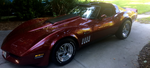


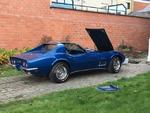


 Electric fan or not ?