




High Altitude Cam

Team Owner


Joined: Apr 1999
Posts: 21,953
Likes: 1,445
From: Reno Nevada
2024 C3 of the Year Finalist- Modified

 The less duration E ? did you tell him that you had a long tube header dual exhaust?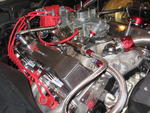
Le Mans Master


Joined: Aug 2017
Posts: 8,336
Likes: 2,810
From: Cool Northern Michigan
Now that's interesting, less lift and duration on the exhaust than the intake. I wonder if that is because of less atmospheric pressure the exhaust has an easier time getting out? or to combat intake reversion? Curious.
Or maybe it would be more accurate to say exhaust reversion/ intake contamination.
Or maybe it would be more accurate to say exhaust reversion/ intake contamination.
Last edited by HeadsU.P.; Oct 23, 2019 at 08:24 PM.

Le Mans Master

Joined: Apr 2006
Posts: 5,403
Likes: 95
The answer is obvious you have a problem with not enough air on the intake side at 7000ft , not getting the exhaust out regardless of your exhaust system exactly why I mentioned a single pattern cam the exhaust is not your problem. I really like the cam he suggested , smart move contacting him. It does not take a genius to figure out you need help getting air in not exhaust problems. What good does it do to have a good exhaust system if you can't get any friggen air in your cylinder exactly why it has more intake duration and lift there. The man is not stupid.
Last edited by Little Mouse; Oct 23, 2019 at 11:46 PM.

Le Mans Master
Joined: Apr 2011
Posts: 6,284
Likes: 1,171
From: Hermosa
The answer is obvious you have a problem with not enough air on the intake side at 7000ft , not getting the exhaust out regardless of your exhaust system exactly why I mentioned a single pattern cam the exhaust is not your problem. I really like the cam he suggested , smart move contacting him. It does not take a genius to figure out you need help getting air in not exhaust problems. What good does it do to have a good exhaust system if you can't get any friggen air in your cylinder exactly why it has more intake duration and lift there. The man is not stupid.
But the way I understand it the exhaust assists getting the fresh charge into the cylinder during during the exhaust's exit. So the speed and duration of the exit of the exhaust and overall depression created by it's exit is of importance.
It could be that too much exhaust duration or lift or both over scavenges the cylinder Right?. That would make the exhaust your problem then.
No reason to optimize the intake side if your just gonna shove too much of it out the exhaust pipe.
I say let's just see what answers we get. None of us are cam experts that I know of.
Last edited by REELAV8R; Oct 24, 2019 at 10:40 AM.

Thread Starter
Instructor

Joined: Dec 2017
Posts: 169
Likes: 29
Here is his reply:
"At your 7,000' elevation, the air density is about 79% of what it is at sea level. This means your cylinder will only have 79% as much mass to evacuate during the exhaust stroke. Less mass, requires less time to evacuate. That's why the exhaust duration is shorter then the intake. With that shorter duration on the exhaust, the velocity of the mass in the exhaust port will be increased, closer to what you would normally see at sea level. This increase in exhaust velocity will pull harder on the intake port, during overlap, increasing the flow in the intake port, and increasing the mass in the cylinder."
"At your 7,000' elevation, the air density is about 79% of what it is at sea level. This means your cylinder will only have 79% as much mass to evacuate during the exhaust stroke. Less mass, requires less time to evacuate. That's why the exhaust duration is shorter then the intake. With that shorter duration on the exhaust, the velocity of the mass in the exhaust port will be increased, closer to what you would normally see at sea level. This increase in exhaust velocity will pull harder on the intake port, during overlap, increasing the flow in the intake port, and increasing the mass in the cylinder."
Le Mans Master
Joined: Apr 2006
Posts: 5,403
Likes: 95
Are you glad now you contacted him and not the idiot's answering a phone line at a big company. If you don't know gold blood at comp can talk to him on the phone you are screwed may as well pick your own cam. He is doing more time to get in air in your intake and further using the exhaust for help on the intake air problem you have. No one can fix that problem but he can do as much as a bad situation allows.
Last edited by Little Mouse; Oct 24, 2019 at 05:21 PM.
Thread Starter
Instructor
Joined: Dec 2017
Posts: 169
Likes: 29
The answer is obvious you have a problem with not enough air on the intake side at 7000ft , not getting the exhaust out regardless of your exhaust system exactly why I mentioned a single pattern cam the exhaust is not your problem. I really like the cam he suggested , smart move contacting him. It does not take a genius to figure out you need help getting air in not exhaust problems. What good does it do to have a good exhaust system if you can't get any friggen air in your cylinder exactly why it has more intake duration and lift there. The man is not stupid.
Maybe I'm not as good at this as you are.
But the way I understand it the exhaust assists getting the fresh charge into the cylinder during during the exhaust's exit. So the speed and duration of the exit of the exhaust and overall depression created by it's exit is of importance.
It could be that too much exhaust duration or lift or both over scavenges the cylinder Right?. That would make the exhaust your problem then.
No reason to optimize the intake side if your just gonna shove too much of it out the exhaust pipe.
I say let's just see what answers we get. None of us are cam experts that I know of.
But the way I understand it the exhaust assists getting the fresh charge into the cylinder during during the exhaust's exit. So the speed and duration of the exit of the exhaust and overall depression created by it's exit is of importance.
It could be that too much exhaust duration or lift or both over scavenges the cylinder Right?. That would make the exhaust your problem then.
No reason to optimize the intake side if your just gonna shove too much of it out the exhaust pipe.
I say let's just see what answers we get. None of us are cam experts that I know of.
Le Mans Master
Joined: Apr 2006
Posts: 5,403
Likes: 95
Last edited by Little Mouse; Oct 24, 2019 at 05:34 PM.
Corvette Stories
The Best of Corvette for Corvette Enthusiasts

Top 10 Most Expensive Corvettes Ever Sold on Bring A Trailer
Brett Foote
10 Things Every Corvette Owner Needs (2026 Edition)
Michael S. Palmer
8 Most "Only Corvette Owners Understand" Quirks and Problems
Pouria Savadkouei
10 Reasons the C6 Z06 is Still A Performance Benchmark After 20 Years
Joe Kucinski
How Much Horsepower Every Corvette Engine "LOST" in 1972
Joe Kucinski
Top 10 DOs and DON'Ts for Protecting Your Convertible Top!
Michael S. Palmer
Top 10 Most Explosive Corvettes Ever Made: Power-to-Weight Ratio Ranked!
Joe Kucinski
150 hp to 1,250 hp: Every Corvette Generation Compared by the Specs That Matter
Joe Kucinski
8 Coolest Corvette Pace Cars (and Replicas) of All Time
Verdad Gallardo
Le Mans Master
Joined: Apr 2006
Posts: 5,403
Likes: 95
Make sure your lifters rotate, without that just a matter of a few miles before a lobe is gone no matter how well you break it in. Folks put in a flat tappet do nothing to check the lifter bores all it takes one bad one in 16.
Last edited by Little Mouse; Oct 24, 2019 at 06:58 PM.
Le Mans Master
Joined: Apr 2011
Posts: 6,284
Likes: 1,171
From: Hermosa
Here is his reply:
"At your 7,000' elevation, the air density is about 79% of what it is at sea level. This means your cylinder will only have 79% as much mass to evacuate during the exhaust stroke. Less mass, requires less time to evacuate. That's why the exhaust duration is shorter then the intake. With that shorter duration on the exhaust, the velocity of the mass in the exhaust port will be increased, closer to what you would normally see at sea level. This increase in exhaust velocity will pull harder on the intake port, during overlap, increasing the flow in the intake port, and increasing the mass in the cylinder."
"At your 7,000' elevation, the air density is about 79% of what it is at sea level. This means your cylinder will only have 79% as much mass to evacuate during the exhaust stroke. Less mass, requires less time to evacuate. That's why the exhaust duration is shorter then the intake. With that shorter duration on the exhaust, the velocity of the mass in the exhaust port will be increased, closer to what you would normally see at sea level. This increase in exhaust velocity will pull harder on the intake port, during overlap, increasing the flow in the intake port, and increasing the mass in the cylinder."
I can only assume that the valve events on the intake and the exhaust are markedly different to accommodate the altitude as well.
Last edited by REELAV8R; Oct 24, 2019 at 08:40 PM.
Thread Starter
Instructor
Joined: Dec 2017
Posts: 169
Likes: 29
Thanks, I'll pay special attention to that.
Le Mans Master
Joined: Apr 2011
Posts: 6,284
Likes: 1,171
From: Hermosa
With that shorter duration on the exhaust, the velocity of the mass in the exhaust port will be increased
There is a piece of the puzzle missing here, must be the timing of the opening of the exhaust valve? Open it a little earlier so pressure is higher?
OP are you getting a cam card with this cam?

Team Owner
Joined: Oct 2004
Posts: 81,241
Likes: 3,063
From: altered state
St. Jude Donor '05
Yes,timing. That exh will find its way out..unless one has a crappy exh or puny port I dont see the need for a bunch of exh lift or duration never made sense to me. Im no expert though!
I do prefer single pattern cams and a real good flowing exh port.Id imagine the less time and distance one has to hang the valve open there could be a small gain just from that. Spring isnt being compressed as much???
I do prefer single pattern cams and a real good flowing exh port.Id imagine the less time and distance one has to hang the valve open there could be a small gain just from that. Spring isnt being compressed as much???
Le Mans Master
Joined: Apr 2011
Posts: 6,284
Likes: 1,171
From: Hermosa
Yes,timing. That exh will find its way out..unless one has a crappy exh or puny port I dont see the need for a bunch of exh lift or duration never made sense to me. Im no expert though!
I do prefer single pattern cams and a real good flowing exh port.Id imagine the less time and distance one has to hang the valve open there could be a small gain just from that. Spring isnt being compressed as much???
I do prefer single pattern cams and a real good flowing exh port.Id imagine the less time and distance one has to hang the valve open there could be a small gain just from that. Spring isnt being compressed as much???
But if the intake flow/volume is compromised then the exhaust doesn't have to flow as well due to the loss of intake flow. That is if the ratio of intake to exhaust flow is changed for the worse. The ratio on the head hasn't been changed in this case but the intake flow is compromised to some degree due to lack of air density. So I guess it does take less time to evacuate the exhaust due to lack of volume or "mass" as Mike says. This should allow for the exhaust valve to open sooner (if we assume that the increased velocity is due to lower lift and opening exhaust valve at a higher exhaust pressure) and close sooner (lower duration).... I think.
If you can close the exhaust sooner you can open the intake sooner, giving the intake more time to fill the cylinder. I could be completely off base here, I'd like to see the cam card to confirm or deny.
I can also see an argument for opening the exhaust valve later since there is less to evacuate and close it sooner for the same reason. However opening it later would not increase the velocity and in fact might decrease it, this the reason for less lift? To create that nozzle effect?
So far I like my single pattern cam as well. I'm pretty sure it's not optimized for my scenario, but it's pretty good.
Le Mans Master
Joined: Apr 2011
Posts: 6,284
Likes: 1,171
From: Hermosa
so if I add all this up I think this is what may be able to be done.
You can open the exhaust valve slightly early to take advantage of high exhaust pressure to evacuate fast and create a nice big depression for the intake charge, but not so early as that you loose any significant pressure on the piston during it's down stroke. Then make it low duration so it can close earlier capturing more intake charge. The low lift vs higher lift, I'm not sure what to make of that, duration again? More lift takes more time, flat tappet has it's limits.
Now you open the intake valve earlier.
By opening it earlier you either have the option to have greater duration here and/or closing it earlier or both. Preventing less loss due to intake reversion and capturing more intake charge. It seems to me that less dense air is going to more easily revert back with the pistons rise.
These things should give you the most intake charge in the cylinder with the least loss either out the exhaust or back into the intake...if my logic is correct that is.
You can open the exhaust valve slightly early to take advantage of high exhaust pressure to evacuate fast and create a nice big depression for the intake charge, but not so early as that you loose any significant pressure on the piston during it's down stroke. Then make it low duration so it can close earlier capturing more intake charge. The low lift vs higher lift, I'm not sure what to make of that, duration again? More lift takes more time, flat tappet has it's limits.
Now you open the intake valve earlier.
By opening it earlier you either have the option to have greater duration here and/or closing it earlier or both. Preventing less loss due to intake reversion and capturing more intake charge. It seems to me that less dense air is going to more easily revert back with the pistons rise.
These things should give you the most intake charge in the cylinder with the least loss either out the exhaust or back into the intake...if my logic is correct that is.