When you click on links to various merchants on this site and make a purchase, this can result in this site earning a commission. Affiliate programs and affiliations include, but are not limited to, the eBay Partner Network.
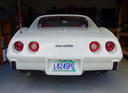
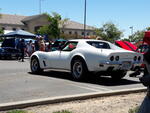
Hi, I just had new adjustable camber rods installed on my 72. I've driven it probably a 100 miles since then and it appears that the tires are "towed in" more now. I'm not certain how the "stance" should look from the rear,does this look normal or is it in need of an adjustment?
Thank you all for your feedback this forum has done very helpful.
If you're going for -.5 degree, they both look off but especially the right. I'll bet that's close to -2 degrees. Camber is the easiest thing in the world to check. Just put a level on the wheel.
Needs adjusting. Right side is out really bad, left side out just a bit. Take it back to whom ever done the alignment, they didn't tighten the camber adjustment bolts enough and they slipped.
I believe you want to be on the lip of the wheel and not on the tire.
Look closely at the above photos showing the level is set up on the wheel lip.
I would also remove the trim ring.
Even looking at it I would say you are going to have to much camber. But as said above use the lip of the rim. On adjustable camber rods you have to really torque down on those big nuts. They do tend to loosen up. Check yours.
Place your level so the bulge in the tire is not throwing off the measurement. By the front or rear face of the rim is fine. Also when you make a change you need to roll the car back and forth to settle suspension, then take reading, repeat. Ditto on tightening nuts. No need to go to shop, with adjustable rods this is one of the easiest adjustments you can make. Just be sure to recheck after a spin around the block.
Many have had trouble keeping the jam nuts tight on those adjustable rods with poly bushings. After you get it adjusted, get the jam nuts super tight, maybe even use some lock tite.
I admire you guys who can just eyeball adjustments like this. A few years back I re-did all my suspension. I set everything up the best I could, using a tape measure and MK1 eyeball......When I took it to the shop for the 'official alignment' the first thing the dude said to me was 'how long have you been driving it like this?' Doh. But if I had used that awesome socket on a level method, I think Id have gotten closer. GREAT idea. Thank you.
You can't measure camber by sticking a level on your tire. Here's my method and good to a 10th of a degree if you are on a flat and level surface. An iPhone with a free "Tremec Toolbox" driveline angle finder ap. The "straight edge" is a piece of scrap granite counter top (flat, no flex and free) cut to just over wheel lip length. We compared measurements while on the new computer alignment machine at the local GM dealer and they were the same. I was surprised at how accurate it is. It's also accurate measuring caster or any other angle.
Last edited by CanadaGrant; Dec 6, 2019 at 11:58 PM.
The Camber can be set with a level. Use the formula: 1 degree = 0.017 per inch. So a 15" wheel would be 15 x 0.017 = 0.255 inch.
Position the Level vertical with the bottom end touching the lower half (6 O'Clock) of the wheel. Then position the level so it is perfectly vertical and measure the distance (gap) to the upper half (12 O'Clock) of the wheel. 1 degree negative camber would be a 1/4" gap at the top. 1/2 degree negative camber would be an 1/8" gap at the top. Adjust the strut rods until you get the amount of negative camber you want. I like negative 1/2 degree. Roll the car back and forth a bit and jounce the rear suspension then check it again. You should be close enough until you can get your car properly aligned.
The Camber can be set with a level. Use the formula: 1 degree = 0.017 per inch. So a 15" wheel would be 15 x 0.017 = 0.255 inch.
Position the Level vertical with the bottom end touching the lower half (6 O'Clock) of the wheel. Then position the level so it is perfectly vertical and measure the distance (gap) to the upper half (12 O'Clock) of the wheel. 1 degree negative camber would be a 1/4" gap at the top. 1/2 degree negative camber would be an 1/8" gap at the top. Adjust the strut rods until you get the amount of negative camber you want. I like negative 1/2 degree. Roll the car back and forth a bit and jounce the rear suspension then check it again. You should be close enough until you can get your car properly aligned.
John
I like John's tips. The phone app works well too. The sidewall can be used, but I have an old $175 autocross camber gauge that you could duplicate by taping/gluing/welding/bolting two same height sockets to a piece of angle iron. Then touch them to the wheel lip top & bottom. It is a bit more accurate than using the tire itself. Then you have issues with tire bulge at the bottom and even raised lettersa on the sidewalls. Any of these tools can easily duplicate the accuracy of an alignment shop. It's just a little slower, but hey, my labor is free right?
My old guage uses a bubble level and has a calibrated screw to re-level it, but the phone app, or Home Depot digital tool is so much easier and quicker.
These are $14 on-line:
Last edited by leigh1322; Dec 7, 2019 at 02:51 PM.
One thing to remember is that rear camber will vary even with how much fuel you have in the tank. I usually set mine up with about 3/4's of a tank as I seldom get below a half so between full and a half. Another thing to consider (yes,nitpicking...) is that a 15" rim is actually 16" from lip to lip when changing degrees to inches.




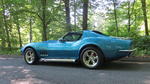



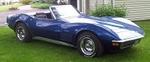

 Camber adjustment








 Even looking at it I would say you are going to have to much camber. But as said above use the lip of the rim. On adjustable camber rods you have to really torque down on those big nuts. They do tend to loosen up. Check yours.