When you click on links to various merchants on this site and make a purchase, this can result in this site earning a commission. Affiliate programs and affiliations include, but are not limited to, the eBay Partner Network.
I had to make a repair to the passenger side door sill where my door ajar switch broke off. I am in the process of attaching a fiberglass patch and will skim and float with bondo.
I plan to repaint the entire door sill section as to make a better blend at the seams. Should I just rough up the existing paint with sand paper and prime the section around the switch to prepare for paint? I purchased some color match spray paint and clear coat from automotive touchup.com
Suggest you use VPA (Evercoat vette panel adhesive) instead of bondo for body filler. Sounds like a reasonably good plan for a repair in an area not seen very often. Random fiberglass is better here than the woven mat which could telegraph and be seen through your finished paint which it looks like you are using. I would also suggest that you Dawn wash several times and use a wax and grease remover before you sand to avoid rubbing any oils, etc, into the body.
Hope this helps.
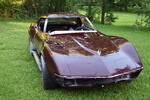
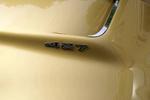
Nice 69 Corvette Tri Power in Riverside Gold!
Last edited by 20mercury; May 26, 2020 at 02:44 PM.
Suggest you use VPA (Evercoat vette panel adhesive) instead of bondo for body filler. Sounds like a reasonably good plan for a repair in an area not seen very often. Random fiberglass is better here than the woven mat which could telegraph and be seen through your finished paint which it looks like you are using. I would also suggest that you Dawn wash several times and use a wax and grease remover before you sand to avoid rubbing any oils, etc, into the body.
Hope this helps.
Nice 69 Corvette Tri Power in Riverside Gold!
thank you. Any recommendation in where to apply primer. Just over the repair area after it is skimmed with the filler? What type of primer is best?
I would rough up a larger area that encompasses the perimeter of your repair area, with something like 320gt. Then apply your bondo (it'll work ok), then sand trying to keep sandscratches to as small of an area as possible. Use part of a hard wood stick and some sandpaper to get the repair area as flat as possible. You could even wetsand the bondo with like 220 on a stick ...and hit it with a hair dryer to evaporate the water out. That'll cut down on the heavy sand-scratches you'll leave and make your downstream work easier and less prone to telegraphing through.
Then you're going to need a number of coats of primer. Any legit shop would use a high-build urethane epoxy primer (that doesn't shrink), but since you're using spray cans, tape off a region and apply several coats. The final coat should be a very light mist (one light pass from a distance) of some semi-gloss black or black primer. Don't use gloss paint. The black is going to be your 'guide coat' so you can see how your sanding is going during the next step.
Sanding: Let the primer sit a few hours or overnight. Then come back with a hair dryer and really give it some heat. Spray can primer is really crappy stuff and prone to 'shrinking' a long time after your repair if you don't bake it out. Don't believe what the can says, b/c they all say, "Doesn't shrink" (it's a lie). After you bake out the primer, let it sit another day.
Final Prime: Then come back and wetsand it with 400 grit wet/dry sandpaper on a hard foam or plastic backer (something that will still conform to the curve), you 'll be able to see how you're doing with the 'guide coat'. black. Then move to 600 grit, or even 1000 grit. On the last sanding, sand a little further out on your repair. If you sand through the primer, ...and even if you haven't, you might want to put another light coat of primer on the repaiir area and make sure it covers all the scratches.
After it cures, you might want to lightly sand the edges of the primer, but just a little ..don't sand completely smooth. Here's why: your top coat of paint, some of the solvents will to 'into' the primer (that's what paint does). If you just put gold paint over your sanded area where you can see your sand scratches from the repair, the solvents will LIFT the edges of those areas and in a year your repair will 'telegraph' through. By putting a final coat of primer over the repair, and leaving it (but let it cure out), the solvents won't go deep enough to lift any edges. It probably doesn't make any sense what I'm saying, but just think back to bad paint repairs you've seen where you could see the guy's repair work coming through the paint. That's what you want to avoid. A body shop would spray a 'Primer/sealer' right before applying paint. The purpose of a 'sealer' is to prevent solvents from penetrating the repair. it acts like a barrier. Your final coat of primer will be your sealer, it'll have to do.
For painting, if it were me, I'd mask off a decent sized area (use 1.5" wide tape and 'back-tape' with a curl) going even further away than your sanded and primed repair. Before spraying, paint, if it were me, I would spray the old painted area to be sprayed with a single wet coat of solvent. The purpose would be to soften up the surrounding paint so the new paint and clear will 'melt' in. Let the solvent 'flash-off' for 5 minutes, then apply the first coat of paint. Wait a minute or two and then a 2nd. Each coat should go slightly beyond the boarder of the previous. Give yourself plenty of room. You don't want a 'hard' tape line.
Gold is probably the hardest color to ever match, so you need to give yourself room to 'blend it out' into the surrounding gold. Then a couple coats of clear. Let it sit a couple weeks or a month before wetsanding and buffing the edges, unless it turns out good enough you don't need to.
Sounds like a lot of work and it is ...to get a 'good' job. In a bodyshop, we'd have to sometimes repaint/clear a whole panel, sometimes multiple panels (in some cases a whole car side) to get a good paint blend ...depending on where the damage was and how bad.
thank you. Any recommendation in where to apply primer. Just over the repair area after it is skimmed with the filler? What type of primer is best?
I would just prime only the repaired area and try to blend in your touch up paint into the surrounding area with blue tape curled as mentioned by Mark G. I like primers and primer sealers from SPI, but I do not know if they make a spray can for touch ups. I would use VPA and not bondo. Bondo might work, but I have used VPA on a number of Vette repairs as fillers successfully and per advice here.
Good advice from Mark G above, the only thing I would wonder about is a solvent prep to soften the paint, but might try it.
The good news is this is a non conspicuous spot, not like on the center of your hood, and it is small, so you can play with it a bit. Only caution from my experience is small repair spots get bigger the more you do, so be careful and limit the area worked.
Also you might consider posting in the paint and body section here too.
Good luck and hope to see your 69 Riverside Gold at a car show as you might be in Texas??
Editorial comment: I have snagged something on those switches more than once and have had to effect repairs. The alarm switches are located out-of-the-way at the front of the door (as I remember, but haven't looked). I suppose there's more sensitivity here but still ....
Went out and looked at my C6. I am guessing that that function is embedded in the electric door mechanism. No little plungers anywhere. This is about 1930's level technology.
Lot of good advice here, I wouldn't use Bondo anywhere near this, just keep glassing until the fiber disappears. But I would paint the entire jamb, you won't be able to disguise a blend and it's no big deal to do the whole thing. A good thick primer/filler with guide coat to catch the surface imperfections where you sanded. Maybe a skim coat if you went really deep with the sanding as it appears you have. I like PPG K36 if that's available where you are. You don't need to prime the whole thing if you do you may end up with a different color than you want.
You may not have compressed air, but if you do, HVLP touch-up guns are the way to go and they're not that expensive. You'll be happier if you own one. If you do use spray cans, clear the nozzle every now and then, just in case.
I often also recommend the other corvette topics, few seem to realize that exists.
Finally, I have had seatbelts and one of the door panel screws scratch the surface in this area. I put some "Cleartastic" down here to protect the paint job. Fairly invisible.
I would rough up a larger area that encompasses the perimeter of your repair area, with something like 320gt. Then apply your bondo (it'll work ok), then sand trying to keep sandscratches to as small of an area as possible. Use part of a hard wood stick and some sandpaper to get the repair area as flat as possible. You could even wetsand the bondo with like 220 on a stick ...and hit it with a hair dryer to evaporate the water out. That'll cut down on the heavy sand-scratches you'll leave and make your downstream work easier and less prone to telegraphing through.
Then you're going to need a number of coats of primer. Any legit shop would use a high-build urethane epoxy primer (that doesn't shrink), but since you're using spray cans, tape off a region and apply several coats. The final coat should be a very light mist (one light pass from a distance) of some semi-gloss black or black primer. Don't use gloss paint. The black is going to be your 'guide coat' so you can see how your sanding is going during the next step.
Sanding: Let the primer sit a few hours or overnight. Then come back with a hair dryer and really give it some heat. Spray can primer is really crappy stuff and prone to 'shrinking' a long time after your repair if you don't bake it out. Don't believe what the can says, b/c they all say, "Doesn't shrink" (it's a lie). After you bake out the primer, let it sit another day.
Final Prime: Then come back and wetsand it with 400 grit wet/dry sandpaper on a hard foam or plastic backer (something that will still conform to the curve), you 'll be able to see how you're doing with the 'guide coat'. black. Then move to 600 grit, or even 1000 grit. On the last sanding, sand a little further out on your repair. If you sand through the primer, ...and even if you haven't, you might want to put another light coat of primer on the repaiir area and make sure it covers all the scratches.
After it cures, you might want to lightly sand the edges of the primer, but just a little ..don't sand completely smooth. Here's why: your top coat of paint, some of the solvents will to 'into' the primer (that's what paint does). If you just put gold paint over your sanded area where you can see your sand scratches from the repair, the solvents will LIFT the edges of those areas and in a year your repair will 'telegraph' through. By putting a final coat of primer over the repair, and leaving it (but let it cure out), the solvents won't go deep enough to lift any edges. It probably doesn't make any sense what I'm saying, but just think back to bad paint repairs you've seen where you could see the guy's repair work coming through the paint. That's what you want to avoid. A body shop would spray a 'Primer/sealer' right before applying paint. The purpose of a 'sealer' is to prevent solvents from penetrating the repair. it acts like a barrier. Your final coat of primer will be your sealer, it'll have to do.
For painting, if it were me, I'd mask off a decent sized area (use 1.5" wide tape and 'back-tape' with a curl) going even further away than your sanded and primed repair. Before spraying, paint, if it were me, I would spray the old painted area to be sprayed with a single wet coat of solvent. The purpose would be to soften up the surrounding paint so the new paint and clear will 'melt' in. Let the solvent 'flash-off' for 5 minutes, then apply the first coat of paint. Wait a minute or two and then a 2nd. Each coat should go slightly beyond the boarder of the previous. Give yourself plenty of room. You don't want a 'hard' tape line.
Gold is probably the hardest color to ever match, so you need to give yourself room to 'blend it out' into the surrounding gold. Then a couple coats of clear. Let it sit a couple weeks or a month before wetsanding and buffing the edges, unless it turns out good enough you don't need to.
Sounds like a lot of work and it is ...to get a 'good' job. In a bodyshop, we'd have to sometimes repaint/clear a whole panel, sometimes multiple panels (in some cases a whole car side) to get a good paint blend ...depending on where the damage was and how bad.
Can I use a heat gun on low instead of a hair dryer?
What product is the wet coat of solvent? Is it available in a spray can at an auto parts store?
How long should the base coat dry before applying clear coat?
Thank your for the detailed explanation. Here are my steps as I understand them:
1. drill out center hole for door ajar button and rivet holes on repair patch
2. attach the repair mold (fiberglass) to the damaged area using JB Weld adhesive
3. skim out damaged area and blend fiberglass mold into surrounding area with Bondo
3. rough up area 4"- 6" from repair area using 320 gt - use stick to apply force
4. wet sand area with 220 gt - use stick to apply force
5. tape off area to be painted - top of door sill above striker guide plate to bottom of plate above door jamb - to left side outer door sill to inside trim plate
5. hit repair area with heat gun to remove moisture
6. spray primer (urethane epoxy - black) to repair area and blend into surrounding area - let sit over night.
7. hit primed area with heat gun to bake out primer
8. wet block sand with 400 gt wet/dry sandpaper followed by 600/1000 gt
9. lightly sand edges of primed area
10. apply light coat of primer over repair area prior to paint to fill any sanding scratches
11. mask off area to be painted using 1.5" tape and back tape with curl
12 spray old painted area with wet coat of solvent - allow to flash off for 5 minutes
13 apply first coat of paint, wait 1-2 minutes followed by 2nd coat bringing each coat slightly beyond the border of the 1st.
14 after base coat dries apply 2 coats of clear coat
15 wet sand and buff the edges if needed after 2 weeks
Can I use a heat gun on low instead of a hair dryer?
What product is the wet coat of solvent? Is it available in a spray can at an auto parts store?
How long should the base coat dry before applying clear coat?
Thank your for the detailed explanation. Here are my steps as I understand them:
1. drill out center hole for door ajar button and rivet holes on repair patch
2. attach the repair mold (fiberglass) to the damaged area using JB Weld adhesive
3. skim out damaged area and blend fiberglass mold into surrounding area with Bondo
3. rough up area 4"- 6" from repair area using 320 gt - use stick to apply force
4. wet sand area with 220 gt - use stick to apply force [The stick is to get a 'smooth' flat repair that matches your door jamb]
5. tape off area to be painted - top of door sill above striker guide plate to bottom of plate above door jamb - to left side outer door sill to inside trim plate
5. hit repair area with heat gun to remove moisture [Lightly heat (about as hot as a hair dryer), you don't want to 'blister' the primer]
6. spray primer (urethane epoxy - black) to repair area and blend into surrounding area - let sit over night. [I was assuming you would be using spray can primer ..it'll work ok if you let it cure out overnight, then 'bake it out' with a hair dryer or light heat gun heat as per below]
7. hit primed area with heat gun to bake out primer [Don't overdo the heat]
8. wet block sand with 400 gt wet/dry sandpaper followed by 600/1000 gt [Sure. Sand the whole repair smooth. Probably don't need to use 1000 grit if you don't have any in stock. Clean the ENTIRE area you are going to blend with soapy water in case a previous owner has applied Armour-All to the jambs at some point in the past -- a painters nightmare!]
9. lightly sand edges of primed area
10. apply light coat of primer over repair area prior to paint to fill any sanding scratches [Yes, but here you are mainly looking for 'coverage' so when you apply the paint it doesn't lift any exposed sand scratches or 'edges']
11. mask off area to be painted using 1.5" tape and back tape with curl [Yes]
12 spray old painted area with wet coat of solvent - allow to flash off for 5 minutes [Yes, lightly (test a spot first ..you don't want to 'lift' ..or damage the existing paint) ...this is assuming you have a spray gun. If you don't, maybe just skip this step. If I were doing it, or a paint shop, they might spray with an enamel reducer. Enamel reducer is usually a little less agressive than lacquer thinner, or most other solvents. They make blending solvents for shops. The goal is to just slightly gum-up the outer surface of the existing paint so the new paint/clear will melt in. therefore you get a chemical adhesion than a 'mechanical' adhesion. chemical is always better and won't 'peel' down the road. You could also try one of those refillable paint cans too ..I think H/F sells them]
13 apply first coat of paint, wait 1-2 minutes followed by 2nd coat bringing each coat slightly beyond the border of the 1st.
14 after base coat dries apply 2 coats of clear coat
15 wet sand and buff the edges if needed after 2 weeks
[Yep, I would just lightly sand down any dry edges and buff those. You could hand buff if you have the right compound, or lightly machine buff]






 Paint preparation process?