When you click on links to various merchants on this site and make a purchase, this can result in this site earning a commission. Affiliate programs and affiliations include, but are not limited to, the eBay Partner Network.
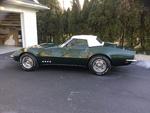
I acquired my 69 L68 a few months ago and have had starting problems from day 1. The car is mostly bone stock except for a small Erson cam and has the factory tri power system redone by John Luck(?). Anyway, I discovered the exhaust crossover was not blocked off, so I figured this may be the problem. After replacing the intake with the gasket blocked this time and a lower thermostat, issues improved but the carbs are still boiling after shut-down. I was considering the spacers offered by Dashman - has anybody used these? https://www.dashman.net/product.html?id=272
The car has a an L88 hood so I have the clearance if necessary.
Any input is appreciated!
Non-ethanol laced fuel is important. Ethanol fuels have 10 degree lower boiling point that 100% gas. I think with a tri-power setup, a heat shield 'pack' would be more beneficial than a thick isolator block.
If you have vacuum advance system working, make sure it is being fed by manifold vacuum. Ported vacuum source will defeat advance feature at idle and make the heads run hotter (the actual intent of 'ported/timed' vacuum). Putting "initial" timing at 10-12* BTDC would also cool the engine down at idle and low speed cruising rpm's.
My L71 has similar issues and I've also looked at Dashman's phenolic spacers. You might also consider these from hotrodcarbs.com. A bit pricier (the "Kit C") but they include heat shields along with insulating spacers. The photo shows them on a Mopar manifold but they're made to fit a Corvette Tri-Power setup as well. I too would be interested in hearing from anyone with firsthand experience with either of these products.
Ethanol boils at 180 degrees. Ethanol added fuel is all you can get in some states these days. If you can get the old stuff, go for it.
If it is boiling after shut down too much heat is being "radiated" into the fuel bowls. You need a reflective heat shield made out of aluminum that reflects the "radiation" energy away from the bottom of the fuel bowl. It needs to shield the fuel bowl. An insulating spacer may work, but a reflective one is thinner and may work better. It needs air space around it to work. Heat "conduction" works very efficiently thru the soild metal portion of the carb, and isolating that would help with an under carb spacer. But the fuel bowl seems to pick up most of it's heat from "radiation" thru the air from the nearby manifold and shiny aluminum works best there.
This Holley one includes both for safe measure. But I don't know of one for a two barrel.
I would use the one you found. That is a cool looking product. It solves one of the heat related issues. You could always add a layer of aluminum in that shape to it if it is not effective enough. For your application the 1/4" thick ones should work just as well as the 1/2" thick ones.
I assume your starting problem is after you run it for a while,,,, like about the time it takes to get to the brewery,,,, and when you let it set for a while it's hard to start,,, about the time it takes to drink 2 beers. My 68 L79 did the same thing. I tried all the spacers, heat blockers, ETC.... The only thing that stopped it was to set the timing as per Lars. Are you sure it is "boiling" ? Mine with the air cleaner off would shoot fuel 6 inches out the top when I started it. I also had the problem with my altitude,,, 5500 ft, the boiling point is even lower. I checked the heat at the carb after it was warm,,, it never did seem that hot. My car doesn't do it any more.
So true. Initial timing at 18 or so with more vac on top of that (manifold) in a performance curve runs much cooler than the stock setup. The heavily retarded stock setup is early emissions control at it's worst. And fixing it is a win-win. And very low cost.
My buddy says running aviation fuel solves all these issues as it has a higher boiling point than the 93 Ethanol sold around here. Not sure I want the hassle with gas cans and all. Regarding timing, the distributor seems to have more mechanical advance than the HEIs I'm used to. It has the Pertronix guts and new coil and plugs. I worked backward from setting 38 degrees total timing which comes to about 8 degrees initial. Usually I'd run more but I didn't want too much total. The vacuum advance is just above the manifold on the center carb (In fact, I didn't see any ported/spark option) and I have lighter advance springs. The timing advances quickly off idle.
I know the carbs are boiling as I removed all three site plugs and can see it bubbling some, but not near as bad as before the exhaust crossover was blocked.
Funny thing is that when hot, I can shut the car off and immediately try to restart and it takes a decent amount of cranking and a playing with the gas. Never had that issue and I've been using Holley's all my life (just not a tri-power setup). Float levels are good. I set the air fuels with a vacuum gauge with a 1/4 turn richness added. The outboard carb rods are set so they are fully shut.
I was reading some original documentation and even the factory suggests like a half pump of the gas on a hot start, which I find bizarre as I shouldn't have to touch the gas.
..... The vacuum advance is just above the manifold on the center carb (In fact, I didn't see any ported/spark option) and I have lighter advance springs. The timing advances quickly off idle.
.....
Thanks again for any input.
The vacuum advance should add at least 12 degrees at idle, so you would have like 21 + at idle with both initial and vacuum. (I run high 20s) Otherwise you are hooked up to a ported vacuum source. Then you only have 8 degrees at idle and that is what makes it run real hot.
With the vacuum hooked up to manifold, the timing should drop very quickly when you give it gas.
The last time GM ran a good performance curve like this was 1964, on the 365HP 327. It had an ideal performance curve setup from the factory. But there were zero emission concerns then, remember they even still had road draft tubes, no PCV. Emissions started in 65 and a good timing curve was the very first casualty.
The vacuum advance should add at least 12 degrees at idle, so you would have like 21 + at idle with both initial and vacuum. (I run high 20s) Otherwise you are hooked up to a ported vacuum source. Then you only have 8 degrees at idle and that is what makes it run real hot.
With the vacuum hooked up to manifold, the timing should drop very quickly when you give it gas.
The last time GM ran a good performance curve like this was 1964, on the 365HP 327. It had an ideal performance curve setup from the factory. But there were zero emission concerns then, remember they even still had road draft tubes, no PCV. Emissions started in 65 and a good timing curve was the very first casualty.
I should have clarified that it was 8 degrees initial without the vacuum advance. Yes, it jumps way up with the vacuum advance attached. So, as it sits, its tuned with vacuum advance attached (manifold port) at over 20 initial, 750 rpms idle, lighter springs for the advance weights, and 38 degrees total. Power valve should be good as I can kill the idle as I lean out the air fuels. Mechanically, the advance is all in at 2500 rpms.
Last edited by Monaco400HP; Jun 2, 2020 at 10:05 PM.
I used the Dashman spacers when swapped my stock tripower carbs for the Mopar Direct Connection mechanical secondary setup. Needed the clearance with the thermostat housing. Worked well for me.
I used the Dashman spacers when swapped my stock tripower carbs for the Mopar Direct Connection mechanical secondary setup. Needed the clearance with the thermostat housing. Worked well for me.
Thanks for posting.....the Dashman spacers do not have the heat shield for the bowls like in the other brand above ^^^. I wonder if one is better.
I was curious if they made a mechanical tri-power setup. I will have to look that up. Seems like too much air flow for my 427 at lower rpms, esp being a manual.
As others have mentioned, switch to manifold vacuum and get a vac can that is fully advanced at idle vacuum. This had a huge impact on my L71 temp.....went from 210 to 180 even on 90 degree days. No more vapor lock, etc.






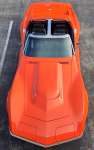

 3x2 carbs boiling