When you click on links to various merchants on this site and make a purchase, this can result in this site earning a commission. Affiliate programs and affiliations include, but are not limited to, the eBay Partner Network.
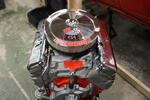
Can someone help me identify this carb please, and once done does anyone have any documents for it. Trying to find the various adjusters for it.
Also I removed the original air filter box, and replaced it with and open element, however there are two hoses im not sure what to do with.. both circled in red in the pics.
The first just seems to take hot air off the manifold heat shield and pipe it in to the cold air intake for reason I cannot figure out, can I just leave this off i assume and allow it to just vent as the manifold originally would or do I need to seal it up? (I assume its just warm air and not exhaust gas coming through it) - I live in CA so if this is a cold weather thing I dont think it'll be an issue
The second is on the bottom of the carb toward the bulk head and fed a couple of vacuum lines that also plugged in to the cold air intake. These appear to have actuated the flaps/doors in the inlets. This has a good amount of vacuum pressure, question is do I plug it, or let it breath? (plugging it appear to increase and smooth out the idle)
Last edited by Blobitos; Jun 26, 2020 at 05:51 PM.
That's a Quadrajet, says so right on the side in your third photo. There should be numbers you can look up to help determine what car it came off of. Is that a replacement Goodwrench engine? What year is your car? I wouldn't think that the secondary flappers should be open like that, though.
The hot air tube feeds one leg of the dual snorkel intake, but since it's not hooked up to a cold air source, it's moot. The convoluted mess of vacuum hoses and thermo-vacuum switches in your waterneck is used to shut one or both of the flappers inside the intake snorkels, to force the engine to run off of the warmer exhaust-heated air from the heat stove around the exhaust (not actual exhaust, of course). If a vacuum hose is open, your best bet is to cap the port on the carburetor that is feeding it, until you can decide if you need the hose (then fix it), or not. You can buy packs of vacuum caps at any auto parts store.
Your best bet is to email @lars on this forum for his Q-Jet identification and setup papers (get his timing and HEI setup papers as well). Another good source is Cliff Ruggles' book.
Thanks for your response Bikespace. I have reached out to Lars, i did notice the writing on the side of the carb when I uploaded the pics and felt like such a dumbass! But i cant get my phone a lot lower and closer then I could get me head
Yes its a goodwrench engine, cars a 78 but this is the block it came with
In terms of what you have written here: The convoluted mess of vacuum hoses and thermo-vacuum switches in your waterneck is used to shut one or both of the flappers inside the intake snorkels, to force the engine to run off of the warmer exhaust-heated air from the heat stove around the exhaust (not actual exhaust, of course).
Is there more I can remove then? I never had the snorkels with the car hence why i just swapped to an open element, so its always been running off the hot air, and id really like to trim down the amount of pipes and stuff in there
Last edited by Blobitos; Jun 26, 2020 at 06:26 PM.
If that is the original air cleaner and carburetor then that vertical number that Bikespace refers to should read 17058228. It was used on a 78 L82 auto with air. This number will tell you what the carb was used on if not on the 78.
From: At my Bar drinking and wrenching in Lafayette Colorado
Bob -
Just sent you out some info. Your carb is a nice, stock, original carb, but it's pretty messed up - it needs a complete rebuild and setup. Your secondary airvalves are flopped wide open, providing no secondary control at all, which is likely representative of the condition of the rest of the carb. Time for some work..!
Your Carb has other problems but a couple things you circled in red:
Your flex hose is not connected to your air cleaner stove pipe inlet, 1st photo. On a cold start this hose draws in warm-hot air generated by the exhaust manifold.
The vacuum hose not connected in the 2nd photo goes to the thermostatic sensor that should be inside your air cleaner housing (Green Valve My Photo).
The sensor has 2 hose ports on the bottom. Inlet and outlet. Because your 78 air cleaner has 2 damper doors you will have to tee the outlet vacuum hose so it reaches both damper door.s My 77 only has one.
The same sensor was used from 1975-1979 GM #6484244.
A diagram of how the sensor and damper doors works.
Thermostatic Sensor:
Last edited by bmotojoe; Jun 26, 2020 at 10:22 PM.
Thanks for your response Bikespace. I have reached out to Lars, i did notice the writing on the side of the carb when I uploaded the pics and felt like such a dumbass! But i cant get my phone a lot lower and closer then I could get me head
Yes its a goodwrench engine, cars a 78 but this is the block it came with
In terms of what you have written here: The convoluted mess of vacuum hoses and thermo-vacuum switches in your waterneck is used to shut one or both of the flappers inside the intake snorkels, to force the engine to run off of the warmer exhaust-heated air from the heat stove around the exhaust (not actual exhaust, of course).
Is there more I can remove then? I never had the snorkels with the car hence why i just swapped to an open element, so its always been running off the hot air, and id really like to trim down the amount of pipes and stuff in there
You should be on the right path if you read what @lars sent you, and fix what you can.
As for the rest of the vacuum hoses, if California allows you to use a single-element non-snorkel air cleaner, I s'pose you can get rid of the vacuum hoses that control the flappers in the snorkels. I am a big proponent of the cold-air induction, though, and have it in both of my cars.
Beyond that, I'm afraid you are at the mercy of what you need for your state emissions. At least one of the TVSs controls the EGR valve, I think, and you'll need that. And the smog pump, A.I.R. tubes, etc.
I'd search the forum for other people with late-model C3s in California, and perhaps join your local club. I don't want to speculate and be wrong.
Depending on the county emissions requirements where you live in CA, you may be required to KEEP all emission stuff as it was received from the factory. Check with local testing site to know what restrictions you have.
Since your car is in 'original' configuration, but needs rebuilding, I strongly recommend that you send it to Lars for rebuilding. Getting the carb set up properlly is the best way to have the engine meet your local emissions requirements. I am certain that the vacuum advance can on the distributor was fed from a 'ported' vacuum fitting on your carb....and it needs to be set up that way for emissions testing. But for normal driving, it would be best for the engine and idle quality to connect that can directly to a 'manifold' vacuum fitting.
Hey guys, thanks all for your responses and apologies for being rude and not acknowledging you, for some reason my emails about new posts started going to spam. Thanks all for your help and for Lars with his great documents, I will spend some time trying to sort it myself (after all its my quarantine project and i have nothing better to do), if i bugger it up or lock down ends it'll be on its way to Lars
P.s.
The car has already passed its SMOG, and pretty well with its current setup, the AIR system has already been made an exception by the BAR and for the age of the car the emissions levels were very good
You may want to re-think the open-air air cleaner vs cold air air cleaner. I just read the cold air system that was first added in 73 vettes was worth 0.5 sec zero to 60. It gets really hot under that closed hood in a small engine compartment, like near 200 degrees air temps.






 Carb Help