When you click on links to various merchants on this site and make a purchase, this can result in this site earning a commission. Affiliate programs and affiliations include, but are not limited to, the eBay Partner Network.
Generally, my '82 runs pretty well. 37K miles. New, cap, plug, wires around 29K miles 8 years ago. Stock CFI. A couple of questions. Spray patterns in TBI's seem decent. It does surge at idle sometimes when cold. Intake gaskets (Fel pro) replace years ago. Rarely surges at all when warmed up...only at cold idle (first start after sitting for awhile....hours, or days) sometimes. Surging was majorly reduced when the intake gaskets were replaced.
1) I thought these usually fire up to about 1K rpms until warmed up and then settles in ~550. Mine only sometimes ramps up to 1k during warm up. AC on or off. It surprised me recently that it seemed to do this once or twice. Idle Air controllers? TPS maybe? Idle at start up just seems intermittent a bit in its behavior. But, it idles nicely smooth at ~550 when warm. Rare for it to die during start up. It hunts a little, but stays short of dying.
2) I notice there is actually a choke light in the cluster, but never have ever seen it come on? Is it supposed to ever come on indicating a warm up condition? Only when it's cold outside and the choke actually comes on?
3) I read in another thread about a choke relay in the center console. Symptoms of it going bad?
Thoughts?
Got an OBD I scanner coming to dig a little deeper.
Run an unlit propane torch around the intake where the upper and lower pieces meet.....this gasket is known to get petrified and leak from heat......also sniff around the TB base gaskets.....and where the intake meets the head......you never know.....it may need a re-seal or tightening. It's free to check!
If the IAC's are old.....it may need new ones too....remove and inspect these.
The choke light has no bulb in it.....GM's way of saving money.
Jebby
Last edited by Jebbysan; Aug 26, 2020 at 07:30 AM.
Run an unlit propane torch around the intake where the upper and lower pieces meet.....this gasket is known to get petrified and leak from heat......also sniff around the TB base gaskets.....and where the intake meets the head......you never know.....it may need a re-seal or tightening. It's free to check!
If the IAC's are old.....it may need new ones too....remove and inspect these.
The choke light has no bulb in it.....GM's way of saving money.
Jebby
Thanks Jebby! Yeah, it certainly could be time for some IAC checks and verifying the intake bolts. You were referring to the felpro gasket known to leak? The torch is used to simply heat up the gaskets? Or, is it a method to perform some other test? Now I remember no bulb behind the choke "window" when I put leds in the speedo/tach section of the panel. I just think it may be some parameter for start up because it has always settled into a nice idle after a minute or two. Only on occasion do I get the initial higher rpm on startup that slowly comes down my 550 idle. The IACs I checked awhile back with the simple battery test that moves the little pin. Is there a better test?
Last edited by 6mn Vette; Aug 26, 2020 at 09:03 AM.
Thanks Jebby! Yeah, it certainly could be time for some IAC checks and verifying the intake bolts. You were referring to the felpro gasket known to leak? The torch is used to simply heat up the gaskets? Or, is it a method to perform some other test? Now I remember no bulb behind the choke "window" when I put leds in the speedo/tach section of the panel. I just think it may be some parameter for start up because it has always settled into a nice idle after a minute or two. Only on occasion do I get the initial higher rpm on startup that slowly comes down my 550 idle. The IACs I checked awhile back with the simple battery test that moves the little pin. Is there a better test?
No...do not light the torch LOL......open it to let gas out and if there is a leak...the engine will pull the propane in and the idle will change..... Fel Pro gaskets are not known to leak.....but if it was done a long time ago....the plenum gasket maybe brittle and if not done properly the intake gaskets at the head maybe loose now....and the only way to get to the four center ones is to remove the top plate.....which i recommend you do with the throttle bodies attached......do not remove them.....unless you find those are leaking. Remove the plenum cover and go around to see if any of the bolts are missing.
Also hook a vacuum gauge to a port.....does it bounce or is it steady? Bouncing indicates a leak.
Jebby
Last edited by Jebbysan; Aug 26, 2020 at 09:18 AM.
2) I notice there is actually a choke light in the cluster, but never have ever seen it come on? Is it supposed to ever come on indicating a warm up condition? Only when it's cold outside and the choke actually comes on?
3) I read in another thread about a choke relay in the center console. Symptoms of it going bad?
Thoughts?
I guess by now you have found out the 82 CFI has no choke. Here's whats funny (GM Marketing at its finest) if you look at the show room accessory listing from 82 it does show it, but the pic must be of an 80-81 as the cross flags are also wrong. Guess it was easier to just change the horn button.
No...do not light the torch LOL......open it to let gas out and if there is a leak...the engine will pull the propane in and the idle will change..... Fel Pro gaskets are not known to leak.....but if it was done a long time ago....the plenum gasket maybe brittle and if not done properly the intake gaskets at the head maybe loose now....and the only way to get to the four center ones is to remove the top plate.....which i recommend you do with the throttle bodies attached......do not remove them.....unless you find those are leaking. Remove the plenum cover and go around to see if any of the bolts are missing.
Also hook a vacuum gauge to a port.....does it bounce or is it steady? Bouncing indicates a leak.
Jebby
Sounds good. Yeah, a corvette shop replaced the gaskets ~8 years (~8k miles ago). I'll certainly look for a vac leak, but idle is steady when warm (maybe everything expanding). I can't help but suspect a closed loop/open loop issue. The choke window was weird since it is there - even if there is no light. I never expected an actual choke with a FI unit. But, this was a rather primitive FI unit (by today's standards).
I guess by now you have found out the 82 CFI has no choke. Here's whats funny (GM Marketing at its finest) if you look at the show room accessory listing from 82 it does show it, but the pic must be of an 80-81 as the cross flags are also wrong. Guess it was easier to just change the horn button.
Your 'evaluation' should include checking the 'trouble codes' which may reside in your ECM. There is a method of downloading them via the OBD-I connector and the flashing of the Check Engine Light (CEL) on your dashboard. Your hand-held unit may provide the same information...or it may not, depending on how advanced the software is in the unit.
Your best course of action would be to download any stored trouble codes via BOTH methods to see how they compare and to identify any system problems recognized by your ECM. Any improper operation of the engine management system should be logged and identified in the ECM. If you have stored trouble codes, they will guide you as to what area of the system to look or test for specific deficiencies. If there are NO stored trouble codes, you still could have some 'issues' caused by engine control sensors that occasionally provide faulty signals. But, no logged trouble codes would indicate that the 'significant' components in your system are operating properly and that issues would be likely related to sporadic sensor readings that confused that system for an instant.
Now, this is all based on the fact that the CEL is working on your dashboard. When you put the key in the ignition and turn it to RUN (but not START), all the indicator lamps on your dashboard should light. You want to be sure that the CEL is 'on' when ignition is in 'run' mode. Then, when you start the car, the CEL should turn "off", which would indicate that the engine management system is working properly. If you never see the CEL light come 'on', it is most likely that the bulb is burned out OR someone has disconnected it. You need to get that lamp working to be able to download trouble codes via your OBD-I connector and CEL light flashes.
Last edited by 7T1vette; Aug 26, 2020 at 10:57 AM.
Your 'evaluation' should include checking the 'trouble codes' which may reside in your ECM. There is a method of downloading them via the OBD-I connector and the flashing of the Check Engine Light (CEL) on your dashboard. Your hand-held unit may provide the same information...or it may not, depending on how advanced the software is in the unit.
Your best course of action would be to download any stored trouble codes via BOTH methods to see how they compare and to identify any system problems recognized by your ECM. Any improper operation of the engine management system should be logged and identified in the ECM. If you have stored trouble codes, they will guide you as to what area of the system to look or test for specific deficiencies. If there are NO stored trouble codes, you still could have some 'issues' caused by engine control sensors that occasionally provide faulty signals. But, no logged trouble codes would indicate that the 'significant' components in your system are operating properly and that issues would be likely related to sporadic sensor readings that confused that system for an instant.
Now, this is all based on the fact that the CEL is working on your dashboard. When you put the key in the ignition and turn it to RUN (but not START), all the indicator lamps on your dashboard should light. You want to be sure that the CEL is 'on' when ignition is in 'run' mode. Then, when you start the car, the CEL should turn "off", which would indicate that the engine management system is working properly. If you never see the CEL light come 'on', it is most likely that the bulb is burned out OR someone has disconnected it. You need to get that lamp working to be able to download trouble codes via your OBD-I connector and CEL light flashes.
The CEL light appears to be working and has always come on when turning on ignition. Only this past week (I pulled it out of storage recently to give it some TLC and drive it some more) did I for the first time see a CEL during startup as it began to idle a little rough. It went away after 20 seconds or so. Then, after leaving a car show while driving on a feeder street, it started to stutter a little, CEL came on for a few seconds, and then cleared up after 20 seconds or so and ran fine after that. I've got a new fuel filter coming just because it's a good idea and don't know how long since it was changed. OBD scanner coming (in pic). I wasn't ready to do the paper clip test just yet, though I did see videos of how to do it. I also have the '82 GM Service manual to look up the codes...before I start swapping out sensors.
From: Arizona - If you don’t know CFI, STOP proliferating the myths around it...
If you have a CEL coming ON at anytime after engine start, there is an issue. The CEL should ONLY come ON for a second or two as you start the engine and that's it. The paperclip method is very simple and no tools required. Do you have a GM service manual? If so,, use it. It will have all the info you need to troubleshoot this issue. My suggestion is to pull the fuse in the battery box for about 30 seconds and then install it again. This is the direct power for the ECM. By removing it the fuse, you will erase all the previous codes. Restart the motor and see if the CEL comes back ON at any point. If it does and has multiple codes, start with the first codes displayed and go from there. DO NOT just randomly start picking codes and trying things, you will screw yourself by doing that.
Also, have you even checked your TPS sensor for the proper voltage? Easy enough, key ON, engine off, check for .525vdc. If not, set it as close to that as you can. It will want to wonder a bit as you tighten the screws so just compensate for that and tighten as you go. Also, after you set the TPS, check for smooth operation of the TPS through its entire range. SLOWLY moving the lever which it a wiper inside the TPS, if there is any spot that goes OPEN (which is a dead spot) on your DVM or wild reading, the TPS is probably bad. Recheck it several times and see if you can duplicate the reading n the same spot(s). The TPS is important. It tells the ECM where idle is by throttle plate position. When you start a cold motor, your idle should be around 1,300ish rpm or slightly higher and then drop as the engine starts to warm up and go to idle setting.
One last thing, there are NO separate choke systems like on a carb for a CFI engine. The choke is controlled by the ECM and is a fixed setting in the PROM for a cold motor start. After the motor is warmed up, the sensors on the motor take over and feed the ECM data to control the motor correctly. The 81 was the last engine to have a carb and choke system along with the Gen I ECM system. CFI is Gen II, OBDI.
Re-post back on what you find. Thanks and good luck.
Last edited by Buccaneer; Aug 26, 2020 at 02:26 PM.
If you have a CEL coming ON at anytime after engine start, there is an issue. The CEL should ONLY come ON for a second or two as you start the engine and that's it. The paperclip method is very simple and no tools required. Do you have a GM service manual? If so,, use it. It will have all the info you need to troubleshoot this issue. My suggestion is to pull the fuse in the battery box for about 30 seconds and then install it again. This is the direct power for the ECM. By removing it the fuse, you will erase all the previous codes. Restart the motor and see if the CEL comes back ON at any point. If it does and has multiple codes, start with the first codes displayed and go from there. DO NOT just randomly start picking codes and trying things, you will screw yourself by doing that.
Also, have you even checked your TPS sensor for the proper voltage? Easy enough, key ON, engine off, check for .525vdc. If not, set it as close to that as you can. It will want to wonder a bit as you tighten the screws so just compensate for that and tighten as you go. Also, after you set the TPS, check for smooth operation of the TPS through its entire range. SLOWLY moving the lever which it a wiper inside the TPS, if there is any spot that goes OPEN (which is a dead spot) on your DVM or wild reading, the TPS is probably bad. Recheck it several times and see if you can duplicate the reading n the same spot(s). The TPS is important. It tells the ECM where idle is by throttle plate position. When you start a cold motor, your idle should be around 1,300ish rpm or slightly higher and then drop as the engine starts to warm up and go to idle setting.
One last thing, there are NO separate choke systems like on a carb for a CFI engine. The choke is controlled by the ECM and is a fixed setting in the PROM for a cold motor start. After the motor is warmed up, the sensors on the motor take over and feed the ECM data to control the motor correctly. The 81 was the last engine to have a carb and choke system along with the Gen I ECM system. CFI is Gen II, OBDI.
Re-post back on what you find. Thanks and good luck.
Great info! Initial cold start rpm was what I was looking for also. I don't remember the last time it did that consistently. This past week was the first time I ever saw the CEL come on after the initial 2 second key-turn. I do have the service manual. I've just started in the past couple of weeks digging in to some needed fixes (rear strut rods, exhaust from cat to mufflers). I've been putting a few miles (~200) on it as it has been running pretty well with a smooth idle and acceleration after warm up. So, chasing the CELs is pending delivery of my reader (or waiting for hurricane Laura to finish her rampage). I will need to investigate further (other posts, videos?) the TPS testing method as I do have a voltmeter, of course.
When you start a cold motor, your idle should be around 1,300ish rpm or slightly higher and then drop as the engine starts to warm up and go to idle setting.
Re-post back on what you find. Thanks and good luck.
So, while I wait patiently for my OBD I scanner (knowing I may do the paper clip trick while waiting), I looked closer and saw something that could explain why the car fluctuates on cold start up. I'm guessing (I know, it's a guess) a bad signal to the ECM is confusing the car and telling it that the engine is warm (when it isn't yet warm) because of what I see upon closer inspection of the coolant temperature switch. I'm going to get that sorted and see what happens. Yes, I'm still going to get any stored codes.
Last edited by 6mn Vette; Aug 27, 2020 at 10:57 PM.
WOW! Are those wires shorted together for the CTS? If so, that will cause an issue for sure.
It looked like it to me, too. I only had a couple mins with the car to get pics. I'll be digging into it tomorrow or Sat for sure. Gotta get those wires separated and taped. This is my first time really just digging in to the tuning. Other than a little hunting at start up, it warms up in a couple mins and has been running decent for the intermittent times I've driven it. But, looking to drive it some more and give it some TLC. That is my first target. I'm still going to update the O2 and plugs (plugs only have 8-9k miles on it, but that was back in '10 or '11). We'll see soon about the code/s (that only popped up twice for a few seconds last week for the first time).
Do not disconnect the battery before you download any trouble codes the ECM has in its memory. Once you have them, do whatever you need to to resolve your problem. But, the trouble code retained by give you solid clues as to where the problem may reside.
And, as I mentioned before, download those codes using the 'paper clip' and via the scanner. The codes could be different; but all codes collected should be 'relevant' to your problem.
Last edited by 7T1vette; Aug 28, 2020 at 10:40 PM.
Do not disconnect the battery before you download any trouble codes the ECM has in its memory. Once you have them, do whatever you need to to resolve your problem. But, the trouble code retained by give you solid clues as to where the problem may reside.
And, as I mentioned before, download those codes using the 'paper clip' and via the scanner. The codes could be different; but all codes collected should be 'relevant' to your problem.
After replacing the Coolant temp switch, I moved on to code/s. Waiting for my OBD reader, I used the paper clip method and got a single stored code 22. The disconnected harness clip voltage for top and bottom came right at 5.21-5.25 V, ignition on, engine off. So my tps is either starting to go
or the ^%*& ecm according to the FSM (unless I have a ground in the wiring somewhere that I'll never find).
From: Arizona - If you don’t know CFI, STOP proliferating the myths around it...
Well, you measured at the wrong pins on the TPS. You should be measuring pins A/B (plug should be marked) and read .525vdc when perfect. You were reading C which is 5 volt reference. Code 22 is TPS, but it might be because it is way off as well.
Last edited by Buccaneer; Aug 29, 2020 at 07:15 PM.
Well, you measured at the wrong pins on the TPS. You should be measuring pins A/B (plug should be marked) and read .525vdc when perfect. You were reading C which is 5 volt reference. Code 22 is TPS, but it might be because it is way off as well.
Oh I re-read the FSM and finally figured it out. I created the 3 jumpers and measured correctly. The TPS was reading 4.7 V. I adjusted it to 5.25. I ran out of time to do much test driving after clearing the codes. So, a replaced coolant switch and adjusted TPS makes a decent day. Thank you for checking back!
So, a replaced O2, TPS (set at. 525, which fluctuated .520-.525), I AIC (the other one delivered today), and a coolant temp sensor (ECM) and so far it finally starts up and idles higher at the get-go (1k ish). A good start! I didn't have a fancy jumper, so I rigged the wires in the pic and it seemed to suffice.





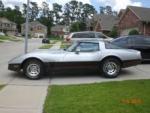


 1982 L83 Idle