






427/454 Hybrid question

Thread Starter
Drifting

Joined: Aug 2017
Posts: 1,433
Likes: 351
 427/454 Hybrid question
Forgive my ignorance on this, I'm still learning about these engines.... if you had a L-36 which failed and you replaced it with a 70-72 454 block, but swapped the heads, intake and carb etc from the 427 motor, in terms of power output what would you be left with?
Would the compression ratio be determined by the pistons in the 454 block, the L-36 heads or a combo of both?
How did the heads from the L-36 compare to those on the 454?
I'm looking at a car with this scenario and I'm trying to work out if this is a good basis or the worst of both worlds etc?
Let's assume the cam is the original 454 cam.
Would the compression ratio be determined by the pistons in the 454 block, the L-36 heads or a combo of both?
How did the heads from the L-36 compare to those on the 454?
I'm looking at a car with this scenario and I'm trying to work out if this is a good basis or the worst of both worlds etc?
Let's assume the cam is the original 454 cam.
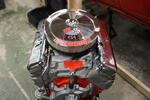
Old Pro Solo Guy


Joined: Dec 2017
Posts: 8,107
Likes: 4,465
From: Marlton NJ
LS5 454 & L36 427 used the same cam, and in 1970-67 had the same compression ratio.(10.2?) 71-72 had lower compression ratio due to a larger head and smaller piston dome. (8.5?)
67-70 versions both rated at same HP 390, which makes sense because it is determined by the cam & heads. 427 would peak higher, 454 peak lower.
But the 1/4" extra stroke of the 454 would generate more TQ everywhere. Roughly 30-40 TQ higher. 427 around 460 454 around 500.
IIRC the CR dropped almost 2 full points on the 71-72s.
So if you have the earlier hi CR pistons and the larger open chamber heads, or vice versa, with the later dished pistons and the earlier closed chamber heads, you should wind up somewhere in the 9s which would run better on pump gas than 10. But you would lose a few HP, maybe 10-15? The 71 454 lost 35.
BTW that stock cam is very very mild. Don't be afraid to add 10-15 degrees duration, it will wake it up a lot, like 50hp worth. And not change the TQ very much.
So maybe not the best of both worlds, but it should run very strong, stronger than the original 427. but at less rpm.
So someone here correct me if I am wrong, but I would think that a stock hi CR L36, with iron heads, and closed chambers, and 10.2 CR, with a smallish cam, in a hot running C3 body, would be very ping prone on pump gas.
67-70 versions both rated at same HP 390, which makes sense because it is determined by the cam & heads. 427 would peak higher, 454 peak lower.
But the 1/4" extra stroke of the 454 would generate more TQ everywhere. Roughly 30-40 TQ higher. 427 around 460 454 around 500.
IIRC the CR dropped almost 2 full points on the 71-72s.
So if you have the earlier hi CR pistons and the larger open chamber heads, or vice versa, with the later dished pistons and the earlier closed chamber heads, you should wind up somewhere in the 9s which would run better on pump gas than 10. But you would lose a few HP, maybe 10-15? The 71 454 lost 35.
BTW that stock cam is very very mild. Don't be afraid to add 10-15 degrees duration, it will wake it up a lot, like 50hp worth. And not change the TQ very much.
So maybe not the best of both worlds, but it should run very strong, stronger than the original 427. but at less rpm.
So someone here correct me if I am wrong, but I would think that a stock hi CR L36, with iron heads, and closed chambers, and 10.2 CR, with a smallish cam, in a hot running C3 body, would be very ping prone on pump gas.
Last edited by leigh1322; Nov 14, 2020 at 04:09 PM.
Thread Starter
Drifting
Joined: Aug 2017
Posts: 1,433
Likes: 351
LS5 454 & L36 427 used the same cam, and in 1970-67 had the same compression ratio.(10.2?) 71-72 had lower compression ratio due to a larger head and smaller piston dome. (8.5?)
67-70 versions both rated at same HP 390, which makes sense because it is determined by the cam & heads. 427 would peak higher, 454 peak lower.
But the 1/4" extra stroke of the 454 would generate more TQ everywhere. Roughly 30-40 TQ higher. 427 around 460 454 around 500.
IIRC the CR dropped almost 2 full points on the 71-72s.
So if you have the earlier hi CR pistons and the larger open chamber heads, or vice versa, with the later dished pistons and the earlier closed chamber heads, you should wind up somewhere in the 9s which would run better on pump gas than 10. But you would lose a few HP, maybe 10-15? The 71 454 lost 35.
BTW that stock cam is very very mild. Don't be afraid to add 10-15 degrees duration, it will wake it up a lot, like 50hp worth. And not change the TQ very much.
So maybe not the best of both worlds, but it should run very strong, stronger than the original 427. but at less rpm.
So someone here correct me if I am wrong, but I would think that a stock hi CR L36, with iron heads, and closed chambers, and 10.2 CR, with a smallish cam, in a hot running C3 body, would be very ping prone on pump gas.
67-70 versions both rated at same HP 390, which makes sense because it is determined by the cam & heads. 427 would peak higher, 454 peak lower.
But the 1/4" extra stroke of the 454 would generate more TQ everywhere. Roughly 30-40 TQ higher. 427 around 460 454 around 500.
IIRC the CR dropped almost 2 full points on the 71-72s.
So if you have the earlier hi CR pistons and the larger open chamber heads, or vice versa, with the later dished pistons and the earlier closed chamber heads, you should wind up somewhere in the 9s which would run better on pump gas than 10. But you would lose a few HP, maybe 10-15? The 71 454 lost 35.
BTW that stock cam is very very mild. Don't be afraid to add 10-15 degrees duration, it will wake it up a lot, like 50hp worth. And not change the TQ very much.
So maybe not the best of both worlds, but it should run very strong, stronger than the original 427. but at less rpm.
So someone here correct me if I am wrong, but I would think that a stock hi CR L36, with iron heads, and closed chambers, and 10.2 CR, with a smallish cam, in a hot running C3 body, would be very ping prone on pump gas.
if it would also make it an easier decision to throw a few parts at it to wake it up further and make it a bit of a monster. Very early days, but thought I;d ask the question. I'm waiting for block numbers which I'll report back here - maybe we can assess more closely what it is, what it's potential is.
Last edited by Last Triumph; Nov 14, 2020 at 04:12 PM.
Old Pro Solo Guy
Joined: Dec 2017
Posts: 8,107
Likes: 4,465
From: Marlton NJ
Yes there are an awful lot of things to consider. And matching numbers is just one of them. I would rank that as very important if you want to judge the car, but not so much if you just want to drive it. IMHO a rust free frame is way more important. So is finding one that "speaks" to you!
Good luck.
Good luck.
Thread Starter
Drifting
Joined: Aug 2017
Posts: 1,433
Likes: 351
Yes there are an awful lot of things to consider. And matching numbers is just one of them. I would rank that as very important if you want to judge the car, but not so much if you just want to drive it. IMHO a rust free frame is way more important. So is finding one that "speaks" to you!
Good luck.
Good luck.
Thread Starter
Drifting
Joined: Aug 2017
Posts: 1,433
Likes: 351
My rationale is that a matching numbers car should in theory always attract a premium over a non-matching numbers car. As I will be on a journey of continuous improvement with any project, its appeal and ultimately its value will increase as its condition improves. My perception of the market is that the more its value increases as I improve it over time, the greater the importance of matching numbers.
For example, i might buy a $17k car now with bad paint, rough interior, but essentially good bones and matching numbers. I can't afford to buy a $30k car today as i don't have the money, but I do anticipate that over time, I will have some disposable income to throw at the car for improvements - paint, interior, trim, perishables etc, etc, so eventually I end up with whilst not a show car, but a very, very nice example. No if we park the idea that I'll be in the red in either case, surely at $30k (for example) the importance of matching numbers is far greater than at sub $20k?
Whilst investment value might not have been the best phrase to use, I suspect that the desirability of a car as its value increases to to condition improvement, that the importance of matching numbers also increases.
To amplify my theory (and I understand that being in the red negates the concept to a degree, but go with me....) lets just say I ended up do ing a full nut and bolt (all the labour and paint myself) and the car ended up being absolutely gorgeous and one never to be driving in the rain again etc.... how much of a difference to it's value would matching vs non-matching numbers be then?
There's an argument that says just save up for the car you want to avoid being in the red.... I get it.... but there's a counter argument that I've already been saving up for a very long time and I'm fed up of looking through the window. I want to join the party now before the party ends. Life is short. But I like to give myself the best chance of success down the road, hence my interest in future value with matching numbers once the car increases in condition based value.
Hope that makes sense?
If my assessment of the importance of matching numbers in the $30k+ range of cars is askew, I'm happy to be advised.
For example, i might buy a $17k car now with bad paint, rough interior, but essentially good bones and matching numbers. I can't afford to buy a $30k car today as i don't have the money, but I do anticipate that over time, I will have some disposable income to throw at the car for improvements - paint, interior, trim, perishables etc, etc, so eventually I end up with whilst not a show car, but a very, very nice example. No if we park the idea that I'll be in the red in either case, surely at $30k (for example) the importance of matching numbers is far greater than at sub $20k?
Whilst investment value might not have been the best phrase to use, I suspect that the desirability of a car as its value increases to to condition improvement, that the importance of matching numbers also increases.
To amplify my theory (and I understand that being in the red negates the concept to a degree, but go with me....) lets just say I ended up do ing a full nut and bolt (all the labour and paint myself) and the car ended up being absolutely gorgeous and one never to be driving in the rain again etc.... how much of a difference to it's value would matching vs non-matching numbers be then?
There's an argument that says just save up for the car you want to avoid being in the red.... I get it.... but there's a counter argument that I've already been saving up for a very long time and I'm fed up of looking through the window. I want to join the party now before the party ends. Life is short. But I like to give myself the best chance of success down the road, hence my interest in future value with matching numbers once the car increases in condition based value.
Hope that makes sense?
If my assessment of the importance of matching numbers in the $30k+ range of cars is askew, I'm happy to be advised.
Last edited by Last Triumph; Nov 15, 2020 at 04:45 AM.

Drifting


Joined: Oct 2005
Posts: 1,528
Likes: 148
From: East London/SW Essex UK
My L36 '68 is by no means a 'show queen' - far from it. It is (was - still can be) a matching numbers car. Rather than 'hot-up' and re-build the 427 (which had implications in terms of parts availability) for me it was only slightly more expensive to 'mothball' the original engine and drop-in a 'built', stroker 4 bolt 454 engine. I still have the original 427 engine for originality if need be. Chose your engine (particularly the head, cam and exhaust) components and you can have the best of all worlds - far more power, significantly increased torque and improved fuel consumption and good driveability.
Corvette Stories
The Best of Corvette for Corvette Enthusiasts

Every 2027 Corvette Engine Explained
Joe Kucinski
Designer Imagines A Corvette That Looks More Like a Corvette Than the Corvette
Verdad Gallardo
10 Ugly Corvettes That We Still Kinda Love
Joe Kucinski
Top 10 Most Expensive Corvettes Ever Sold on Bring A Trailer
Brett Foote
10 Things Every Corvette Owner Needs (2026 Edition)
Michael S. Palmer
8 Most "Only Corvette Owners Understand" Quirks and Problems
Pouria Savadkouei
10 Reasons the C6 Z06 is Still A Performance Benchmark After 20 Years
Joe Kucinski
How Much Horsepower Every Corvette Engine "LOST" in 1972
Joe Kucinski
Top 10 DOs and DON'Ts for Protecting Your Convertible Top!
Michael S. Palmer
Le Mans Master

Joined: Mar 2004
Posts: 7,503
Likes: 1,511
From: Little Rock AR
No big block expert here but you might need to make sure you dont mess up the rotational balance of the engine. I think the 427 was internally balanced. I think the 454 is externally balanced. You probably need to use the flywheel and damper from the 454.


