




temporary fix for leaking steering gear box
Thread Starter
Drifting


Joined: Dec 2017
Posts: 1,306
Likes: 226
From: PA
 temporary fix for leaking steering gear box
OK, I know this ain't the way to do it. But the clock is ticking on my 4L60e transmission swap warranty as the intall took way longer than planned. And I really need to get some miles on it to ensure everything is OK before the warranty is up. I figured the oil I saw on the steering box was just like all the other oil under the engine, but it appears to be an actual leak in the box. Can something be tightened to slow it, more grease put in, etc. I'd just like to be certain to get a few hundred miles out of it. For the record, the car is an '80, 90k miles, original steering box.
Tech Contributor

Joined: Aug 1999
Posts: 15,175
Likes: 3,990
From: Connecticut, USA
Vince
There should be no oil in the steering box. There should be grease and the problem with old boxes is the grease has turned into an acidic sludge. The oil separates out and once that happens it is going to get by the seals- new or old. The boxes are not vented and close to the exhaust which adds to the problem. They will leak from the upper and lower seals. Now if you added oil in the past that changes most of what I just said other then the leaks will stay in the box until you get the box cleaned out , resealed and greased at a minimum. To go through all that to just change seals though doesn't make sense.
There should be no oil in the steering box. There should be grease and the problem with old boxes is the grease has turned into an acidic sludge. The oil separates out and once that happens it is going to get by the seals- new or old. The boxes are not vented and close to the exhaust which adds to the problem. They will leak from the upper and lower seals. Now if you added oil in the past that changes most of what I just said other then the leaks will stay in the box until you get the box cleaned out , resealed and greased at a minimum. To go through all that to just change seals though doesn't make sense.
Last edited by GTR1999; Feb 25, 2021 at 10:26 PM.
Thread Starter
Drifting
Joined: Dec 2017
Posts: 1,306
Likes: 226
From: PA
Vince
There should be no oil in the steering box. There should be grease and the problem with old boxes is the grease has turned into an acidic sludge. The oil separates out and once that happens it is going to get by the seals- new or old. The boxes are not vented and close to the exhaust which adds to the problem. They will leak from the upper and lower seals. Now if you added oil in the past that changes most of what I just said other then the leaks will stay in the box until you get the box cleaned out , resealed and greased at a minimum. To go through all that to just change seals though doesn't make sense.
There should be no oil in the steering box. There should be grease and the problem with old boxes is the grease has turned into an acidic sludge. The oil separates out and once that happens it is going to get by the seals- new or old. The boxes are not vented and close to the exhaust which adds to the problem. They will leak from the upper and lower seals. Now if you added oil in the past that changes most of what I just said other then the leaks will stay in the box until you get the box cleaned out , resealed and greased at a minimum. To go through all that to just change seals though doesn't make sense.
Tech Contributor
Joined: Aug 1999
Posts: 15,175
Likes: 3,990
From: Connecticut, USA
Vince
100 miles isn't going to make a difference. If the gears or the end of the ball screw is acid etched now 100 miles isn't going to cause it to lock up. I have had boxes shipped to me that had no grease in them and so much wear the car was aimed not steered. In your case I would wipe it down, do your testing and then rebuild the box the correct way and be done with it. You could do the add grease method of removing cover bolts but that isn't the best way. If you remove the cover you will change the lash so it will have to be set close on the car, again I would drive it for now.
100 miles isn't going to make a difference. If the gears or the end of the ball screw is acid etched now 100 miles isn't going to cause it to lock up. I have had boxes shipped to me that had no grease in them and so much wear the car was aimed not steered. In your case I would wipe it down, do your testing and then rebuild the box the correct way and be done with it. You could do the add grease method of removing cover bolts but that isn't the best way. If you remove the cover you will change the lash so it will have to be set close on the car, again I would drive it for now.

Safety Car


Joined: Sep 2005
Posts: 4,226
Likes: 643
From: Orange County Ca
From my experience, the statement about no oil is correct. Some/most grease's will separate and the light weight oil will leak easier.
If you have some kind of suction device you can suck out the oil through a bolt hole in the top cover and inject some grease.
My steering box gets real hot and the increased pressure made the leaking worse.
I drilled a small hole through the center of the highest bolt on the top cover to vent the box, and eventually, the grease level stabilized and the leaking stopped immediately.
It did puke grease through the hole until it got to a point that the hot grease wouldn't expand and ooze out.
If you have some kind of suction device you can suck out the oil through a bolt hole in the top cover and inject some grease.
My steering box gets real hot and the increased pressure made the leaking worse.
I drilled a small hole through the center of the highest bolt on the top cover to vent the box, and eventually, the grease level stabilized and the leaking stopped immediately.
It did puke grease through the hole until it got to a point that the hot grease wouldn't expand and ooze out.
Last edited by Sayfoo; Feb 26, 2021 at 12:18 PM.
Corvette Stories
The Best of Corvette for Corvette Enthusiasts

Top 10 Most Expensive Corvettes Ever Sold on Bring A Trailer
Brett Foote
10 Things Every Corvette Owner Needs (2026 Edition)
Michael S. Palmer
8 Most "Only Corvette Owners Understand" Quirks and Problems
Pouria Savadkouei
10 Reasons the C6 Z06 is Still A Performance Benchmark After 20 Years
Joe Kucinski
How Much Horsepower Every Corvette Engine "LOST" in 1972
Joe Kucinski
Top 10 DOs and DON'Ts for Protecting Your Convertible Top!
Michael S. Palmer
Top 10 Most Explosive Corvettes Ever Made: Power-to-Weight Ratio Ranked!
Joe Kucinski
150 hp to 1,250 hp: Every Corvette Generation Compared by the Specs That Matter
Joe Kucinski
8 Coolest Corvette Pace Cars (and Replicas) of All Time
Verdad Gallardo
Burning Brakes


Joined: Aug 2013
Posts: 1,071
Likes: 322
From: palm springs ca
When I rebuilt my box I put very thick oil in it thinking it would be the way to go. The rebuild went perfect and the body was not on the frame. I noticed oil on the floor under the box and it just kept coming out. So I got on the forum and I think it was Gary that mentioned a grease from auto zone.
So I removed one bolt and machined a hole thru another bolt, welded a air fitting on the bolt and attached a air hose with about 130 PSI to push all the oil out. Not 1 drop would come out when under pressure. Take the air away and it would leak, with air no leaks.
Well the air forced the seal against the shaft and no leaks. With no air the seal relaxed and leak came back.
I have seen this many times on aircraft struts that have 500 + PSI over hydraulic oil. The struts would leak hydraulic oil when the Nitrogen PSI was low. Many mechanics rebuilt the struts and I found that in most cases the struts just needed pressure added to keep the seal.
So getting back to my steering box, the air pressure made the seal work better.
Dom
So I removed one bolt and machined a hole thru another bolt, welded a air fitting on the bolt and attached a air hose with about 130 PSI to push all the oil out. Not 1 drop would come out when under pressure. Take the air away and it would leak, with air no leaks.
Well the air forced the seal against the shaft and no leaks. With no air the seal relaxed and leak came back.
I have seen this many times on aircraft struts that have 500 + PSI over hydraulic oil. The struts would leak hydraulic oil when the Nitrogen PSI was low. Many mechanics rebuilt the struts and I found that in most cases the struts just needed pressure added to keep the seal.
So getting back to my steering box, the air pressure made the seal work better.
Dom
Tech Contributor
Joined: Aug 1999
Posts: 15,175
Likes: 3,990
From: Connecticut, USA
Dom,
The grease I used to get was Coastal but it was changed or sold and the grease I used to use disappeared years ago. I use Lucas HD Green now. As mentioned all grease will have a drop point and a good indicator is to open the tube or container and see if there is oil separated out.
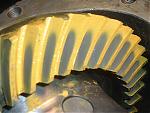
The problem with an original 40 year old box is the grease has pretty much broken down. If Vince never put any oil in the box then what is leaking out is what is left of the original brown pasty 1980 grease GM used. Once all the moisture is gone then corrosion will start to set in and it will be down hill from that point on. Trying to result a box at that point is usually not going to improve anything in it. For cars that sat for a very long time, corrosion will eat into the teeth that have been meshed for years. If the steering wheel was turned to one side that would be positive, if stored with the wheel straight and corrosion starts the gears will be wrecked for sure. When I blueprinted one of the original 63 grand sport boxes the car was stored with the wheels turned and that saved the gear set since corrosion wrecked the tooth contact patch but the straight away contact was perfect still and those were one of a kind faster ratio never offered in a production vette.
The grease I used to get was Coastal but it was changed or sold and the grease I used to use disappeared years ago. I use Lucas HD Green now. As mentioned all grease will have a drop point and a good indicator is to open the tube or container and see if there is oil separated out.
The problem with an original 40 year old box is the grease has pretty much broken down. If Vince never put any oil in the box then what is leaking out is what is left of the original brown pasty 1980 grease GM used. Once all the moisture is gone then corrosion will start to set in and it will be down hill from that point on. Trying to result a box at that point is usually not going to improve anything in it. For cars that sat for a very long time, corrosion will eat into the teeth that have been meshed for years. If the steering wheel was turned to one side that would be positive, if stored with the wheel straight and corrosion starts the gears will be wrecked for sure. When I blueprinted one of the original 63 grand sport boxes the car was stored with the wheels turned and that saved the gear set since corrosion wrecked the tooth contact patch but the straight away contact was perfect still and those were one of a kind faster ratio never offered in a production vette.



Thread Starter
Drifting
Joined: Dec 2017
Posts: 1,306
Likes: 226
From: PA
Guys, this is why I like this forum, great real world knowledge you'd have to dig hard to find. Reminds of the time after pulling the distributor cap, which got moisture in it, off a 76 Century, drying it out, and putting it back on the car wouldn't start. There was no spark even though there had been before. After several hours I called my grandfather who was a machinist and mechanic and had run his own garage for over 30 years. He told me to check one particular wire on the plug into the HEI. "The contact will back out when you try to plug it in", he said, "but not far enough to fall out of the housing". Sure enough, that was it. Gramps has been gone now for 30 years. But at least we have forums like this.
Thread Starter
Drifting
Joined: Dec 2017
Posts: 1,306
Likes: 226
From: PA
Dom,
The grease I used to get was Coastal but it was changed or sold and the grease I used to use disappeared years ago. I use Lucas HD Green now. As mentioned all grease will have a drop point and a good indicator is to open the tube or container and see if there is oil separated out.
The problem with an original 40 year old box is the grease has pretty much broken down. If Vince never put any oil in the box then what is leaking out is what is left of the original brown pasty 1980 grease GM used. Once all the moisture is gone then corrosion will start to set in and it will be down hill from that point on. Trying to result a box at that point is usually not going to improve anything in it. For cars that sat for a very long time, corrosion will eat into the teeth that have been meshed for years. If the steering wheel was turned to one side that would be positive, if stored with the wheel straight and corrosion starts the gears will be wrecked for sure. When I blueprinted one of the original 63 grand sport boxes the car was stored with the wheels turned and that saved the gear set since corrosion wrecked the tooth contact patch but the straight away contact was perfect still and those were one of a kind faster ratio never offered in a production vette.
The grease I used to get was Coastal but it was changed or sold and the grease I used to use disappeared years ago. I use Lucas HD Green now. As mentioned all grease will have a drop point and a good indicator is to open the tube or container and see if there is oil separated out.
The problem with an original 40 year old box is the grease has pretty much broken down. If Vince never put any oil in the box then what is leaking out is what is left of the original brown pasty 1980 grease GM used. Once all the moisture is gone then corrosion will start to set in and it will be down hill from that point on. Trying to result a box at that point is usually not going to improve anything in it. For cars that sat for a very long time, corrosion will eat into the teeth that have been meshed for years. If the steering wheel was turned to one side that would be positive, if stored with the wheel straight and corrosion starts the gears will be wrecked for sure. When I blueprinted one of the original 63 grand sport boxes the car was stored with the wheels turned and that saved the gear set since corrosion wrecked the tooth contact patch but the straight away contact was perfect still and those were one of a kind faster ratio never offered in a production vette.
Tech Contributor
Joined: Aug 1999
Posts: 15,175
Likes: 3,990
From: Connecticut, USA
Vince you don't need a new box, you just need yours to be correctly set up with the right parts and procedures. This might be something you can do in your shop? If you have any questions when you get to that point let me know and I can go over them with you. A good dial 0-30 Tq Wrench is required.
Thread Starter
Drifting
Joined: Dec 2017
Posts: 1,306
Likes: 226
From: PA
Vince you don't need a new box, you just need yours to be correctly set up with the right parts and procedures. This might be something you can do in your shop? If you have any questions when you get to that point let me know and I can go over them with you. A good dial 0-30 Tq Wrench is required.

Le Mans Master


Joined: Feb 1999
Posts: 8,351
Likes: 75
From: Tampa Bay FL
OK, I know this ain't the way to do it. But the clock is ticking on my 4L60e transmission swap warranty as the intall took way longer than planned. And I really need to get some miles on it to ensure everything is OK before the warranty is up. I figured the oil I saw on the steering box was just like all the other oil under the engine, but it appears to be an actual leak in the box. Can something be tightened to slow it, more grease put in, etc. I'd just like to be certain to get a few hundred miles out of it. For the record, the car is an '80, 90k miles, original steering box.
If the steering is not exhibiting issues (loose), drive it like you stole it. Slave cylinder can groan but that is more an issue with the parts attached to the power steering pump than the steering gear box.