






Cam lobe damage: Possible source?

Team Owner


Joined: Oct 2004
Posts: 81,241
Likes: 3,063
From: altered state
St. Jude Donor '05

^^^Solid roller addict also..not like Ill ever see 10k..or even 5k out of the car in my lifetime.
Simply love the way they sound and run. If I had a BB Id still run a retainer plate or button, id be concerned about that cam gear.
Think GM went to roller blocks for BB for sure in 96 not sure about earlier? My 90 dually was a HFT cam.
Simply love the way they sound and run. If I had a BB Id still run a retainer plate or button, id be concerned about that cam gear.
Think GM went to roller blocks for BB for sure in 96 not sure about earlier? My 90 dually was a HFT cam.

Race Director


Joined: Apr 2007
Posts: 11,152
Likes: 890
From: South Western Ontario

Dr. Detroit


Joined: Mar 2012
Posts: 10,097
Likes: 4,027
From: New Braunfels Texas
A low lift solid probably would be where I would be in your situation......and a set of Crower lifters.....expensive but it will be the last one you will buy.
Jebby
Last edited by Jebbysan; Oct 14, 2021 at 09:14 AM.

Thread Starter
Tech Contributor

Joined: Jun 2004
Posts: 20,952
Likes: 962
From: I tend to be leery of any guy who doesn't own a chainsaw or a handgun.
Race Director
Joined: Apr 2007
Posts: 11,152
Likes: 890
From: South Western Ontario
You can make GM lifters and dog bones fit into an older small block, but using a 6 cylinder lifter and it requires machining/grinding the lifter valley so the dog bones will fit. So, you could probably figure out a way to do it to an older big block too if you were determined enough to avoid the lifters with links.
Last edited by lionelhutz; Oct 14, 2021 at 04:01 PM.
Corvette Stories
The Best of Corvette for Corvette Enthusiasts

5 Best & 5 Worst Corvette Daily Drivers
Joe Kucinski
The Headlights of Every Corvette Generation Explained
Joe Kucinski
5 Best & 5 Most Overrated Corvette Track Packages of All Time!
Joe Kucinski
Every 2027 Corvette Engine Explained
Joe Kucinski
Designer Imagines A Corvette That Looks More Like a Corvette Than the Corvette
Verdad Gallardo
10 Ugly Corvettes That We Still Kinda Love
Joe Kucinski
Top 10 Most Expensive Corvettes Ever Sold on Bring A Trailer
Brett Foote
10 Things Every Corvette Owner Needs (2026 Edition)
Michael S. Palmer
8 Most "Only Corvette Owners Understand" Quirks and Problems
Pouria Savadkouei
Pro

Joined: Jul 2021
Posts: 719
Likes: 156
OP 69427
The late, great builder Gary O Sharkey of Long Island (shop owner, machinist, aka GOSFAST) had devised a technique for milling Mk IV BBC blocks to retrofit a Gen 6 roller cam retainer plate; and the later, step-nose cam. It seemed like it would be far superior to a cam button.
Perhaps other, clever shops are doing likewise?
The late, great builder Gary O Sharkey of Long Island (shop owner, machinist, aka GOSFAST) had devised a technique for milling Mk IV BBC blocks to retrofit a Gen 6 roller cam retainer plate; and the later, step-nose cam. It seemed like it would be far superior to a cam button.
Perhaps other, clever shops are doing likewise?
Pro
Joined: Jul 2021
Posts: 719
Likes: 156
Quick Tech: The Differences Between Bushed- and Needle-Roller Lifters
https://www.motortrend.com/how-to/quick-tech-differences-bushed-needle-roller-lifters/
https://www.enginelabs.com/engine-tech/engine/isky-cams-takes-mystery-out-of-bushing-style-roller-lifters/
FWIW, older 2-pc rms V. newer 1-pc rms SMALL block chevy have an important difference between heights of their lifter bosses; the newer blocks' lifter bosses are about 0.300" taller to accommodate the newer block's taller "roller" lifters. That's why the DIY retrofit of "short" V6 (e.g. 3.1L) roller lifters is necessary in the DIY method. If ya tried to use the typical newer, taller OE 350 roller lifter in a older short flat tappet boss, the OE roller lifter would instantly push the dog bone up & away; the OE roller lifter would twist in bore and side of its wheel would instantly destroy lobe.
However, I have No clue if newer OE BIG block chevy roller lifter bosses/bores are taller than their older flat tappet BIG block counterparts? I dunno, but suspect they are.
https://www.enginelabs.com/engine-tech/engine/isky-cams-takes-mystery-out-of-bushing-style-roller-lifters/
FWIW, older 2-pc rms V. newer 1-pc rms SMALL block chevy have an important difference between heights of their lifter bosses; the newer blocks' lifter bosses are about 0.300" taller to accommodate the newer block's taller "roller" lifters. That's why the DIY retrofit of "short" V6 (e.g. 3.1L) roller lifters is necessary in the DIY method. If ya tried to use the typical newer, taller OE 350 roller lifter in a older short flat tappet boss, the OE roller lifter would instantly push the dog bone up & away; the OE roller lifter would twist in bore and side of its wheel would instantly destroy lobe.
However, I have No clue if newer OE BIG block chevy roller lifter bosses/bores are taller than their older flat tappet BIG block counterparts? I dunno, but suspect they are.
Last edited by ebbnflow; Oct 15, 2021 at 04:28 PM.

Le Mans Master


Joined: Mar 2001
Posts: 6,241
Likes: 1,014
From: Watkinsville, GA and Glen Cove, NY
The GenV and VI 502 blocks have the .300 taller lifter bores. Not sure about the 454 blocks but I assume they do also.
Last edited by 69ttop502; Oct 16, 2021 at 06:04 PM.

Team Owner

Joined: Jan 2007
Posts: 53,648
Likes: 878
From: Southern Cal Ca
St. Jude Donor '22


Thread Starter
Tech Contributor
Joined: Jun 2004
Posts: 20,952
Likes: 962
From: I tend to be leery of any guy who doesn't own a chainsaw or a handgun.
Thanks.

Old Pro Solo Guy


Joined: Dec 2017
Posts: 8,129
Likes: 4,489
From: Marlton NJ
I decided to go with a hybrid setup - solid rollers on a milder ramped hydraulic roller cam. (I will be pulling my solid roller cam before I even finish the build) I would never build a flat lifter engine these days:
For many reasons but mostly reliability 1) run lower spring pressures than SR cams, easier on whole valvetrain 2) lighter lifters than HR 3) typically another 500 rpm with no worries of lifter pump up vs any hydr, runs cleaner up top 4) very tight lash like .006 - makes virtually no noise 5) These SR lifters are made to handle 800# springs so life is dramatically improved and they're very reliable long term with half that 6) I can use the lash as a roller health monitoring tool - you can't do that with Hydr lifters 7) with good poly loks lash does not really change, just check once a year for maint 8) Heard far too many horror stories of flat tappet lifter failure last few years 9) was told all aftermarket flat tappets solid or hydr are actually rebuilds and quality is not what it used to be - the oems have not made a flat tappet since the mid 90s - 25/30 yrs now - not 100% sure if that is true but it would sure explain all the weird issues 10) the long term failure risk is far too high vs the short term $ savings vs flat 11) more power and better idle manners at the same time was just a plus vs a flat
For many reasons but mostly reliability 1) run lower spring pressures than SR cams, easier on whole valvetrain 2) lighter lifters than HR 3) typically another 500 rpm with no worries of lifter pump up vs any hydr, runs cleaner up top 4) very tight lash like .006 - makes virtually no noise 5) These SR lifters are made to handle 800# springs so life is dramatically improved and they're very reliable long term with half that 6) I can use the lash as a roller health monitoring tool - you can't do that with Hydr lifters 7) with good poly loks lash does not really change, just check once a year for maint 8) Heard far too many horror stories of flat tappet lifter failure last few years 9) was told all aftermarket flat tappets solid or hydr are actually rebuilds and quality is not what it used to be - the oems have not made a flat tappet since the mid 90s - 25/30 yrs now - not 100% sure if that is true but it would sure explain all the weird issues 10) the long term failure risk is far too high vs the short term $ savings vs flat 11) more power and better idle manners at the same time was just a plus vs a flat

Safety Car

Joined: Dec 2012
Posts: 3,974
Likes: 673
valve lift
Hey guys, thanks for all the comments and suggestions. They're greatly appreciated.
Spent the last couple days reading this thread, and working on a suspension change while digesting the contents here. While I have no idea how many miles or years ago this little defect showed up, I'm going to go the safe (and adult, for a change) route and replace the cam. I had hoped to make another track day this fall, but I would really kick myself if I knowingly ran this cam and it destroyed itself and dumped a bunch of debris into the rotating parts.
Just some background info on the engine and its treatment on the track. My preference is a reasonably light car that will brake and corner well. With a lighter car (it's currently about 2700# with a quarter tank of fuel) I can get a pretty decent power to weight ratio using a reasonably well mannered engine. A milder engine should require less maintenance, and also require less fuel volume/weight during track sessions. As such, I'm not really running a lot of cam lift or valve spring pressure, and I rarely need to rev this thing that high between shifts.
As I mentioned previously, when I was assembling this engine a dozen years ago I saw too many stories about (aftermarket) roller cam/lifter failures, and decided to stay with a flat tappet hydraulic setup, as I had always had good reliability with them. But, it looks like it's perhaps time to consider changing to a roller setup. I'll pull the engine, as I just find it easier to work on it outside the car. I guess I've got all winter to educate myself on what detail issues I need to consider with this swap, and what parts I need to change out. I invite additional posts here with any helpful suggestions and advice.
Trying to stay on topic but 2700 pounds is pretty damm light how did you get it so light and what kind of suspension changes are you making.
Thanks again,
Mike
Spent the last couple days reading this thread, and working on a suspension change while digesting the contents here. While I have no idea how many miles or years ago this little defect showed up, I'm going to go the safe (and adult, for a change) route and replace the cam. I had hoped to make another track day this fall, but I would really kick myself if I knowingly ran this cam and it destroyed itself and dumped a bunch of debris into the rotating parts.
Just some background info on the engine and its treatment on the track. My preference is a reasonably light car that will brake and corner well. With a lighter car (it's currently about 2700# with a quarter tank of fuel) I can get a pretty decent power to weight ratio using a reasonably well mannered engine. A milder engine should require less maintenance, and also require less fuel volume/weight during track sessions. As such, I'm not really running a lot of cam lift or valve spring pressure, and I rarely need to rev this thing that high between shifts.
As I mentioned previously, when I was assembling this engine a dozen years ago I saw too many stories about (aftermarket) roller cam/lifter failures, and decided to stay with a flat tappet hydraulic setup, as I had always had good reliability with them. But, it looks like it's perhaps time to consider changing to a roller setup. I'll pull the engine, as I just find it easier to work on it outside the car. I guess I've got all winter to educate myself on what detail issues I need to consider with this swap, and what parts I need to change out. I invite additional posts here with any helpful suggestions and advice.
Trying to stay on topic but 2700 pounds is pretty damm light how did you get it so light and what kind of suspension changes are you making.
Thanks again,
Mike
Dr. Detroit
Joined: Mar 2012
Posts: 10,097
Likes: 4,027
From: New Braunfels Texas
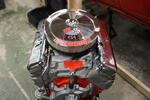
Life's been getting in the way for the past few months, but I finally got the engine pulled and set on an engine stand today. Will be pulling it apart this week. I've always been a hydraulic lifter fan as they're quieter and on a road course I generally don't need to wing my engine to the moon very often, as I'm pretty happy with my current power to weight ratio. I'm presently looking at the lifters that Lionelhutz mentioned, but I am interested in your opinion on why you like or recommend a solid lifter setup.
Thanks.
Thanks.
The other is the it just takes all of the hydraulic **** out of the lifter, nothing to break.......and if you buy a high quality lifter....it will be damn near forever, all you care bout is the roller and trunion.......a low lift solid will make better power than a hydraulic grind and be more reliable overall.
The Crower solid roller lifter has been an awesome piece although a bit pricey......
Jebby

Le Mans Master
Joined: Apr 2006
Posts: 5,403
Likes: 95
Solid lifter cams in factory cars or aftermarket back in the day you had to watch valve lash because of the crap jam nuts on studs with ball rocker arms and they had higher lash settings. Get yourself a tight lash solid cam with atleast roller rockers and you will not be adjusting valves anytime soon they will stay in adjustment. I would never run oil in a lifter in any form of cam no reason to. Also radical solid rollers with very high spring pressure to make them work cause them to get a bad reputation it's race stuff only. If you go roller cam get a street version of it with moderate rate of springs and you will be good to go for a long time.
Last edited by Little Mouse; Mar 7, 2022 at 09:56 AM.
Thread Starter
Tech Contributor
Joined: Jun 2004
Posts: 20,952
Likes: 962
From: I tend to be leery of any guy who doesn't own a chainsaw or a handgun.
Fuel pump pushrod question.
Jusr scanning the interwebs for the parts I need to put the engine back together. My present fuel pump pushrod looks in great shape, but I'm traditionally a bit paranoid mixing and matching used and new parts when a camshaft is in the mix. I see one vendor of these pushrods says his part is not for use with roller cams. The added hassle here comes as no surprise, but I haven't seen this warning on other pushrods. So, can someone tell me what particular issues/items I have to keep in mind when purchasing a new pushrod for the planned roller cam?
Thanks for any help.
Thanks for any help.
Thread Starter
Tech Contributor
Joined: Jun 2004
Posts: 20,952
Likes: 962
From: I tend to be leery of any guy who doesn't own a chainsaw or a handgun.
And for pure weight reduction purposes, I've swapped out the heavy steel or cast iron parts for lighter aluminum pieces wherever I can justify it. Some stuff is bolt on/in, while other stuff required fabrication & welding. A nice coat of semi-gloss black paint, and the new aluminum parts look pretty stock. I like the stock/sleeper look.