When you click on links to various merchants on this site and make a purchase, this can result in this site earning a commission. Affiliate programs and affiliations include, but are not limited to, the eBay Partner Network.
From: I tend to be leery of any guy who doesn't own a chainsaw or a handgun.
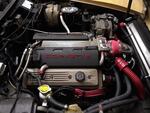
Cam lobe damage: Possible source?
Had the intake manifold off today to fix a leak, and I noticed something on #7 cylinder cam lobe. At the top of the lobe there's a slight "divot" in it. I don't know how long it's been like that (or if I possibly did it when installing the cam a dozen years ago), or if it's something recent. Either way, I'm not thrilled about it. Anybody know if this is a sign to immediately pull the engine and replace the cam? I stayed with a flat tappet camshaft (Lunati) when I built this engine as I had heard and read too many stories of failures with aftermarket hydraulic roller lifters, and I had good luck with all the flat tappet cams I ran before. (Have run Mobil1 20W-50 and 0W-40 exclusively after the initial break-in.)
Just looking for some feedback/advice here. Thanks.
From: I tend to be leery of any guy who doesn't own a chainsaw or a handgun.
Hey guys, thanks for all the comments and suggestions. They're greatly appreciated.
Spent the last couple days reading this thread, and working on a suspension change while digesting the contents here. While I have no idea how many miles or years ago this little defect showed up, I'm going to go the safe (and adult, for a change) route and replace the cam. I had hoped to make another track day this fall, but I would really kick myself if I knowingly ran this cam and it destroyed itself and dumped a bunch of debris into the rotating parts.
Just some background info on the engine and its treatment on the track. My preference is a reasonably light car that will brake and corner well. With a lighter car (it's currently about 2700# with a quarter tank of fuel) I can get a pretty decent power to weight ratio using a reasonably well mannered engine. A milder engine should require less maintenance, and also require less fuel volume/weight during track sessions. As such, I'm not really running a lot of cam lift or valve spring pressure, and I rarely need to rev this thing that high between shifts.
As I mentioned previously, when I was assembling this engine a dozen years ago I saw too many stories about (aftermarket) roller cam/lifter failures, and decided to stay with a flat tappet hydraulic setup, as I had always had good reliability with them. But, it looks like it's perhaps time to consider changing to a roller setup. I'll pull the engine, as I just find it easier to work on it outside the car. I guess I've got all winter to educate myself on what detail issues I need to consider with this swap, and what parts I need to change out. I invite additional posts here with any helpful suggestions and advice.
I think I'd be looking at getting that cam out of there BEFORE it gets worse. Right now, there's one little chip floating around. My thought is that the face of the lifter has some damage too and will head south pretty quick. And that will force a major rebuild. Just my $0.02
I'd pull the lifter and look at it, drain all the oil and dissect the oil filter. Maybe stick a magnet in the drain hole and fish around. If you find the offending piece of metal you may perhaps soldier on if the lifter looks good or you can replace it.
But even if you change out the cam without finding the root cause, you have a bit of a dilemma, there may still be a chip of something somewhere in the motor, (or it may be long gone with past oil changes). However my experience with a disintegrating lobe is nothing bad happened, the oil filter caught all the metal there was to be caught. And I think that is the likeliest scenario.
What is the downside here? I think it's that the lobe is irreparably damaged and continues to deteriorate. But why would it do that? That divot would have to enlarge. I kind of think there's enough good surface left that that wouldn't happen provided the lifter is good. It's after all, a hole full of oil sliding past the surface of the lifter.
The happiest outcome is you find the piece of crud and know it won't do any further damage.
I'm almost on the verge of deleting this but I think the one piece of experience I have to share is that the oil pump and filter does a really good job of capturing all the debris.
I think I'd be looking at getting that cam out of there BEFORE it gets worse. Right now, there's one little chip floating around. My thought is that the face of the lifter has some damage too and will head south pretty quick. And that will force a major rebuild. Just my $0.02
I was just wondering what the lifter face looks like, also. Is it worth the trouble to remove the valve cover/loosen the rocker arm enough to move the lifter away from the cam lobe to inspect the lifter face with a mirror or bore scope
You have a cam with a surface hardening flaw. It's over hardened to the point where the metal is brittle and fractures instead of just uniform ware. Such a tiny amount of metal though. I've seen other cams like this and the lifter was just still polished like a mirror. The cam lobe is angled causing the lifter to spin in it's bore. I'd bet that damage is on the highest point of the lobe where the max spring pressure is. Earson cams used to be local and they would repair cams by rewelding with some kind of hard chrome alloy and then heat treating after final grind and polishing.
Generally surface hardening is a very thin layer and once damaged it will accelerate in ware. It might be time to get the cam that you always wanted. I've had wonderful luck with billet steel cams with sleeved on dizzy gears. The beauty of roller cams is they can be civil and still make much more power than the flat lifter cousin.
I've had 3 SR cams in my 427. The first one was 242/248 comp cams extreme. way too mild. Then a custom lobe 246 252. okay with 3000 rpm wide brutal power band exceeding 600 hp. Then the final that I still use today with 4 degrees more retard than before and 252/256. A true power house in the mid 600 hp and 7500 rpm rev limiter. It's amazing how fast the tach climbs in the first couple of gears with my 4.11 rear end.
It's not going to get better. But it could also last a long time with your relatively low spring pressure.
That is one good possibility. It could also be due to a weak spot in the metal at that point (junk metal mix?). Looks like microscopic surface erosion (pitting) over long period of time.
In any event, it would be best to replace cam and lifters before that lobe 'throws craps' and the valve train is trashed. You didn't mention if this is a 'stock' built engine or if it has had 'work' done to it. Lubrication issues could also be in play....
Just my .02. Take it out now. You can do it with engine in car and clean the pan good when it’s off, looking for the chip. Avoid larger future problems. You caught a break!
Agreed, no need to pull the engine. But I would change that cam. dropping the oil pan I think is optional. I believe that would have worn away in very small bits, not one chunk that your likely to find. the oil filter is on there for a reason.
Gskull is spot on with assessment, but I usually side with caution and would look into cam/lifter replacement, and a clean out, inspect bearings and fresh gaskets.
Other than metal failure. You could measure that spring pressure. another possibility would have been excessive lash on that lifter giving you less spring pressure over the nose on that lobe. but I'm not sure what valve float or surge will actually destroy first. I've completely mushroomed all 16 valve stem tips, I've beat up the ends of hardened push rods, beat the needle bearing out of the roller rockers, but never damaged a lobe
Gkull is right......the surface hardening of the lobe is inconsistent......it appears that it is toward the downside of the taper, which is a good thing. The chip most likely fell....was winged around by the crank/rods and is now sitting in the bottom of the pan. Slap a magnet on it.
It could run like this forever......but you know the OCD inside of you wants to change it......it appears that you do track days so do you want it to fail at an inopportune time? Easy to be on the fence about this one......
Interesting using a flat tappet on an aluminum block......do not see that much. At this point do you feel a hydraulic roller is in the cards? The Morel lifters that everyone talks about are pretty formidable. The LS guys run the pee out of them......the key is to not use a super aggressive grind, keep the valve speed down, use a light and stable rocker (a girdle would even be considered here) to cut down on harmonics. When valve speeds get too high, there is a lot of stress during the polar moment of inertia (the point where the valve, rocker, pushrod, lifter changes direction). I think if you spec it right....it would live well under stress.
The other option is a solid roller......stable as a rock....will take what you throw at it, but quality lifters are key here too......
If you stay flat tappet......consider the micronite option.....easy break-in...last forever.
Micronite, ? Flat tappet.
I had not heard of that.
Sorry, I meant nitriding...doing two things at once here,...like a high end Callies crankshaft.....
I think it is a $100 option to a standard Comp FT cam.....they call it "Pro Plasma".
Sorry, I meant nitriding...doing two things at once here,...like a high end Callies crankshaft.....
I think it is a $100 option to a standard Comp FT cam.....they call it "Pro Plasma".
Jebby
Comp Cams will make you a billet cam with sleeved on dizzy gear of any base circle you desire. much better
I agree with Gkull, the pitting of the metal is a result of being too hard. There's a higher incidence of this on the flame hardening process as opposed to induction hardening. And sometimes it just starting out with a poor casting.
what goes up, must come down. Perhaps Lifter was lofted and on its way down it smacked the lobe?
wrong spring, weak spring, and perhaps the lobe surface was weak as well? Regardless, lobe surface is now compromised and that cancer is malignant.
Designer Imagines A Corvette That Looks More Like a Corvette Than the Corvette
Slideshow: A Jaguar designer's personal project imagines what a modern front-engined Corvette might look like if Chevrolet revisited the golden age of the Stingray.











 Cam lobe damage: Possible source?