When you click on links to various merchants on this site and make a purchase, this can result in this site earning a commission. Affiliate programs and affiliations include, but are not limited to, the eBay Partner Network.
I have a 71’ with a zz4 engine.
Ive been chasing an intermittent very rich condition. This issue usually comes up when I cruise for a while then stop and idle. I get a sort of overwhelming smell and burning eyes feeling depending on which way the breeze is blowing. I bought the car with the zz4 and a Holley carb. I installed a Holley sniper and hyperspark. The very rich after cruise seemed consistent across carb and tbi set ups. I hired Adam mad scientist the tuner ( well reviewed online tuner ) and he definitely improved the drive-ability but he also commented that the car goes rich at times for unknown reasons. This is more of a nuisance, the car runs strong across idle cruise and wot.
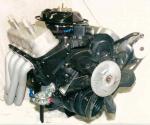
Is it possible that the previous owner installed an intake that doesn’t match the zz4 engine/ head port shape and gas is pooling up somewhere by a port mismatch?
pics of the intake-
i ran a rectangle port intake on an oval port big block. ultimate port mismatch. no issues. are they heated oxy sensors? cuz a 1 wire sensor may read ok at highway exhaust flow then get too cool to read at idle or low throttle. another thought. could be too rich while on the highway too. only the people behind you will smell it then. can you read your afr through the ecm and a laptop? https://documents.holley.com/techlibrary_199r11259.pdf this will only tell you the fuel readings if the O2 sensors are telling the ecm the truth. if it is so rich your eyes are burning it should be way down in single digits. 14.7 is textbook perfectomundo. average good idle is 13.5. idles good at 11.5. so running like crap and fogging the mosquitos should be around 6.
Last edited by derekderek; Jun 25, 2022 at 06:26 AM.
Not clear on anything on that intake manifold other than its a dual plane.
I would suggest a single Plane manifold with your Sniper.
Perhaps something like a Team G.
Not clear on anything on that intake manifold other than its a dual plane.
I would suggest a single Plane manifold with your Sniper.
Perhaps something like a Team G.
Is the Team G intake compatible with the Zz4 fast burn heads. I heard you need a manifold that works with a vortec style engine. The intake to head bolts are at an angle if that helps.
is the attached image showing a sensor?
I don’t think the wideband is obscured by anything. I have another wideband I will try out just to see if it is a lazy sensor.
Is the Team G intake compatible with the Zz4 fast burn heads. I heard you need a manifold that works with a vortec style engine. The intake to head bolts are at an angle if that helps.
Looks like the professional tuner has a good idea on why I’m running so rich, totally unrelated to the intake port theory I dreamed up and more based in experience and reality. Long story short he thinks the injector wiring may be intermittently making contact. The only thing that doesn’t make sense to me is that when I drive the car doesn’t stumble or skip at all. I actually had a great time driving myself and the wife to an Irish restaurant last night in this beautiful car and gorging on bangers and mash with tons of gravy. All the while it smelled like sweet toxic rich exhaust- I digress..
from the tuner named Adam mad scientist:
”
Got to go through your logs. The majority of the time, the AFR is still VERY rich of the commanded AFR, at least a point or two richer. Since you are positive on the PCV not being the cause, then your next step would be to look at the injectors, and their wiring, and make sure all of them are fully seated. It is very common for the sniper injector clips to come undone, and if you have one or two that are intermittently spraying, it's going to be impossible for the ECU to make the appropriate fuel table corrections. As it tries to maintain the proper AFR, and removes and adds the fuel needed to maintain it, all of a sudden an injector or two comes online, and it has double the fuel that it needed. It will just continue to chase its tail. ”
2020 Corvette of the Year Finalist (performance mods)
2019 C3 of Year Winner (performance mods)
2016 C3 of Year Finalist
its the dual plane...switch to a single plane and it will clear up. Some systems dont like the dual plane. Mine loved a single plane but would pool lots of fuel in the dual plane. I sold the whole thing and went back to carb
its the dual plane...switch to a single plane and it will clear up. Some systems dont like the dual plane. Mine loved a single plane but would pool lots of fuel in the dual plane. I sold the whole thing and went back to carb
I was thinking of switching back to a carb too.
I installed mine very soon after your build / install thread.
what carb did you go with?
its the dual plane...switch to a single plane and it will clear up. Some systems dont like the dual plane. Mine loved a single plane but would pool lots of fuel in the dual plane. I sold the whole thing and went back to carb
I grabbed a 1" carb spacer to see if that helps the pooling issue. Im hoping to drive around without fumigating the neighborhood for the summer then decide if I get a single plane manifold or switch back to the carb and keep the dual plane.
I see so many of these aftermarket old school "TBI" throttlebody injections systems for sale cheap... funny the only vettes to come with it (crossfire injection system) is the least desirable setup so many remove and swap with carbs.. just seems ironic to me. (had my 84 crossfire for 13 years BTW and it ran like a top)... sold it because my new 4 cylinder work car camry at the time could run circles around it.
ive read many times these systems work better on a single plane. (although the crossfire was the furthest from it...)
I too see many of these systems for sale. Guys that know how they work, grab them up and put them on just about everything with great success.
I will admit that learning to tune these supposedly self tuning systems is a learning curve.
Myself, Im to stubborn to give up. In the process joined a few groups and learned.
WOW, my car starts and runs good. Yes. it took me a bit to get there. Would NOT go back to a carb now.
I too see many of these systems for sale. Guys that know how they work, grab them up and put them on just about everything with great success.
I will admit that learning to tune these supposedly self tuning systems is a learning curve.
Myself, Im to stubborn to give up. In the process joined a few groups and learned.
WOW, my car starts and runs good. Yes. it took me a bit to get there. Would NOT go back to a carb now.
Thank you for the encouragement. I am sort of lost between changing my intake to single plane and switching back to a carb.
The core issue is the rich condition described.
yesterday I opened the tbi unit and checked wiring to injectors, it was nice and tight. I also checked fuel pressure and got 60-65psi.
I bought a 1” carb spacer as a sort of experiment. If this mostly solves the rich condition I’ll probably just get the single plane intake.
2020 Corvette of the Year Finalist (performance mods)
2019 C3 of Year Winner (performance mods)
2016 C3 of Year Finalist
Originally Posted by Greengear
I was thinking of switching back to a carb too.
I installed mine very soon after your build / install thread.
what carb did you go with?
on my small block it worked with a low profile single plane and the 1 inch spacer. I had plenty of room under the L88 hood to mess with it. when I went to a big block that room disappeared and I couldnt find a dingle plane I liked that fit so I went with a factory -396 dual plane and that was a puddling mess. I had the start of a tripower setup so I went in that direction. That is another issue of tuning that had a learning curve as well.
The issue with the fuel injection is that all 4 barrels are pumping fuel and if the motor isnt demanding it then you end up with lots of extra raw fuel. If the intake doesnt let it atomize correctly then you end up with raw fuel. Most folks dont understand that the dual plane is optimized to create a signal on the carburetor to suck fuel out of it and that doesnt translate to forced fuel injection. Sucked air /fuel mixtures are designed to atomize in the carburetor throat and the chamber and fuel injection just atomizes in the chamber. So in most cases you need a big single plane chamber to do that. Look at the LS single plane. Its a giant tube with runners like an alien face hugger wrapping up and around it.
Give it a shot with a single plane and a spacer if you have the room. All the gadgets and gizmos along with the digital dash to see what you can do with you tune is great if it works.....if it doesnt it is frustrating. But you will learn alot about fuel mixtures and tuning and when your car will transition from idle to idle transition to primary fuel feeds. Which will translate straight over to carbs. The best tools you can have is an AFR gauge and a manifold vacuum gauge. I have them "permanently" plumbed in and on my A pillar along with fuel pressure so I can see if any engine parameters change on the fly.
2020 Corvette of the Year Finalist (performance mods)
2019 C3 of Year Winner (performance mods)
2016 C3 of Year Finalist
If you are running a giant set of intake chambered heads with out a huge compression ratio then you arent really giving a good suck on that chamber. Or even just regular tiny exhaust as you cant get the air out of the chambers to get fresh a/f in
Iike to think of it this way.... comparing it to ourselves breathing
suck air through a tiny mixing straw, a regular straw, a big slurpee or milk shake straw, and then some thing along the lines of a garden hose, then a piece of 2 inch pvc but in a 2 second time limit. Now do it to a drink
the tiny straw will kill you
the regular straw will work if you are lying on the couch and concentrate on trying to survive because it takes forever to get any air into your lungs or out of your lungs.
the bigger straw works and you can walk around but its still an effort
the garden hose is better and you could actually do some running. Now think of that as your engine at idle. You can rev it up but there isnt really any struggle or purpose to it and you cant really work.
now use the analogy as compared to really putting effort into the engine to sucking fluid though the straws and hoses
obviously the regular straw would be the worst cast iron heads with tiny valves and intake chambers, there isnt enough volume so it would take to long to get any air fuel into the chamber before the intake cycle is done. But it would get better as you go through the bigger straws and into the garden hose. But you can only draw so much fluid into the straw or hose and into your mouth. That is where you are trying to tune. If you go beyond that and get into the bigger volume heads its like the 2 inch PVC pipe even a short length you can only suck up a tiny amount of fluid and it may not make it to your mouth before you run out of lung volume to pull it. You need giant lungs and a giant chest to do it.
So if your intake volume isnt matched to what your cylinder can draw its going to leave a lot of unused fuel in the chamber and it wont mix well because it isnt getting pulled in all the different directions of the cylinders with any force.
I would hold off on switching either your intake manifold or going backwards to your old carburetor. It is very possible that you have something not quite adjusted correctly or set up completely. The Holley systems were designed for we the users to be able to understand and set them up without any help from tuners.
Is the Oxygen sensor where the instructions suggested? It needs to be someplace where it gets a good strong signal and stays hot enough but still has 18" before the end of the exhaust pipes. Do you have any air leaking into the exhaust system? Air leaks make big problems for the O2 being accurate.
What are the numbers reading on the hand held touch pad? Is the AF ratio in the correct zone? I have a Stealth Sniper and it is supposed to have 58 psi of fuel pressure and my in-tank fuel pump and pressure regulator shows that to be right on the button. Did you complete the pre-run setup where you feed all the information into the system?
It is very important to install the wiring to eliminate any potential of electrical noise getting into the system. My power wires run straight to the battery and all the sensor wires are clear of any power wires under the hood. The power wires on my system were changed to a larger gauge wire and twisted before running down the center tunnel area directly to the battery. There are no places where my wiring goes anywhere near the spark plug wires or the alternator output. On the older Corvettes there are problems with the older alternators making electrical noise, this is why WHERE the power comes from is so important. It appears that cars with metal hoods are more likely to have worse electrical noise issues. They also frequently have their batteries under the hood and keeping the noise out of the EFI wiring is harder as there is less room to find a clear path. On C3 Corvettes our batteries are out of the way but the power still needs to come from the battery directly. I have seen a lot of people try to find a better, shorter run for the battery power and this often leads to problems. I have a second Fuse block mounted below the passengers side of the dash panel which could have been a great place for power but I still went to the battery and made there final connection there as per Holley's suggestion. My battery has both top terminals and side terminals so I connected the EFI to the side terminals. This keeps the Battery Positive wire which can carry noise from the alternator away from the power wires as I have an aftermarket 125 amp alternator that feeds the battery positive wire at the Starter.
Having an Air Gap dual plane intake I ran the CTS wires under the throttle body and away from any other wires. The O2 wiring is also run away from any other wiring keeping its signal free from noise. Any excess wire should be trimmed off, we have seen people coil up the excess wires and that actually acts like an "antenna" for the electrical noise we are trying to avoid. I have been helping with Holley EFI installations for a while now and 99% of the problems we have been seeing are owners not following the installation guide to the "T". Many of the problems are related to the running of the wires. Any unused wires from the EFI harness' should be removed to prevent them from getting noise into the EFI controller.
There is a lot of great information on the Holley EFI systems on the web page for: efisystempro.com
Take a look there and follow the pointers they give about things like getting the IAC set up correctly as that can have a big effect on the idle and the AF mixture. The site has lots of good information regarding the systems and the various problems that people often run int\o. They have a Tech named Chris who is a Holley Tier 3 EFI systems expert and he is the one with the answers to most problems with the EFI systems. I only know about him because I bought my system from them and they give you 2 years of post sale setup "support" to ensure that you have a working system on your vehicle. One thing Chris suggests is to install and get the fueling part working before attempting to install the Ignition control system. If you have a problem after installation of both systems troubleshooting becomes much more difficult.
The whole idea that dual plane manifolds can't work properly is simply not true. I have an Edelbrock RPM Air gap dual plane intake manifold on my 427 and it runs great. The spacers are suggested when you have a whine from the system operating. I am also using the old MSD Distributor along with a MSD6AL box with my Sniper system.
Good Luck and I hope that you solve the issue that you are dealing with quickly and easily to allow you to enjoy the benefits of the EFI system on your Corvette. I had a great carburetor but this EFI system is light years better as it can control the AF mixture more accurately and precisely. Be sure not to turn off the self learning until your engine is running at it's best. The features of the Holley EFI software (downloadable at their website) is awesome, I have found a way to use the system to control my water/methanol injection system.
P.S. I have never had any pooling issues on my system using the dual plane intake. GM used two large injectors constantly spraying to work on their throttle body EFI systems and those poor engines were not the best breathers. The Holley system works and can work very well if it is set up properly. All eight cylinders are running very similar exhaust temperatures so the air flow is getting to all 8 cylinders without any problems.
Last edited by ctmccloskey; Jun 26, 2022 at 10:51 AM.







 Port mis match?