When you click on links to various merchants on this site and make a purchase, this can result in this site earning a commission. Affiliate programs and affiliations include, but are not limited to, the eBay Partner Network.
2025 c3 ('74-'82) of the Year Finalist - Unmodified
2019 C3 of Year Finalist (appearance mods)
Originally Posted by kodpkd
I understand. I will tighten it when I have weight on the wheels. But what happens when it's all done and I lift the car with a frame jack and the front suspension drop to the stops.
With the front suspension hanging down the rubber will twist but return to its normal position once back on the ground.
Tightening the bushings when hanging puts extra strain on the rubber.
I understand. I will tighten it when I have weight on the wheels. But what happens when it's all done and I lift the car with a frame jack and the front suspension drop to the stops.
If you've done it right, on the lift, only the weight of the suspension is twisting the rubber.
If you've done it wrong, on the ground, the entire weight of the car is twisting the rubber.
I personally feel the above post is a mute point. Which weight is twisting the rubber doesn't change the amount it's twisted.
But at normal ride height where it is sitting 99 percent of it's life span. its neutral. As the suspension goes up and down it twists. this way and then that way. But returns to neutral.
This sitting at neutral 99.8 percent of its life will greatly dictate its life span.
Most of its life it's not moving. It's parked. It should twist up when hitting a bump. twist down when dropping away. And not be twisted in the least at rest.
The End.
DON'T do this. Leave the end bolts loose. Mount the control arms to the car and reassemble the suspension. Lower the car. NOW you can tighten the end bolts.
Here's the deal, the outside of the bushing is secured to the control arm. After you tighten the end bolt, the inside of the bushing will be secured to the "mounting rod." In between is rubber. You don't want a twist in the rubber when at normal ride height.
Last night thinking about how the control arm bushings work. I have been trying to figure out what moves in the bushing when the control arm moves up and down. Before I removed the old set, both the upper and lower arms were very springy. It didn't seem anything was moving/sliding in the bushing. It seems that the rubber was just stretching both ways. When the new bushings are installed, is this the way they work, or are the bushings supposed to swivel on the mounting shaft? I know the bushings swivel on the mounting bar when the end bolts are not tightened down, but when tight they lock the bushings center metal tube to the mounting bar.
As you can see post #9 of interpon photo the bushing shaft sleeve has jagged teeth cut into it.
Vehicle on the ground and suspension settled now torque the end bolts.
The jagged teeth of the bushing sleeve will bite into the cross shaft on the insides and the heavy flat washer of the outsides.
Whatever movement you get is the rubber flexing, but the bushing and shaft are essentially one at this point.
Last night thinking about how the control arm bushings work. I have been trying to figure out what moves in the bushing when the control arm moves up and down. Before I removed the old set, both the upper and lower arms were very springy. It didn't seem anything was moving/sliding in the bushing. It seems that the rubber was just stretching both ways. When the new bushings are installed, is this the way they work, or are the bushings supposed to swivel on the mounting shaft? I know the bushings swivel on the mounting bar when the end bolts are not tightened down, but when tight they lock the bushings center metal tube to the mounting bar.
At the risk of being repetitive, Post #18. The rubber stretches (I used the term "twist") both ways. That's how it works. That's why you only tighten when at normal ride height.
So, there is obviously a big difference from how rubber bushings function vs poly bushings. The poly bushings can't stretch/twist, so they must be made to turn with the movement of the A arm. I can see over time when the grease gets washed from the bushing, creating big issues with the poly bushing.
The biggest issue is that the turning poly bushing also tends to rotate the outer washer and end bolt with the result being loosened end bolts. Poly is not a good solution for the way C2 and C3 front suspensions work.
Even in suspensions where this isn't an issue, you are correct that the grease eventually goes away and the bushings squeak. Whenever I install poly, I also install grease fittings so I can periodically regrease.
Poly is cheap and has less give than rubber. Popular with the track crowd.







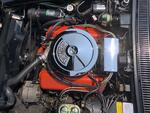


 springs?