





Some input on carb adjustments.

Thread Starter
Burning Brakes


Joined: Jan 2003
Posts: 961
Likes: 275
From: Frederick MD
 Some input on carb adjustments.
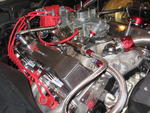
On my brothers 68 big block car with a 454 we are doing some maintenance and clean up on it this winter.
Motor itself is a mid 70s smog motor for a truck. It’s been rebuilt at some point and is overall healthy but not a speedster in any sense. Has about 150 psi of static compression. No real blow by, but has OE style low compression pistons, peanut port heads, and at best an RV cam. Makes 19-20 inches of vacuum. Better suited for an old truck but it is what it is.
The carb on the motor is a Holley 4150 4778-5. Carb is basically as it was out of the box minus a rebuild last winter. There is a small hitch in its giddy up at part throttle. Basically you can’t smash it to the rug from 1500-2000 rpm without it stumbling. We’re thinking the power valve is wrong for the application. The current valve in the carb is a 6.5. With as much vacuum as the motor is making we were going to swap it out with a 8 or 8.5 to hopefully correct this problem. Anything else to look at? It’s also super rich at idle. While it seems to adjust out well at 2ish turns on the idle fuel screws I want to take a good look at the transition slots on the secondaries. I don’t recall where those are set and those could obviously be part of the problem.
Any other suggestions?
Motor itself is a mid 70s smog motor for a truck. It’s been rebuilt at some point and is overall healthy but not a speedster in any sense. Has about 150 psi of static compression. No real blow by, but has OE style low compression pistons, peanut port heads, and at best an RV cam. Makes 19-20 inches of vacuum. Better suited for an old truck but it is what it is.
The carb on the motor is a Holley 4150 4778-5. Carb is basically as it was out of the box minus a rebuild last winter. There is a small hitch in its giddy up at part throttle. Basically you can’t smash it to the rug from 1500-2000 rpm without it stumbling. We’re thinking the power valve is wrong for the application. The current valve in the carb is a 6.5. With as much vacuum as the motor is making we were going to swap it out with a 8 or 8.5 to hopefully correct this problem. Anything else to look at? It’s also super rich at idle. While it seems to adjust out well at 2ish turns on the idle fuel screws I want to take a good look at the transition slots on the secondaries. I don’t recall where those are set and those could obviously be part of the problem.
Any other suggestions?
Le Mans Master


Joined: Aug 2017
Posts: 8,336
Likes: 2,810
From: Cool Northern Michigan
No mention of the accelerator pumps health. But more importantly is the pumps arm to linkage gap, or lack of.
You want 0.012 - 0.15 clearance between the linkage and acc pump arm. Any wider than that will cause a bog. Too tight and you rupture a diaphragm.
Transition slot is favored at 0.020. Some carbs get adjusted by a screw topside of the base plate, but usually under the carb requiring carb removal.
Not everybody has an Air / Fuel Ratio gauge hooked up. But a vacuum gauge that can be seen from the drivers seat while test driving will confirm the power valve choice. I bet the 6.5 is just fine.
You want 0.012 - 0.15 clearance between the linkage and acc pump arm. Any wider than that will cause a bog. Too tight and you rupture a diaphragm.
Transition slot is favored at 0.020. Some carbs get adjusted by a screw topside of the base plate, but usually under the carb requiring carb removal.
Not everybody has an Air / Fuel Ratio gauge hooked up. But a vacuum gauge that can be seen from the drivers seat while test driving will confirm the power valve choice. I bet the 6.5 is just fine.
Last edited by HeadsU.P.; Feb 5, 2023 at 06:18 PM.
Thread Starter
Burning Brakes
Joined: Jan 2003
Posts: 961
Likes: 275
From: Frederick MD
No mention of the accelerator pumps health. But more importantly is the pumps arm to linkage gap, or lack of.
You want 0.012 - 0.15 clearance between the linkage and acc pump arm. Any wider than that will cause a bog. Too tight and you rupture a diaphragm.
Transition slot is favored at 0.020. Some carbs get adjusted by a screw topside of the base plate, but usually under the carb requiring carb removal.
Not everybody has an Air / Fuel Ratio gauge hooked up. But a vacuum gauge that can be seen from the drivers seat while test driving will confirm the power valve choice. I bet the 6.5 is just fine.
You want 0.012 - 0.15 clearance between the linkage and acc pump arm. Any wider than that will cause a bog. Too tight and you rupture a diaphragm.
Transition slot is favored at 0.020. Some carbs get adjusted by a screw topside of the base plate, but usually under the carb requiring carb removal.
Not everybody has an Air / Fuel Ratio gauge hooked up. But a vacuum gauge that can be seen from the drivers seat while test driving will confirm the power valve choice. I bet the 6.5 is just fine.

Le Mans Master
Joined: Mar 2004
Posts: 7,493
Likes: 1,502
From: Little Rock AR
Verify float settings first. Pull the carb off and set the transition slot to a square on the primary side. Make the secondary butterflys have the same light gap as the primary butterflies. Note the color of the pump cams. Make sure you have zero gap in the accelerator pump linkage, but just barely zero. Check the jets to see what they are. Jets should be stock for the carb or close and about 8 numbers apart (primary to secondary).
Hope that gets you started.
Hope that gets you started.

Is my vette stock?? HAHA


Joined: Oct 2015
Posts: 20,209
Likes: 9,348
From: Im not allowed to tell you
2020 C3 of the Year Finalist - Modified
2020 Corvette of the Year Finalist (performance mods)
2019 C3 of Year Winner (performance mods)
2016 C3 of Year Finalist
Whats tour timing set to?. If your down around 6 or 8 degrees you need to bump it to 14. Theres a while lot more to it but that would be a quick indicator. You will want to get Lars Timing Papers from him. Basically you want to have your base timing plus your mechanical advance to reach 36 before 2500 rpm.
You want 0 lash on your accelerator pump arm at idle and the .020 gap available at the end of the stroke to prevent rupture....everyone reads that wrong. A gap at idle will give you a lean bog. After that you may have to start looking at idle air jets and idle fuel restrictors. If you have a newer carb you can change the idle air jets on the top of the carb to straighten out your rich idle..
My old carbs say bottom of the fuel sight hole. My engine likes it above the hole. If you have a glass, play with the level to effect idle quality, stalling at lights and dealing with idle Mixtures. The hieght changs head pressure which gives more fuel during transition.
As for you motor, find some better heads and a good cam with some higher rpm peaks for horsepower, truck cams are all torque.
Go to Richard Holdners youtube page. Look for his BBC section. He has some good power videos for bbc and peanut port heads if you are limited by cash
You want 0 lash on your accelerator pump arm at idle and the .020 gap available at the end of the stroke to prevent rupture....everyone reads that wrong. A gap at idle will give you a lean bog. After that you may have to start looking at idle air jets and idle fuel restrictors. If you have a newer carb you can change the idle air jets on the top of the carb to straighten out your rich idle..
My old carbs say bottom of the fuel sight hole. My engine likes it above the hole. If you have a glass, play with the level to effect idle quality, stalling at lights and dealing with idle Mixtures. The hieght changs head pressure which gives more fuel during transition.
As for you motor, find some better heads and a good cam with some higher rpm peaks for horsepower, truck cams are all torque.
Go to Richard Holdners youtube page. Look for his BBC section. He has some good power videos for bbc and peanut port heads if you are limited by cash

Dr. Detroit

Joined: Mar 2012
Posts: 10,097
Likes: 4,027
From: New Braunfels Texas
Good suggestions here but the 4778 (700 DP) has only a 28 primary squiter in it for a 450 ci engine......move up to a 31 (tube style) and see if it changes......
It also has a 69 primary jet......this seems small to me.....I just jetted a 357ci with a 650DP and it wanted a 72 in the primary.....this may be worth investigating....although this engine is pulling mucho vacuum.....
So squirter first, then maybe add jet if needed.
Jebby
It also has a 69 primary jet......this seems small to me.....I just jetted a 357ci with a 650DP and it wanted a 72 in the primary.....this may be worth investigating....although this engine is pulling mucho vacuum.....
So squirter first, then maybe add jet if needed.
Jebby
Le Mans Master
Joined: Aug 2017
Posts: 8,336
Likes: 2,810
From: Cool Northern Michigan
Unless your engine idles as smooth as a sewing machine, a zero-gap setting for the acc pump arm will cause a dribble into the venturi at idle every few seconds.
That extra drop of fuel will cause erratic fuel mixtures on every drip. A gap of 0.12 - 0.15 is nothing to cause a bog.
That extra drop of fuel will cause erratic fuel mixtures on every drip. A gap of 0.12 - 0.15 is nothing to cause a bog.

Le Mans Master

Joined: Mar 2001
Posts: 5,738
Likes: 644
From: Lincoln, CA
I added this so I can adjust the secondary without messing with the fronts.
I use this document to get mine dialed in.
Carb Tuning with Wideband and Vacuum, By Burton Machine
This is not an all about carbs guide. I’m not going to show off knowledge of fluid dynamics and venturi effect, or talk about pressure differential. I’m not going to talk about annular vs downleg boosters, or explain all the emulsion functions, internal passages, or what they do. I’m also not going to show you where the idle speed or mixture screws are. In fact, I’m not going to show you where anything is.
This guide assumes you know a bit about carbs, and are serious about really tuning it in. If you weren’t, you wouldn’t have a wideband and vacuum gauge hooked up. I will explain how to change each circuit for its intended operating range, and how to avoid common tuning errors of fixing symptoms, with the wrong circuits. Following these steps will give you the best balance of economy, and full power potential.
Base timing, and advance curve must be set prior to tuning. Refinements can be made later on, but it must be close to start. To set base/initial timing, start the engine, run until warm, then set a quick idle mixture. Set the idle RPM to the lowest idle that won’t stall. Advance or retard the timing until the highest vacuum at the chosen rpm is achieved. The idle speed screw will need to be turned with timing adjustments to keep the rpm the same, so this could take a while.
After this initial timing is set, check the amount of advance with a timing light. Write this down in a tuning log. You will then need to limit the total advance either with bushings, or in some cases, the slot must be partially welded, and filed to allow the correct amount of advance. If your initial timing was set at something high, like over 20* you might want to pull the initial back until you know how much mechanical advance you’re getting. Once the total amount of advance is proper, you can return the initial to the setting you wrote down. Choose a set of weights and springs that gives full advance at an RPM that is typically recommended for your engine. Most like around 2500.
Make sure you have the float level and fuel pressure set for what is recommended by the carb manufacturer, not your buddy, or that guy who solved his lean condition by running 12psi at idle.
This will get you close enough to dive into the carb circuits. If you didn’t already do this when installing the carb, pull it off the intake (I know, how annoying) and see where the transfer slot exposure is on the primary side. It should look like a square. You can put a jam nut on and lock it down which will prevent you from screwing with it later on, pun intended. This is important to isolate the idle mixture from the off idle/cruise mixture. With the carb back on, readjust idle speed if needed using the secondary screw, or if equipped, “idle ease” adjustment. Note that carbs with the idle ease, or 4 corner idle will need the secondary transfer slot set as the primary.
Now, to begin some baseline settings. Because of differences in combustion efficiency, compression, overlap etc, engines will “like” different AFR’s (air to fuel ratios). Acceptance of this is critical to optimizing your engine’s manners. This is why we will be using the trusty vacuum gauge once again before using any wideband data.
Idle Mixture:
This is a basic one, but it will greatly impact how you go about tuning your carb’s off idle/cruise circuit. More on that later. Warm the engine up to typical operating range.
Bottom out the mixture screws, then back them out 1-1 ½ turns. Working in equal amounts for driver’s and passenger’s sides, turn them in ¼ turn at a time, maybe even less, until the engine wants to die, but still stumbles along without doing so. Note the AFR.
This is the absolute leanest it will run at, but poorly at that. Now do the opposite, but do it for the highest vacuum reading possible. IGNORE the wideband at this point! Be sure not to go above the highest vacuum reading. Only open them up enough to hold the highest steady vacuum reading. Do this like you did for base timing, and readjust idle speed so you are getting your vacuum readings at the same engine speed. Only use the secondary idle speed screw, or if equipped, idle ease for speed adjustments. Don’t change the primary setting. Okay, now you can look at your wideband, and note the number.
This is where it “likes” to be, but will quite possibly be a very rich figure. Mine for example idles buttery smooth at a 12.0, but will tend to foul plugs quicker. It also idles as lean as 16 but sounds like it has a huge cam. At this point, lean it out until the vacuum, or rpm drops just a little bit, but doesn’t produce the choppy effects seen at the absolute lean mixture. This is going to be your best compromise of smooth idle, and clean plugs. Note this AFR.
Main Jets:
“But what about IFR (idle feed restrictors) and IAB’s (idle air bleeds)” you shout!? We will get back to them later. The selection of the main jet is a tough one to get your head around, but here is the real basic concept. The main jet needs only to be large enough to support cruise and light acceleration at engine speeds of approximately 2000-4000rpm. 4000 is really pushing it too. Who cruises at 4 grand!?
Warmed up to normal temp, drive the car on a flat level road at 2500rpm. Hold the throttle steady, and observe the wideband. You should be able to get away with 14’s for AFR at this range, even with a fairly radical engine because the combustion process is better than at idle, the advance is likely”all in” and there is very little load. If the engine is too rich, jet it down attempting to get it as lean as possible. This is where it doesn’t matter what your buddy’s engine likes, or some Honda tuner. Go lean until it starts surging or develops a steady miss. Go back to the leanest setting that doesn’t surge or miss, and note the AFR. Keep in mind that a steady miss could also be an indicator of a vacuum leak, ignition problems, or poor distribution. The vacuum gauge would be really jumpy if you had a leak though.
Going to a best lean cruise will likely create some drivability symptoms. This is where most guys say, “it needs bigger mains”. WRONG! Those problems will be cured with other circuits. Now we’re going to go back and flatten the fuel curve from idle through the 2500 main jet selection.
Idle Circuit Refinement:
To get a nice smooth fuel injection quality fuel curve, you’re likely going to have to modify some passages in the carb. Make a chart of idle, 1000rpm, 1200, 1500, 1800, 2000, 2200, 2500. With the engine warm, run the car at those speeds in neutral, just sitting in the driveway. At each of those speeds, carefully hold the throttle steady, and watch the wideband. Throttle movement will cause the readings to jump, so take your time, and let it find a steady number. Don’t just jot down the first steady number you see. Wall wetting from accelerator pump, leanout from slowly throttling down, etc can take a good 20 seconds or more to “clear out”.
There are 2 things we’re really interested in. Remember that good balanced idle AFR we achieved earlier? Is the number at 1200 richer or leaner? Is the number at 1800 richer or leaner than that? If the 1200 number is richer, the IFR (idle feed restrictor) needs to be smaller. If leaner, the opposite. If the value at 1800 is richer than at 1200, the IAB (idle air bleed) needs to be bigger. If leaner, the opposite. This is the area where most in town cruising occurs. This is where you can either get max economy, and clean plugs, or a swilling fuel drunk neanderthal that needs the plugs removed and cleaned every week.
This is also an area that requires a lot of time. Since the air bleed can affect the entire curve, you should change it with the restrictor. It should be a good match from the factory, but if the feed restrictor needs to go down, the bleed will seem to have a much more pronounced effect on the curve. As a general rule, if the restrictor goes smaller, the bleed will likely need to go smaller with it to maintain a flat curve. Change one, then the other, a little at a time until your fuel curve is smooth. Also, keep in mind that most engines will want a slightly richer AFR at, and just off idle. If that is your case, the curve should smoothly lean out from idle by around 1500rpm to what the mains tolerated, then stay there into the main circuit.
Carbs with screw in bleeds have it easy. If yours doesn’t, you will either need to experiment with wire to reduce the diameter, or best bet is to drill and tap the stock ones for 8-32 brass set screws. You’ll use the set screws later on too, so it is worth pulling the carb apart for this, and the ones mentioned later. If you read this whole thing first, you’ll know which ones to do. Same is the case for the IFR’s. If you don’t have screw in ones, drill and tap, but the screws will likely need to be smaller.
Another thing to consider is that air bleed changes in the idle circuit will tend to have the opposite effect on the signal to the mains. This is because by reducing the air going through the idle air bleed, more of it then pulls through the main. There could be some changes needed in the main jet after refining the idle circuit, but should be minimal.
Time for a test drive! Drive the car at varied speed, and terrains. With the idle circuit and mains smooth and lean, it could result in poor throttle response, and falling on its face under moderate part throttle acceleration. Why would we tune it like this then!? We will now begin curing drivability symptoms with the proper circuits!
Get the car up to a steady speed, say 25mph, then smoothly push down to accelerate. Don’t romp on it, but don’t baby pedal it. Think of trying to go up a slight hill, or smoothly pass someone. If the car’s AFR plunges lean, watch the vacuum gauge. Look for the lowest vacuum reading that it runs nice at, then the point that it stumbles badly at. Note those vacuum readings.
Accelerator Pump:
Next, romp on the throttle from a dead stop. Do it both to ½ throttle, and full throttle. It needs to be an immediate stab of the gas, not a roll into the throttle. Watch the AFR, and behavior of the car. If it goes lean, and recovers, but doesn’t stumble during that lean spike, you’re probably okay. More likely, is that it will pop through the intake, or stall, or come close then recover. Occasionally, it will go really rich and bog, then clear out.
If the first situation occurs, enlarge the primary squirter until the ½ throttle stabs are responsive, with no stumble or stutters. If the second situation occurs, go smaller until it smooths out. Do the same on the secondary to cover the full throttle stabs. I have found that with the double pumpers, equal squirters front and rear works best, but you might experiment with a smaller one on the primary for economy, and a bigger one on the secondary for full throttle hits.
Power Valve:
Once you can romp on it from a dead stop, go for another test drive. Most of the drivability issues should be gone now. The next step is to optimize the power valve, and PVCR’s (power valve channel restrictions). If you roll into the throttle, you will see the vacuum gauge drop. You want to watch the AFR for a lean out above light throttle, or a rich bog. If it goes rich too soon, a lower power valve needs to be used. To get close, use the lowest steady cruise vacuum reading you got from the first test drive. Go1-2 numbers lower for the PV. For example, if you have a big cam, and only pull 8” of vacuum at cruise, a #6 power valve should be used.
In most mild street and strip combos, the car will starve out for gas before the power valve opens because of lots of vacuum, and the lean main jets. This is where most folks put in bigger mains to cover it, but the best bet is to put the right power valve in, and “jet” the power valve circuit via the PVCR’s. Like with the low vacuum combo, pick a PV that opens just below the lowest part throttle vacuum reading. In some cases it may require a really early opening valve. The most aggressive one Holley makes is a 10.5.
After changing the PV watch the AFR’s as it comes in. You’ll know when it opens by watching the vacuum gauge. When you are under a part throttle, but not full throttle load, and the vacuum is below your PV opening point, look at the AFR. If it is lean, the PVCR’s need to be bigger. If it goes rich, they need to be smaller. If lean, use a pin vise set, or if you have steady hands, a cordless drill, to enlarge the passages a few thousandths at a time until the AFR under load is around a 12.5-13. For max economy, favor the 13. For max power, it will probably pull harder around 12.5. Experimentation will be required to find what your combo likes best. If it goes too rich, you have to reduce the size of the hole. Some folks have gotten away with JB weld, and redrilling, but the best bet is to drill and tap the holes to accept 8-32 brass set screws. This will allow you to keep a few sets to go back and forth with.
Secondary Jets:
Now for the fun part, full throttle blasts! Take the car somewhere you can run it out for a couple gears, while watching the AFR. Obviously a track is best, but do what you can and be realistic about the fact you will be distracted by gauges and need nobody else driving near you. I suggest running it out moderate throttle in first gear, opening it to full as you hit second, staying in it through redline, and a little bit into third. If the car goes lean, or pops or does ANYTHING weird, don’t stay on the throttle. As with the power valve, tune it for max pull. It is probably going to be around 12.5 that it pulls the hardest, but some are stronger a little lean, some like a fatter mix.
The last bit is to watch for a difference in AFR as it approaches your shift point. If it starts to lean out, the high speed air bleeds need to be a little smaller. If it gets richer, they need to be bigger. Again, carbs with screw in bleeds have this easy. If not, drill and tap for the same 8-32’s you used on the IAB’s and PVCR’s. This can take a lot of time and effort, but having an awesome running car is worth it!
The wideband can be a great tuning tool, but it can also become a sort of car guy illness. You can get real finicky and watch the wideband more than the road. Remember a carb isn’t fuel injection, but can be tuned dang close! At some point you have to decide when the car runs well enough, and just enjoy it. Also note that the aggressive initial timing, and lean mixtures can cause some pinging at light throttle. An adjustable vacuum advance can be used to cure that. If the pinging cannot be cured with timing, you might need to slightly enrich that portion of the fuel curve and compromise some economy.
Adjustable power valve:
Sometimes when tuning for economy, and your engine pulls a lot of vacuum it can create a lean spot. If your main jets are tuned small for cruise, you need something to cover the gap between primary and secondary fuel. That’s the power valve’s job. Holley only makes up to a 10″ vacuum valve as far as I know. I had a car that pulled 22″ of vacuum at light throttle cruise. Off idle acceleration was nice and crisp, but above that when I would go for more throttle it would nose over until the vacuum drop was enough to open the PVCR’s, even with the 10″ valve.
I decided to watch my AFR and vacuum to see when it was dropping lean. The car would surge at around 14″ of vacuum. I took a 10″ power valve and very carefully took it apart. I turned a new center shaft on the lathe, with extra threaded length. Once assembled, I was able to tighten the 2 knurled nuts for an earlier opening valve. After a few runs, turning the adjuster **** a 1/4 turn each drive, I was able to clear up the lean spot, without giving up the economical main jetting. The one in the picture used an aluminum shaft. I later made one with a brass shaft, and the high flow type valve. If there is interest I may look into production for these.
I use this document to get mine dialed in.
Carb Tuning with Wideband and Vacuum, By Burton Machine
This is not an all about carbs guide. I’m not going to show off knowledge of fluid dynamics and venturi effect, or talk about pressure differential. I’m not going to talk about annular vs downleg boosters, or explain all the emulsion functions, internal passages, or what they do. I’m also not going to show you where the idle speed or mixture screws are. In fact, I’m not going to show you where anything is.
This guide assumes you know a bit about carbs, and are serious about really tuning it in. If you weren’t, you wouldn’t have a wideband and vacuum gauge hooked up. I will explain how to change each circuit for its intended operating range, and how to avoid common tuning errors of fixing symptoms, with the wrong circuits. Following these steps will give you the best balance of economy, and full power potential.
Base timing, and advance curve must be set prior to tuning. Refinements can be made later on, but it must be close to start. To set base/initial timing, start the engine, run until warm, then set a quick idle mixture. Set the idle RPM to the lowest idle that won’t stall. Advance or retard the timing until the highest vacuum at the chosen rpm is achieved. The idle speed screw will need to be turned with timing adjustments to keep the rpm the same, so this could take a while.
After this initial timing is set, check the amount of advance with a timing light. Write this down in a tuning log. You will then need to limit the total advance either with bushings, or in some cases, the slot must be partially welded, and filed to allow the correct amount of advance. If your initial timing was set at something high, like over 20* you might want to pull the initial back until you know how much mechanical advance you’re getting. Once the total amount of advance is proper, you can return the initial to the setting you wrote down. Choose a set of weights and springs that gives full advance at an RPM that is typically recommended for your engine. Most like around 2500.
Make sure you have the float level and fuel pressure set for what is recommended by the carb manufacturer, not your buddy, or that guy who solved his lean condition by running 12psi at idle.
This will get you close enough to dive into the carb circuits. If you didn’t already do this when installing the carb, pull it off the intake (I know, how annoying) and see where the transfer slot exposure is on the primary side. It should look like a square. You can put a jam nut on and lock it down which will prevent you from screwing with it later on, pun intended. This is important to isolate the idle mixture from the off idle/cruise mixture. With the carb back on, readjust idle speed if needed using the secondary screw, or if equipped, “idle ease” adjustment. Note that carbs with the idle ease, or 4 corner idle will need the secondary transfer slot set as the primary.
Now, to begin some baseline settings. Because of differences in combustion efficiency, compression, overlap etc, engines will “like” different AFR’s (air to fuel ratios). Acceptance of this is critical to optimizing your engine’s manners. This is why we will be using the trusty vacuum gauge once again before using any wideband data.
Idle Mixture:
This is a basic one, but it will greatly impact how you go about tuning your carb’s off idle/cruise circuit. More on that later. Warm the engine up to typical operating range.
Bottom out the mixture screws, then back them out 1-1 ½ turns. Working in equal amounts for driver’s and passenger’s sides, turn them in ¼ turn at a time, maybe even less, until the engine wants to die, but still stumbles along without doing so. Note the AFR.
This is the absolute leanest it will run at, but poorly at that. Now do the opposite, but do it for the highest vacuum reading possible. IGNORE the wideband at this point! Be sure not to go above the highest vacuum reading. Only open them up enough to hold the highest steady vacuum reading. Do this like you did for base timing, and readjust idle speed so you are getting your vacuum readings at the same engine speed. Only use the secondary idle speed screw, or if equipped, idle ease for speed adjustments. Don’t change the primary setting. Okay, now you can look at your wideband, and note the number.
This is where it “likes” to be, but will quite possibly be a very rich figure. Mine for example idles buttery smooth at a 12.0, but will tend to foul plugs quicker. It also idles as lean as 16 but sounds like it has a huge cam. At this point, lean it out until the vacuum, or rpm drops just a little bit, but doesn’t produce the choppy effects seen at the absolute lean mixture. This is going to be your best compromise of smooth idle, and clean plugs. Note this AFR.
Main Jets:
“But what about IFR (idle feed restrictors) and IAB’s (idle air bleeds)” you shout!? We will get back to them later. The selection of the main jet is a tough one to get your head around, but here is the real basic concept. The main jet needs only to be large enough to support cruise and light acceleration at engine speeds of approximately 2000-4000rpm. 4000 is really pushing it too. Who cruises at 4 grand!?
Warmed up to normal temp, drive the car on a flat level road at 2500rpm. Hold the throttle steady, and observe the wideband. You should be able to get away with 14’s for AFR at this range, even with a fairly radical engine because the combustion process is better than at idle, the advance is likely”all in” and there is very little load. If the engine is too rich, jet it down attempting to get it as lean as possible. This is where it doesn’t matter what your buddy’s engine likes, or some Honda tuner. Go lean until it starts surging or develops a steady miss. Go back to the leanest setting that doesn’t surge or miss, and note the AFR. Keep in mind that a steady miss could also be an indicator of a vacuum leak, ignition problems, or poor distribution. The vacuum gauge would be really jumpy if you had a leak though.
Going to a best lean cruise will likely create some drivability symptoms. This is where most guys say, “it needs bigger mains”. WRONG! Those problems will be cured with other circuits. Now we’re going to go back and flatten the fuel curve from idle through the 2500 main jet selection.
Idle Circuit Refinement:
To get a nice smooth fuel injection quality fuel curve, you’re likely going to have to modify some passages in the carb. Make a chart of idle, 1000rpm, 1200, 1500, 1800, 2000, 2200, 2500. With the engine warm, run the car at those speeds in neutral, just sitting in the driveway. At each of those speeds, carefully hold the throttle steady, and watch the wideband. Throttle movement will cause the readings to jump, so take your time, and let it find a steady number. Don’t just jot down the first steady number you see. Wall wetting from accelerator pump, leanout from slowly throttling down, etc can take a good 20 seconds or more to “clear out”.
There are 2 things we’re really interested in. Remember that good balanced idle AFR we achieved earlier? Is the number at 1200 richer or leaner? Is the number at 1800 richer or leaner than that? If the 1200 number is richer, the IFR (idle feed restrictor) needs to be smaller. If leaner, the opposite. If the value at 1800 is richer than at 1200, the IAB (idle air bleed) needs to be bigger. If leaner, the opposite. This is the area where most in town cruising occurs. This is where you can either get max economy, and clean plugs, or a swilling fuel drunk neanderthal that needs the plugs removed and cleaned every week.
This is also an area that requires a lot of time. Since the air bleed can affect the entire curve, you should change it with the restrictor. It should be a good match from the factory, but if the feed restrictor needs to go down, the bleed will seem to have a much more pronounced effect on the curve. As a general rule, if the restrictor goes smaller, the bleed will likely need to go smaller with it to maintain a flat curve. Change one, then the other, a little at a time until your fuel curve is smooth. Also, keep in mind that most engines will want a slightly richer AFR at, and just off idle. If that is your case, the curve should smoothly lean out from idle by around 1500rpm to what the mains tolerated, then stay there into the main circuit.
Carbs with screw in bleeds have it easy. If yours doesn’t, you will either need to experiment with wire to reduce the diameter, or best bet is to drill and tap the stock ones for 8-32 brass set screws. You’ll use the set screws later on too, so it is worth pulling the carb apart for this, and the ones mentioned later. If you read this whole thing first, you’ll know which ones to do. Same is the case for the IFR’s. If you don’t have screw in ones, drill and tap, but the screws will likely need to be smaller.
Another thing to consider is that air bleed changes in the idle circuit will tend to have the opposite effect on the signal to the mains. This is because by reducing the air going through the idle air bleed, more of it then pulls through the main. There could be some changes needed in the main jet after refining the idle circuit, but should be minimal.
Time for a test drive! Drive the car at varied speed, and terrains. With the idle circuit and mains smooth and lean, it could result in poor throttle response, and falling on its face under moderate part throttle acceleration. Why would we tune it like this then!? We will now begin curing drivability symptoms with the proper circuits!
Get the car up to a steady speed, say 25mph, then smoothly push down to accelerate. Don’t romp on it, but don’t baby pedal it. Think of trying to go up a slight hill, or smoothly pass someone. If the car’s AFR plunges lean, watch the vacuum gauge. Look for the lowest vacuum reading that it runs nice at, then the point that it stumbles badly at. Note those vacuum readings.
Accelerator Pump:
Next, romp on the throttle from a dead stop. Do it both to ½ throttle, and full throttle. It needs to be an immediate stab of the gas, not a roll into the throttle. Watch the AFR, and behavior of the car. If it goes lean, and recovers, but doesn’t stumble during that lean spike, you’re probably okay. More likely, is that it will pop through the intake, or stall, or come close then recover. Occasionally, it will go really rich and bog, then clear out.
If the first situation occurs, enlarge the primary squirter until the ½ throttle stabs are responsive, with no stumble or stutters. If the second situation occurs, go smaller until it smooths out. Do the same on the secondary to cover the full throttle stabs. I have found that with the double pumpers, equal squirters front and rear works best, but you might experiment with a smaller one on the primary for economy, and a bigger one on the secondary for full throttle hits.
Power Valve:
Once you can romp on it from a dead stop, go for another test drive. Most of the drivability issues should be gone now. The next step is to optimize the power valve, and PVCR’s (power valve channel restrictions). If you roll into the throttle, you will see the vacuum gauge drop. You want to watch the AFR for a lean out above light throttle, or a rich bog. If it goes rich too soon, a lower power valve needs to be used. To get close, use the lowest steady cruise vacuum reading you got from the first test drive. Go1-2 numbers lower for the PV. For example, if you have a big cam, and only pull 8” of vacuum at cruise, a #6 power valve should be used.
In most mild street and strip combos, the car will starve out for gas before the power valve opens because of lots of vacuum, and the lean main jets. This is where most folks put in bigger mains to cover it, but the best bet is to put the right power valve in, and “jet” the power valve circuit via the PVCR’s. Like with the low vacuum combo, pick a PV that opens just below the lowest part throttle vacuum reading. In some cases it may require a really early opening valve. The most aggressive one Holley makes is a 10.5.
After changing the PV watch the AFR’s as it comes in. You’ll know when it opens by watching the vacuum gauge. When you are under a part throttle, but not full throttle load, and the vacuum is below your PV opening point, look at the AFR. If it is lean, the PVCR’s need to be bigger. If it goes rich, they need to be smaller. If lean, use a pin vise set, or if you have steady hands, a cordless drill, to enlarge the passages a few thousandths at a time until the AFR under load is around a 12.5-13. For max economy, favor the 13. For max power, it will probably pull harder around 12.5. Experimentation will be required to find what your combo likes best. If it goes too rich, you have to reduce the size of the hole. Some folks have gotten away with JB weld, and redrilling, but the best bet is to drill and tap the holes to accept 8-32 brass set screws. This will allow you to keep a few sets to go back and forth with.
Secondary Jets:
Now for the fun part, full throttle blasts! Take the car somewhere you can run it out for a couple gears, while watching the AFR. Obviously a track is best, but do what you can and be realistic about the fact you will be distracted by gauges and need nobody else driving near you. I suggest running it out moderate throttle in first gear, opening it to full as you hit second, staying in it through redline, and a little bit into third. If the car goes lean, or pops or does ANYTHING weird, don’t stay on the throttle. As with the power valve, tune it for max pull. It is probably going to be around 12.5 that it pulls the hardest, but some are stronger a little lean, some like a fatter mix.
The last bit is to watch for a difference in AFR as it approaches your shift point. If it starts to lean out, the high speed air bleeds need to be a little smaller. If it gets richer, they need to be bigger. Again, carbs with screw in bleeds have this easy. If not, drill and tap for the same 8-32’s you used on the IAB’s and PVCR’s. This can take a lot of time and effort, but having an awesome running car is worth it!
The wideband can be a great tuning tool, but it can also become a sort of car guy illness. You can get real finicky and watch the wideband more than the road. Remember a carb isn’t fuel injection, but can be tuned dang close! At some point you have to decide when the car runs well enough, and just enjoy it. Also note that the aggressive initial timing, and lean mixtures can cause some pinging at light throttle. An adjustable vacuum advance can be used to cure that. If the pinging cannot be cured with timing, you might need to slightly enrich that portion of the fuel curve and compromise some economy.
Adjustable power valve:
Sometimes when tuning for economy, and your engine pulls a lot of vacuum it can create a lean spot. If your main jets are tuned small for cruise, you need something to cover the gap between primary and secondary fuel. That’s the power valve’s job. Holley only makes up to a 10″ vacuum valve as far as I know. I had a car that pulled 22″ of vacuum at light throttle cruise. Off idle acceleration was nice and crisp, but above that when I would go for more throttle it would nose over until the vacuum drop was enough to open the PVCR’s, even with the 10″ valve.
I decided to watch my AFR and vacuum to see when it was dropping lean. The car would surge at around 14″ of vacuum. I took a 10″ power valve and very carefully took it apart. I turned a new center shaft on the lathe, with extra threaded length. Once assembled, I was able to tighten the 2 knurled nuts for an earlier opening valve. After a few runs, turning the adjuster **** a 1/4 turn each drive, I was able to clear up the lean spot, without giving up the economical main jetting. The one in the picture used an aluminum shaft. I later made one with a brass shaft, and the high flow type valve. If there is interest I may look into production for these.
Corvette Stories
The Best of Corvette for Corvette Enthusiasts

Top 10 Most Expensive Corvettes Ever Sold on Bring A Trailer
Brett Foote
10 Things Every Corvette Owner Needs (2026 Edition)
Michael S. Palmer
8 Most "Only Corvette Owners Understand" Quirks and Problems
Pouria Savadkouei
10 Reasons the C6 Z06 is Still A Performance Benchmark After 20 Years
Joe Kucinski
How Much Horsepower Every Corvette Engine "LOST" in 1972
Joe Kucinski
Top 10 DOs and DON'Ts for Protecting Your Convertible Top!
Michael S. Palmer
Top 10 Most Explosive Corvettes Ever Made: Power-to-Weight Ratio Ranked!
Joe Kucinski
150 hp to 1,250 hp: Every Corvette Generation Compared by the Specs That Matter
Joe Kucinski
8 Coolest Corvette Pace Cars (and Replicas) of All Time
Verdad Gallardo
Thread Starter
Burning Brakes
Joined: Jan 2003
Posts: 961
Likes: 275
From: Frederick MD
Good suggestions here but the 4778 (700 DP) has only a 28 primary squiter in it for a 450 ci engine......move up to a 31 (tube style) and see if it changes......
It also has a 69 primary jet......this seems small to me.....I just jetted a 357ci with a 650DP and it wanted a 72 in the primary.....this may be worth investigating....although this engine is pulling mucho vacuum.....
So squirter first, then maybe add jet if needed.
Jebby
It also has a 69 primary jet......this seems small to me.....I just jetted a 357ci with a 650DP and it wanted a 72 in the primary.....this may be worth investigating....although this engine is pulling mucho vacuum.....
So squirter first, then maybe add jet if needed.
Jebby
Thread Starter
Burning Brakes
Joined: Jan 2003
Posts: 961
Likes: 275
From: Frederick MD
As for finding a different motor without peanut port heads and a more aggressive cam I’m sure my brother is all about that as long as somebody else is willing to fund the project. Anybody down to give away about $4000 in hardware for new heads, cam, pushrods, and lifters? I figured not.
With the joking aside just want to get this small issue sorted out. We know the carb is alittle small for the motor but it’s what came with the car and other than a few issues it seems to run good.
What would be the best and cheapest way to determine AF ratio and not be a full time install? Car has side pipes, but I welded O2 bungs in the headers.
With the joking aside just want to get this small issue sorted out. We know the carb is alittle small for the motor but it’s what came with the car and other than a few issues it seems to run good.
What would be the best and cheapest way to determine AF ratio and not be a full time install? Car has side pipes, but I welded O2 bungs in the headers.


Dr. Detroit
Joined: Mar 2012
Posts: 10,097
Likes: 4,027
From: New Braunfels Texas
Squirters were changed to 31’s last winter and the pump cam way changed to orange because it had a real bad off idle skip. Off idle it’s fine now. It’s part throttle where the issue is now. I don’t remember exactly but the timing is 35-36 all in with about 14 or so at idle with vacuum advance disconnected.
Jebby