







Fresh rebuild 350 10-1 approx compression

Thread Starter
Heel & Toe

Joined: Aug 2022
Posts: 17
Likes: 1
From: Waterford, Michigan
 Fresh rebuild 350 10-1 approx compression
Hi all,
I am running my fresh engine and I'm going through oil like Ive never done before. Compression test on cyl 1, 3,5 are 150-160 psi cyl 7 is strong 170 psi
Cam is 110 separation with .477/480 lift. .268-280 duration. Plugs are showing very rich and possibly some oil.
I admit, I sometimes do dyslexic type stuff so this has me wondering if I installed some or possibly all the rings upside down YIKES!
Any thoughts or ideas before I pull it and start over are welcome. I'll do the even cyl's later Thanks
I am running my fresh engine and I'm going through oil like Ive never done before. Compression test on cyl 1, 3,5 are 150-160 psi cyl 7 is strong 170 psi
Cam is 110 separation with .477/480 lift. .268-280 duration. Plugs are showing very rich and possibly some oil.
I admit, I sometimes do dyslexic type stuff so this has me wondering if I installed some or possibly all the rings upside down YIKES!
Any thoughts or ideas before I pull it and start over are welcome. I'll do the even cyl's later Thanks

Le Mans Master


Joined: Apr 2011
Posts: 6,284
Likes: 1,171
From: Hermosa
What kind of break in have you done? How many miles on the rebuild? What was replaced during the rebuild? How were the cylinders prepped? Face material on the rings? did you do the rebuild or have it done?
Thread Starter
Heel & Toe
Joined: Aug 2022
Posts: 17
Likes: 1
From: Waterford, Michigan
It was a typical break in. I used Zinc additive for break in. Ran it over 2000 rpm 15-20 minutes drove it 100-150 miles changed oil and used Shell T4 HD Diesel oil. Zero glitter in the oil. It traveled 3-400 miles since. Blue smoke on start up, smoke when idle cold, smoke on hard take off.
Local Machine shop did the heads new valve seals and guilds, all new springs and all valves needed to be replaced.
I cant remember if I purchased Molly rings or Std. but they are Total seal .30 over. I did the assembly of the engine, (Ive done a few)
Just finished Compression testing. They are all above 160 psi or higher. (wasn't cranking quite long enough) So I'm liking the intake manifold theory because my manifold wasn't in very good shape. (this engine we totally worn out) pistons fell out when I disassembled it.
The heat shield was fully packed with carbon (solid) so I removed the heat shield and cleaned it up and put it on the engine. Foolish? probably! Also it's clearly running rich. Plugs are BLACK! It has a reman Q Jet from National Carb (Ive had good luck with them in the past)
Ordering a new intake now. Lets see what happens.
Thanks for the reply please let me know if you think I'm on the right track or have another point of view
Local Machine shop did the heads new valve seals and guilds, all new springs and all valves needed to be replaced.
I cant remember if I purchased Molly rings or Std. but they are Total seal .30 over. I did the assembly of the engine, (Ive done a few)
Just finished Compression testing. They are all above 160 psi or higher. (wasn't cranking quite long enough) So I'm liking the intake manifold theory because my manifold wasn't in very good shape. (this engine we totally worn out) pistons fell out when I disassembled it.
The heat shield was fully packed with carbon (solid) so I removed the heat shield and cleaned it up and put it on the engine. Foolish? probably! Also it's clearly running rich. Plugs are BLACK! It has a reman Q Jet from National Carb (Ive had good luck with them in the past)
Ordering a new intake now. Lets see what happens.
Thanks for the reply please let me know if you think I'm on the right track or have another point of view
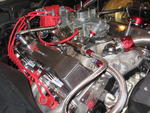
Le Mans Master

Joined: Aug 2017
Posts: 8,336
Likes: 2,810
From: Cool Northern Michigan
Faulty PCV Valve.
No baffles in the Valve Covers.
Five out of four people may have trouble with fractions but,
six out of ten people install Intake Gaskets incorrectly. (lack of sealant)
No baffles in the Valve Covers.
Five out of four people may have trouble with fractions but,
six out of ten people install Intake Gaskets incorrectly. (lack of sealant)
Last edited by HeadsU.P.; Aug 5, 2023 at 04:46 PM.
Corvette Stories
The Best of Corvette for Corvette Enthusiasts

Top 10 Most Expensive Corvettes Ever Sold on Bring A Trailer
Brett Foote
10 Things Every Corvette Owner Needs (2026 Edition)
Michael S. Palmer
8 Most "Only Corvette Owners Understand" Quirks and Problems
Pouria Savadkouei
10 Reasons the C6 Z06 is Still A Performance Benchmark After 20 Years
Joe Kucinski
How Much Horsepower Every Corvette Engine "LOST" in 1972
Joe Kucinski
Top 10 DOs and DON'Ts for Protecting Your Convertible Top!
Michael S. Palmer
Top 10 Most Explosive Corvettes Ever Made: Power-to-Weight Ratio Ranked!
Joe Kucinski
150 hp to 1,250 hp: Every Corvette Generation Compared by the Specs That Matter
Joe Kucinski
8 Coolest Corvette Pace Cars (and Replicas) of All Time
Verdad Gallardo
Thread Starter
Heel & Toe
Joined: Aug 2022
Posts: 17
Likes: 1
From: Waterford, Michigan
Hi HeadsU.P
Great catch! On the first start I didn't have any breathers or PCV, I had quite a bit of oil squirting out the bleed hole on the fuel pump. I added two breathers and that stopped the massive oil bleed. No leaks I can see.
I still wonder if that could have compromised the fuel pump?? Any thoughts on that one?
Thanks for the reply!!!
Great catch! On the first start I didn't have any breathers or PCV, I had quite a bit of oil squirting out the bleed hole on the fuel pump. I added two breathers and that stopped the massive oil bleed. No leaks I can see.
I still wonder if that could have compromised the fuel pump?? Any thoughts on that one?
Thanks for the reply!!!
Le Mans Master
Joined: Aug 2017
Posts: 8,336
Likes: 2,810
From: Cool Northern Michigan
Maybe someone else can chime in on that fuel pump.
When I had a fuel pump dribble out the weep hole it was gas, not oil. Bad diaphragm.
Sometimes a bad pump will dribble gas into the oil pan. Just the opposite of your story.
Back to your question. There really isn't any oil pressure at the fuel pump area. So I doubt any damage to the pump occurred. Blowby doesn't really have much pressure behind it as shown when you remove a breather at idle. Nothing comes out.
You might want to consider a PCV valve on one valve cover. Your two-breather set-up will work but eventually the firewall, steering box, inner fenders, etc will have a oily residue. With a evacuation system, blowby is collected and burned off via the Intake./ carb vac port.
Did you install your oil rings up-side-down? I vote no.
Unrelated your compression numbers are not too bad. Your cam has enough duration to bleed-off high compression testing at cranking speed. So that is normal.
I would try anything as opposed to a complete tear-down of the engine. Having said that, I wonder if you pulled the oil pan, turn the crank so that a piston is at the bottom of the stroke, if could you see any markings on the oil rings? Some rings had dot or dimple for up or down orientation. You just might be able to verify if the rings were indeed installed correctly.
When I had a fuel pump dribble out the weep hole it was gas, not oil. Bad diaphragm.
Sometimes a bad pump will dribble gas into the oil pan. Just the opposite of your story.
Back to your question. There really isn't any oil pressure at the fuel pump area. So I doubt any damage to the pump occurred. Blowby doesn't really have much pressure behind it as shown when you remove a breather at idle. Nothing comes out.
You might want to consider a PCV valve on one valve cover. Your two-breather set-up will work but eventually the firewall, steering box, inner fenders, etc will have a oily residue. With a evacuation system, blowby is collected and burned off via the Intake./ carb vac port.
Did you install your oil rings up-side-down? I vote no.
Unrelated your compression numbers are not too bad. Your cam has enough duration to bleed-off high compression testing at cranking speed. So that is normal.
I would try anything as opposed to a complete tear-down of the engine. Having said that, I wonder if you pulled the oil pan, turn the crank so that a piston is at the bottom of the stroke, if could you see any markings on the oil rings? Some rings had dot or dimple for up or down orientation. You just might be able to verify if the rings were indeed installed correctly.

Melting Slicks

Joined: Jul 2006
Posts: 2,291
Likes: 493
From: Salmon Arm, BC
First off it's not likely the valve seals leaking as the shop just went over the heads.....mistakes can be made though.
Get one of those inexpensive borescope cameras off Amazon, Remove the carb, and stick it down each of the intake runners and look for oil residue at the intake manifold / head mating surfaces....if it's leaking there it should be easily seen with the amount of oil your going through.
Lars @lars has repeatedly gone on about the poor quality of reman Q-jet carbs and the way they butcher them when doing their reman thing.....not related to your oil consumption, but something to think about.
Get one of those inexpensive borescope cameras off Amazon, Remove the carb, and stick it down each of the intake runners and look for oil residue at the intake manifold / head mating surfaces....if it's leaking there it should be easily seen with the amount of oil your going through.
Lars @lars has repeatedly gone on about the poor quality of reman Q-jet carbs and the way they butcher them when doing their reman thing.....not related to your oil consumption, but something to think about.
Last edited by OMF; Aug 5, 2023 at 07:55 PM.
Le Mans Master
Joined: Apr 2011
Posts: 6,284
Likes: 1,171
From: Hermosa
It was a typical break in. I used Zinc additive for break in. Ran it over 2000 rpm 15-20 minutes drove it 100-150 miles changed oil and used Shell T4 HD Diesel oil. Zero glitter in the oil. It traveled 3-400 miles since. Blue smoke on start up, smoke when idle cold, smoke on hard take off.
Local Machine shop did the heads new valve seals and guilds, all new springs and all valves needed to be replaced.
I cant remember if I purchased Molly rings or Std. but they are Total seal .30 over. I did the assembly of the engine, (Ive done a few)
Just finished Compression testing. They are all above 160 psi or higher. (wasn't cranking quite long enough) So I'm liking the intake manifold theory because my manifold wasn't in very good shape. (this engine we totally worn out) pistons fell out when I disassembled it.
The heat shield was fully packed with carbon (solid) so I removed the heat shield and cleaned it up and put it on the engine. Foolish? probably! Also it's clearly running rich. Plugs are BLACK! It has a reman Q Jet from National Carb (Ive had good luck with them in the past)
Ordering a new intake now. Lets see what happens.
Thanks for the reply please let me know if you think I'm on the right track or have another point of view
Local Machine shop did the heads new valve seals and guilds, all new springs and all valves needed to be replaced.
I cant remember if I purchased Molly rings or Std. but they are Total seal .30 over. I did the assembly of the engine, (Ive done a few)
Just finished Compression testing. They are all above 160 psi or higher. (wasn't cranking quite long enough) So I'm liking the intake manifold theory because my manifold wasn't in very good shape. (this engine we totally worn out) pistons fell out when I disassembled it.
The heat shield was fully packed with carbon (solid) so I removed the heat shield and cleaned it up and put it on the engine. Foolish? probably! Also it's clearly running rich. Plugs are BLACK! It has a reman Q Jet from National Carb (Ive had good luck with them in the past)
Ordering a new intake now. Lets see what happens.
Thanks for the reply please let me know if you think I'm on the right track or have another point of view
The break in I was referring to was seating the rings, how was that done?
BTW oil rings are not directional, but middle ring certainly is. Most of it's job is scraping oil off the cylinder walls.

Is my vette stock?? HAHA


Joined: Oct 2015
Posts: 20,222
Likes: 9,359
From: Im not allowed to tell you
2020 C3 of the Year Finalist - Modified
2020 Corvette of the Year Finalist (performance mods)
2019 C3 of Year Winner (performance mods)
2016 C3 of Year Finalist
I've gone through the issues you have and others ahve said. If you had pcv hoses connected and the system failed it would suck oil from the heads into the carb base. Its sounds like you dont have any PCV system setup so thats not your issue. IF you had old umbrella seals they can get stuck on the valve stem and you will get a lot of oil smoke at idle if you let it sit and the heads fill up with oil and it gets sucked down into the chamber. That can be a quart a tank. Some companies dont use a seal on the exhaust valve so it could still be using oil and burning it up but it wont show up in your cylinder. The poor intake seal would be the most likely. I truly doubt your intake is the issue but if it is an old cast one you will save alot of weight and get some better performance from a new one.
I never used sealant on the intake and never had an issue until the 427 build. when I pulled it due to the bad rod bearing I found the lower half of the intake gaskets oil soaked and all the pistons had a diesel like carbon fouling to them. WD40 sprayed on it would lift it right off. It was sucking a lot of oil into the intake. If you pull your carb and look into the intake you may see it in the main chamber or in the intake passages. when I dropped the 396 back in using the same intake I used ultra black on the head around the water passages and on the intake in the same spot. Then I used permatex#2 on the head and the intake around the passages and let it sit over night. ON start up it actually had a smoother idle and a faster start up like the 427 had when I first broke it in....as the leak got worse it started harder and harder.
If you use something like ultra black on both sides of the entire gasket you may not get it apart again
I never used sealant on the intake and never had an issue until the 427 build. when I pulled it due to the bad rod bearing I found the lower half of the intake gaskets oil soaked and all the pistons had a diesel like carbon fouling to them. WD40 sprayed on it would lift it right off. It was sucking a lot of oil into the intake. If you pull your carb and look into the intake you may see it in the main chamber or in the intake passages. when I dropped the 396 back in using the same intake I used ultra black on the head around the water passages and on the intake in the same spot. Then I used permatex#2 on the head and the intake around the passages and let it sit over night. ON start up it actually had a smoother idle and a faster start up like the 427 had when I first broke it in....as the leak got worse it started harder and harder.
If you use something like ultra black on both sides of the entire gasket you may not get it apart again
Is my vette stock?? HAHA
Joined: Oct 2015
Posts: 20,222
Likes: 9,359
From: Im not allowed to tell you
2020 C3 of the Year Finalist - Modified
2020 Corvette of the Year Finalist (performance mods)
2019 C3 of Year Winner (performance mods)
2016 C3 of Year Finalist
If the black on your plugs is a dry soot its burning oil vapors not an over rich condition. Over rich may not burn all the fuel so it would be oily and wet
Thread Starter
Heel & Toe
Joined: Aug 2022
Posts: 17
Likes: 1
From: Waterford, Michigan
Thanks to all who have responded to this thread. I will follow all the leads Ive gotten so far, I really like the bore-scope suggestion. I have one and will get out there in a little while to do that inspection.
Quite a few suggestions that I never would have considered Thanks guys
Quite a few suggestions that I never would have considered Thanks guys

Thread Starter
Heel & Toe
Joined: Aug 2022
Posts: 17
Likes: 1
From: Waterford, Michigan
Hi Jebby,
I believe its a vent or drain hole maybe 1/8" or less on the bowl portion of the pump. Probably to prevent air lock or allow drainage should the diaphragm leak.
I added two vents at the valve covers and it corrected the leak. I still wonder if the pump was compromised in some way that isn't obvious.
Your question suggests you have some experience with this?
Thanks for the reply
I believe its a vent or drain hole maybe 1/8" or less on the bowl portion of the pump. Probably to prevent air lock or allow drainage should the diaphragm leak.
I added two vents at the valve covers and it corrected the leak. I still wonder if the pump was compromised in some way that isn't obvious.
Your question suggests you have some experience with this?
Thanks for the reply
Thread Starter
Heel & Toe
Joined: Aug 2022
Posts: 17
Likes: 1
From: Waterford, Michigan
Hi Rescue
I removed the Q-Jet and there is oil residue inside the intake. I couldn't really tell how it looked where the intake meets the head with my endoscope because oily moisture was present everywhere anyway, It must be oil because any gas that spilled while removing the carb dried and long gone while the moisture inside remained. It had some gas odor but not enough to convince me its all gas. So I loaded the parts cannon and ordered a new intake manifold. I don't trust what I have on the car anyway.
Thanks
I removed the Q-Jet and there is oil residue inside the intake. I couldn't really tell how it looked where the intake meets the head with my endoscope because oily moisture was present everywhere anyway, It must be oil because any gas that spilled while removing the carb dried and long gone while the moisture inside remained. It had some gas odor but not enough to convince me its all gas. So I loaded the parts cannon and ordered a new intake manifold. I don't trust what I have on the car anyway.
Thanks

Pro


Joined: Aug 2010
Posts: 651
Likes: 452
From: Napa, CA
Hi Rescue
I removed the Q-Jet and there is oil residue inside the intake. I couldn't really tell how it looked where the intake meets the head with my endoscope because oily moisture was present everywhere anyway, It must be oil because any gas that spilled while removing the carb dried and long gone while the moisture inside remained. It had some gas odor but not enough to convince me its all gas. So I loaded the parts cannon and ordered a new intake manifold. I don't trust what I have on the car anyway.
Thanks
I removed the Q-Jet and there is oil residue inside the intake. I couldn't really tell how it looked where the intake meets the head with my endoscope because oily moisture was present everywhere anyway, It must be oil because any gas that spilled while removing the carb dried and long gone while the moisture inside remained. It had some gas odor but not enough to convince me its all gas. So I loaded the parts cannon and ordered a new intake manifold. I don't trust what I have on the car anyway.
Thanks