When you click on links to various merchants on this site and make a purchase, this can result in this site earning a commission. Affiliate programs and affiliations include, but are not limited to, the eBay Partner Network.
Hi All,
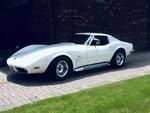
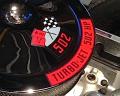
I'm planning to try improving the idle mixture on my crate ZZ502. It has the factory manifold (P/N 12363407): Dual Plane and the Holley 870 carb.
I'll be using a Gunson "glass plug" to see the mixture in each cylinder. I'd like to know which of the barrels on the Holley will feed which cylinder?
Thanks in advance.
Joe
I personally prefer to check the combustion in each cylinder by measuring the exhaust temperature using a Infrared thermometer. You find a spot that is common to all eight cylinders and start measuring. The difference between cylinders should be very close if all is well with your carburetor.
Using a bigger carburetor tends to slow down the air flow and makes the engine's performance less crisp. I have a 427 that needs a lot of air and my current throttle body is rated at 1000 cfm and it works okay. When I had a Holley 750 Double pumper on the engine it was very responsive where the 1000 cfm worked great but lost some of the crispness of the throttle. In the intake manifold like the EdelbrockAir gap Performer RPM there is a cut through in the center plate inside the intake manifold. I noticed that many dual plane manifolds do not have this notch. My Holley EFI system gives me fairly consistent temperatures at all eight cylinders so I have to assume that it is getting a good mixture to the furthest cylinders on the intake.
For the best way to monitor what is happening is to put Exhaust Gas sensors in each cylinder's exhaust tube like they do on piston driven aircraft. This will show you the inequalities of some Dual Plane intake manifolds. I would love to have an aircraft style "Engine Monitor" on my dashboard which could give you some great data and plenty of warnings in case of a problem
I had never heard of the Gunson "Colortune" Glass spark plug. It sounds interesting but it would require a very good color vision to make it work properly, unfortunately I am seriously colorblind....
Hi All,
I'm planning to try improving the idle mixture on my crate ZZ502. It has the factory manifold (P/N 12363407): Dual Plane and the Holley 870 carb.
I'll be using a Gunson "glass plug" to see the mixture in each cylinder. I'd like to know which of the barrels on the Holley will feed which cylinder?
Thanks in advance.
Joe
Did you look at the plenum of that intake manifold? The manifold doesn't have 4 holes and the center divider is cut down so how do you think any of the the 4 barrels of the carburetor feed only certain cylinders?
From: At my Bar drinking and wrenching in Lafayette Colorado
Originally Posted by jyounane
I'd like to know which of the barrels on the Holley will feed which cylinder?
I think you're doing this the wrong way, as Clem correctly points out and suggests. But in answer to your question, the right barrels feed cylinders # 2, 8, 3 and 5. The left barrels feed cylinders #1, 7, 4 and 6. However, there is mixing between the two sides due to the cut-down plenum divider and your open-plenum carb base gasket, so there is no one side, or barrel, of the carb actually feeding any one cylinder. The difference in intake runner length to each cylinder will also change the mixture slightly between cylinders being fed by the same side of the carb. So you're fighting a losing battle if you're trying to get each cylinder at the same air/fuel ratio, with very little to gain by attempting to do so. If you've done any dyno testing, you would know that you can change the A/F ratio by several tenths of a point with almost no change in power output (and certainly no noticeable change in power).
2020 Corvette of the Year Finalist (performance mods)
2019 C3 of Year Winner (performance mods)
2016 C3 of Year Finalist
Originally Posted by jyounane
Hi All,
I'm planning to try improving the idle mixture on my crate ZZ502. It has the factory manifold (P/N 12363407): Dual Plane and the Holley 870 carb.
I'll be using a Gunson "glass plug" to see the mixture in each cylinder. I'd like to know which of the barrels on the Holley will feed which cylinder?
Thanks in advance.
Joe
Why?
No other hobbies, nothing else to do on your car? Just bored?. It won't effect your performance unless you drive around at idle. You are better off investing in an AFR gauge and tuning while you drive.
I could understand the individual tuning with a 4x2 weber system where you are 1 to 1 on each cylinder but you are seriously wasting your time chasing spark color. Even a good afr gauge will get you a lot closer at idle. If you aren't using replaceable air bleeds idle fuel restrictors or idle air restrictors with an aftermarket fuel block that you reworked to move the fuel restrictors down then you need to do more homework
The suggestion to look at exhaust temps is one I haven't tried yet.
I'll also hook up my Innova LM-1 AFR meter and check again at the exhaust tips.
The carb came with the ZZ502 as the crate package from GM. I had to use small wire restrictors in the idle feed to stop it from fouling plugs every 30 miles! That was back in 2016. I'll go back and check my AFR notes from back then.
I'm generally happy with the setup however ... my idle RPM gradually drops when idling for extended periods, occasionally stalling, plugs look sooty and I have some run-on if I increase idle RPM.
Why haven't you recurved your distributor. A typical performance curve with aluminum heads would be about 32 degrees at 3k rpm with an initial of at least 12 degrees possibly even 15 to 18 degrees. The vacuum advance which currently provides 15 degrees should be around 10 to no more than 12. Also hopefully your idle speed with manifold vacuum advance is at least 900 rpm.
Read this link
https://www.camaros.net/threads/zz502-timing-curve.108617/
From: At my Bar drinking and wrenching in Lafayette Colorado
You might have better luck leaning out the idle circuit by opening up the low speed air bleeds rather than running the wire in the IFRs... This assumes you have balanced your idle speed/throttle blade openings on the primary and secondary sides to be equal at idle and have verified no more than .020" transition slot exposure on the primary side...
Lars
Lars always says 75% of carb problems are actually timing problems.
So set that up to more ideal performance specs first.
It would probably like more like 15-18* initial. Then recurve the distrib to limit the centrifugal to 21*-18*, to get 36* total, near 3000 rpm.
Then restrict the vac can to only 10-12*, and leave it on manifold.
You'll have 30* at idle w/ vac.
That may even clear up a little of the rich idle.
But yeah then address the carb.
GMs suggested timing curve is always very conservative. They need to cover every application & situation. It will run much better with a real performance curve.
The carb is a std Holley 4160 vac sec, and the idle circuits seem to run rich on those. It is because you have a mild 224* cam, and that combo makes a lot of vac w/ 502 cubes. The carb is really designed for bigger duration cams with less vac at idle. You know, a typical hot-rod cam. The idle circuit needs tuned. Use your AFR meter.
Last edited by leigh1322; Jun 1, 2024 at 08:49 PM.
You might have better luck leaning out the idle circuit by opening up the low speed air bleeds rather than running the wire in the IFRs... This assumes you have balanced your idle speed/throttle blade openings on the primary and secondary sides to be equal at idle and have verified no more than .020" transition slot exposure on the primary side...
Lars
Hi Lars,
I did set it up originally per your advice in the Holley Carb paper including balancing the openings using the small grub screw on the secondary side.
Probably need to recheck everything.
Is there information/instructions in your papers about opening up the air bleeds?
I'll post again once I've made a fresh set of AFR measurements.
Joe
MelWff and Leigh1322,
Thanks! for your input and I agree that a recurve is in this distributor's future. Right now I'm going to focus on idle AFR, and I think 25-26 timing with vac advance at idle should be adequate to make progress on this issue.
Joe
While I haven't had time to do any serious work on the car, I did check the AFR at the exhaust tips with the LM-1. This was after a 40 minute run.
I'm seeing around 22 at idle 700rpm (jumping around a bit) and 16-17 at 2000rpm with no load. Bot sides read the same. I guess probably a bit too lean at idle and may account for bucking at low rpm and a bit of dieseling at shutoff.
While I haven't had time to do any serious work on the car, I did check the AFR at the exhaust tips with the LM-1. This was after a 40 minute run.
I'm seeing around 22 at idle 700rpm (jumping around a bit) and 16-17 at 2000rpm with no load. Bot sides read the same. I guess probably a bit too lean at idle and may account for bucking at low rpm and a bit of dieseling at shutoff.
MelWff,
I've set the idle speed to give me the lowest steady idle. It's a compromise because I get more dieseling on shut-off with higher idle speeds.
The idle speed does vary a little, I've increased the return spring tension to get a more positive idle stop on the adjustment screw.
Joe
Your .040" wire you added in the idle fuel transfer slots may be leaning it too much. At least it is not fouling the plugs LOL!
But try an idle mixture screw adjustment first and see if you can get it back to normal at idle.
Then check it just above idle, say 1500-2000 rpm, and see what it is there.
If you can't it is just too lean.
You can keep revving it slowly til 3500 or so, and at some point the AFR will change suddenly when the main jets kick in. Mark that rpm down.
Depending on what happens at idle & 2000, that's your clue you may need to mess with the idle feed restrictors or the air bleeds.
An LM-1 should make tuning a carb easy, once you get used to it.
Here are a couple targets: You need to hit all these at the same time. I typically tune the car first, and then see how far the idle screws are off from this ideal. And then decide if an orifice in the circuit needs adjusted.
Both Holley transfer slots set to .020"
Holley idle screws 1-1/2 turns out
13.5 AFR: Recommended for idle and light cruising
14.7:1 AFR: Considered the most efficient mixture for idling and light throttle cruising, as it provides the best fuel economy and lowest emissions
Many engines do not like to be lean at idle and yet will tolerate a little bit leaner at cruise. But at 22 you are way off. Probably stings the eyes, right?
Honestly, if you do all that first, and then change the timing second, that will change your idle settings and transfer slot #s.
If you set the timing first, you could just go thru this whole tuning process one time.
Last edited by leigh1322; Jun 24, 2024 at 09:36 AM.
MelWff,
I've set the idle speed to give me the lowest steady idle. It's a compromise because I get more dieseling on shut-off with higher idle speeds.
The idle speed does vary a little, I've increased the return spring tension to get a more positive idle stop on the adjustment screw.
Joe
If necessary add a idle solenoid but that engine should have a higher idle speed.
They eventually got it to stay in the 12's during WOT, from low to high rpm, and yet at cruising it would jump up to 12.80 to 13.0 AFR at 2500 to 3000 cruise speed on light throttle.
On this engine the low speed circuit cut out at 2700 rpm and then it went to main jets. You have more cubes and that may vary.
The high cruise rpm on this car meant it was in transition from low speed circuit to main jet during cruise.
I mention all that because it is important to know which circuit it is functioning on during your cruise speed.
It initially had a 13.80 lean spot during WOT, which is lean enough to melt a hole in a piston. So that was a very good catch.
Beautiful AFR curve at WOT
It is going to be extremely difficult to get a Holley tuned much better than that.
Thanks Leigh1322 and MelWff for your helpful input!
The brief history is the IFR wires were introduced to solve a plug fouling / economy problem back in 2016. I was getting 7mpg.
It took me a while to realise the car was running on the idle circuit most of the time and why changing main jets made little difference!
The 0.040 wires definitely created a leaner idle and cruise and good economy. Good throttle response and no apparent acceleration issues.
I have always had a lumpy idle and some bucking in low gear at low rpm say around 1500 in traffic.
Plugs still look a bit sooty. See 1,3, 4 and 8
I'd be happy to have a higher idle if I can eliminate the dieseling.
Do you have any links to reading about modifying air bleeds on the Holley metering block? Lars also mentioned this might be a better approach that wires in the IFR.
Congrats!
Sounds like you are on the right track.
Since you are all the way down under, and already have an LM-1 tool, I would pick up one or two books on tuning Holleys.
I have this one and it is old but really good, but there are others. link
You should be able to find one about tuning Holleys with AFR gauges.
If you get deep into Holley tuning they make replacement metering blocks which have adjustable fuel bleeds via small jets.
And the main body can also be tapped for air bleed jets.
Many ways to skin a horse!
Here is an Innovate Article where they got a Holley Carb'd big 253*dur @.050' cam'd 556HP SBC up to 21MPG!
It is do-able! link
Last edited by leigh1322; Jun 25, 2024 at 10:24 AM.
Thanks Leigh1322 and MelWff for your helpful input!
The brief history is the IFR wires were introduced to solve a plug fouling / economy problem back in 2016. I was getting 7mpg.
It took me a while to realise the car was running on the idle circuit most of the time and why changing main jets made little difference!
The 0.040 wires definitely created a leaner idle and cruise and good economy. Good throttle response and no apparent acceleration issues.
I have always had a lumpy idle and some bucking in low gear at low rpm say around 1500 in traffic.
Plugs still look a bit sooty. See 1,3, 4 and 8
I'd be happy to have a higher idle if I can eliminate the dieseling.
Do you have any links to reading about modifying air bleeds on the Holley metering block? Lars also mentioned this might be a better approach that wires in the IFR.
Joe
Did you buy this engine as a complete package including the 870 CFM Holley Chevrolet includes?
If so I don't understand why you would have to "tune the carburetor". I would , perhaps incorrectly, assumed Chevrolet would have done it.
Why are you not using the recommended spark plug and did you check if the NGK plug you are using is the same heat range?
Are you sure you don't have an ignition problem contributing to those very black looking plugs?







 ZZ502 idle mix tuning