When you click on links to various merchants on this site and make a purchase, this can result in this site earning a commission. Affiliate programs and affiliations include, but are not limited to, the eBay Partner Network.
Thank you for the details on adjusting the air valve. As you can see in my previous post that I actually tried to adjust this with the original (rebuilt q-jet) but I will try this again on the new q-jet with the help of your detailed explanations. I was trying to adjust before by "the seat of my pants" ! I am going to do some testing today to eliminate the dry-bowl situation by disconnecting and plugging the little hose that connects to the top of the fuel filter today. I just checked the accelerator pump on the carb after 24 hours and it did NOT have any squirt at all when I opened the accelerator before I tried to start it. . I would think that a new carb and a newly rebuilt carb should NOT leak fuel after the car is shut off so somehow the fuel from the carb is being siphoned back from the carb to that gas tank by either the little hose attached to the top of the filter or a faulty fuel pump. Also, I cannot understand why the secondary seem to work properly when in neutral, but NOT when it is in gear?? Additionally, I will check the fuel pressure from the pump and report on the amount of advance the spark show at 2,000 and 3,000 RPM. I cannot believe that it is an advance problem because it really ran GREAT with the Holley 4150, and I have NOT adjusted the timing. It is set to the factory specifications for 4 degrees advance at 800 rpm idle. I tried advancing the spark to 8 degrees advanced, but the car seemed to run on after the ignition was shut off, so I have kept it at the factory specification of 4 degrees.
The car runs perfect with steady idle at 800 RPM. When the choke is closed the fast idle at 2000 rpm and runs great in all gears as long as I do not press down on the gas pedal enough to open the secondaries. To your point, it must be related to the air valve opening too soon and dropping the vacuum to a point that it does NOT suck gas into the intake. I might also connect my vacuum gauge to one of the hoses that control the wiper and headlight valves on the inside of the car, so I can see what the vacuum is doing while I am driving the car and opening the secondaries. Prior to my original posting, I blocked off the vacuum port on the intake manifold to see if any of the vacuum hoses to the headlight and wiper door were affecting the secondary problem, but blocking off the intake manifold port had no effect on the problem.
You are probably correct. The original 7029207 Q-jet was in really good shape and when I sent it to All American Carbs in Florida, it came back like brand new. They idicated that it was in good condition and like I said in my original post, it started and rand perfectly, except for the dry bowl and secondary problem. They had put it on a test engine and it ran perfect, but I suspect they did NOT put it on a real car and run through the gears.
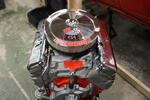
Since my 69 Corvette is a matching numbers car and I have taken many hours of research, I was trying to retore the originality of the motor. The Holley configuration (see Picture) ran perfect, but was NOT anywhere near original. What a tradeoff??
I purchased the new carb from Speed Autopart-USA on Ebay. I was surprised to be able to find a NEW Q-jet. maybe hoping that it was made in the USA. Does Holley make a carb that would fit the fuel line and original air filter configuration? I ran my Holley for about 10 years without any problems before I decided to go back to original..
I can understand the posting regarding the Made In China carb comments. Yesterday, while I was testing the choke Idle setting, I noticed that some fuel was leaking around the accelerator pump piston. Just a little sitting on top of the accelerator pump actuator rod. I also looked down the primary barrels and saw fuel drippage out of the aerators in an irregular drip causing a little rough idle. Of Course, this was after I blocked off the little hose from the top of the fuel filter that returns fuel to the tank, so I thought that the blocked return line may be causing extra fuel pressure.
I presume that the little return line probably had something to do with fuel emissions, but never saw any articles or information as to why that was part of the fuel filter.
I noticed that when I was checking out my vacuum leak that advancing the timing really increased the vacuum. I will change the advance to 8 degrees and run some rpm test today to see what the advance curve is at 2000 and 3000 RPM. I can NOT believe that timing is an issue when the secondaries open just fine and RPM increases to about 5000 when I open the carb in neutral, but I will give it a try to see what happens.
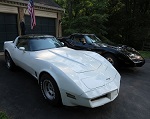
Thanks again for your advice and knowledge. It gives me more to think about. This is the engine when I had the Holley 4150 and Semi-Higfh rise Weiand intake manifold, before returning it to original.
The return line has nothing to do with emissions. By recirculating the fuel it prevents fuel percolation in Quadrajets. It was not used by Chevy on Holley's. Either the secondary air valve is not adjusted to 3/4 turn or the choke vacuum break is defective. The valve should not open in neutral.
I noticed that when I was checking out my vacuum leak that advancing the timing really increased the vacuum. I will change the advance to 8 degrees and run some rpm test today to see what the advance curve is at 2000 and 3000 RPM.
yeah you’re massively improving the efficiency and function of the engine. Think about how much power, economy and efficiency you are leaving on the table by sticking with suboptimal timing. Leaving it at factory spec is intentionally making your engine run worse
I have done other tests to see what was causing the almost stall when opening the secondaries.
1. I got a paper with the new q-jet, it suggested that low vacuum from High lift (long duration cams) might cause vacuum Q-jet problems, so I blocked off the left front port of the q-jet where the normal vacuum advance would be and connected the vacuum advance hose directly to the port on the intake manifold (where the vacuum for the headlights, ww wipers etc. ) would be. The vacuum readings were the same as the front port on the carb, but it was not too much trouble to try it. The secondary opened while in neutral in the driveway (as before) but when in any gear other the 4th (at highway speeds) the car would almost stall when the secondaries would open. The vacuum reading from both ports were the same, so I reconnected the vacuum advance to the front driver side port on the q-jet.
2. I thought that the Choke Pull-off diaphram might be holding the secondary air valve from opening. I observed the operation of the Choke pull-off while in the driveway in Neutral. When I opened the throttle to the secondaries, the choke pull-opp would at first pull back momentarily then relax and allow the secondary air valve to open and the motor would rev up immediately with the secondary air flap open. Just to eliminate this as the problem. I disconnected the rod that attaches the choke pull-off to the secondary air flap and removed it so the the choke pulloff was NOT connected to the secondary air flap. As befpre, the motor reved properly and the secondaries opened while in neutral in the driveway, but when in gear the motor did exactly the same and bog down when the secondaries were opened.
3. The paper from the new carb suggested adjusting the airdoor opening by loosening the 3/32 Allen screw ( lockdown screw) and using the little adjusting screw a little at a time to eliminate the bog. Since I attempted this adjustment with the original rebuilt q-jet with no noticeable difference, I thought that I would ask the Corvette Forum for advice on the bog before attempting this adjustment. I thought that a new carb that has been tested would have the tension on the airdoor properly adjusted.
Since the same problem occurred with a completely rebuilt Q-jet and a brand new Q-jet, I was thinking that something else may be causing the problem with the fuel draining out of the Q-jet when it sits for a couple of hours and the significant BOG when the secondary are opened. I thought about maybe the little vent hose that connects to the top of the original type fuel filter may not be allowing enough fuel pressure to the Q-jet. When I had the Holley 4i50 and it ran the 1/4 mile in about 13 seconds, I did NOT have the original fuel filter with the metal fuel lines and the little fuel vent hose that goes back to the fuel tank. I also thought that if it was a fuel pump or filter vent issue, it would NOT be able to rev quickly and open the secondary air valve when in the driveway and in neutral.
I thought that maybe the fuel pump may not be pumping enough fuel and allowing the gas to siphon back to the tank when the engine was shut off. I looked at the Corvette Forums technical threads and I did NOT find any useful indications that this was a common problem. Maybe I was NOT looking at the correct threads or using the correct keywords to search.
I have been rebuilding chevy small blocks and working on them since 1965, so I am pretty experienced at doing my mechanical work. I have rebuilt 283's, 327, and 350's.. I have never had any carburetor issues until I restored this 350 back to original Q-jet, fuel lines, filters and intake manifolds.
Any suggestions or advice would be greatly appreciated.
none of this may matter due to your carb being a chinese knock off BUT in regards to point #2 above: the way to test the choke pull off is to find out if it holds vacuum. you can do this by pushing it in then covering the nipple with a tight fitting vacuum cap or just putting your finger across the opening. if the diaphram relaxes and will not stay pressed in then it is ruptured. you can also do this with a mighty vac or something similiar. the choke pull off acts as a damper for the secondary air valve too keep it from opening too fast - not by holding it closed under full throttle. also in regards to your air valve spring on original Qjets you do not want to tighten them more than 1 full turn past zero tension or there is a pretty good chance you will destroy the spring. not sure if this apply's to the chinese version. hope this helps.
Pat
The visible air valve on a Q-Jet should not open in the driveway under any circumstances!!!!
Many folks, for decades have tried to adjust it to "open quicker" and this is the MAIN reason for the infamous Q-Jet bog reputation. Bad tuning.
Adjust the air valve spring to ~7/8 turn past the "just touch" point, and report back.
Until you get that setting correct, you are wasting your time with any other tuning.
The actual secondary throttle blades, are mechanically controlled, and are at the bottom of the carb, and I can guarantee you they do open.
If you want to prove it to yourself, stick a finger in the air valve, and hold it open, and with engine off, open the throttle to wide open, and look down the rear carb throats, and you will see the real secondary throttle blades open.
The visible air valve on a Q-Jet should not open in the driveway under any circumstances!!!!
Many folks, for decades have tried to adjust it to "open quicker" and this is the MAIN reason for the infamous Q-Jet bog reputation. Bad tuning.
Adjust the air valve spring to ~7/8 turn past the "just touch" point, and report back.
Until you get that setting correct, you are wasting your time with any other tuning.
The actual secondary throttle blades, are mechanically controlled, and are at the bottom of the carb, and I can guarantee you they do open.
If you want to prove it to yourself, stick a finger in the air valve, and hold it open, and with engine off, open the throttle to wide open, and look down the rear carb throats, and you will see the real secondary throttle blades open.
With the car warmed up of course. Otherwise the secondary lockout lever prevents the butterflies from moving.
Do you really think you can buy a "new carburetor" that's going to work for $190...?
No amount of airvalve adjustment or tuning is going to fix it. He sent his previous carb to one of the worst, and cheapest, carb "rebuilders" in the world, and it didn't work. Those guys have a reputation for that. When you go cheap, you get junk, and he now has 2 carbs that cannot be repaired at any reasonable cost.
I just read the OP post. Where does it say in there that he bought a $190.00 repop carb off Amazon???
I just read the OP post. Where does it say in there that he bought a $190.00 repop carb off Amazon???
He mentioned that he bought a new carburetor. The Chinese ones are the only ones sold as new since nobody else is making them anymore.
Second you can tell just by looking at it. The entire carb body, hardware, and linkages are a kind of chrome silver color, my guess is that the body is unfinished aluminum, since the Chinese ones are made out of it instead of zinc. Here’s a picture of an ad off ebay.
You are so correct! I purchased it on Ebay for $170. Made in China!
I ran some diagnostics at 4 degrees and 8 degrees advance and have attached a picture of the results.
OBSERVATIONS:
1. The timing did not change when I attached the Vacuum Advance.
2. The Vacuum went from 16 In to 18 In at 8 degree at 1000 RPM
3. The Vacuum went from 21 in to 24 In. at 8 degree at 2000 RPM.
4. When the secondaries were opened at 4 degrees advance the vacuum dropped to 2-5 in
5. When the secondaries were opened at 8 degrees advance the vacuum dropped to 6-10 in.
6. There was still a bog at 8 degrees, but NOT as severe.
7 The Vacuum ranged from 22 to 28 when driving normal through all gears when only on primary jets and ran very smooth.
Questions:
1. The timing did NOT change when I attached the Vacuum advance hose to the front (Correct Port ) of the carb at 800 rpm. The timing changed at 1000 and 2000 RPM was due to centrifugal advance on the distributer. Should the Vacuum advance change to timing at idle?
2. I noticed a Rochester Carb rebuild on Summit Racing for $419. It indicated Made in USA. Any Good. ?
3. I would like to keep the original Carb and get it rebuilt. Do you have the address for a GOOD rebuilder?
4. I am running with the original recommended Spark Plugs AC delco R44N (I think). Do you have better spark plug Option?
I will try to adjust the air valve tension and reply back if any progress is made.
Answers:
1. The "correct" port may be in the front of that Q-Jet, but it is the one with manifold (always on) vacuum, not ported. Yes, your timing should change at idle, at least if you follow the best practice suggestions of many on this Forum. This is NOT what GM specified for your car, however, so you will get other opinions on this.
You can find the correct port with your finger, or that vacuum gauge.
It sounds like your vacuum advance is plugged into a ported vacuum nipple on the carb. It makes the car run hotter and lowers emissions at idle, but the engine runs “better” with a full manifold vacuum source. If you remove the hose you should be able to feel vacuum with your finger at idle on a manifold source.
Like others have said, don’t waste your time or money on any more commercial rebuilders. Lars is a great resource, Here is a thread if you need convincing.
Last edited by Piersonpie; Nov 5, 2024 at 02:32 PM.
It sounds like your vacuum advance is plugged into a ported vacuum nipple on the carb. It makes the car run hotter and lowers emissions at idle, but the engine runs “better” with a full manifold vacuum source. If you remove the hose you should be able to feel vacuum with your finger at idle on a manifold source.
Like others have said, don’t waste your time or money on any more commercial rebuilders. Lars is a great resource, Here is a thread if you need convincing.
Thanks for the recommendation. There are a couple of ports that are NOT being used. I will check them out.
The STOCK vacuum metal hose that goes to the distributor is positioned directly in front of the bottom drover side of the carb. During initial testing, I connected the vacuum advance directly to the port on the intake directly behind the carb. It was the port where the vacuum to the headlights and wiper door actuators are attached. I did NOT check the timing at that time and only did a test run to see if it affected the opening of the secondary.
I will check out the extra port on the carb that is not being used to see if there is constant vacuum. I thought that the engineers did NOT want to connect the vacuum advance to the same port as the Headlight and wiper door actuators because of fluctuations in the vacuum when the wiper or headlight doors were opened that might affect the timing. When I had my Holley 4150, I always noticed that when I disconnected the vacuum advance hose to check the engine timing the idle would slow down and when I reconnected it, the idle would increase and the timing would advance.by about 4-6 degrees. I was going to check the vacuum on that port to see at what RPM there was actual vacuum. I noticed this lack of vacuum on the original 7029207 carb also.
I tried to access the referenced thread, but I clicked on it and nothing happened. How do I get to it? This is the first time I submitted a thread so I am new to this?
The original Poster is obviously a very detailed, knowledgeable person and has done extensive research and work on his various carburetors / engine. I have a car show buddy who rebuilt the original Quadrajet from his Corvette, this guy has been repairing commercial copying machines for 30 years. Guess what, he has spent all kinds of money trying to fix the problem where his car won’t start, once his hot engine is shut off. There must be some SpecIal Gene that causes people to think they can fix anything. Being an older guy, experience had taught me that you don’t go to a Dermatologist for a hernia problem. Having Lars rebuild a Quad will not cost that much, but the time and aggravation that you will avoid will be monumental.
For me it's about saving time and aggravation from having it done wrong. That and having the knowledge when your done. That's what drives me to repair my own stuff.
sometimes having it done, hiring someone else is a very good idea if you don't have the time, or skill or ability to actually do it yourself. For instance I don't re-shingle my own roof. Far too much labor and time for my taste.
The q-jet is complicated, but not beyond many of our potential skill sets to tackle. Doesn't really require special tooling or hard physical labor. It does require some knowledge. Some of that can be obtained through reading and some through just taking it apart and experimentation.
If I had someone rebuild a carb for me, it would be Lars, no question about it. He is an expert in this area, and several more I would guess.
There is absolutely NO question your carb WILL be right when he is done with it.
I can, and have build and worked on many things. But it's important to know your limitations, and get an expert when it is needed. You don't always get multiple opportunities to get something right.
Using a qualified and proven expert in certain areas is a huge aggravation, time and labor saver, and potentially even a life saver.
In the meantime, email him anyway, ask for his timing papers, and follow them.
You do not need to have headlights to get your timing correct. You do not need EGR, HVAC, power brakes, or a dozen other things, to get your timing correct. You need a single vacuum hose with no interruptions and no T-connections linking the vac advance can and the manifold vacuum port on your Q-Jet. Plug the rest for now, an you can add them back later. Unless I missed something, your timing is very retarded, and until proven otherwise, that is likely your issue. Follow @lars's instructions and work backwards from max mechanical advance (likely 36 degrees at 3000 RPM), and fix the rest as you go (perhaps limiting the advance from the vac can, for example).
You cannot buy the same gasoline that was available when your car was new. Following the stock timing specs is no longer best practice for performance and drivability.