When you click on links to various merchants on this site and make a purchase, this can result in this site earning a commission. Affiliate programs and affiliations include, but are not limited to, the eBay Partner Network.
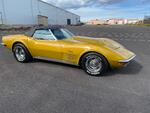
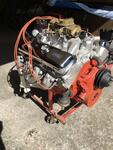
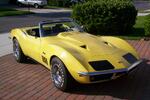
I have a 1969 350/350hp with a Rochester Q-jets. carb 7029207. The engine was completely rebuilt with .30 over, 350 hp camshaft. It had a Holly 4150 that ran great, really fast. I had an idea to return it to stock, so I found the Quadrajet 7029207 and sent it to All American Carburetor for a complete rebuild. It has the stock mainfold (3927184) and I even found and installed the A.I. R. Pump and correct exhaust Manifolds with A.I.R. ports. Correct fuel lines with fuel filter with little vent pipe.
I installed the rebuilt q-jet and the motor ran perfect with idle rpm at 800 and fast idle at 2000. Timing set at 4 degrees advance. There was only 2 problems with the carburetor.
1. After setting for more that 1 day, there would be no fuel in the carb and it took several seconds of cranking to get the fuel back in the carb and it would start perfectly.
2. The car ran good in all gears, but when the secondaries were opened (gas pedal pressed down), the car would almost stall in 1st, 2nd, or third gear. It seemed to open OK in 4th gear at 70 MPH..
I had read about Quadrajets being sensitive to vacuum issues, and since I do not floor the carbs at all, i did not pursue the problem because the wiper door or headlight would not go up so I assumed the issue to be vacuum related. Since I do NOT drive the car at night or in the rain, it was NOT a BIG deal.
I recently had a desire to fix the wiper door problem through the myriad of vacuum hoses which I installed new a couple of year ago and found the vacuum leak was an actuator valve for the Wipers. It was leaking vacuum, so I replace the actuator control valve. The wiper door and Headlight go up and down perfect. The engine has about 15 lbs. of vacuum so they now work great!
Since the vacuum problem was fixed, I thought the secondary issue with the carburetor would also be resolved. It was exactly the same as before. Lots of power when the primaries are used, but when I open the secondaries, the car almost stalls. I talked to Michelle at All American Carburetor, They would be more than happy to check it out if I would send it back to them. I tried adjusting the air control flap on the secondaries with the little screw, but it seemed to have no effect. I even attached a secondary spring on the air flap lever to add tension to the opening of the air flap, but it had n0 effect. The secondaries would open great when the car was in neutral, but in gear it almost stalls. I checked out the vacuum advance with a timing light and it seem to be working correctly. If it opens the secondaries great in Neutral, why does it NOT do it in gear>
Rather than messing around with another rebuild, I decided to just purchase a NEW replacement carburetor. I installed the new carb and expected different results.
Unfortunately, it works exactly that same as the rebuilt 7029207. It bogs and almost stalls when secondaries are opened in any gear except 4th.
The unusual thing, is that when the car is in Neutral and in the garage, I can open the carb without the air cleaner and the secondaries open and it revs like it should. I leave the air cleaner off and try that in first gear on the highway and it almost stalls when the secondaries are open.
Since it is a new carburetor, I thought all of the adjustments would work just fine.
Could it be fuel pump or something else? If the fuel pump is bad, would it suck the fuel back from the carb into the fuel tank resulting in the lack of fuel in the carb after a couple of hours?
there are a lot of things it could be. first if the carb has a choke pull off or vacuum break diaphram on the drinkers side of the carb check to make sure the diaphram is not ruptured. if it is it will allow the air valve to open too quickley and you will get a bog when you stomp on it but it shouldn't be close to stalling. also on the secondary some Qjets have discharge holes just above the air valve that give a shot of fuel when the air valve opens kind of like a accelerator pump squirt on the primarys. make sure this is operating - if your carb has this. i know 71's did have it and your initial timing should be higher than 4 degrees. others will chime in with more things to check.
Pat
I'm real sure that they don't make New Quadrajet carburetors anymore, and haven't for many years.
So, send your carburetor back to the first rebuilder. Or send it off to Lars if he's interested in the job.
But your "New" carburetor is highly suspect. As in a Chinese copy? (Read, junk).
Your “new” Quadrajet didn’t happen to come from China did it? Like the one outlined in this thread.
It’s nearly impossible for the secondaries on a Quadrajet to open with the car standing still and winging the throttle. It doesn’t put enough load on the engine to demand them opening.
And as already stated, your timing is retarded, grossly retarded. Try bumping it up to 12 at idle with the vacuum advance unplugged then go from there.
There is a spring for the air doors on the secondaries. It needs to be tightened. About 3/4 of a turn is a good place to start. There is an allen wrench set screw you have to loosen first.
Here is a video. Should help.
Do you really think you can buy a "new carburetor" that's going to work for $190...?
No amount of airvalve adjustment or tuning is going to fix it. He sent his previous carb to one of the worst, and cheapest, carb "rebuilders" in the world, and it didn't work. Those guys have a reputation for that. When you go cheap, you get junk, and he now has 2 carbs that cannot be repaired at any reasonable cost.
I agree timing is severely retarded second and. I'm no. Fan of quadrajet by any measure but you sent your carburetor to the wrong place, Lars is right on that. Take that shiny Chinese carburator clean it real well and you will have a shiny paperweight that will help you to remember this lesson and save you thousands of dollars going forward 🤔 now follow the advice you have gotten or put the Holley back on.
Lars is THE most knowledgeable person on the planet when it comes to QJets. If you want your car to run right, find an unmolested original carb and send it to him. Search the forum and you will find countless posts on his experience with them.
That new carburetor you got functions but cannot be fine tuned.
The YouTube video from Reelav8r should help adjusting the air door for the secondaries on the rebuilt carburetor, I would start there. Quadrajets are great carburetors. Watch as many YouTube videos to get some knowledge on fine tuning steps, you will need a vacuum gauge for fine tuning. There are a lot of books as well. There are lots of posts here on this forum with steps and procedures on how to adjust a quadrajet.
Adjusting the timing goes along with adjusting the carburetor. They work together for best performance.
Here’s an older video that explains pretty well how to adjust timing. It’s been posted here on the forum before.
This stuff comes easy to a lot of us gearheads with practical knowledge, but once you get an understanding of this part of the hobby, it’s a different level of fun with the car.
I have done other tests to see what was causing the almost stall when opening the secondaries.
1. I got a paper with the new q-jet, it suggested that low vacuum from High lift (long duration cams) might cause vacuum Q-jet problems, so I blocked off the left front port of the q-jet where the normal vacuum advance would be and connected the vacuum advance hose directly to the port on the intake manifold (where the vacuum for the headlights, ww wipers etc. ) would be. The vacuum readings were the same as the front port on the carb, but it was not too much trouble to try it. The secondary opened while in neutral in the driveway (as before) but when in any gear other the 4th (at highway speeds) the car would almost stall when the secondaries would open. The vacuum reading from both ports were the same, so I reconnected the vacuum advance to the front driver side port on the q-jet.
2. I thought that the Choke Pull-off diaphram might be holding the secondary air valve from opening. I observed the operation of the Choke pull-off while in the driveway in Neutral. When I opened the throttle to the secondaries, the choke pull-opp would at first pull back momentarily then relax and allow the secondary air valve to open and the motor would rev up immediately with the secondary air flap open. Just to eliminate this as the problem. I disconnected the rod that attaches the choke pull-off to the secondary air flap and removed it so the the choke pulloff was NOT connected to the secondary air flap. As befpre, the motor reved properly and the secondaries opened while in neutral in the driveway, but when in gear the motor did exactly the same and bog down when the secondaries were opened.
3. The paper from the new carb suggested adjusting the airdoor opening by loosening the 3/32 Allen screw ( lockdown screw) and using the little adjusting screw a little at a time to eliminate the bog. Since I attempted this adjustment with the original rebuilt q-jet with no noticeable difference, I thought that I would ask the Corvette Forum for advice on the bog before attempting this adjustment. I thought that a new carb that has been tested would have the tension on the airdoor properly adjusted.
Since the same problem occurred with a completely rebuilt Q-jet and a brand new Q-jet, I was thinking that something else may be causing the problem with the fuel draining out of the Q-jet when it sits for a couple of hours and the significant BOG when the secondary are opened. I thought about maybe the little vent hose that connects to the top of the original type fuel filter may not be allowing enough fuel pressure to the Q-jet. When I had the Holley 4i50 and it ran the 1/4 mile in about 13 seconds, I did NOT have the original fuel filter with the metal fuel lines and the little fuel vent hose that goes back to the fuel tank. I also thought that if it was a fuel pump or filter vent issue, it would NOT be able to rev quickly and open the secondary air valve when in the driveway and in neutral.
I thought that maybe the fuel pump may not be pumping enough fuel and allowing the gas to siphon back to the tank when the engine was shut off. I looked at the Corvette Forums technical threads and I did NOT find any useful indications that this was a common problem. Maybe I was NOT looking at the correct threads or using the correct keywords to search.
I have been rebuilding chevy small blocks and working on them since 1965, so I am pretty experienced at doing my mechanical work. I have rebuilt 283's, 327, and 350's.. I have never had any carburetor issues until I restored this 350 back to original Q-jet, fuel lines, filters and intake manifolds.
Any suggestions or advice would be greatly appreciated.
I suggest you quit trying to open the sec by rev'ing in neutral
the fact you say you can, tells me there is not enough air plate/valve spring tension.
so, after adjusting spring to stock setting, 1/2 to 3/4 turn past where spring touches
air valve add 1/4 turn and DRIVE car, 1/4 etc until HOPEFULLY it lessons bog.
I forget the exact starting turn tension but someone will correct me.
I am hoping the spring tension will help.
there are other things on carb that will cause bog.
PV, tune, bleeds,
I know it sucks to hear your new carb is junk but it is what it is.
The fact that the secondary air flaps open when reved in neutral tells you that the spring tension is incorrect. Those air flaps should not move or barely move when reved freely. They are air demand devices. With the engine not under a load you cannot force the engine to demand enough air to open them in neutral.
your engine bogs ( if this is the reason and it's not because of a bad rebuild or being a Chinese POS) because if those air flaps open too quickly then it experiences a very lean condition as the air is being supplied prior to sufficient fuel.
Adjusting the spring tension against which the air valve operates causes the air valve to open either sooner or later. To adjust the spring, loosen the socket set screw under the adjustment screw and back off the screw CCW 1/4 turn at a time until you reach the zero-tension point where the air valve barely closes when you tap on the carbu-retor. Then, preset spring tension by turning the adjusting screw 7/8 turn CW from the zero point. Hold the adjusting screw position as you retighten the set screw. Any experimentation from this point should be 1/8 turn at a time, but the screw must not be tightened more than one turn from zero-tension or you'll distort the spring into uselessness.
A lot of owners try to quicken the air-valve opening, thereby interrupting the continuous smooth air flow that would be best for acceleration with this carburetor. Quick air-valve opening sends the car straight to Bogsville, which is located on the map a few feet down the road from where you buried your foot in the throttle. If you must experiment in this area, unwind the spring until the engine begins to "stum-ble" just as the car leaves the starting line, then tighten the spring a little at a time until it's eliminated - but not more than one turn. From how to hotrod small block Chevrolet’s “1976”
Adjusting the spring tension against which the air valve operates causes the air valve to open either sooner or later. To adjust the spring, loosen the socket set screw under the adjustment screw and back off the screw CCW 1/4 turn at a time until you reach the zero-tension point where the air valve barely closes when you tap on the carbu-retor. Then, preset spring tension by turning the adjusting screw 7/8 turn CW from the zero point. Hold the adjusting screw position as you retighten the set screw. Any experimentation from this point should be 1/8 turn at a time, but the screw must not be tightened more than one turn from zero-tension or you'll distort the spring into uselessness.
A lot of owners try to quicken the air-valve opening, thereby interrupting the continuous smooth air flow that would be best for acceleration with this carburetor. Quick air-valve opening sends the car straight to Bogsville, which is located on the map a few feet down the road from where you buried your foot in the throttle. If you must experiment in this area, unwind the spring until the engine begins to "stum-ble" just as the car leaves the starting line, then tighten the spring a little at a time until it's eliminated - but not more than one turn. From how to hotrod small block Chevrolet’s “1976”
Thank you for the details on adjusting the air valve. As you can see in my previous post that I actually tried to adjust this with the original (rebuilt q-jet) but I will try this again on the new q-jet with the help of your detailed explanations. I was trying to adjust before by "the seat of my pants" !
I am going to do some testing today to eliminate the dry-bowl situation by disconnecting and plugging the little hose that connects to the top of the fuel filter today. I just checked the accelerator pump on the carb after 24 hours and it did NOT have any squirt at all when I opened the accelerator before I tried to start it. . I would think that a new carb and a newly rebuilt carb should NOT leak fuel after the car is shut off so somehow the fuel from the carb is being siphoned back from the carb to that gas tank by either the little hose attached to the top of the filter or a faulty fuel pump. Also, I cannot understand why the secondary seem to work properly when in neutral, but NOT when it is in gear?? Additionally, I will check the fuel pressure from the pump and report on the amount of advance the spark show at 2,000 and 3,000 RPM. I cannot believe that it is an advance problem because it really ran GREAT with the Holley 4150, and I have NOT adjusted the timing. It is set to the factory specifications for 4 degrees advance at 800 rpm idle. I tried advancing the spark to 8 degrees advanced, but the car seemed to run on after the ignition was shut off, so I have kept it at the factory specification of 4 degrees.
The car runs perfect with steady idle at 800 RPM. When the choke is closed the fast idle at 2000 rpm and runs great in all gears as long as I do not press down on the gas pedal enough to open the secondaries. To your point, it must be related to the air valve opening too soon and dropping the vacuum to a point that it does NOT suck gas into the intake. I might also connect my vacuum gauge to one of the hoses that control the wiper and headlight valves on the inside of the car, so I can see what the vacuum is doing while I am driving the car and opening the secondaries. Prior to my original posting, I blocked off the vacuum port on the intake manifold to see if any of the vacuum hoses to the headlight and wiper door were affecting the secondary problem, but blocking off the intake manifold port had no effect on the problem.
Thank you for the details on adjusting the air valve. As you can see in my previous post that I actually tried to adjust this with the original (rebuilt q-jet) but I will try this again on the new q-jet with the help of your detailed explanations. I was trying to adjust before by "the seat of my pants" ! I am going to do some testing today to eliminate the dry-bowl situation by disconnecting and plugging the little hose that connects to the top of the fuel filter today. I just checked the accelerator pump on the carb after 24 hours and it did NOT have any squirt at all when I opened the accelerator before I tried to start it. . I would think that a new carb and a newly rebuilt carb should NOT leak fuel after the car is shut off so somehow the fuel from the carb is being siphoned back from the carb to that gas tank by either the little hose attached to the top of the filter or a faulty fuel pump. Also, I cannot understand why the secondary seem to work properly when in neutral, but NOT when it is in gear?? Additionally, I will check the fuel pressure from the pump and report on the amount of advance the spark show at 2,000 and 3,000 RPM. I cannot believe that it is an advance problem because it really ran GREAT with the Holley 4150, and I have NOT adjusted the timing. It is set to the factory specifications for 4 degrees advance at 800 rpm idle. I tried advancing the spark to 8 degrees advanced, but the car seemed to run on after the ignition was shut off, so I have kept it at the factory specification of 4 degrees.
The car runs perfect with steady idle at 800 RPM. When the choke is closed the fast idle at 2000 rpm and runs great in all gears as long as I do not press down on the gas pedal enough to open the secondaries. To your point, it must be related to the air valve opening too soon and dropping the vacuum to a point that it does NOT suck gas into the intake. I might also connect my vacuum gauge to one of the hoses that control the wiper and headlight valves on the inside of the car, so I can see what the vacuum is doing while I am driving the car and opening the secondaries. Prior to my original posting, I blocked off the vacuum port on the intake manifold to see if any of the vacuum hoses to the headlight and wiper door were affecting the secondary problem, but blocking off the intake manifold port had no effect on the problem.
I purchased it on e-bay and it did NOT ship from China, but it did not have any manufacturing information. I had tried advancing the spark on several performance test with the Holley 4150 and the rebuilt original Q-jet. When I advanced the spark greater the 6 degrees, it seemed to be firing during startup too soon causing starter strain. Additionally, it seemed to run on after turning off the ignition for a few seconds, then shut down with a burp through the carb. The motor runs great on the primaries, It starts and idles smooth at 800 RPM. I will be doing some additional testing today to eliminate the DRY bowl after 24 hours that both the new carb and the rebuild original has. I checked the accelerator pump this morning and it had NO fuel to pump into the carb after 24 hours.
I purchased it on e-bay and it did NOT ship from China, but it did not have any manufacturing information. I had tried advancing the spark on several performance test with the Holley 4150 and the rebuilt original Q-jet. When I advanced the spark greater the 6 degrees, it seemed to be firing during startup too soon causing starter strain. Additionally, it seemed to run on after turning off the ignition for a few seconds, then shut down with a burp through the carb. The motor runs great on the primaries, It starts and idles smooth at 800 RPM. I will be doing some additional testing today to eliminate the DRY bowl after 24 hours that both the new carb and the rebuild original has. I checked the accelerator pump this morning and it had NO fuel to pump into the carb after 24 hours.
There hasn’t been a domestic manufacturer of Quadrajets in nearly 2 decades (Edelbrock 1900 series.) If your carb is new it was undoubtedly made in China, even if it was shipped to the US then shipped to you from there.
To quote a thread on these carbs:
Originally Posted by lars
After 6 hours of work, repairs and tuning, several rounds of drilling, a box full of real Rochester parts and jetting components to replace faulty or out-of-spec parts, 4 times on the test engine and 3 disassembly operations, this carb now runs reasonably well at idle and no-load. It remains to be seen how it runs under load on a real vehicle and how it performs at WOT – chances are good that the secondary rods and the airvalve operation will need some work in order for it to run well. Anyone expecting to buy one of these and have a nice-running carb out of the box will be truly disappointed... No – I don’t want to do this exercise again if you buy one of these carbs.
Personally I would cut your losses with these two carbs and either put the Holley back or start looking for another unmolested Quadrajet that can be set up to your engines specifications.
Your timing spec of 4 degrees at idle is what made your vehicle pass emissions when it was new, but far out of line for what a small block Chevy wants to run on. My guess of the dieseling after shutoff could be hot spots of carbon built up in the combustion chamber, or the timing being halfway there to being “correct,” but still being retarded. I run 14 degrees advance at idle with the vacuum advance unplugged in my car and have no issues whatsoever. I would email Lars at v8fastcars@msn.com And ask for a copy of his timing papers.
After a proper ignition curve and a non Chinese or commercially remanufactured carb you’ll be surprised at just how much better the car will drive and feel. Your engine bay is beautiful, and it deserves to run beautifully too.
Designer Imagines A Corvette That Looks More Like a Corvette Than the Corvette
Slideshow: A Jaguar designer's personal project imagines what a modern front-engined Corvette might look like if Chevrolet revisited the golden age of the Stingray.








 Quadrajet bogs when secondary opens