When you click on links to various merchants on this site and make a purchase, this can result in this site earning a commission. Affiliate programs and affiliations include, but are not limited to, the eBay Partner Network.
From: At my Bar drinking and wrenching in Lafayette Colorado
Originally Posted by jb78L-82
Lars's comments made sense to me since a drop base air cleaner with a 2 inch or less air filter width from the airhorn base to the bottom of the air cleaner lid would create an air restriction requiring the incoming air to "climb" up over the air horn to enter the intake, affecting volume and velocity of the air charge.
Interestingly, the OEM L-82 dual snorkel cold air cleaner allows for not only a 3.5 inch high filter element from the airhorn base to the lid (I just went to the garage to measure mine) PLUS, as demonstrated previously by Interpon's charts, significantly colder incoming intake air. It appears that the OEM L-82 dual snorkel cold air cleaner apparatus is a win win, more than 3 inches (3.5 inches) AND, at least as significant, providing colder air to the engine which everyone knows colder air will produce more power. Colder intake air charge is the reason for intercoolers on Turbo engines.....as a more extreme example.........
Originally Posted by 4-vettes
Perhaps a lower intake manifold is a better compromise than a drop base air filter.
That's exactly right, and the reason for the factory 3.5" element. The power loss from the loss of the 3" minimum height is much more severe than any power gain from the higher rise intake manifold. You will actually lose power with a high-rise "hi performance" manifold if you have to run a drop-base air cleaner with an element that's only 2" tall. You're much better off running a stock-height manifold with a tall filter element. Dyno facts don't lie, and the boys and girls designing the original parts weren't all that stupid...
Lars..................Most impressive summation
What air filter according to your knowledge base would be best for my 78 L-48 that has a Lars reengineered QJet installed???
From: At my Bar drinking and wrenching in Lafayette Colorado
Originally Posted by JavaJolt78
Lars..................Most impressive summation
What air filter according to your knowledge base would be best for my 78 L-48 that has a Lars reengineered QJet installed???JJ78
Any good quality, low-restriction air filter/air cleaner combo that meets or exceeds the height numbers I posted in my info post above. See REELAV8R's post above regarding the restrictiveness of some paper filter elements.
To do vacuum readings inside the air box I used a piece of clear vinyl hose taped to the side window as a water monometer. Acceptable vacuum inside the air box at full throttle and max RPM, indicating little to no restriction to the incoming air, is 1.5" of water column.
You cannot use a vacuum gauge as it is in inches of mercury. Mercury is 13.6 times denser than water. This means that the water monometer will be 13.6 times more sensitive to vacuum vs using a vacuum gauge.
Some paper filter are VERY restrictive to incoming air. To see the difference I did a run with the paper filter in place got the water monometer reading. Then did a run without the paper filter. The difference in readings was so significant that all the water in the monometer was sucked into the engine vs with the paper filter in place I only had 1" of water vacuum indicated.
Due to the height restriction of the side window it could indicate as much as 12" of water vacuum.
That means that the paper air filter was creating a restriction to the engine that exceeded 11" of water vacuum.
My compliments on using instrumentation (your manometer). Also for your knowledge of inches of water readings.
I have multiple pressure/vacuum taps on both my induction and exhaust systems. I don't spend time or money until I've first measured the system's pressure drop or rise. I did find a 0-40" H2O differential pressure gauge years ago, and use that quite often for testing on the car.
My compliments on using instrumentation (your manometer). Also for your knowledge of inches of water readings.
I have multiple pressure/vacuum taps on both my induction and exhaust systems. I don't spend time or money until I've first measured the system's pressure drop or rise. I did find a 0-40" H2O differential pressure gauge years ago, and use that quite often for testing on the car.
Thank you. It made it pretty clear if I wanted to optimize the engine build itself, what I needed to do to not choke the engine.
Nothing like building a 500hp engine only to choke it off or feed it a diet of 150*+ air. Whats the point of the build then?
Just some additional food for thought.
First of all, I fully understand and agree that using an outside , cooler air source, ducted directly to my air cleaner / carburetor would produce more power than my current set up. For various reasons, I don't do it that way.
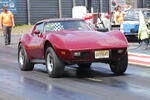
Back when I was making changes to my car to improve drag strip performance, I did some back to back tests on the track comparing my stock, L48, SINGLE snorkel air cleaner with all stock ducting in place, to a 14 x 3 inch, drop base, open element air cleaner. This is with a mild 383 using an Edelbrock Performer intake, with Vortec heads and a Qjet.
A few runs showed that the car was at least 3 tenths quicker with the open element filter. Obviously, in this case, the benefits of cooler air were more than outweighed by the restriction of the single snorkel. Remember that my engine needed more air that a stock L48 would.
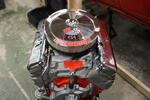
Later, with my engine set up as it currently is (hotter HR cam, RPM Air Gap intake, Lars Qjet, 14 x3 drop base open element air cleaner) I did some on the track comparisons of air filter vs no air filter. I kept the drop base in place during the no filter runs for whatever effect that has on airflow into the carb. My car runs very consistently and these tests showed a 1/2 to 3/4 quarter mile MPH improvement with no filter. That is not insignificant. But, I run with the filter in place.
Also, using the Air Gap intake on Vortec heads, I need to use an adapter under the carb. All my best ET and MPH numbers are with this set up. Maybe it would be faster with a Holley and no adapter. If I try that, I'll let you guys know.
The thing you need to know is how much the factory unit with the hoses ducts and filter can flow.. we had a member on here that used to make a nice housing and snorkel that should have flowed well.
The thing you need to know is how much the factory unit with the hoses ducts and filter can flow.. we had a member on here that used to make a nice housing and snorkel that should have flowed well.
Or measure the vacuum in inches of water at WOT max RPM, if it's too much add intake air until it's no longer a restriction.
There was an air cleaner Dyno test on Engine Masters.
They tested a twin snorkel vs an open element.
And found a 25HP improvement on a 400-500HP engine.
However when you dive into the details, the twin snorkel had only a 2.5" high filter, and the open had a 3.5" high filter.
Too many changes going on to really blame it on the twin snorkel, I blame the 2.5" element, or how close the lid was to the carb.
BTW it looked like a Mopar unit.
The 69-71 C3 open element A/C has a 2.0" drop, and uses a 14" dia x 3.5" hi filter. AC A212Cw
The 71-72 Twin snorkel A/C uses a 12" dia x 3.0" high filter. AC A329C.
Not sure of the drop of this one. But I would guess the lids are near the same height.
Now that is a dyno comparison I would like to see.
Last edited by leigh1322; Dec 3, 2024 at 04:59 PM.
There was an air cleaner Dyno test on Engine Masters.
They tested a twin snorkel vs an open element.
And found a 25HP improvement on a 400-500HP engine.
However when you dive into the details, the twin snorkel had only a 2.5" high filter, and the open had a 3.5" high filter.
Too many changes going on to really blame it on the twin snorkel, I blame the 2.5" element, or how close the lid was to the carb.
Did they feed the open air filter heated air?
A leaf blower (often around 800 cfm) and a Radon manometer might show something as well.
Dyno air is a lot cooler than underhood air. Not a valid test based just on that IMO. Dyno testing has to be kept in context of what it is testing. It's not the same as in the car under driving conditions with the constraints of intake systems and exhaust systems, both of which can and do have dramatic effects on the performance of the engine. Not just at max power but all the way from idle, which a dyno cannot reproduce. We all like dyno numbers but they start where? 3500 rpm? What happened before that? That is where the street driven car lives, and yet a dyno tells you nothing about that relm of operation.
Their air cleaner dyno test had at least 6 variables (way too many):
different air filter height
different air filter diameter
small diameter twin snorkel vs open
no snorkel opening size listed
air cleaner base drop not listed
air cleaner lid height to carb not listed
That's 5 too many variables for a valid scientific test, so it's impossible to tell which variable really caused the HP difference.
They also tested the K&N filter top, and found it lost HP.
They blamed it on the different airflow path to the carb venturis.
But again, very little other information was provided to be a valid A-B test.
To me, their tests are interesting, but thy raise as many questions as they answer.
I don't see any possible way those 2 corrugated ducts with the turbulence they create can flow enough for anything more than a very low power engine. Under hoot temperatures drop the faster you drive.. I no longer have this issue, I have cool air and plenty of volume.
I don't see any possible way those 2 corrugated ducts with the turbulence they create can flow enough for anything more than a very low power engine. Under hoot temperatures drop the faster you drive.. I no longer have this issue, I have cool air and plenty of volume.
I have data that says that they don't drop. I also have data that says they do (there's still quite a gap, though). I'll post both, you decide. Or collect your own data! I suspect the better breathing nose of the 80 makes a big difference.
Original test, 1979 with L82 intake. Street and highway. The compartment temp is nearly flat (water temp sensor failed).
Here's an update with a more recent experiment (temps in deg C). Likely the same loop of highway in Virginia. 80 L48 with L82 intake, foam around the radiator vs. not. Only one variable, as well as I can control!
Last edited by Bikespace; Dec 4, 2024 at 10:42 AM.
I love the data!
So if an L82 ducted air cleaner can maintain a 90* intake air temp, (highway)(10* over ambient) and an open element could not (Bikespace), then that one would revert to near ~150* underhood temps
Wallace Racings Online weather calculator shows a 40* rise in air temp will cause a significant 28HP loss in a 400HP engine.
(http://www.wallaceracing.com/weather-corr.php)
That would be roughly equivalent to the 25HP low restriction loss from using a too small closed element air cleaner (Enginemasters)
That might make them roughly offsetting each other.
The best way to have both low restriction airflow, with cold air, is the L88 hood, with all ducting in place.
AFAIK no one has measured or calculated the flow of a C3 twin snorkel air cleaner assembly (L48/LS5), or the twin ducted L82 version, or the 73-75 ducted hood scoop.
Anyone have any dimensions of openings, or duct sizes?