When you click on links to various merchants on this site and make a purchase, this can result in this site earning a commission. Affiliate programs and affiliations include, but are not limited to, the eBay Partner Network.
(‘68 L68 427)
Over the last summer I suspected that the fuel pump might be causing minor issues and was on its way out so I installed a fuel pressure gauge, “one thats designed to be installed inside the car”
. It wandered a little at first but I noticed it dropping down at cruise speeds to around 4 lbs then climb back up then drop again even though the speed was constant. Assuming its is the pump on its way out I ordered one from Zip last fall. The unit I got was made by Carter.
Years back I installed a Carter high volume pump in my ‘73 Charger and it put out 9 lbs of pressure. Thinking that was too high I installed a Holley regulator and set it at 6 lbs . Car ran great like that.
Well I’ve been sitting on this pump over the winter because I couldn’t bring myself to work under a car in a cold garage.
The first weekend of this month saw a warmer day and the years first cars and coffee so I went. The car drove ok but as the pic below shows the pressure dropped and stayed at between 3-4 lbs.
Time to get it done.
Wasn’t bad but this was the first engine I’ve done with a pushrod for the pump. Something new to learn. Used a bore scope to view the cam position as I turned the crank to put the cam on its low spot as instructed. Tight space to work in too, thankful for shorty wrenches .
It’s done though, no leaks and the new pump is definitely better than the one it replaced. Night and day difference.
The one question I have though is this pump is like the other putting out 9lbs of pressure. Should I be concerned ?
The majority of people don’t have fuel pressure gauges, they just install these and drive them oblivious to what the pressure is so maybe I shouldn’t sweat it (???) What’s your opinion ?
If it doesn't flood out the carb there would be no problem with that pressure. But likely it will force the inlet needle off the seat and overfill the bowl leading to flooding.
Both of your points are true and I’ve been very aware of. I added the regulator to my Dodge for these concerns.
This is the regulator I used though it wasn’t chrome then. Liked it better plain . I’ve got other things to do while the car is up on jackstands so it’ll be a bit but I’m going to wait and see if the pressure settles down while driving. Theres a chance it’ll be initially high on startup and come down.
If it doesn’t I’ll need to mount this regulator after the pump. The inlet on pretty much all of these in on the bottom with it exiting to either side.
The idea I have now if it comes to pass is mounting it directly to the discharge port on the pump and aiming the discharge port straight up. The other aiming down would be plugged. It wasn’t fun bending and flaring that 3/8” line but it’s looking like I’ll need to do it again.
Hopefully when I get the other work done and drive it I will find it to settle down to at least 7lbs.
Braided steel hose is a lot easier to work with than bending pipe.
I have my regulator mounted up top in a horizontal orientation where I can adjust the pressure as needed.
I also have a regulator with the return line hooked up. Helps keep the supply fuel cooler.
I would add a good quality fuel pressure regulator to the system. My four barrel carburetor had the same type of fuel pressure issues while I was trying different combinations of fuel pumps and plumbing. I finally mounted an AeromotiveFuel Pressure Regulator and it kept the pressure in the 5-6 range even while the engine was cruising down the highway. When I let off the gas it would stay above 5 psi and when I was "pedal to the fiberglass" I would never see the pressure drop below 5 psi. The constant fuel pressure kept the fuel levels high enough not to have issues with low fuel during hard acceleration or turns. The last mechanical fuel pump was not able to do this for my C3 so I switched to a low pressure electric Fuel pump (also Aeromotive) and with the pressure regulator in place both fuel bowls had plenty of fuel pressure.
I realize that you have a L71 427 and everything is probably more stock than some of our C3's. I could never understand WHY they put the fuel pump and the metal tubing up there in all that heat coming from the radiator and headers. Hot gas is not as good as cooler gas, this is why I bring my fuel lines up and over my bell-housing and into my throttle body from the rear. I also insulated the fuel lines starting at the fuel tank outlet with DEI Tube insulation and have a silicone fire sleeve over the insulation to protect the fuel lines from excessive heat and even fire if it happens. If I had my fuel lines up in the original locations then I would probably put some kind of insulator over them to keep the fuel from getting too warm.
9 psi would be pushing it for "some" carburetors. I am not familiar with the specific carburetors you use on the L71 but I have in the past had several issues with floats leaking due to excessive fuel pressure. My first Quadrajet was one that would leak gas and stall the engine if the pressure was over the normal 5-7 psi that I would normally use. I re-adjusted the float and the carburetor would still leak, new float needle and seat, and the only solution was reducing the fuel pressure with a FPR down to the 5-7 psi range. With the lower pressure the C3 was more drive-able and it didn't just randomly stall and start leaking gas out of the Quadra Jet carburetor.
It happened too often and I was getting worried about my C3 going up in flames. At this point I replaced the intake manifold and put a HolleyDouble Pumper Carburetor on my 427 which was a major improvement after I got it set up correctly.
Braided steel hose is a lot easier to work with than bending pipe.
I have my regulator mounted up top in a horizontal orientation where I can adjust the pressure as needed.
I also have a regulator with the return line hooked up. Helps keep the supply fuel cooler.
I agree that braided line is easier as thats what I went with in my Charger. In this though I’m trying to keep it as factory appearing as I can from above. This is on a tri-power setup that doesn’t have a return line or yes I’d go that route. I’m not worried about the difficulty in reaching it to adjust it as I set the one in my Charger at 6lbs and never had to touch it afterward. These are supposedly set at 6-1/2 lbs at the factory which would be fine so I might not have to touch it at all.
I have heat wrap for all the lines which should help for that.
This is the kinda thing that makes me lose sleep at night. Last night I’m watching TV with my wife and she asks me something about what we’re watching but I can’t tell her because my mind is trying to figure out how I’m going to mount a regulator and still keep it as close to factory as i can. She watches me drift out to the garage on commercials to measure clearances…
It’s the last thing on my mind when I went to bed and the first thing when I woke up.
It’s tight around the fuel pump outlet with the upper control arm really (too) close under the outlet so I don’t think I can mount the regulator directly to the pump like I was thinking plus the lower radiator hose is really close too. Can’t have it touching that.
Now I’m thinking I could mount it in place of the elbow in the line where it comes straight up and then bends towards the drivers side of the engine.
The tri-power setup doesn’t have an inline filter after the pump like the 4 barrel L36 does. It has a small filter in each carb inlet instead. I wasn’t good with that so I mounted a Holley “pre-filter” back by the tank. The regulator instructions say to mount a filter between the pump and regulator but theres just no room.
It’s really tight between the block and hoses. The filter diameter would have to be 1” diameter or less and the smallest I found is 1-1/2”. Also a filter there would just absorb more heat. So the top line will be cut and flared after the bend and another line fabricated to run from the pump to the regulator. The beautiful T-fitting I put together to mount the pressure sensor will be scrapped and the sensor will be mounted to the second port on the regulator.
These damned lines are a PITA to bend and especially to flare. Not going to enjoy it.
Below shows both how it is now, how tight it is and pointing to where I’m figuring to mount the regulator.
As REELAV8R made note, it will also be easy access here .
When it’s all together I will wrap all the lines with heat shield. Yes I know that’ll kinda deviate from the factory look but I can always take it off for shows. One other thing I have on my to-do list on this go around is to wrap the exhaust header heat shield wrap around the exhaust pipe from the manifolds back to the crossmember. The cast iron manifolds are still exposed but covering the pipes should somewhat reduce the heat . I may also wrap a couple inches of the lower radiator hose where it comes close to the fuel line.
A screenshot of what I bought is below.
( one last note, the line you see is one I bent myself. Rather than altering the factory line I removed it and packed it away for safe keeping so that the next owner can return it to factory stock if he/she so wishes.)
"Steel" braided hose is just synthetic rubber line with steel braiding on the outside for protection. It's still rubber hose. Put solid fuel line on it. If regular steel is too difficult to form for you, buy nickel-copper NiCu line. It is DOT approved for brakes and fuel and is MUCH easier to bend and form. Rubber fuel line--under pressure--is not a good thing for safety of you and your car.
"Steel" braided hose is just synthetic rubber line with steel braiding on the outside for protection. It's still rubber hose. Put solid fuel line on it. If regular steel is too difficult to form for you, buy nickel-copper NiCu line. It is DOT approved for brakes and fuel and is MUCH easier to bend and form. Rubber fuel line--under pressure--is not a good thing for safety of you and your car.
Not sure how I’d like the look of the NiCopp line though it will be covered with the Heat shield. I whole heartedly agree that the NiCopp lines are fantastic to work with and the only thing I’ll use for brake lines now. They won’t rust like steel lines either. Haven’t used them for fuel lines yet though.
It’s my wife’s birthday today so I’m not lost in the garage today but i have found my way out there here and there.
Looking at the front of the head there are 3 unused threaded bolt holes available. One thought I had is that the regulator should have support other than just hanging on the fuel line. I will probably fabricate a support bracket that will bolt up to 2 points on the head .
If it doesn't flood out the carb there would be no problem with that pressure. But likely it will force the inlet needle off the seat and overfill the bowl leading to flooding.
Gave a lot of thought to that cloud of fuel smoke I saw drifting across my yard after I shut the car down. Can’t see it as anything other than the result of flooding.
Decided to not fire it up again until a regulator is installed. It’s kinda painful to think of replacing the lines I carefully bent and flared but it is what it is.
I have the regulator in hand, have flair fittings coming from Jegs and precut and flared line from InlineTube. Those are a bear to flare using hand tools. It can be done but if I can avoid it I will. Should have all I need this week to put it together.
I’m going to wait and see if the pressure settles down while driving. Theres a chance it’ll be initially high on startup and come down.
If it doesn’t I’ll need to mount this regulator after the pump.
...
Hopefully when I get the other work done and drive it I will find it to settle down to at least 7lbs.
This doesn't make sense to me that it'll be higher on startup. It's not like oil that thins when heated. You should have the same fuel pressure from start to shutdown.
This doesn't make sense to me that it'll be higher on startup. It's not like oil that thins when heated. You should have the same fuel pressure from start to shutdown.
Understood, I’m just going off what I’ve seen from the previous pump. It would be at 7-8lbs at startup and then drop to 5-6 after a couple minutes. That was probably another red flag that it was failing.
With the new pump installed I only ran it a couple minutes and the pressure stayed at 9 to 9-1/2 lbs.
After you installed the new pump, did you check the float levels with the engine running?
No I didn’t. Only ran it for a couple minutes and seeing the pressure at 9 lbs was enough for me .
Still waiting on the flared lines to arrive in the mail.
Once I get them installed with the regulator set at a sane pressure I will do that.
Finally got all the small parts together and though I put off bending the new lines it wasn’t as bad as I feared. I did have to shorten and reflair both and that was easier than I remember. Had to figure out how to make a bracket to support the regulator so I measured it over and over again. And fought myself to avoid overcomplicating it. Kept to the KISS theory, keep it simple stupid.
Found it odd that the bracket supplied with the regulator fit so close to the body of the regulator that the two top screws would actually touch when assembled.
I elected to go with a flatter bolt head to avoid rubbing .
I drilled two new holes and used stainless carriage bolts with nylon lock nuts. I drilled the holes in the bars little bigger to allow some adjustment before being tightened down. Not wanting to leave it crude I rounded the shoulders on the bars little bigger like the factory does for brackets and stamped it “GM” .
Not sure if it’ll show after I paint it but maybe enough will to have people scratching their heads.
May go with orange or black. On the fence right now.
In the final two photos it’s mocked up on the engine and nothing is tightened up. I also started with the regional bends when doing the tubing but altered them slightly to give them more clearance from hot hoses and heat sources. When it’s all together the lines will be covered with a heat shield wrap.
The washers that are shimming it out from the engine are temporary and will be replaced with one piece bushings.
I see you selected a return style regulator.
A non-return style would make the plumbing easier.
With the return style that you will have to go down to the fuel pump area, and tee the two return lines together, somehow.
Into the frame mounted return line.
Since the fuel pump also requires a return line.
And that one should not be plugged.
Do you even have a frame mounted return line?
Is it a L68 or L71?
I am no that familiar with fuel lines on tri-powers.
But I do know that almost no carb likes over 6psi.
And you have three needle/seats to worry about.
I see you selected a return style regulator.
A non-return style would make the plumbing easier.
With the return style that you will have to go down to the fuel pump area, and tee the two return lines together, somehow.
Into the frame mounted return line.
Since the fuel pump also requires a return line.
And that one should not be plugged.
Do you even have a frame mounted return line?
Is it a L68 or L71?
I am no that familiar with fuel lines on tri-powers.
But I do know that almost no carb likes over 6psi.
And you have three needle/seats to worry about.
The regulator is a 12-803 Holley that is the non-return model. I suspect what you’re looking at is the brass elbow connected to the second “out” port which has the pressure sensor . The adapter for the sensor to a 3/8” fit really sloppy when threaded directly into the regulator body and never would’ve sealed properly on its own. With the brass elbow it goes together as it should. The engine is the L68 and the rated fuel pressure is supposedly 7lbs which still seems high to me.
9 to 9-1/2 Was definitely to high. The regulator is supposedly factory set at 6-1/2 lbs which will be just right.
Another thing I’m expecting is that it will steady the pressure. Without a regulator you’ll see the pressure reading float around a little. I installed this same regulator on my Dodge because the Carter pump I installed on that was at 9 lbs also. With this regulator it held like a rock at 6 lbs.
Anxiety and grey hair 🙄😖
Not one of my favorite things to do by a long shot (I hate fire) but it’s done .
My fuel pressure was acting wonky and dropping off to 3lbs at cruise so I made the call that the pump was failing.
Ordered a pump for my L68 from Zip and they sent a Carter pump.
I installed that and it was putting out 9-10lbs of pressure. Yes it was flooding the carb and when I shut it down I saw a big plume of fuel smoke wafting across my front yard.
So I ordered a Holley 12-803 regulator.
Had to cut flare and bend new lines which wasn’t as bad as I feared.
Had to fabricate a bracket to hold the regulator in place and I’m pretty happy with how it came out. I tried to make it look like a bracket the factory would make.
Ok, so I fired it up with “a lot” of anxiety and checked for leaks. Everything I did was good 👍 but…
It was leaking like a sieve from the center carb bowl.
The fuel pressure was also 7-1/2lbs, still higher than I’d like.
I found that the 4 bowl screws were little more than finger tight !!! WTH !
I tightened them up and thankfully it stopped the leak .
I then adjust the fuel pressure down to 6-1/2lbs and it’s all running right now.
Taking a coffee break now and settling my nerves.
Back in my teens I had an engine fire in my VW Beetle and my Charger. I got those put out quick but that kinda thing stays with you which is why I’m super cautious working with fuel lines.
The next few photos show the regulator mounted, the pressure at 7-1/2 lbs as preset and then two videos, first showing the bowl leaking fuel then another with it not and the pressure reset at 6-1/2 lbs.




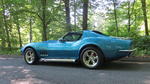






 New pump, pressure higher than expected.
 .
.





 and the sensor will be mounted to the second port on the regulator.