When you click on links to various merchants on this site and make a purchase, this can result in this site earning a commission. Affiliate programs and affiliations include, but are not limited to, the eBay Partner Network.
Using common sense When you change out your suspension and mount coilovers behind the rear wheels your actually hurting your cars performance but helping the ride. Where a spring attaches to the frame determines the rear percentage of your car. So when you mount those coil overs so far back you’re giving up traction. Anybody that thinks the manufacturers don’t spend millions of dollars to develop these cars it’s just not thinking straight if GM thought mounting springs that far back on the chassis, they would’ve done it. Now don’t get me wrong. It looks really cool. So if that’s what you want is to look cool then that’s the e ticket. Also, something that is two to one is weight on the suspension that moves. All these aftermarket companies claim lightweight better performance yeah maybe there’s is lighter weight than their competitors but a lot of times it’s not lighter weight than what you have already so if you can improve what the manufacturers have done, you’ll be way ahead of those guys that do the easy bolt on stuff.
I’m not sure if this post is directed at anyone in general, but I’m glad mine mount in front.
Like you said though, I’m sure a large majority of people installing coilovers are doing it for the “coolness” and ability to adjust the ride height rather than any performance increases. I’ve been meaning to take my car to a scale to get a good measurement, but I’d be willing to bet it’s about the same as a car with a fiberglass spring. These cars probably shouldn’t be too much lighter in the rear anyways.
I’m not sure if this post is directed at anyone in general, but I’m glad mine mount in front.
Like you said though, I’m sure a large majority of people installing coilovers are doing it for the “coolness” and ability to adjust the ride height rather than any performance increases. I’ve been meaning to take my car to a scale to get a good measurement, but I’d be willing to bet it’s about the same as a car with a fiberglass spring. These cars probably shouldn’t be too much lighter in the rear anyways.
Lightweight aluminum hub, stronger sealed wheel bearings, stronger big-HP 9 inch differential, stronger constant velocity driveshafts, stronger increased spline axle stubs, 4 forward links for vastly improved anti-squat and anti-dive, improved and independent nut-n-bolt adjustments for camber and toe-in, improved camber gain, coil-overs for easy height adjustment, remote reservoir JRI double-adjustable race shocks, and practically zero bump-steer. (<.010")
What's not to like?
(Besides the price tag.)
Every component has been upgraded.
No trailing arm suspension will ever handle that well.
That's race car or C7 level stuff.
The DSE suspension has been completely re-engineered, and improved in every way.
Mounting the shocks behind the axles gives increased shock stroke for finer shock control and tuning ability.
That's a positive.
But there are a lot of other bolt-on parts out there, that are much less effective than DSE.
Some of them may not even be as good as the factory stuff.
Now can most drivers feel the difference in a complete DSE suspension vs some other upgrades?
Some can.
Is that difference worth thousands of dollars?
To some people, it is.
Can a trailing arm suspension handle still very well if carefully modified?
Sure it can.
Last edited by leigh1322; Sep 9, 2025 at 11:56 PM.
Nice for show and playing with . I wanna win I want to beat everyone in my class badly. I don’t hate anyone I just hate to loose ! Love your car though don’t ever take me the wrong way I love all corvette’s and it’s all about what you want and how you enjoy it. I need to beat a cobra with a LS in it and twin turbos on a short flat course. Also speedway motors has really deep pockets.
my car 4 way adjustable shocks ,weight jacks , front and rear loop , aluminum hubs in front , 406 engine with ~11 23 degree heads , aluminum brodex, 650hp methanol 5 inch triple disc clutch total weight with me in it #2300 , 51% rear weight.
Last edited by AZSTAR; Sep 17, 2025 at 12:52 AM.
Reason: Add to it
Yep you are going to need those front and rear frame loops.
The C3 chassis is notoriously flexy.
And you want to plant those big tires as quick as possible during quick transitions.
One of the coolest factors about racing a C3 is how easily it accomodates some huge tires & wheels, and how good it looks with those flares!
It can hold some of the largest tires around, on any car, and you are going to need them!
And some of the strongest motors. You will need to exploit that to the max.
Yep you are going to need those front and rear frame loops.
The C3 chassis is notoriously flexy.
And you want to plant those big tires as quick as possible during quick transitions.
One of the coolest factors about racing a C3 is how easily it accomodates some huge tires & wheels, and how good it looks with those flares!
It can hold some of the largest tires around, on any car, and you are going to need them!
And some of the strongest motors. You will need to exploit that to the max.
any help is always needed I’ve got a lot of experience in Racing cars, but not necessarily Corvette so I know there’s gonna be things that can always be done better than what I’m doing.
If you are class racing sure......trying to get every last bit......but for 99% of the rest of the world, it makes little difference if 30 lbs. of coil over shock is moved fore or aft 6".......
If you are class racing sure......trying to get every last bit......but for 99% of the rest of the world, it makes little difference if 30 lbs. of coil over shock is moved fore or aft 6".......
Jebby
the location either the coil over or the spring is connected to the frame determines your rear percentage. 6” is a lot
the location either the coil over or the spring is connected to the frame determines your rear percentage. 6” is a lot
I understand that....like I said, class racing sure....everybody else it would never be noticable....a pair of 15lb. a piece shocks moved forward 6" is splitting hairs....
Leigh and Jebby are right. The location of the coilovers in relation to the rear axle is the least of the problems with the C2/C3 rear suspension.
Detroit Speed's kit is the only one on the market that addresses the real issues without having to swap the entire frame. It's a legit performance design, but pricey.
From a strictly engineering standpoint, it's better to mount the springs and shocks behind the wheel on a trailing arm suspension design. Chevy did half of this from the factory: the stock leaf spring is mounted behind the axle. In general, the higher motion ratio allows for better fine tuning of the damper and reduces the forces acting on both the trailing arm and the chassis. Lower forces mean less beefy components, which means less weight.
The weight distribution impact of coilovers mounted in front of or behind the axle is negligible. My coilovers with remote reservoirs weigh 6.8 lb each, including springs, for a total of 13.6 lb. The difference in rear axle weight between mounting them 4" behind the axle vs. 4" in front of the axle (rough numbers) is a whopping 1.1 lb. Fuel sloshing will have more of an impact than that.
Obviously mounting coilovers in front of the axle still works just fine because people do it all the time (myself included). This is also the only readily available option for 80-82 cars since there is no true diff crossmember.
I'll be honest, I can't tell if AZSTAR is worried about the weight of the coilover affecting rear balance, or trying to say, regardless of the coilover weight, it is the location of the attachment on the frame determining rear percentage.
Either way, I don't see how it can affect rear balance in any meaningful way. Doing the math, moving 30 lbs, +/-3" from the centerline of the rear axle on a 3000 lb car with a 98" wheelbase would change rear bias by less than 1%.
I'm not inclined to draw up any free body diagrams, and certainly not going to run a free body analysis, but I also don't see how the spring attachment point affects rear balance either, since it is determined entirely by the center of gravity and the wheelbase. The only thing the spring mounting location would impact is the motion ratio of the suspension. So yes, that spring has more load on it if you move it forward, but the rear tire doesn't. You've created a larger moment on the trailing arm that puts load into the frame at another point. The forces still ultimately balance out.
The only relevant item of discussion when it comes to spring mounting point is motion ratio and how that affects spring/damper rates, and the strength of the components it mounts to. Unless I'm misunderstanding what he means by rear percentage...
For racing, you would be well advised to lower the very high mounted 150# gas tank, to underneath the frame.
If you could find a way to move it forward, even a little, that would help also.
If you have to choose, lower is much more important than forward.
The high mounted tank raises the CG and unloads the inside tire more. This kills traction off the corner.
The weakest points in the frame are the 90* section in front of the rear wheels, and the "S" curve section near the back of the engine.
But in general it just twists very easily everywhere, like 10x more than a new CAD optimized car.
Notice in the above pic, that even with a BBC, the engine sits entirely behind the front axle centerline, making it truly a mid-engined car,
It's just front mid-engine.
The driver sits right next to the rear wheels and the engine right next to the front.
Unfortunately, the engine is (usually) heavier LOL!
The gas tank weight is what keeps the FR/RR balance closer to 50/50.
But since the tank weight is located so far to the rear, there is a large polar moment, that the rear has, that the front does not.
So when autocrossing/sliding the car, it feels like a pendulum swinging around the front wheels.
The rear has much more momentum than the front does, when sliding, and is slower to stop & hook up.
Way different than a Camaro, where you sit much closer to the center of the wheelbase.
Now if you know how to drive like a madman, in the slalom, you can use that rear "swing" to your advantage to help to rotate the car.
The "trick" is getting about an 18" rear drift/slide, and then getting it to consistently hook, so you can predict it.
I dropped a full second thru a 5-6 cone slalom once I figured that out!
Last edited by leigh1322; Sep 20, 2025 at 12:57 PM.
For racing, you would be well advised to lower the very high mounted 150# gas tank, to underneath the frame.
If you could find a way to move it forward, even a little, that would help also.
If you have to choose, lower is much more important than forward.
The high mounted tank raises the CG and unloads the inside tire more. This kills traction off the corner.
Notice in the above pic, that even with a BBC, the engine sits entirely behind the front axle centerline, making it truly a mid-engined car,
It's just front mid-engine.
The driver sits right next to the rear wheels and the engine right next to the front.
Unfortunately, the engine is (usually) heavier LOL!
The gas tank weight is what keeps the FR/RR balance closer to 50/50.
But since the tank weight is located so far to the rear, there is a large polar moment, that the rear has, that the front does not.
So when autocrossing/sliding the car, it feels like a pendulum swinging around the front wheels.
The rear has much more momentum than the front does, when sliding, and is slower to stop & hook up.
Way different than a Camaro, where you sit much closer to the center of the wheelbase.!
Ok Leigh, Now you’ve got me thinking.
I can easily lower my fuel tank with my 73 because I haven’t installed my new oem type fuel tank and I’m not running a spare tire.
I will call my friend Chris who races vintage C2’s & C3’s, I know that he mounts his fuel cells lower under the frame and he will probably tell me the same thing because it makes perfect sense.
I’m sure he either has someone who manufactures his fuel cells or he makes them himself.
I may just do this for the improved handling even if I’m not track racing my car.
I have considered driving it through some auto cross courses just for fun.
Thanks again for helping to spend my money!
Leigh and Jebby are right. The location of the coilovers in relation to the rear axle is the least of the problems with the C2/C3 rear suspension.
Detroit Speed's kit is the only one on the market that addresses the real issues without having to swap the entire frame. It's a legit performance design, but pricey.
From a strictly engineering standpoint, it's better to mount the springs and shocks behind the wheel on a trailing arm suspension design. Chevy did half of this from the factory: the stock leaf spring is mounted behind the axle. In general, the higher motion ratio allows for better fine tuning of the damper and reduces the forces acting on both the trailing arm and the chassis. Lower forces mean less beefy components, which means less weight.
The weight distribution impact of coilovers mounted in front of or behind the axle is negligible. My coilovers with remote reservoirs weigh 6.8 lb each, including springs, for a total of 13.6 lb. The difference in rear axle weight between mounting them 4" behind the axle vs. 4" in front of the axle (rough numbers) is a whopping 1.1 lb. Fuel sloshing will have more of an impact than that.
Obviously mounting coilovers in front of the axle still works just fine because people do it all the time (myself included). This is also the only readily available option for 80-82 cars since there is no true diff crossmember.
a car will hook up way better with springs in the front. I’ve raced way to much to know springs behind the rear axle don’t work as well. Negligible is not even a word I would use unless you’re talking about going to the grocery store.
I'll be honest, I can't tell if AZSTAR is worried about the weight of the coilover affecting rear balance, or trying to say, regardless of the coilover weight, it is the location of the attachment on the frame determining rear percentage.
Either way, I don't see how it can affect rear balance in any meaningful way. Doing the math, moving 30 lbs, +/-3" from the centerline of the rear axle on a 3000 lb car with a 98" wheelbase would change rear bias by less than 1%.
I'm not inclined to draw up any free body diagrams, and certainly not going to run a free body analysis, but I also don't see how the spring attachment point affects rear balance either, since it is determined entirely by the center of gravity and the wheelbase. The only thing the spring mounting location would impact is the motion ratio of the suspension. So yes, that spring has more load on it if you move it forward, but the rear tire doesn't. You've created a larger moment on the trailing arm that puts load into the frame at another point. The forces still ultimately balance out.
The only relevant item of discussion when it comes to spring mounting point is motion ratio and how that affects spring/damper rates, and the strength of the components it mounts to. Unless I'm misunderstanding what he means by rear percentage...
has nothing to do with the weight of the coil overs.
How can a spring have more load on it and not have more rear percentage if there’s more load by moving it forward you’re carrying more of the weight behind that axle which means there’s less weight on the front axle which means you have more rear percentage. Say you had coil overs mounted mid car would you still have the same weight on the rear tires. The farther forward they mount to the frame means everything behind those mounting points is removed from front or middle of car and added to rear. If you mount coil overs on the tail you add weight to the middle/ front of car.




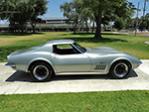







 Aftermarket kits !