When you click on links to various merchants on this site and make a purchase, this can result in this site earning a commission. Affiliate programs and affiliations include, but are not limited to, the eBay Partner Network.
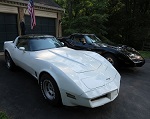
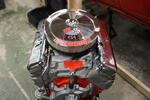
I recently purchased a 1980 coupe. Cosmetically sharp and clean inside and out. Nice side pipe exhaust. The previous owner redid much of the mechanical with a new zzr crate motor, holly 650 cfm carb, aluminum rad with poly fan, elec ignition, new trans, some new suspension components.
I didn't have the opportunity to have it inspected. Other buyers were anxious to take it. Price seemed great to me so I took my chance. I am generally pleased with it. Very fun and powerful drive except there are a few issues- some of which i noticed/expected when I bought it and some I did not:
-somewhat high rpm idle leading to slight clunk into reverse and drive
-small coolant leak under passenger door which i think is coming from heater unit
These two above I expected and hope can be foxed relatively easily, but i have 2 surprises:
-previous owner added some LED lights inside. And also changed the original radio to a pioneer CD player. The LED lights seem to be malfunctioning in that they would come on even when they had not been turned on. That happened a few times which killed the battery. I unplugged and removed all of the lights (but not wires). Charged the battery and jump started the car. I don't know if it's a coincidence, but it would seem too coincidental. The blinkers immediately stopped working after that.
-I noticed today that the rear wheels are tilted inward. I'm almost certain that it wasn't that way when I bought the car a week ago. I would've noticed that. I'm wondering if it's just a coincidence that some normal component wear would've happened in the week since I bought it. Or, if perhaps it could be a sign of something more serious like frame damage and the wheels tilting inward was a persistent problem that the previous owner may have adjusted to straight before he sold me the car knowing it would tilt back in
I am curious if anybody has any thoughts on the above items and/or a recommendation to reliable Corvette repair and workshop in Central New Jersey.
Welcome to the forum. Nice looking car, congratulations.
As per your issues. My initial advice would be to list out all the issues. Decide which items need to be repaired first.
Then attack each problem one at a time.
Perhaps the lights staying on and draining your battery might be at the top of your list as an example.
Then get on here. And describe the symptoms of the issue to the best of your ability and we will try to guide you with repair advice.
Now guessing by your question about available mechanics, perhaps your not looking for repair advice. Although I would highly recommend you embrace the idea of doing as much yourself as possible. It's a very rewarding hobby. Qualified mechanics willing to work on 50 old cars don't grow on trees and a good one won't come cheap.
Congrats on the nw toy. As for the LEDs, we have no idea how he wired them in but if any of the exterior lights had led bulbs, ( like the signal lights) they require a different flasher than the standard bulbs require. You mention that you removed the lights but not the wires, which might be a mistake. If there is some electrical gremlin making the lights turn on, you took out the lights but the power is still going thru the wires. If there is a short in an old brittle wire you could have a fire. i think I would take everything he did out of the car and start from scratch, doing it right. As for the rear wheels tilting in, that is just something that happens with age. The bushings in the rear struts might be worn. You can replace those yourself. Or you might just want to get adjustable ones. An alignment would be called for either way.
Your clunk going into reverse might just be a bad u joint in the driveshaft. Put that on your check list. And finally your heater. That will be a bag of worms once you open it up. For example, if you are replacing the heater core, you MIGHT AS Well 9 that is a term you better get used to) replace the A/C evap core. It is right there and for the labor involved to get to the heater, you would make a mistake if you don't change it. That leads to the R12 vs R 134A debate. Search here on the forum and you will see what that is all about. And you MIGHtT AS WELL verify that all of the vacuum lines are working properly while you are down on the floor under the dash. The heater is IMO one of the hardest jobs to tackle because you don't know where to stop. Hopefully you got a good price on what looks like a great ride.
And I got PTSD when I saw the leaves falling in your NJ neighborhood. I left Bridgewater in '97 after we ran out of room to plow the snow and never looked back!
Thanks for the advice. I am already having fun with it. I'm starting with the minor things that are within my capabilities.
I took out those LED lights and that seems to have fixed the battery problem. Whoever installed them took the time to run all the wires behind the panels so I just disconnected the light strips from the connector clips and removed the lights, but left the wires. You can't see them so I don't think I'm gonna bother with taking off interior panels to take the wiring out unless anyone here thinks that's a bad idea. The guy who sold me the car gave me the original radio and said it still works so I am going to take out the Pioneer and try to put the original back in myself.
He also had swapped the tachometer/ speedometer retainer plate and the ashtray cover with some cheesy looking carbon fiber versions. I ordered original style replacements. I replaced the tachometer retainer plate today and that went well and looks good. I'm going to do the ashtray cover tomorrow morning.
The three most pressing issues are the fact that it's idling with high RPMs and I think that's causing a clunk when shifting the automatic transmission. I'm hoping that's just some carburetor adjustments. Also, the fact that the rear wheels seem to be tilting in. Also, the coolant leak under passenger door (assume from heater hint) These are three items that I don't think I'm capable of dealing with myself so I may have to open up the Wallet for those.
I was under a little bit of pressure to buy the car because someone else literally showed up to look at it when I was deciding and I didn't want to lose it. I got it for $9000 which felt like a good price. So I'm into it for less than $10,000 even with sales tax, registration, and renting a trailer to drive it to my part of New Jersey. Being in that rush, the best I could do was a quick look under the car. I didn't see any significant frame rust. Some surface rust but nothing that wouldn't pass a screwdriver test. However, last night and today I did a better inspection of the birdcage. I took off the kick plates and on the passenger side there is some rust. Unfortunately, too much rust to pass the screwdriver test on the passenger side. The driver side was not as bad. I used my phone to take pictures up those columns and the inside of the columns looked pretty good. I took some trim off Around the windshield frame and I didn't see any rust there. The sill plate on both doors seems fine. So I don't think I have any major major rust issues but I think the passenger side mount number two is going to need some work. Also, both number four mounts don't look so great. I can't see Mounts No. 3 on either side. With the side pipes it's very difficult to see Mounts number one, but I was able to get a glimpse at it and stick my phone up there with my hand to take some pictures and I think those are OK.
Given the ZZ4 motor, newer transmission, carburetor, aluminum radiator, new fan, new fan shroud, electric starter. I still feel pretty good about the price even with these issues.
I understand the above is a lot of info, but here are three questions:
-would you think I need a Corvette specialist to deal with the rear wheels tilting in or can any good suspension mechanic do it? A lot of the suspension components underneath are new. I called a local suspension shop. They said they were comfortable working on it.
-is it possible to repair mounts 2 and 4 without lifting the body off?
-if it's not possible to repair those mounts without taking the body off, should I not have suspension work done until that's being done? Or are the two unrelated? I do have an appointment with a highly reputable Corvette shop in South Jersey on January 12. They're going to check the car in general and specifically the high the idling and the coolant leak for me. Unfortunately they are very busy so January 12 is the soonest appt. I'm wondering if it makes sense to have someone look at the suspension before then or just wait until I take it to them.
Welcome to the forum! Burn your legs on the side pipes yet?
The clunking when going into gear is caused by a worn snubber bushing, which is exacerbated by the high idle. If it’s not a carb or ignition issue that someone has cranked the idle speed up to force the car to run it should be as simple as turning the idle speed screw down.
Your rear camber is determined by your strut rods. The factory setup has them on an eccentric bolt, but aftermarket adjustable ones are common. I agree on trying to do as many things yourself as possible. These cars aren’t hard to work on per se, but knowing as much as you can before diving into something is incredibly useful.
Congrats on the nw toy. As for the LEDs, we have no idea how he wired them in but if any of the exterior lights had led bulbs, ( like the signal lights) they require a different flasher than the standard bulbs require. You mention that you removed the lights but not the wires, which might be a mistake. If there is some electrical gremlin making the lights turn on, you took out the lights but the power is still going thru the wires. If there is a short in an old brittle wire you could have a fire. i think I would take everything he did out of the car and start from scratch, doing it right. As for the rear wheels tilting in, that is just something that happens with age. The bushings in the rear struts might be worn. You can replace those yourself. Or you might just want to get adjustable ones. An alignment would be called for either way.
Your clunk going into reverse might just be a bad u joint in the driveshaft. Put that on your check list. And finally your heater. That will be a bag of worms once you open it up. For example, if you are replacing the heater core, you MIGHT AS Well 9 that is a term you better get used to) replace the A/C evap core. It is right there and for the labor involved to get to the heater, you would make a mistake if you don't change it. That leads to the R12 vs R 134A debate. Search here on the forum and you will see what that is all about. And you MIGHtT AS WELL verify that all of the vacuum lines are working properly while you are down on the floor under the dash. The heater is IMO one of the hardest jobs to tackle because you don't know where to stop. Hopefully you got a good price on what looks like a great ride.
And I got PTSD when I saw the leaves falling in your NJ neighborhood. I left Bridgewater in '97 after we ran out of room to plow the snow and never looked back!
thanks for this. Perhaps I will get started on pulling all of his wires out. I did notice that once I took his LEDs out, the blinkers stopped working.
A risk of a fire would be a big concern as it's parked inside the garage attached to my house. Probably not coincidentally, he made some mention of sometimes when he was storing the car for a long time, he would disconnect the negative battery cable- have a feeling he knew about the electric issues. Do you think it would be smart to disconnect the battery when I'm not using the car while I'm figuring the wiring out?
as for the heating and air conditioning and the coolant leak right now, the heat and the air conditioning are not working. He told me that before I bought the car. Frankly, I never really had any intention of fixing it. So perhaps if the leak is coming from the heater unit, maybe I can just bypass it?
Last edited by 80VetteNJ; Nov 29, 2025 at 09:39 PM.
Welcome to the forum! Burn your legs on the side pipes yet?
The clunking when going into gear is caused by a worn snubber bushing, which is exacerbated by the high idle. If it’s not a carb or ignition issue that someone has cranked the idle speed up to force the car to run it should be as simple as turning the idle speed screw down.
Your rear camber is determined by your strut rods. The factory setup has them on an eccentric bolt, but aftermarket adjustable ones are common. I agree on trying to do as many things yourself as possible. These cars aren’t hard to work on per se, but knowing as much as you can before diving into something is incredibly useful.
below is a few pictures of the rear suspension. Any suggestions on how I could go about trying to adjust it myself so the wheels don't tilt?
Looks like you have adjustable strut rods, a good thing!
You’ll want to loosen these two nuts. Keep in mind one side will be reverse threads.
Then rotating the center tube will make the overall strut rod length longer or shorter. This requires the rear to be jacked up in the air. In this instance you’ll want to make the rod shorter to decrease the amount of negative camber you have.
These are some good specs to go off of, but pretty close to straight up but erroring on the side of negative camber rather than positive should be better than it is now.
Keep in mind worn out strut rod or trailing arm bushings could also be causing the issues you’re having.
Last edited by Piersonpie; Nov 29, 2025 at 09:53 PM.
seems composite rear spring was an available GM option beginning MY1981.
seems this 1980 has aftermarket (or GM upgrade) composite rear spring (in lieu of OE multi-leaf steel rear spring) as well as aftermarket adjustable strut rods.
** be advised
Very few vehicles (of any make) were produced with Both transverse rear spring AND Independent Rear Suspension; Vettes and some Jags come to mind.
Virtually all IRS have coil springs. With that rather small segment in mind, don't expect just any alignment shop to be well-versed in C3 rear alignment.
Last edited by Rebelyell; Nov 30, 2025 at 12:42 AM.
Id post some pics of the mounts behind the kick panels.
Passenger side windshield pillar it looked pretty good to me. Driver side looked the same. Pulled back the rubber on the windshield frame posts and looked good as far as I can see in there This is the passenger side number to mount. Most concerning thing I could find. You can see the small hole in the metal on the right side of the rubber gasket. Driver side number two Mount. It looks as bad as the passenger side, but the metal on the bottom does not have any holes in it and seemed good when tapped with a screwdriver.
[img alt="This is looking up the pillar from the kick plate opening on the passenger side. I didnt see anything concerning in there. Driver side looked the same but
"]https://cimg9.ibsrv.net/gimg/www.corvetteforum.com-vbulletin/2000x1504/img_1506_ce1bdad02cbd02dd1634e4036cdd0a1 741f81fc8.jpeg[/img] This is looking up the pillar from the kick plate opening on the passenger side. I didn't see anything concerning in there. Driver side looked the same but
I would use fluid film, motor oil, or some other sort of rust treatment on those body mounts as soon as possible to make sure the rust doesn’t get any worse.
It doesn't look like there is much adjustment left on those strut rods. Hopefully enough to get back to near zero camber.
Here is nearly everything I learned when switching every bulb in my 80 to LED. There are some changes that are required for full functionality. I'd also highly recommend a quick cutoff on the negative battery terminal. Even if your wiring is 100% correct, it is still 45 years old. And bad diodes in our alternators (an all too common occurance), can drain a battery in a night or two.
I assume Corvette Paramedics, good guys and they charge good money...Talk to Ed...
Treat the rust as advised.
Install a disconnect to the negative terminal of the battery
The camber issue might be an adjustment or worn stub axles or both. It looks like the car has had work back there, maybe it just wasn't done right. take some pics of both ends of the strut rods and the actual tilt of the wheels..
Yes. Corvette paramedics was the only one that was able to give me an appointment by January. I'm hoping they're not crazy expensive. I don't mind paying for good work, but this was supposed to be an affordable fun car.
I am concerned that I might have more significant body mount issues than I originally expected. In crawling deeper under the car to take better pictures of the struts, I was able to get a look at the number four body mounts. The portion that connects to the frame is in pretty good shape. The main frame seems to be in good shape in general. However, on the passenger side, the part that connects to the body is in bad shape and on the driver side it almost looks like it's not there at all. There's just a tiny bit of metal between the rubber gasket and the fiberglass frame. Im surprised the fiberglass is not cracked. It may be underneath the rubber bushing. As I said previously, the driver side number two mount looks maybe OK but the passenger side number two mount certainly has more than surface rust. I'm hoping this dream car doesn't become a nightmare, but I'm also now certain that I'm going to need body mount work. Assuming I need work to the number two and four mounts (hoping 1 and 3 are good still) does that always mean body off completely or can it be done with the body on? and what does something like that cost?
also, below is better pictures of the struts on both sides. I didn't take pictures of the wheels, but the top portion of the tire is in about 2 1/2 to 3 inches of negative camber. I'm assuming I'm going to need more than just strut adjustments. My assumption is the guy who sold me the car probably adjusted the struts to get it to sit straight, but it's already pulling back in due to other issues.
Congrats on the good lucking purchase!
Price seemed pretty reasonable for as good as it looks.
And welcome to 50 year old classic car issues.
Learning to fix most things yourself is part of the enjoyment.
You have a little rust. The rust in the #2 pockets means the windshield frame is leaking , likely due to rust holes. Very common, unfortunately, And almost impossible to even see the holes without pulling the windshield.
That is how the water gets in to rust the #2 bolts area.
The #4 area just rusts because it is behind the rear tire.
Neither will stop you from enjoying the car. They all seem to leak.
Corvette Paramedics is a great shop. Honest and they know Corvettes. The price is fair, but some of these cars need a lot of work.
They will fix your car, correctly. But it may take them a while to get to it as they are absolutely swamped with customers. Get on the service schedule, and wait it out.
BUT one thing you should ask them to do is to to give your car a good once over "safety inspection" or purchase inspection. As soon as possible. Mention the rear wheel concern.
They will give you a list of safety items you should fix before you leave the shop or drive the car at all, other items you should fix if you want it to be reliable, then cosmetic, etc.
They should be able to schedule you in for an inspection visit pretty quickly. That inspection does not take that long if all they are doing is looking it over. Mention my name.
The one thing I see that would concern me the most would be the rear wheel camber. It could be a lot of things, some easy to fix, like the strut rod adjustment. But it could also be the rear wheel bearings, which is a big job, and not safe.
The very best thing you could do now, before you even drive it much, is check the brakes and the rear wheels. If you want to try it yourself, here is how:
Check the brakes carefully for any leaks anywhere, and a good hard pedal.
Inspect the rear wheels by tugging on it hard at 3&9, and again at 12&6. Shake the wheel, HARD, Does it move? Which direction? Jack up each rear tire and do it again. Video or have someone watch the yokes as they (may) move in & out of the diff as you do this.
Report back.
I would not drive a C3 that had badly tilted rear tires, even a mile, unless I did this.
I'm close by.
PM me if needed.
Lee
Last edited by leigh1322; Dec 1, 2025 at 10:57 PM.
However, on the passenger side, the part that connects to the body is in bad shape and on the driver side it almost looks like it's not there at all. There's just a tiny bit of metal between the rubber gasket and the fiberglass frame. Im surprised the fiberglass is not cracked.
Yeah, thats about the size of it, the side it's missing still has a shadow of where it was on the fiberglass. I'm not sure I've ever seen one rust completely off like that, maybe it was removed because it looks better not being there than a bunch of rotting metal would. Replacing #4 would require loosening #3 and #2, at least, I'm guessing they won't want to come loose and you will end up replacing them and #1 as well. You can do one side at a time without a total body lift but it is labor intensive..dealing with rusty bolts takes time. What does #1 look like? I'm not sure how you measured the camber but 2.5" is huge and I hate to speculate how that could happen so quickly, without looking at the car...I'd be curious to see picks of the chamber from the rear of the car...









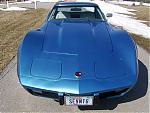



 1980 Corvette - new purchase