When you click on links to various merchants on this site and make a purchase, this can result in this site earning a commission. Affiliate programs and affiliations include, but are not limited to, the eBay Partner Network.
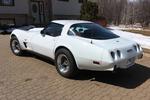
I have a 1979 L 48 Corvette with a 17059207 (I was told it should be a 17059203) Rochester Quadrajet. I'm rebuilding the carb and have found the Primary Rods are 52K (should be .045), Primary Jets are 79 (should be .073), and the Idle pickup tubes should be is almost .039 (should be .035). The Secondary Rods: CH (Matches stock).
Anyway I'm wondering if I should stop putting money in this and change to an Edelbrock or can I just change the stuff above and make it work? As the carb was it did not idle smooth and seemed to run rich and the gas milage was 11 mpg. Other than that it seemed fine and pulled well.
From: At my Bar drinking and wrenching in Lafayette Colorado
Let me make sure I understand your question: You're asking me to explain in detail why stupid people do stupid things... Is that correct..? I'm still working on my book...
A pic or two may tell of a thousand potential issues.
Many of these old Q-Jets were commercially rebuilt years ago , and re-assembled with all mis-matched parts.
If Lars chimes in, he is one of the two best Q-Jet gurus left in the world.
Even Cliff retired, and he wrote the book on Q-Jets.
But a correctly tuned Q-Jet runs better than any other carb out there, bar none, for a stockish type motor.
QJets rarely need much maintenance, except for a worn out accelerator pump or an ethanol resistant one.
Last edited by leigh1322; Mar 20, 2026 at 12:39 PM.
17059203 should have a 72/40 jet/rod combo, the 17059207 should be the same too. 79 jets were never used in factory applications, so it’s clear that someone has been in there before. Have there been any modifications done to the engine that would require the extra fuel? If not I would say your best best is finding a true 17059207 and either rebuilding it yourself or sending it to Lars. An Edelbrock would be a downgrade in every regard.
Your poor fuel economy and rough idle could also be attributed to badly set ignition timing. What is yours set to?
Last edited by Piersonpie; Mar 22, 2026 at 11:23 AM.
I think you need to tell us the configuration of your car before anyone can supply proper information.
- L48 or L82
- Manual or auto transmission
- A/C or no A/C
- stock or modified
I think that you should rebuild/ modify this carb as you will be further ahead doing that, the bolting on an Edelbrock. Reading Cliffs book and learning about your carb will really help understand what's going on in there.....and Lars here on the forum is the go to person for help with Q-jets.
Yeah Leigh1322, it does run rich! Underload it's great though, but floods easy, since it is beginning to warm up.
Piersonpie, I've ordered a combination close to what you suggested from Quadrajetpower.com. No mods have been done to the engine, except the preivous owner(s) stripped all the emission stuff off (there wasn't much). But they did leave me with a lot of vacuum leaks, that I've been dealing with. Engine timing is at 12 BTC.
OMF, the car is a base L48, with AC and is a 4 speed manual. I'm reading Cliffs book now, but just today relized from the rebuild kit vendor that the carb was not original to my vette. It is in really good condition and fooled me by the numbers indicating the correct year.
I am concerned I'm throwing good money after bad. thanks for the encouagement about NOT swapping carbs.
My biggest question is, if by swapping the jets, rods and Idle pickup tubes that the carb will in esence be a 17059203 1979 L-48 Vette carb??
Or is there something else lurking in the carb that has to be changed??
Last edited by jsbowman6; Mar 20, 2026 at 06:58 PM.
That all depends on what air bleeds have been altered in the carb - you need to know the air bleed sizes before making any rational decisions.
Lars, a .0585" shank will barely fit in the the brass cup of the air bleed. What should it be? Can it be replaced if too large. The main air bleed is .119" and same for the air horn bleed.
Last edited by jsbowman6; Mar 21, 2026 at 09:20 AM.
Reason: add picture
From: At my Bar drinking and wrenching in Lafayette Colorado
Good measurements. Your Down Channel Restrictors (DCRs) have been drilled oversized at .058", so there's a good chance the IFRs are oversized, too. It takes a special long drill to check those unless you extract them to check. Check your Idle Air Bleeds, since these will have an effect on transition fuel flow, which affects cruise mixture. Stock size for the DCR is .052". A "performance" size for the DCRs is usually .055". Yes, they can be extracted and replaced.
Your jetting is grossly oversized - GM never used 79 size jets in any application. Your carb is a carb for a '79 305 El Camino, and it was stock jetted at 72/40/CH (not 73/45). If you can locate a set of the stock 40K rods (may to tough to find), you should put your carb back to its stock, baseline setting and then see if it needs to be richened up. If you want to retain the 52K rods, drop the jetting down to 76 and set float level to .320". This will get you jetting similar to the '79 L82 carb, and should be a good baseline to start from. Keep in mind that your idle mixture screws are the "fine thread" screws, which take a lot more "turns out" than the earlier year screws with coarse threads - it is not unusual for the '79 and '80 carbs to run at 8-9 turns out from seated.
I can't see the idle air bypass passage holes in your float bowl - they haven't been plugged, have they?
Would this lump be one of the idle bypass? There is a lump on the other side as well. I know if I blow air in the main jet, air comes up the idle down tube, just saying. If IFR mean Idle down tube, this yes they are 0.039 and I have ordered another pair that are 0.035. I've also previously ordered 2 new jets 74 jets and a pair of 45 primary rods to try out. Thanks for the info on the idle mixture screws, I would never had figured that out, thinking 1.5 to 3 turns should have been enough!!
Last edited by jsbowman6; Mar 21, 2026 at 02:16 PM.
From: At my Bar drinking and wrenching in Lafayette Colorado
The idle air bypass holes in the bowl casting are in the left and right outboard cavities. Commercial builders like to plug these with lead plugs, which screws everything up pretty bad:
The idle air bypass holes in the bowl casting are in the left and right outboard cavities. Commercial builders like to plug these with lead plugs, which screws everything up pretty bad:
Thanks, yes mine has some lead looking stuff in there. Reccon' if I should take that out?
From: At my Bar drinking and wrenching in Lafayette Colorado
Just as suspected - your idle air bypass system has been completely disabled, which is causing you to have to increase throttle opening at idle to expose the majority of the transition slot, causing an over-rich condition and very poor idle, with poor reponse on the idle mixture screws. It can also cause "fuel dribble" from the main discharge nozzles at idle, further contributing to a gross rich condition at idle and off-idle. Classic "hack-work."
From: At my Bar drinking and wrenching in Lafayette Colorado
Let me make sure I understand your question: You're asking me to explain in detail why stupid people do stupid things... Is that correct..? I'm still working on my book...
From: Into the Mystic And yet, despite the look on my face, you're still talking TN
St. Jude Donor '09 thru '25
Originally Posted by lars
Let me make sure I understand your question: You're asking me to explain in detail why stupid people do stupid things... Is that correct..? I'm still working on my book...
From: At my Bar drinking and wrenching in Lafayette Colorado
Yes, it's a commercially rebuilt carb that has been messed up with a lot of "creative" work - all of which is bad... It can probably be saved, but for the cost of the parts and work required, it might be a better idea to locate and procure a good, unmolested, used '79 Vette carb to get the benefit of having the "right" carb with all the correct parts in it.
Lars
Lars, don't you think at this point, any number of a few new spreadbore 650 CFM carbs (you know probably my choice after all these years on the forum, LOL) might be a better option for a L-48 base engine with a 4 speed? Looking for your unbiased opinion.
Just to close out this thread, if it might help somebody. I finished rebuilding the 17059207 carb that came on 1979 Corvette and yes it should be a 1705903. I replaced the idle pickup tubes with 0.035". My down channel restrictions are still at 0.058" (should be 0.052") I replaced the jets with 0.074 jets with 0.045" primary rods (I had already bought them before Lars suggestion). I drilled out the primary shaft and added bushings (I had to take it all apart again due to a slight bend in the shaft to straighten it). I punched out the lead in the idle bypass holes. I set the timing to 12 BTC. The car started right off and idled well, just hi. After moving the vac advance over to a ported connection, I now had control of the idle and could bring it down some.
It has surprised me how many vacuum leaks I have found! Things like the HVAC not routed correctly, caps left off of some of the carb ports, the hot air choke not having the lttle plastic connector form the choke to the carb. Anyway, I think I have them nailed down. This carb has 9 ports not including the fuel inlet!!
The car starts well, even when hot or cold. It idles pretty good, I think I need to readjust the idle fuel/air after finding the last vacuum leak. The care pulls very well. Before, I could tell when the AC compressor kicked on, now I can't. The car seems to drift above 60 MPH without effort. So I'm claiming this as a success and moving on to replacing a leaking AC compressor.







 Quadrajet troubles