When you click on links to various merchants on this site and make a purchase, this can result in this site earning a commission. Affiliate programs and affiliations include, but are not limited to, the eBay Partner Network.
I have a 1973 with a ZZ4. 4-speed car with I am assuming 3.55 gears. My driving profile is cruising with a small amount of "spirited" acceleration from time to time. Not racing, tracking or thrashing on it. The ZZ4 was installed 20+ years ago and never broken in until I got it (still had the plastic plug for the dip stick). The owner at that time developed some serious health issues and it sat for 20+ years until I got it from a local Vette dealer/friend who worked the transaction for the widow. . It had a Holley 750 on it but the carb was not in great shape from sitting. The mechanic installed a carb he had built and was using as a test mule. It is a combo of Holley 750, Quick Fuel and Pro Form parts. It has a large flat spot coming off idle when accelerating. This makes it hard to get moving unless you goose it a few times. Accelerator pump is pumping, bowl levels correct, etc. Tends to leak around the throttle linkage side too. Can not get rid of the stumble. Fuel pump good. Constant 6-7 psi. Pulled bowls off an cleaned all that I could. Very clean carb. New distributor (Zip Corvette Dragon dist) and timed to 12 degree - 35 degrees at RPM. Mechanical advance.
Looking at just buying a new carb at this point and starting over with a good, known baseline. The GM tuned Holley 770 has my attention. I have read many, MANY posts and articles about why one is better than an other, etc etc. That was the version specifically tuned for the ZZ4 (and now ZZ6). Looking for real world input from anyone who has this type of configuration. Not entertaining Edelbrocks or Q-Jets at the moment. Want to keep my fuel delivery setup the way it is.
I see what looks like a cap on your vacuum advance. I would plug it in to a manifold vacuum source and make sure it’s adding 10-12 degrees fully in at 2 inches of vacuum less than what your engine is producing. What is your total mechanical timing all in at? It should be at around 2,800-3,000 RPM.
Ran a q-jet on my ZZ4 for years without issues. I recently installed a sniper 2 FI system and a single plane intake. .It works great too. When I was installing my ZZ4 I think the CFM for the carb was stated to use a 650. I my be wrong as it's been a long time.
Many forum members like the street/truck Avenger squarebore carb like you currently have on the ZZ4 motor.
If you are willing to switch to a spreadbore intake, I can, personally, strongly encourage you to consider the Holley 4175 650 CFM vacuum secondary Qjet replacement spreadbore carb that was on my OEM L-82 from 1985-2014 when I pulled the motor for a complete rebuild/upgrade to a roughly 425-450 Gross HP 355 L-82. I reused the Holley 4175 on the new 355 L-82 with a very minor easy primary jet change. The 4175 is easy to tune (vacuum secondary external spring changes) and primary jets, has smaller primaries with large secondaries like the OEM qjet, is a simple straightforward version of the overly complicated qjet, within 1-2 mpg mileage of the OEM qjet, and is not hard to rebuild. I have rebuilt mine myself 2X over 40 years.....It has been super reliable, making good strong power on 2 different engines, and through 2 DIY rebuilds for minor issues
Last edited by jb78L-82; Mar 22, 2026 at 04:09 PM.
I see what looks like a cap on your vacuum advance. I would plug it in to a manifold vacuum source and make sure it’s adding 10-12 degrees fully in at 2 inches of vacuum less than what your engine is producing. What is your total mechanical timing all in at? It should be at around 2,800-3,000 RPM.
I did look at the timing this AM. Good suggestion. Initial timing was pretty off. It was at 22. I adjusted back to 12. At 3500 RPM I am seeing 44+ of timing. With and without the vacuum advanced hooked up. I have 10+ pounds of vacuum at higher RPMs, zero at idle from the port on my primary metering block.
For the other posts, I do have a spread bore manifold already. It is the original ZZ4 manifold.
For the other posts, I do have a spread bore manifold already. It is the original ZZ4 manifold.
Ok..I am confused? You stated you had a holley 750 and looking at a Holley 770, so I assumed that you had a squarebore carb. Are you using a squarebore carb on a spreadbore manifold. The ZZ4 as you stated is a GM crate engine and yes, uses a spreadbore manifold, a pretty good one at that versus many of the aftermarket ones.
I would strongly suggest you look at a Holley 4175 650 CFM Spreadbore...you do not need a 750 CFM carb on that motor, either way.
Ok..I am confused? You stated you had a holley 750 and looking at a Holley 770, so I assumed that you had a squarebore carb. Are you using a squarebore carb on a spreadbore manifold. The ZZ4 as you stated is a GM crate engine and yes, uses a spreadbore manifold, a pretty good one at that versus many of the aftermarket ones.
I would strongly suggest you look at a Holley 4175 650 CFM Spreadbore...you do not need a 750 CFM carb on that motor, either way.
Roger that, thanks. Yes, using a squarebore carb on a spreadbore manifold. I was looking at the specific GM tuned 770 as that was what GM recommends for that crate motor and GM tunes it for that motor. I do have a ZZ4 spreadbore manifold, but has a squarebore carb currently.
Looking like I should be looking at a 4175 if I end up replacing then. I just like the fact I could get the "correct" carb for that motor from GM and it was ready to run.
I know that a 1980 ZZ4 crate engine with 355 Gross HP does not need or will use all the airflow from a 750CFM carb for 4 reasons:
1. GM has always had a penchant for placing bigger carbs on the vintage engines since that is what enthusiasts expect to see.
2. Carb experts will tell you that a 355 Gross HP engine probably doesnt even need a 650 CFM carb, but closer to 600-625 CFM.
3. My OEM L-82 355 now making around 425-450 Gross HP pulls hard with the spreadbore 650 CFM and never runs out of breath, all the way to 6,000 RPM even with big tube LTH headers and Borla Type S mufflers.
4. The expert former GM engineer who did the bottom end of the L-82 told me explicitly that my Holley 4175 650 CFM spreadbore will run great on the new rebuilt engine with minor primary jetting and he was 100% correct.
I did look at the timing this AM. Good suggestion. Initial timing was pretty off. It was at 22. I adjusted back to 12. At 3500 RPM I am seeing 44+ of timing. With and without the vacuum advanced hooked up. I have 10+ pounds of vacuum at higher RPMs, zero at idle from the port on my primary metering block.
For the other posts, I do have a spread bore manifold already. It is the original ZZ4 manifold.
If you see 44+ with and without vacuum connected, your diaphragm is blown.
I strongly suggest you get the timing fully sorted out before you touch the carb.
Many bog problems are timing related.
Many shops keep a "known good" carb around for testing. Is that what he loaned you? If so it is not the carb.
Actually the ZZ4 manifold will accept spread bore or square bore carbs. The Sniper 2 is a square bore design and I ran in on my original ZZ4 manifold before changing to my Weiand single plane.
I strongly suggest you get the timing fully sorted out before you touch the carb.
Many bog problems are timing related.
Many shops keep a "known good" carb around for testing. Is that what he loaned you? If so it is not the carb.
Concur. Based on screwing around with timing yesterday, I eliminated most of the initial hesitation. Is the carb perfect,probably not. But I'm pretty certain it is mostly timing now. Its a new Dragon Fire unit from Zip they slapped on when I got it. Believe the mechanic set it up for non-vacuum advance and changed springs accordingly. I need him to dive into this as I am not sure of everything they did prior to me getting the car. It was parked for 20+ years and as part of the resale and prep, some of these part installations were, shall I say, hasty. If I have no good answers on the Dist, I will pick a a DUI and move on. Just wish they had the DUIs with the ZZ4 curve and the mech tach option. Its either one or the other with them.
My known good mechanics carb became part of the deal when I got it. Not real data on it.
I know that a 1980 ZZ4 crate engine with 355 Gross HP does not need or will use all the airflow from a 750CFM carb for 4 reasons:
1. GM has always had a penchant for placing bigger carbs on the vintage engines since that is what enthusiasts expect to see.
2. Carb experts will tell you that a 355 Gross HP engine probably doesnt even need a 650 CFM carb, but closer to 600-625 CFM.
3. My OEM L-82 355 now making around 425-450 Gross HP pulls hard with the spreadbore 650 CFM and never runs out of breath, all the way to 6,000 RPM even with big tube LTH headers and Borla Type S mufflers.
4. The expert former GM engineer who did the bottom end of the L-82 told me explicitly that my Holley 4175 650 CFM spreadbore will run great on the new rebuilt engine with minor primary jetting and he was 100% correct.
Thanks! Nice write-up and good advice. Will most likely switch to a 650 once the timing is dialed in. I would rather have the driveability than the max performance. I have my Z06 for the stupid stuff.
If you don’t have them already I would email Lars at v8fastcars@msn.com and ask for a copy of his timing papers. There’s a lot of benefits to the vacuum advance, I would use it.
Couple of suggestions for you:
1) You seem to want to change parts every time something isn't working perfectly. Be advised you are going to have to tune whatever you buy anyway. I would recomment you start by working with what you have and only consider replacing parts when it becomes evident that you cannot make what you have work. The one reason I can think of to change out the carb you have is the fact that you have a squarebore/spreadbore mismatch between your carb and manifold. I have had really bad luck with this. You may want to consider changing out the manifold or the carb for that reason.
2) I agree that a 650 is probably the best choice for this engine, but there is nothing wrong with a 750 or 770. I certainly wouldn't spring for a new carb just because of that.
3) Get your timing worked out before you start playing with the carb. You should have about 12-18 deg. of initial advance with 34-36 deg total mechanical advance all in by about 3000 rpm. Connect your vacuum advance to manifold (unported) vacuum. Vacuum advance tuning is a whole 'nother discussion, but you should have 10-18 deg. (at the crankshaft) of vacuum advance, depending on the camshaft, in addition to the mechanical. A good starting point is about 12 deg. which potentially gives you a maximum lead of 48 deg.
4) Once you have the ignition sorted out, if you still have the bog off idle, and your main jetting is close, you need to tune your accelerator pump.
Throwing parts at the problem is not the answer
Last edited by drwet; Mar 23, 2026 at 09:17 AM.
Reason: Kant spel
Couple of suggestions for you:
1) You seem to want to change parts every time something isn't working perfectly. Be advised you are going to have to tune whatever you buy anyway. I would recomment you start by working with what you have and only consider replacing parts when it becomes evident that you cannot make what you have work. The one reason I can think of to change out the carb you have is the fact that you have a squarebore/spreadbore mismatch between your carb and manifold. I have had really bad luck with this. You may want to consider changing out the manifold or the carb for that reason.
2) I agree that a 650 is probably the best choice for this engine, but there is nothing wrong with a 750 or 770. I certainly wouldn't spring for a new carb just because of that.
3) Get your timing worked out before you start playing with the carb. You should have about 12-18 deg. of initial advance with 34-36 deg total mechanical advance all in by about 3000 rpm. Connect your vacuum advance to manifold (unported) vacuum. Vacuum advance tuning is a whole 'nother discussion, but you should have 10-18 deg. (at the crankshaft) of vacuum advance, depending on the camshaft, in addition to the mechanical. A good starting point is about 12 deg. which potentially gives you a maximum lead of 48 deg.
4) Once you have the ignition sorted out, if you still have the bog off idle, and your main jetting is close, you need to tune your accelerator pump.
Throwing parts at the problem is not the answer
Thanks, and I agree with everything you said. That is the exact same advice I often give in other situations. The push for replacement or new parts was to establish a good baseline on what I actually have. I have actually been working this issue for the past 3 months. The Dist and Carb were both previously "tuned" and I have no clear answer on what was done. Just bits of conversation. The carb is a combo of 3-4 different carbs as it is. But you are right, I am going to deal with what I have for the moment.
Your mechanic " tuned the distributor for no vacuum advance"
That is Very very old school "racer" advice (~50 years out of date). Circle track and drag race cars do not need vac advance. They do not run at part throttle.
EVERY street car NEEDS vacuum advance. Because they run 95% of the time at part throttle. It runs cooler and gets rid of the bogs.
Ask LARS for his timing & vacuum advance papers in an email, they are the best resource around, better than 99% of the other "mechanics" out there.
email him at v8fastcars@msn.com
If your mechanic will not do it, find another tuner. Or learn to do it yourself. Best $7 in parts you will ever spend.
Or spend a couple hundred and buy a Progression tuneable by phone tach drive distributor!
Last edited by leigh1322; Mar 23, 2026 at 10:03 AM.
Your mechanic " tuned the distributor for no vacuum advance"
That is Very very old school "racer" advice. Circle track and drag race cars do not need vac advance. They do not run at part throttle.
EVERY street car NEEDS vacuum advance. Because they run 95% of the time at part throttle. It runs cooler and gets rid of the bogs.
Ask LARS for his timing & vacuum advance papers in an email, they are the best resource around, better than 99% of the other "mechanics" out there.
email him at v8fastcars@msn.com
If your mechanic will not do it, find another tuner. Or learn to do it yourself. Best $7 in parts you will ever spend.
Or spend a couple hundred and buy a Progression tuneable by phone tach drive distributor!
Thanks, I have a copy. Google search takes you right to it. Lars helped me out many years ago on a different 73 I had ten years ago. The ZZ4 manual actually directs the end-user to not use the Vacuum Advance. Hence the confusion.
Really??! Throw those instructions in the nearest circular file!
Quote directly from the manual -
"Set spark timing at 32º before top dead center (BTDC) at 4000 RPM with the vacuum advance line to the distributor disconnected and plugged. This setting will produce 32º of total advance at wide open throttle (WOT). The HEI vacuum advance canister should remain disconnected. This engine is designed to operate using only the internal centrifugal advance to achieve the correct timing curve."
Last edited by Redhook98; Mar 23, 2026 at 11:41 AM.




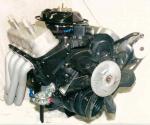



 Another ZZ4 and carb thread