




overheating 70

Thread Starter
Intermediate

Joined: Nov 2002
Posts: 49
Likes: 0
From: Greensboro Georgia
 overheating 70
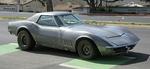
I have a '70 conv. with the 350/300 that has recently begun to overheat after short drives. I check the coolant level before starting off, and top it off if necessary. I first noticed it about three weeks ago when the car was in a parade, and I attributed the high temps to the lack of airflow through the radiator. Since then, however, the car begins to run hot after a few minutes. I replaced the radiator cap today, hoping that the old cap was bad and was not allowing the radiator to build up pressure, but that didn't change anything. My question is what could be the cause of this? Could it be something simple and easy to fix like the thermostat? Or does this sound like something else? :confused:

Safety Car


Joined: Aug 2002
Posts: 3,842
Likes: 230
From: SANTA CRUZ CA
Re: overheating 70 (Coolcar)
I am assuming that by adding coolant to the radiator, you do not have an over-flow bottle to collect expelled coolant. Is this a correct assumption? Normally, with a closed system, the coolant is expelled into the over-flow bottle, and then siphoned back into the radiator as the engine cools. Coolant can be added to the over-flow bottle.
If the replacement of the stat doesn't solve your problem, you may be experiencing a small exhaust head gasket leak into the cooling stream. The symptoms of a exhaust head gasket leak would be an increased and more rapid coolant operating temp, coolant would be expelled into the over-flow bottle to excess, and there would be no return siphoning to the radiator. A simple check after the engine has heated and cooled down, is to slowly remove the radiator cap and listen for air escaping. That would indicate there is pressure in the system.
Let's hope the stat solves your problem, and if it doesn't, let's hope you don't have pressure in the cooling system when the engine is cold. Good luck.......
If the replacement of the stat doesn't solve your problem, you may be experiencing a small exhaust head gasket leak into the cooling stream. The symptoms of a exhaust head gasket leak would be an increased and more rapid coolant operating temp, coolant would be expelled into the over-flow bottle to excess, and there would be no return siphoning to the radiator. A simple check after the engine has heated and cooled down, is to slowly remove the radiator cap and listen for air escaping. That would indicate there is pressure in the system.
Let's hope the stat solves your problem, and if it doesn't, let's hope you don't have pressure in the cooling system when the engine is cold. Good luck.......

Safety Car

Joined: Mar 2002
Posts: 4,411
Likes: 1
From: Okeechobee Florida
Re: overheating 70 (Coolcar)
i have nothing of value to add here...
i just wanted to say that i found it ironic that a post titled "overheating 70" was posted by a member named "CoolCar" :lolg:
sorry but i couldnt resist the obvious...
good luck with your problem... :yesnod:
i just wanted to say that i found it ironic that a post titled "overheating 70" was posted by a member named "CoolCar" :lolg:
sorry but i couldnt resist the obvious...
good luck with your problem... :yesnod:

Safety Car


Joined: Feb 1999
Posts: 3,631
Likes: 14
From: Fountain Hills AZ
Re: overheating 70 (Coolcar)
I agree with the others about replacing the stat as one not opening when it should could cause your symptoms. If you're using a clutch fan, the clutch fan may not be engaging. Another possibility that comes to mind is the water pump. They don't always fail completely or give any visual or audible signs that they are failing. The impellor can corrode until there's not enough left of it to move enough water. The radiator is also a possibility unless you know for sure that it's in good condition.
Melting Slicks


Joined: Jun 2001
Posts: 2,429
Likes: 14
From: CA
Re: overheating 70 (Coolcar)
When does it get hot? If it overheats if you are sitting or driving slowly and it cools at highway speeds, you don't have enough airflow going thru the radiator - which is the job of the clutch fan. An easy way to check it is to warm the motor, then shut it off. Give the fan a spin by hand. It should not spin a complete revolution. If it does, or if it makes any noise, replace it.
If it heats all the time - in traffic or highway, thermostat as others have noted.
If it heats all the time - in traffic or highway, thermostat as others have noted.
Thread Starter
Intermediate
Joined: Nov 2002
Posts: 49
Likes: 0
From: Greensboro Georgia
Re: overheating 70 (SIGNGUY)
i have nothing of value to add here...
i just wanted to say that i found it ironic that a post titled "overheating 70" was posted by a member named "CoolCar" :lolg:
sorry but i couldnt resist the obvious...
good luck with your problem... :yesnod:
i just wanted to say that i found it ironic that a post titled "overheating 70" was posted by a member named "CoolCar" :lolg:
sorry but i couldnt resist the obvious...
good luck with your problem... :yesnod:
I appreciate the replys so far, they have been helpful. I think the clutch fan is okay, because the fan will turn freely when the motor is off. The thing that concerns me is the description that Oldman gave-it sounds similar to what is happening with the car. It actually does have the overflow tank (I just failed to mention it in the original post), and when I stopped the car yesterday after a few minutes of driving, coolant was blowing out the overflow tank on to the ground. There was also pressure in the system after the motor cooled down. Does this mean it's time for more intensive work to be done on the motor (new gaskets, etc.), or could the thermostat still be the culprit? I'll probably change it out sometime later this week, but it sounds like it may shop-time. Any other ideas/opinions?
Safety Car
Joined: Feb 1999
Posts: 3,631
Likes: 14
From: Fountain Hills AZ
Re: overheating 70 (Coolcar)
Puking coolant at shut down is a symptom of overheating but doesn't indicate the cause of the overheating. If the fan turns freely when cold, that's normal but if it turns freely right after shut down and fully warmed up that could indicate a problem with it's clutch. Pressure in the system after shut off is normal until it cools down and the pressure often increases at shutdown because the coolant is no longer circulating through the radiator.
Corvette Stories
The Best of Corvette for Corvette Enthusiasts

Top 10 Most Expensive Corvettes Ever Sold on Bring A Trailer
Brett Foote
10 Things Every Corvette Owner Needs (2026 Edition)
Michael S. Palmer
8 Most "Only Corvette Owners Understand" Quirks and Problems
Pouria Savadkouei
10 Reasons the C6 Z06 is Still A Performance Benchmark After 20 Years
Joe Kucinski
How Much Horsepower Every Corvette Engine "LOST" in 1972
Joe Kucinski
Top 10 DOs and DON'Ts for Protecting Your Convertible Top!
Michael S. Palmer
Top 10 Most Explosive Corvettes Ever Made: Power-to-Weight Ratio Ranked!
Joe Kucinski
150 hp to 1,250 hp: Every Corvette Generation Compared by the Specs That Matter
Joe Kucinski
8 Coolest Corvette Pace Cars (and Replicas) of All Time
Verdad Gallardo


Melting Slicks

Joined: Dec 2000
Posts: 3,407
Likes: 2
From: Carmichael CA
Re: overheating 70 (Coolcar)
It's easy to check to see if it's the T-Stat...just pull the darn thing and don't put another one in. Drive it without a T-Stat and see if it gets hot...it probably won't unless you have some other problem like air flow through the radiator. I don't run a T-Stat in any of my cars, and since 1983 I was a fleet mechanic with 10 cars to watch and they all ran great. The engine warms up to to around 180 with freeway driving anyway...it just takes more time. The benefit is the larger diameter to accomodate faster coolant flow rates and hence carry heat away faster.

Team Owner

Joined: May 2001
Posts: 29,745
Likes: 3
From: Exiled to Richmond, VA - Finally sold my house in Murfreesboro, TN ?? Corner of "Bumf*&k and 'You've got a purdy mouth'."
CI 6-7-8 Veteran
CI-VIII Burnout Champ
St. Jude Donor '06-'10, '13
Re: overheating 70 (Coolcar)
I think the clutch fan is okay, because the fan will turn freely when the motor is off.
When you replace the T-stat make sure to use a new unit, either 160 or 180 temp, and get a "balanced" or "high flow" unit if you can find one. Make sure to get all the air out of the system after re-filling it.
Make sure air will freely move through the radiator. If not, wash it and blow it with some compressed air to clean it out.
When you change the T-stat and have the fluid low, look in through the radiator cap and look at the cores (cross tubes) of the radiator. Do they have gunk built up around them ? If so, have it professionally cleaned. Run the motor before you re-fill the system. Make sure you can see coolant flow out of these cores after the T-stat opens up. Add coolant as the motor is running and continue to watch and make sure coolant moves through the cores. Top it off while the motor is running and is hot enough to have the t-stat open. When it's full, cap it and make sure the overflow bottle has plenty of coolant.
Other things to check are the seals around the fan shroud and around the radiator. Make sure they are all in place to make the air go through the rad. and not around.
Check those items and let us know how it looks when those are done.
P.S. only use distilled water in the radiator. Do not use tap water as the minerals in the water will cause harm later on by plugging up the system.
Thread Starter
Intermediate
Joined: Nov 2002
Posts: 49
Likes: 0
From: Greensboro Georgia
Re: overheating 70 (BSeery)
Thanks for all the info guys. I am strapped for time this week, so it will probably be this weekend before I can work on the car, but I will pull the t-stat, check the fan and the inside of the radiator, and hopefully, it'll be running cool by the end of the weekend. I'll keep ya'll posted.
Thread Starter
Intermediate
Joined: Nov 2002
Posts: 49
Likes: 0
From: Greensboro Georgia
Re: overheating 70 (Coolcar)
Finally got a chance to tinker with the car and it did turn out to be the thermostat. I dropped a new 180 degree on in and everything is fine. I appreciate the input from everyone who helped out. I was hoping it would be something simple and cheap like this, but the problems started so suddenly, I wasn't sure. Thanks again! :seeya