


 The 88 owners manual states "Your engine is designed to operate on premium grade unleaded fuel. However, with the electronic spark control system, you may use either middle or regular grade unleaded fuel at slightly reduced acceleration performance."
Premium or regular?
Advanced

Joined: Mar 2018
Posts: 64
Likes: 13
From: Spartanburg SC

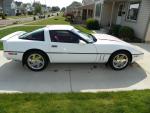
The conundrum I have isn't cost. I finally bought a Corvette and want to use the best gas. Here in South Carolina, if I run medium grade or premium every pump carries the "may contain up to 10% ethanol" warning label. I don't want that "stuff" (feel free to substitute another s-word if you wish), in my new-to-me '94 base model. If I want ethanol free gas, it only comes in 87 octane which (according to this thread) will reduce performance. Do I run mid-grade or premium and hope it doesn't have ethanol, or run ethanol-free regular and lace it with octane booster? Do certain brands offer ethanol free premium? Just asking.
Racer

Joined: May 2013
Posts: 278
Likes: 7
From: Long Valley NJ
The conundrum I have isn't cost. I finally bought a Corvette and want to use the best gas. Here in South Carolina, if I run medium grade or premium every pump carries the "may contain up to 10% ethanol" warning label. I don't want that "stuff" (feel free to substitute another s-word if you wish), in my new-to-me '94 base model. If I want ethanol free gas, it only comes in 87 octane which (according to this thread) will reduce performance. Do I run mid-grade or premium and hope it doesn't have ethanol, or run ethanol-free regular and lace it with octane booster? Do certain brands offer ethanol free premium? Just asking.
https://www.pure-gas.org/index.jsp?stateprov=SC

Team Owner


Joined: Jul 2004
Posts: 28,461
Likes: 3,288
From: Hartford WI
The conundrum I have isn't cost. I finally bought a Corvette and want to use the best gas.
Here in South Carolina, if I run medium grade or premium every pump carries the "may contain up to 10% ethanol" warning label.
I don't want that "stuff" (feel free to substitute another s-word if you wish), in my new-to-me '94 base model. If I want ethanol free gas, it only comes in 87 octane which (according to this thread) will reduce performance. Do I run mid-grade or premium and hope it doesn't have ethanol, or run ethanol-free regular and lace it with octane booster? Do certain brands offer ethanol free premium? Just asking.
Here in South Carolina, if I run medium grade or premium every pump carries the "may contain up to 10% ethanol" warning label.
I don't want that "stuff" (feel free to substitute another s-word if you wish), in my new-to-me '94 base model. If I want ethanol free gas, it only comes in 87 octane which (according to this thread) will reduce performance. Do I run mid-grade or premium and hope it doesn't have ethanol, or run ethanol-free regular and lace it with octane booster? Do certain brands offer ethanol free premium? Just asking.
That's different from here. Most gas is ethanol and most often it is the 93 that is pure.
Exactly what is your issue with ethanol? That it eats injectors that are Multec injectors? For the hassle, I'd switch to some Bosch 3 and be happy. Max power? Definitely gas by a whopping 2.33% so if you are racing for a prize purse, I'd go with pure gas. If not, I really don't think the hassle is worth it. Here is what it takes. You are going to have to map out where each pure gas station is and go there only. Sure, there is the cool factor but it gets old. I could get pure gas but I'd have to drive 13 minutes each way, out of my way and have nothing there so is it worth it? IDK about you. Not to me
My suggestion is to just change the injectors if you have Multecs and fill up everywhere you are low instead of having to steer yourself to some location. Yes, I once had it outside my house but even then, it is inconvenient when you are somewhere else and have to hope you make it home to fill up or fill up before leaving. I didn't see enough of an ROI. Just my $0.02.


Race Director

Joined: Oct 2008
Posts: 17,982
Likes: 1,074
From: Lansing MI
Advanced
Joined: Mar 2018
Posts: 64
Likes: 13
From: Spartanburg SC
Thanks for the list of stations with pure gas. Should've known there'd be something like that on the web. I guess by best I'm really looking for a compromise, a grade of gas that'll give me decent performance and not be harmful to the engine. I've got a custom van from the '80s that I run regular 87 octane ethanol free gas in and it does fine. You're right though, it is a drag having to go out of my way or plan a trip based on a gas station. Being brand new to Corvettes I wasn't aware there were injectors I could install that would be more tolerant of ethanol. I will probably take this approach in the near future.
Team Owner
Joined: Jul 2004
Posts: 28,461
Likes: 3,288
From: Hartford WI
Thanks for the list of stations with pure gas. Should've known there'd be something like that on the web. I guess by best I'm really looking for a compromise, a grade of gas that'll give me decent performance and not be harmful to the engine. I've got a custom van from the '80s that I run regular 87 octane ethanol free gas in and it does fine. You're right though, it is a drag having to go out of my way or plan a trip based on a gas station. Being brand new to Corvettes I wasn't aware there were injectors I could install that would be more tolerant of ethanol. I will probably take this approach in the near future.
Actually, I would suspect that those injectors were in other cars but most of them have already been processed into other things so you don't hear of them. When the time comes, give FIC a call and he will set you up right. Get remans since they have been tested and on a year warranty so why buy new?
Le Mans Master


Joined: Oct 2004
Posts: 6,314
Likes: 508
From: South-central Missouri

But! As Tom points out, this doesn't apply to someone driving a car across country...unless you're doing a
Advanced
Joined: Nov 2016
Posts: 54
Likes: 8
Interesting that in the rather comprehensive list of "pure gas" stations, many of the listings are years out of date, at least in Illinois. Also, there are none listed anywhere near urban/suburban Chicago (which is entirely likely) which leaves the rest in rural areas (relatively) or at marinas and small airports, which may or may not have the correct pumps. Don't get me wrong... it's a great list though with lots of good info; just check dates for reviews before going out of your way for pure gas that might not exist.
Corvette Stories
The Best of Corvette for Corvette Enthusiasts

Top 10 Most Expensive Corvettes Ever Sold on Bring A Trailer
Brett Foote
10 Things Every Corvette Owner Needs (2026 Edition)
Michael S. Palmer
8 Most "Only Corvette Owners Understand" Quirks and Problems
Pouria Savadkouei
10 Reasons the C6 Z06 is Still A Performance Benchmark After 20 Years
Joe Kucinski
How Much Horsepower Every Corvette Engine "LOST" in 1972
Joe Kucinski
Top 10 DOs and DON'Ts for Protecting Your Convertible Top!
Michael S. Palmer
Top 10 Most Explosive Corvettes Ever Made: Power-to-Weight Ratio Ranked!
Joe Kucinski
150 hp to 1,250 hp: Every Corvette Generation Compared by the Specs That Matter
Joe Kucinski
8 Coolest Corvette Pace Cars (and Replicas) of All Time
Verdad Gallardo
Team Owner


Joined: Sep 2001
Posts: 62,153
Likes: 1,731
From: Athens AL
C7 of the Year - Unmodified Finalist 2021
C4 of Year Finalist (performance mods) 2019
The conundrum I have isn't cost. I finally bought a Corvette and want to use the best gas. Here in South Carolina, if I run medium grade or premium every pump carries the "may contain up to 10% ethanol" warning label. I don't want that "stuff" (feel free to substitute another s-word if you wish), in my new-to-me '94 base model. If I want ethanol free gas, it only comes in 87 octane which (according to this thread) will reduce performance. Do I run mid-grade or premium and hope it doesn't have ethanol, or run ethanol-free regular and lace it with octane booster? Do certain brands offer ethanol free premium? Just asking.
Last edited by vader86; Apr 10, 2018 at 05:39 PM.
Team Owner
Joined: Jul 2004
Posts: 28,461
Likes: 3,288
From: Hartford WI
Most places will not offer midgrade or premium E0, you'll see more 87, partially because of lawn equipment only wanting that and then some people who have old cars or those that don't know any better and/or dont care. Really doesnt depend on brands of gas. Usually it'll be a mom & pop store that goes with E0, not a chain. Check the link given above and see what you can find nearby.
Drifting


Joined: Feb 2008
Posts: 1,537
Likes: 177
From: NE Ohio
2024 C4 of the Year Finalist - Unmodified
How many knocks before ESC retards timing? How soon does the ESC return the timing? As this process keeps repeating why is it no one thinks those knocks don't do damage? That is the question.
Team Owner
Joined: Jul 2004
Posts: 28,461
Likes: 3,288
From: Hartford WI
IIRC the ECM retarded timing soon as it sees knock till the knock stops and after a set duration tries to raise it till it hears knock again. How much damage Probably not much. Cumulative effect? Nobody has said yet

Team Owner

Joined: Aug 2004
Posts: 21,543
Likes: 3,216
From: Park City Utah
Because the engine can tolerate some knocking w/o damage. It's not like one typical knock event is going to blow a hole in the piston, on a stock or stockish engine. I've seen some engines (L03) knock so badly that they sound like a diesel...and they go on and on running like that w/no issue.

Le Mans Master
Joined: Aug 2017
Posts: 6,940
Likes: 1,490
From: New Jersey
A pretty good snack on a screwdriver with a 5 lb sledge got my timing to decrease. Just tapping around didn't. It takes a pretty decent knock before it will. My throw out bearing knock doesn't seem to even be picked up by the sensor.
Team Owner
Joined: Jul 2004
Posts: 28,461
Likes: 3,288
From: Hartford WI
https://www.haltech.com/knock-control/
To most accurately detect knock in your engine with Elite ECU we try to focus in on the specific frequency of noise that knock makes, this helps eliminate background noise. Because knock causes vibration (noise) at a certain frequency in your engine, just like say G in music is a noise certain frequency and an F is a noise at a different frequency, different engines have difference frequencies of knock.
The knock frequency setting on the knock detection tab in the ESP software is telling the ECU “you need to listen out for this frequency of noise, because that is knock” or following on from the music analogy, the ECU is seperating the G’s from the E’s and all the other notes that the band may be playing at the same time.
The big question then is how do we find what that exact frequency is for our engine? There are a couple of ways to answers to this.
We can use an online formula which will normally get us close. These normally look something like this: Knock Frequency = 900,000/(π×0.5 ×cylinder bore diameter ) which equates to roughly Knock Frequency= 573,000/(bore diameter).
The knock frequency setting on the knock detection tab in the ESP software is telling the ECU “you need to listen out for this frequency of noise, because that is knock” or following on from the music analogy, the ECU is seperating the G’s from the E’s and all the other notes that the band may be playing at the same time.
The big question then is how do we find what that exact frequency is for our engine? There are a couple of ways to answers to this.
We can use an online formula which will normally get us close. These normally look something like this: Knock Frequency = 900,000/(π×0.5 ×cylinder bore diameter ) which equates to roughly Knock Frequency= 573,000/(bore diameter).
Le Mans Master
Joined: Aug 2017
Posts: 6,940
Likes: 1,490
From: New Jersey
What frequency was your self created knock? I don't think it picks up every sound otherwise the constant engine noise will have you retarding timing every explosion it gets. I think it has to be within a certain frequency to rattle the piezoelectric thingy. It has to be a certain frequency not any noise or you would have your cylinder explosions considered knock.
https://www.haltech.com/knock-control/
https://www.haltech.com/knock-control/
Team Owner
Joined: Jul 2004
Posts: 28,461
Likes: 3,288
From: Hartford WI
My hunch is that the softer one didn't get the right frequency while the louder one somehow got the right frequency so it registered. What you seem to be saying is that it has to be loud enough (hitting harder) to be heard (register as an event). What I am reading is that it has to be of a certain frequency to be registering as an event.

Le Mans Master
Joined: Aug 2017
Posts: 6,940
Likes: 1,490
From: New Jersey
So you are saying it is intensity or volume that will cause it to register and not the frequency? That creates a lot of questions since most of what I am reading says it looks for a certain frequency. They have a calculation for frequency so you can select the appropriate KS for your application based on diameter of the piston but nothing based on how loud it is.
My hunch is that the softer one didn't get the right frequency while the louder one somehow got the right frequency so it registered. What you seem to be saying is that it has to be loud enough (hitting harder) to be heard (register as an event). What I am reading is that it has to be of a certain frequency to be registering as an event.
My hunch is that the softer one didn't get the right frequency while the louder one somehow got the right frequency so it registered. What you seem to be saying is that it has to be loud enough (hitting harder) to be heard (register as an event). What I am reading is that it has to be of a certain frequency to be registering as an event.
Last edited by 84 4+3; Apr 12, 2018 at 02:24 PM.
Team Owner
Joined: Jul 2004
Posts: 28,461
Likes: 3,288
From: Hartford WI
The 84 could also be vastly different than later c4s. I get knock counts around 100 beating the snot out of it, but it is mainly on shifts which for the most part would be the synchros. Data logging shows those counts cause no timing to be pulled so obviously they aren't bad. My throw out bearing sounds like a knock at idle and it's loud as hell and doesn't trip it up.

Burning Brakes


Joined: Jan 2017
Posts: 961
Likes: 237
From: Diamondhead Mississippi
St. Jude Donor '17-'18-'19-'20-'21-'22
It appears in this article that it is not just the frequency but the intensity (loudness) that creates a varying voltage by the knock sensor. Much like a tuning fork will always vibrate at a specific frequency when struck. The difference that you can hear is that when you hit with a hard object, more energy is transferred in the impact, making it ring louder, but with the same frequency.
https://www.azosensors.com/article.aspx?ArticleID=50
https://www.azosensors.com/article.aspx?ArticleID=50