


Be Cool radiator, not impressed!

Le Mans Master


Joined: Jan 2003
Posts: 8,596
Likes: 19
From: Portland Oregon

Originally Posted by GeosFun
TJ,
For what it is worth, I had about a 480FWHP, 496 cu inch carburated engine in my 1971 GMC 3/4 ton (original 401 BBC truck) and it always ran normal engine temps (it gets plenty hot here in Redding in the summers, like 105 to 112+). Mine also had air and power steer/power brakes/TH400 transmission. All it had was a fan shroud around the mechanical fan. I do not know the differences between the two year's radiators. The 502 should run cool.
For what it is worth, I had about a 480FWHP, 496 cu inch carburated engine in my 1971 GMC 3/4 ton (original 401 BBC truck) and it always ran normal engine temps (it gets plenty hot here in Redding in the summers, like 105 to 112+). Mine also had air and power steer/power brakes/TH400 transmission. All it had was a fan shroud around the mechanical fan. I do not know the differences between the two year's radiators. The 502 should run cool.
I think we may have found the problem. That integrated fan shround with the twin fans is causing an air flow restriction. The aluminum shrould looks pretty but it is totally enclosed with the exception of the cutouts for the two fans. I spoke to the Northern engineer yesterday and they have redisigned the shroud by louvering it. Their suggestion is that I return it or have the shroud louvered locally at their cost. Today I am going to remove the shroud and install the single fan that I had on the engine before, drive and see what it does.

Pro

Joined: Nov 2004
Posts: 637
Likes: 0
From: Perth Amboy N.J.
i run 93 lt1 s/c stock rad. 160 stat fans kick on at 187. on highway in 100 degrees outside, i run 178. in traffic a/c on never see 200. a proper single core rad. will cool better then a 2 core. bar none. no garbage on ect. clean and in good condition.

Former Vendor
Joined: Jan 2000
Posts: 5,593
Likes: 631
From: Brighton
Originally Posted by bacardioil
i run 93 lt1 s/c stock rad. 160 stat fans kick on at 187. on highway in 100 degrees outside, i run 178. in traffic a/c on never see 200. a proper single core rad. will cool better then a 2 core. bar none. no garbage on ect. clean and in good condition.

Race Director


Joined: Sep 2000
Posts: 17,298
Likes: 33
From: The Top of Utah
Originally Posted by Tom DeWitt
Think about this for a second...if the flow is too fast through the radiator to remove the heat, then why isn't it too fast to pick up the heat from the engine?
BINGO!!!
That old "wives tail" has been floating around forever. I first heard it as an argument as why not to remove a thermostat. It STILL is a bad idea to remove the stat, but not because the coolant won't be in the radiator long enough to cool.
RACE ON!!!

Team Owner


Joined: Oct 2004
Posts: 81,241
Likes: 3,063
From: altered state
St. Jude Donor '05
IMO a larger radiator needs a stronger fan to truly realize its cooling potential unless you have a large grill opening to force the air through which the vette doesn't. Otherwise it would act as a "big radiator with too small of a fan, no?"How can it move enough air over the increased area to scrub off heat? I say upgrade the fan system, makes sense.
By the way, there's nothing wrong with having a motor run at 180 or so. The only reason GM has them running that hot is for emissions, that's it!
Heck, look at Joe Sherman;he built a 600 hp sb that holds an oil temp of 150. Didn't hear of anyfailure...Back on topic-
By the way, there's nothing wrong with having a motor run at 180 or so. The only reason GM has them running that hot is for emissions, that's it!
Heck, look at Joe Sherman;he built a 600 hp sb that holds an oil temp of 150. Didn't hear of anyfailure...Back on topic-
Last edited by cv67; Aug 24, 2005 at 07:02 PM.

Melting Slicks


Joined: Mar 2001
Posts: 2,149
Likes: 303
From: Timra, Sweden
Let us start with a few facts.
* You have heat transfer from the water to the radiator core.
* You have heat transfer from the radiator core to the air passing thru it.
* The amout of heat transfered depends on the contact area and the temperature differance.
* The 'water' side of the radiator is almost never a problem because the heat flows very easy from the water to the radiator core. The radiator core temp and the water temp will be almost identical.
Let us assume that we have a constant flow of air thru the radiator.
If you have a slow flowing water then it will spend a long time in the radiator and be cool when exiting the radiator.
With higher water flow it will spend less time in the radiator and it will be hotter at the other end.
When is the most heat removed?
WRONG !!! You remove more heat when you have the higher water flow! Removing 5 degrees from thee gallons is better than removing 10 degrees from one gallon.
The reson is the temperature differance. With the slower moving water you get less temperature differance between the air and the colder side of the radiator. By increasing water flow you keep the 'colder' side of the radiator hot, and that means that more heat is transferd to the air at that side.
It is the same thing as the 'air' part of the radiator. You want as much air flow as possible, and as cold air as possible to remove the most heat. Slowing the air down will raise the air temp behind the radiator, but that does not mean that more heat is removed.
A thicker radiator core can transfer more heat from water to air, but you might need higher water flow to make the most of it. If it cools down the water by the time the water is half way thru the radiator, then the other half does not remove much heat. This situation will WASTE half the air flow ... By speeding up the water flow to keep the whole radiator warm you use all the air availabe to remove heat.
* You have heat transfer from the water to the radiator core.
* You have heat transfer from the radiator core to the air passing thru it.
* The amout of heat transfered depends on the contact area and the temperature differance.
* The 'water' side of the radiator is almost never a problem because the heat flows very easy from the water to the radiator core. The radiator core temp and the water temp will be almost identical.
Let us assume that we have a constant flow of air thru the radiator.
If you have a slow flowing water then it will spend a long time in the radiator and be cool when exiting the radiator.
With higher water flow it will spend less time in the radiator and it will be hotter at the other end.
When is the most heat removed?
WRONG !!! You remove more heat when you have the higher water flow! Removing 5 degrees from thee gallons is better than removing 10 degrees from one gallon.
The reson is the temperature differance. With the slower moving water you get less temperature differance between the air and the colder side of the radiator. By increasing water flow you keep the 'colder' side of the radiator hot, and that means that more heat is transferd to the air at that side.
It is the same thing as the 'air' part of the radiator. You want as much air flow as possible, and as cold air as possible to remove the most heat. Slowing the air down will raise the air temp behind the radiator, but that does not mean that more heat is removed.
A thicker radiator core can transfer more heat from water to air, but you might need higher water flow to make the most of it. If it cools down the water by the time the water is half way thru the radiator, then the other half does not remove much heat. This situation will WASTE half the air flow ... By speeding up the water flow to keep the whole radiator warm you use all the air availabe to remove heat.

Le Mans Master
Joined: Feb 1999
Posts: 9,922
Likes: 38
From: South Carolina
St. Jude Donor '03 & '05
Originally Posted by cuisinartvette
IMO a larger radiator needs a stronger fan to truly realize its cooling potential unless you have a large grill opening to force the air through which the vette doesn't. Otherwise it would act as a "big radiator with too small of a fan, no?"How can it move enough air over the increased area to scrub off heat? I say upgrade the fan system, makes sense.
By the way, there's nothing wrong with having a motor run at 180 or so. The only reason GM has them running that hot is for emissions, that's it!
Heck, look at Joe Sherman;he built a 600 hp sb that holds an oil temp of 150. Didn't hear of anyfailure...Back on topic-
By the way, there's nothing wrong with having a motor run at 180 or so. The only reason GM has them running that hot is for emissions, that's it!
Heck, look at Joe Sherman;he built a 600 hp sb that holds an oil temp of 150. Didn't hear of anyfailure...Back on topic-
Corvette Stories
The Best of Corvette for Corvette Enthusiasts

10 Reasons the C6 Z06 is Still A Performance Benchmark After 20 Years
Joe Kucinski
How Much Horsepower Every Corvette Engine "LOST" in 1972
Joe Kucinski
Top 10 DOs and DON'Ts for Protecting Your Convertible Top!
Michael S. Palmer
Top 10 Most Explosive Corvettes Ever Made: Power-to-Weight Ratio Ranked!
Joe Kucinski
150 hp to 1,250 hp: Every Corvette Generation Compared by the Specs That Matter
Joe Kucinski
8 Coolest Corvette Pace Cars (and Replicas) of All Time
Verdad Gallardo
Top 10 Corvette Engines RANKED by Peak Torque (70+ Years of Muscle!)
Joe Kucinski
Corvette ZR1X Will Be Pacing the Indy 500, And Could Probably Race, Too!
Verdad Gallardo
Top 10 Corvettes Coming to Mecum Indy 2026!
Brett Foote

Melting Slicks
Joined: Jun 2000
Posts: 2,386
Likes: 4
From: Dallas / Fort Worth, Texas Texas
I installed a "Be Cool" radiator in my '81 and it keeps the C3 cool on even the hottest days with the A/C on - I have small dual electric fans and have had no heating problems at all (I could not say this with my stock radiator, it got hot as hell in the summer).

Pro
Joined: Apr 2005
Posts: 552
Likes: 0
From: TEMECULA CALIFORNIA
St. Jude Donor '06-'07-'08-'09
[QUOTE=SunCr] If anything, it drags the alternator down and if you're using the stock alternator, it's probably putting out a measly 30 amps at idle - not enough for both fans, the a/c on high and everthing else. Once the volts go, the fans slow down and the temps go up. Since all is new, I'd verify the dash readout by scanning it and comparing it to the CTS. )
THAT'S AN INTERESTING THOUGHT. I NOTICED LAST WEEK THAT WHEN BOTH OF THE RADIATOR FANS WERE ON IN TRAFFIC THAT THE
A/C FAN LOST POWER . SO THEN, LIKEWISE, THE RADIATOR FANS WOULD NOT OPERATE AS EFFICIENTLY. HOW DOES ONE CHECK TO SEE IF THE ALT IS A HIGH OUTPUT VERSION OR NOT? AND ANY RECOMMENDATIONS FOR ONE?
THAT'S AN INTERESTING THOUGHT. I NOTICED LAST WEEK THAT WHEN BOTH OF THE RADIATOR FANS WERE ON IN TRAFFIC THAT THE
A/C FAN LOST POWER . SO THEN, LIKEWISE, THE RADIATOR FANS WOULD NOT OPERATE AS EFFICIENTLY. HOW DOES ONE CHECK TO SEE IF THE ALT IS A HIGH OUTPUT VERSION OR NOT? AND ANY RECOMMENDATIONS FOR ONE?
Le Mans Master
Joined: May 2005
Posts: 7,348
Likes: 2,272
From: Central Maryland
Originally Posted by JoBy
Let us start with a few facts.
* You have heat transfer from the water to the radiator core.
* You have heat transfer from the radiator core to the air passing thru it.
* The amout of heat transfered depends on the contact area and the temperature differance.
* The 'water' side of the radiator is almost never a problem because the heat flows very easy from the water to the radiator core. The radiator core temp and the water temp will be almost identical.
Let us assume that we have a constant flow of air thru the radiator.
If you have a slow flowing water then it will spend a long time in the radiator and be cool when exiting the radiator.
With higher water flow it will spend less time in the radiator and it will be hotter at the other end.
When is the most heat removed?
WRONG !!! You remove more heat when you have the higher water flow! Removing 5 degrees from thee gallons is better than removing 10 degrees from one gallon.
The reson is the temperature differance. With the slower moving water you get less temperature differance between the air and the colder side of the radiator. By increasing water flow you keep the 'colder' side of the radiator hot, and that means that more heat is transferd to the air at that side.
It is the same thing as the 'air' part of the radiator. You want as much air flow as possible, and as cold air as possible to remove the most heat. Slowing the air down will raise the air temp behind the radiator, but that does not mean that more heat is removed.
A thicker radiator core can transfer more heat from water to air, but you might need higher water flow to make the most of it. If it cools down the water by the time the water is half way thru the radiator, then the other half does not remove much heat. This situation will WASTE half the air flow ... By speeding up the water flow to keep the whole radiator warm you use all the air availabe to remove heat.
* You have heat transfer from the water to the radiator core.
* You have heat transfer from the radiator core to the air passing thru it.
* The amout of heat transfered depends on the contact area and the temperature differance.
* The 'water' side of the radiator is almost never a problem because the heat flows very easy from the water to the radiator core. The radiator core temp and the water temp will be almost identical.
Let us assume that we have a constant flow of air thru the radiator.
If you have a slow flowing water then it will spend a long time in the radiator and be cool when exiting the radiator.
With higher water flow it will spend less time in the radiator and it will be hotter at the other end.
When is the most heat removed?
WRONG !!! You remove more heat when you have the higher water flow! Removing 5 degrees from thee gallons is better than removing 10 degrees from one gallon.
The reson is the temperature differance. With the slower moving water you get less temperature differance between the air and the colder side of the radiator. By increasing water flow you keep the 'colder' side of the radiator hot, and that means that more heat is transferd to the air at that side.
It is the same thing as the 'air' part of the radiator. You want as much air flow as possible, and as cold air as possible to remove the most heat. Slowing the air down will raise the air temp behind the radiator, but that does not mean that more heat is removed.
A thicker radiator core can transfer more heat from water to air, but you might need higher water flow to make the most of it. If it cools down the water by the time the water is half way thru the radiator, then the other half does not remove much heat. This situation will WASTE half the air flow ... By speeding up the water flow to keep the whole radiator warm you use all the air availabe to remove heat.
While speeding up the flow of coolant through the radiator will cause each molecule of coolant to spend less time in the core shedding heat, it will also cause more molecules to flow through the core. This must be kept in mind when considering the thermal dynamics involved.
It also should be remembered that the true objective is to transfer heat from the engine to the atmosphere. Moving coolant through the radiator very slowly will allow each molecule of liquid that passes through the core to shed more heat, but there will be a corresponding reduction in the amount of heat that the liquid absorbs from the engine, as a result of the reduced rate of flow.
Be well,
SJW
Race Director
Joined: Sep 2000
Posts: 17,298
Likes: 33
From: The Top of Utah
Originally Posted by SJW
This is correct.
Moving coolant through the radiator very slowly will allow each molecule of liquid that passes through the core to shed more heat, but there will be a corresponding reduction in the amount of heat that the liquid absorbs from the engine, as a result of the reduced rate of flow.
Moving coolant through the radiator very slowly will allow each molecule of liquid that passes through the core to shed more heat, but there will be a corresponding reduction in the amount of heat that the liquid absorbs from the engine, as a result of the reduced rate of flow.
If "Moving coolant through the radiator very slowly will allow each molecule of liquid that passes through the core to shed more heat", then conversely, Moving coolant through the engine very slowly will allow each molecule of liquid that passes through the block and heads to absorb more heat.
Remember, too, that part of the ability of the coolant to absorb or reject heat is dependent on the difference in temps. If the coolant gets cooler by traveling more slowly through the radiator, then it will be able to absorb more heat from the engine, first because it was cooler going in and second because it was in there longer.
If the time in the radiator is increased, so will the time in the engine.
RACE ON!!!



Burning Brakes

Joined: Sep 2003
Posts: 875
Likes: 0
From: Louisville KY
Originally Posted by CFI-EFI
Too bad this isn't.
If "Moving coolant through the radiator very slowly will allow each molecule of liquid that passes through the core to shed more heat", then conversely, Moving coolant through the engine very slowly will allow each molecule of liquid that passes through the block and heads to absorb more heat.
Remember, too, that part of the ability of the coolant to absorb or reject heat is dependent on the difference in temps. If the coolant gets cooler by traveling more slowly through the radiator, then it will be able to absorb more heat from the engine, first because it was cooler going in and second because it was in there longer.
If the time in the radiator is increased, so will the time in the engine.
RACE ON!!!
If "Moving coolant through the radiator very slowly will allow each molecule of liquid that passes through the core to shed more heat", then conversely, Moving coolant through the engine very slowly will allow each molecule of liquid that passes through the block and heads to absorb more heat.
Remember, too, that part of the ability of the coolant to absorb or reject heat is dependent on the difference in temps. If the coolant gets cooler by traveling more slowly through the radiator, then it will be able to absorb more heat from the engine, first because it was cooler going in and second because it was in there longer.
If the time in the radiator is increased, so will the time in the engine.
RACE ON!!!
This is a great thread though... very good discussion. Close to *sticky* material.

Team Owner
Joined: May 2002
Posts: 24,337
Likes: 25
From: San Diego , CA Double Yellow DirtBags 1985..Z51..6-speed
Mine creeps up to 228-230 with the stock rad, but as soon as the fan fires up, it drops like a rock.
I also have an override switch wired to both fans, but I never need that in traffic, only at the track.. I'll leave the car running, idling, and the fans will pull it all the way down to 185 (I have a 180 tstat)
I also have an override switch wired to both fans, but I never need that in traffic, only at the track.. I'll leave the car running, idling, and the fans will pull it all the way down to 185 (I have a 180 tstat)
Team Owner
Joined: May 2002
Posts: 24,337
Likes: 25
From: San Diego , CA Double Yellow DirtBags 1985..Z51..6-speed
Originally Posted by kpforce1
Thermo Dynamics.... ugh, stop. You all are reminding me of that god awfull class in college. This is a great thread though... very good discussion. Close to *sticky* material.
This is a great thread though... very good discussion. Close to *sticky* material.Moving the water faster WILL help. But, what CFI said is very true, and often overlooked. It's just not that simple. To see why it helps, you'll have to understand LMTD (log mean temperature difference). Joby touches on this when he talks about the temperature on the cold side of the radiator.

Last edited by CentralCoaster; Aug 26, 2005 at 10:58 PM.
Burning Brakes
Joined: Aug 2005
Posts: 1,239
Likes: 0
From: North Central Indiana
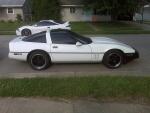
I wish mine would run a bit cooler. When I am stuck in traffic, mine gets up to about 228 or so and I start getting squimish. I am not sure what is normal for an 89 with auto trans at 85 degrees, but I would like it to be lower.
At what point should we start to worry, temp wise ?
Also there is a piece of smooth plastic under the filter inlet box. It seems like it is there to "buffer" any movement so that the air box doesn't wear away at the piece underneath.
I am new to all of this obviously but I am curious and I know from lurking on these formus, that all of you are the most knowledgeable people on the subject.
Thank you all for the comraderie.
Not trying to Hijack the thread. I am just interested in cooler engine temps. I don't have to worry about emission testing at the moment. We don't have anything like that in Indiana. I just want to make sure I am not doing any damage while I am waiting for the Car Hops to bring out my Hot Dogs
At what point should we start to worry, temp wise ?
Also there is a piece of smooth plastic under the filter inlet box. It seems like it is there to "buffer" any movement so that the air box doesn't wear away at the piece underneath.
I am new to all of this obviously but I am curious and I know from lurking on these formus, that all of you are the most knowledgeable people on the subject.
Thank you all for the comraderie.
Not trying to Hijack the thread. I am just interested in cooler engine temps. I don't have to worry about emission testing at the moment. We don't have anything like that in Indiana. I just want to make sure I am not doing any damage while I am waiting for the Car Hops to bring out my Hot Dogs
Last edited by Scott-89; Aug 26, 2005 at 11:20 PM.
Melting Slicks
Joined: Jun 2000
Posts: 2,386
Likes: 4
From: Dallas / Fort Worth, Texas Texas
Originally Posted by Scott-89
I wish mine would run a bit cooler. When I am stuck in traffic, mine gets up to about 228 or so and I start getting squimish. I am not sure what is normal for an 89 with auto trans at 85 degrees, but I would like it to be lower.
At what point should we start to worry, temp wise ?
Also there is a piece of smooth plastic under the filter inlet box. It seems like it is there to "buffer" any movement so that the air box doesn't wear away at the piece underneath.
I am new to all of this obviously but I am curious and I know from lurking on these formus, that all of you are the most knowledgeable people on the subject.
Thank you all for the comraderie.
Not trying to Hijack the thread. I am just interested in cooler engine temps. I don't have to worry about emission testing at the moment. We don't have anything like that in Indiana. I just want to make sure I am not doing any damage while I am waiting for the Car Hops to bring out my Hot Dogs
At what point should we start to worry, temp wise ?
Also there is a piece of smooth plastic under the filter inlet box. It seems like it is there to "buffer" any movement so that the air box doesn't wear away at the piece underneath.
I am new to all of this obviously but I am curious and I know from lurking on these formus, that all of you are the most knowledgeable people on the subject.
Thank you all for the comraderie.
Not trying to Hijack the thread. I am just interested in cooler engine temps. I don't have to worry about emission testing at the moment. We don't have anything like that in Indiana. I just want to make sure I am not doing any damage while I am waiting for the Car Hops to bring out my Hot Dogs
My friend put a Be Cool in his Big Block '70 & since he did that - racing or not, it never overheats.

Burning Brakes
Joined: Aug 2005
Posts: 1,239
Likes: 0
From: North Central Indiana
According to my codes I have a better radiator. It does great when just tooling around town but it seems to be a bit hot ( well to me anyway ) when I have to sit for a few minutes.
I have a 66 GTO as well and it doesn't seem to run near as hot as my new addition. I think I just need to get used to the fact that they are made to run a tad more hot to help with emissions. I might just try a lower temp thermo and fix the fans to come on a little sooner and see what happens.
I think I just have a little Stage Freight as it were. I have a good apptitude for all things computer related and think I will like to expand on my knowledge with the inner workings.
I am just used to the old school engines and have never made the connection between computer and car.. I will just do some studying and try to combine the 2.
I have a 66 GTO as well and it doesn't seem to run near as hot as my new addition. I think I just need to get used to the fact that they are made to run a tad more hot to help with emissions. I might just try a lower temp thermo and fix the fans to come on a little sooner and see what happens.
I think I just have a little Stage Freight as it were. I have a good apptitude for all things computer related and think I will like to expand on my knowledge with the inner workings.
I am just used to the old school engines and have never made the connection between computer and car.. I will just do some studying and try to combine the 2.
Last edited by Scott-89; Aug 26, 2005 at 11:43 PM.