



Post your hp and ET...

Safety Car


Joined: Feb 1999
Posts: 4,724
Likes: 16
From: Little Elm TX

Originally Posted by Nathan Plemons
You're talking about one particular arguement with Jesse, I'm referring to the more general case. We've been round in circles about these issues from every possible angle and it's completely pointless.

Former Vendor
Joined: Jun 2001
Posts: 7,204
Likes: 6
From: St Marys PA
Originally Posted by Nathan Plemons
You have to consider the purpose of the car as well. Suspension, will all play a part in the 1/4 mile. A car that does well on a road course can do lowsy on a drag strip. In either case a well set up low horsepower car and outrun a poorly setup high horsepower car.
Jesse's biggest argument always seems to be that people with high horsepower numbers don't seem to run the track times that they "should." At that though you have to determine how what a car "should" run was determined. Is what a car "should" run based off of a car with sticky tires, a loose stall, shoft shocks in the back, etc, etc. Horsepower is only part of the story, the combination has to be optimized to apply that power in an effective manner for the intended purpose.
The only way that you can really get a good correlation between HP and track times is if you can hold all of the track conditions and car conditions constant. Vette's aren't F-bodies. Although they both may make the same horsepower, they can have radically different track times simply because they have different drivetrains, weight characteristics, drag coefficients, etc, etc, etc.
Jesse always tells us that people get too hung up on dyno numbers, and that dyno numbers don't always mean faster track times. He's absolutely right in that regard. However, a more powerful (referring to total power under a dyno power cureve) car, makes more power. That says nothing about if that power can effectively be utilized for one application or another. It simply depends on what your goal is. Do you want an extremely powerful street car that handles like it's on rails and has a crazy top end speed or do you want a mushy suspension drag car that uses every last drop of it's power to accelerate from 0 to a quarter mile and then do nothing else?
Neither answer is "wrong," but it leads to a bunch of argument that really just needs to stop. It never goes anywhere because both sides are "correct" provided you stick with the restrictions that each side presents. The issue in this argument always comes in when one side decides to ignore the restrictions that the other side places.
Jesse's biggest argument always seems to be that people with high horsepower numbers don't seem to run the track times that they "should." At that though you have to determine how what a car "should" run was determined. Is what a car "should" run based off of a car with sticky tires, a loose stall, shoft shocks in the back, etc, etc. Horsepower is only part of the story, the combination has to be optimized to apply that power in an effective manner for the intended purpose.
The only way that you can really get a good correlation between HP and track times is if you can hold all of the track conditions and car conditions constant. Vette's aren't F-bodies. Although they both may make the same horsepower, they can have radically different track times simply because they have different drivetrains, weight characteristics, drag coefficients, etc, etc, etc.
Jesse always tells us that people get too hung up on dyno numbers, and that dyno numbers don't always mean faster track times. He's absolutely right in that regard. However, a more powerful (referring to total power under a dyno power cureve) car, makes more power. That says nothing about if that power can effectively be utilized for one application or another. It simply depends on what your goal is. Do you want an extremely powerful street car that handles like it's on rails and has a crazy top end speed or do you want a mushy suspension drag car that uses every last drop of it's power to accelerate from 0 to a quarter mile and then do nothing else?
Neither answer is "wrong," but it leads to a bunch of argument that really just needs to stop. It never goes anywhere because both sides are "correct" provided you stick with the restrictions that each side presents. The issue in this argument always comes in when one side decides to ignore the restrictions that the other side places.
I do not want this to turn into a bitching match about this or that. But you need to realize that my car (however mushy) you think it's suspension is, you would probably quickly realize its stiffer than yours.
Also you need to realize I know right now, my car would run the within ~2MPH of its "drag race trim (slicks/skinnies) as it would with the street tires. However the ET would be much different.
This is because whether the car is running in its "drag" trim, or its street trim the car is still making the same power. I have spun all through first gear, nearly 1/2 way through 2nd gear, and still turn the same MPH. My ET is completely slower, but the MPH is the same. How your suspension is setup for all intensive reasons is completely irrelavent to MPH. And so is driving ability for the most part. If you can put your foot to the floor, and keep it there - the car should run the same MPH. ET can change with driver, but in a full automatic, it should too be pretty much the same. Manuals too, if the person can hit the same RPM shift points as the other person within reason.
Furthermore, the loose converters you speak of do NOTHING but cost us valuable TOP end MPH. They help on the launches to get you better 60' times and ET, but they result in 12%+ slip factors at the top end of the track, meaning nothing more than a good portion of our power is going out the window in HEAT. This is commonly why manual transmissions will pull a higher MPH than an auto(they do not have this slip). If you loaned me your manual transmission I can almost assure you within 3 run of getting used to it, my car would be hitting near 136-137MPHs. Because I would gain back all those losses from the converter slip that these converters have and put it to the rear wheels.
Converter slip is a necessary elvil and why its so hard to get a good one that is efficient and provides you with the launch you need for your setup. I gained nearly .3sec and 3mph this past season with a simple change to the converter. I simply sent it back in after speaking with Rossler and seeing well over 15% slip at the track. TCI engineers spoke with me about what I wanted, and they were able to change the housing to a more efficient one, without effecting the stall speed. This brought the slip down to around 12% and I gained a bunch.
But realize nowhere in that entire explination did my motors output change. This is simply why I caution people about their obtained HP numbers. I see people posting all the time 500rwhp setups, knowing they have efficient transmissions compared to mine, but their MPH is 15MPH less and barely breaking 90mph in the 1/8. So I can only conclude that I am either making WAY more hp than ever before obtained on a 23* 434, or their HP numbers are inflated. Because I can almost assure you my top end efficiency is FAR less than your manual transmission.
Its a very confusing topic, and I run into guys at the strip all the time that have no idea how your MPH can be the same run after run, but your ET can change TONS.
Watch some of the videos of my fathers car when we first took it out. It would smoke the tires to the 1/8th mile like a top fueler, but the MPH would still be within 2mph of what the car would run on a dead hook. ETs changed up to 3/4 of a second though.

Last edited by ski_dwn_it; Jan 4, 2006 at 04:25 PM.

Burning Brakes

Joined: Nov 2003
Posts: 914
Likes: 1
From: Redding Ca
The original question is a good one...because if enough people answer, it will show there are so many variables as to make a meaningful correlation difficult and we can end the bickering. But some reasonable generalities show up. Let's just "can" the bickering and answer the question. HP and MPH usually are closely related which should show up. Not so with HP and ET. That should show up too. Isn't that the point of all this?
Stock 1988, 700R/2.59 gear: 14.60 at 97. I think it is rated at 245hp.
Hopefully I can brag about some good times in a couple months as I am in the middle of an engine change.
Stock 1988, 700R/2.59 gear: 14.60 at 97. I think it is rated at 245hp.
Hopefully I can brag about some good times in a couple months as I am in the middle of an engine change.

Race Director


Joined: May 2001
Posts: 14,165
Likes: 9
Originally Posted by ski_dwn_it
Nathan.
I do not want this to turn into a bitching match about this or that. But you need to realize that my car (however mushy) you think it's suspension is, you would probably quickly realize its stiffer than yours.
I do not want this to turn into a bitching match about this or that. But you need to realize that my car (however mushy) you think it's suspension is, you would probably quickly realize its stiffer than yours.

Drifting

Joined: May 2003
Posts: 1,730
Likes: 1
From: Charlotte NC
St. Jude Donor '05
A dyno is useful for comparing gains or losses per RPM. You can sit there and dial the car in completely at every RPM and even load. For instance you can make changes and note how the torque come in sooner, or carry over better, have power not drop off so quickly.
Theres a reason why nascar uses dynos.. And if case your wondering dynojet is licensed by nascar.
Theres a reason why nascar uses dynos.. And if case your wondering dynojet is licensed by nascar.

Melting Slicks


Joined: Nov 2004
Posts: 2,799
Likes: 2
From: Cape Coral FL
To simplify....
Dynos are a useful tool... not an "end all and be all", and are only as good as their operator (what? fudge numbers to "make" more HP? no way!) 
Broken down in simple terms that everyone can understand:
ET is a function of traction .
MPH is an indicator of horsepower .
Both are affected by weather conditions, track prep, etc.
carry on...
Broken down in simple terms that everyone can understand:
ET is a function of traction .
MPH is an indicator of horsepower .
Both are affected by weather conditions, track prep, etc.
carry on...
Corvette Stories
The Best of Corvette for Corvette Enthusiasts

Top 10 Most Expensive Corvettes Ever Sold on Bring A Trailer
Brett Foote
10 Things Every Corvette Owner Needs (2026 Edition)
Michael S. Palmer
8 Most "Only Corvette Owners Understand" Quirks and Problems
Pouria Savadkouei
10 Reasons the C6 Z06 is Still A Performance Benchmark After 20 Years
Joe Kucinski
How Much Horsepower Every Corvette Engine "LOST" in 1972
Joe Kucinski
Top 10 DOs and DON'Ts for Protecting Your Convertible Top!
Michael S. Palmer
Top 10 Most Explosive Corvettes Ever Made: Power-to-Weight Ratio Ranked!
Joe Kucinski
150 hp to 1,250 hp: Every Corvette Generation Compared by the Specs That Matter
Joe Kucinski
8 Coolest Corvette Pace Cars (and Replicas) of All Time
Verdad Gallardo
Melting Slicks
Joined: Nov 2004
Posts: 2,799
Likes: 2
From: Cape Coral FL
Originally Posted by rlane5
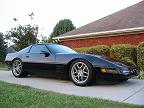
I have an engine I built and run it in a truck and used it in a vette and it ran the same MPH one weighed 3360 with me and the other weighed 3420.
Racer

Joined: Apr 2004
Posts: 487
Likes: 0
From: Huntsville AL
I dyno 291rwhp and 326rwtq...always run 8.2 at the local drag strip no matter the weather on street tires with a 1.8 60ft and 3200 lb car (minus me) with 6-speed factory gearing. MPH ranges from 86-88
I've run a few 12.5s at the "local" Steele 1/4mile strip on ET Streets. MPH range is around 112.
I've run a few 12.5s at the "local" Steele 1/4mile strip on ET Streets. MPH range is around 112.

Pro

Joined: May 2002
Posts: 635
Likes: 6
From: New Jersey
Nathan,
the weigh is about 60 lbs depending on how much gas is in the tank. I changed the cam ( Comp XR282HR to Hot Cam) and went fuel injection and the vette weighs the most with less gear. 3.07 vs 3.42 but it's like a brick vs a bullet in the air.
Randy
the weigh is about 60 lbs depending on how much gas is in the tank. I changed the cam ( Comp XR282HR to Hot Cam) and went fuel injection and the vette weighs the most with less gear. 3.07 vs 3.42 but it's like a brick vs a bullet in the air.
Randy

Thread Starter
Racer
Joined: Jan 2004
Posts: 291
Likes: 0
From: Norton ma
Wow guys I didn't mean to turn this into a big pissing match.
All I wanted to do was get a rough, rough, idea of what hp target I am looking for.
I know there are a huge amount of variables (i'm a mech engineer btw), however I was hoping to narrow down the variables by only asking about C4 vettes and using my own judgement ( ie I have a stick and ET streets, whereas car A. has a 3800rpm stall and wrinkle walls etc) to extrapolate a guess.
I have a bunch of experience with F-bodies and lightnings at the strip, but little about C4's yet (hopefully this spring).
Again thanks for all the helpful posts guys.
All I wanted to do was get a rough, rough, idea of what hp target I am looking for.
I know there are a huge amount of variables (i'm a mech engineer btw), however I was hoping to narrow down the variables by only asking about C4 vettes and using my own judgement ( ie I have a stick and ET streets, whereas car A. has a 3800rpm stall and wrinkle walls etc) to extrapolate a guess.
I have a bunch of experience with F-bodies and lightnings at the strip, but little about C4's yet (hopefully this spring).
Again thanks for all the helpful posts guys.

Le Mans Master


Joined: Feb 1999
Posts: 9,938
Likes: 38
From: South Carolina
St. Jude Donor '03 & '05
Every track is diffferent too. My Vette with stock motor , other than 1.6 rr's and gutted cats and 3.75 gears, ran consistent 13.0's in Rockingham NC, then I came to Hawaii and the best it ever could muster was 13.6. Same MPH, 106, but ET was slower here.
Gearing makes a big difference too, and shift points, traction, etc etc and the list goes on.
A better comparison would be go to a track and ask all the C4's to give you there data that day, and then that would be a better comparison, as far as track and conditions.
Gearing makes a big difference too, and shift points, traction, etc etc and the list goes on.
A better comparison would be go to a track and ask all the C4's to give you there data that day, and then that would be a better comparison, as far as track and conditions.
Last edited by steve40th; Jan 4, 2006 at 06:48 PM.
Former Vendor
Joined: Jun 2001
Posts: 7,204
Likes: 6
From: St Marys PA
Originally Posted by Nathan Plemons
Jesse I've stopped reading right there, don't bother. I don't want this to turn into a pissing match either. I never mentioned a word about YOUR car. I only said that you cannot compare HP and track times without considering the intended application of the car. End of arguement. If you want to take it any further you did so of your own accord and you'll find yourself arguing with nobody but yourself.
Nathan...just for the record - I was not saying anything bad about your car. I was simply pointing out that my suspension is ROCK hard in the rear of my car compared to the way I run it on the street. This is to plant the tires and keep the car from OVERLY squatting. Did not mean anything more or less from it.
RacerX70, You got the right idea.

350ws6, I would highly suggest if your in the search for a good street/strip car you pick a combo that is what you want to achieve and try to extract any and all information you can from that owner - then copy it to a T.
As racerX70 stated, its pretty basic principles that make the numbers come up on the board at the 1320 mark. Making decent power these days out of a sound platform is not too difficult with today technology.
Weather is going to play a factor in ANY setup you build unless you go with alcohol to minimize the effects - so regardless of weather if you build a stellar performer - it will yield you better than average results against other cars at the strip that day. Everyone will gain, and everyone will loose with weather changes.
The thing to NOT get caught up in as Beach stated before he was slapped on the wrist for saying it, is don't get caught up in the hooplah with "Horsepower" numbers. There are many that get both outrageously high and outragerously low numbers and still have stellar performance at the strip.
I have to laugh everytime someone uses the "nascar" parallel with dynos. Is there a contract/underwritten rule I'm unaware of that upon EVERY dyno sold; their operation must be both maintained and conducted with the same care and scrutiny as a narcar team? There are some that are good, some that are bad, and some that are ugly. Your guess is as good as mine how to differentiate between them. They can be helpful to play around with things, but final tune/verification comes in when you run down the strip and the forces of the real world are on the car.
These are good topics to discuss/debate.


Le Mans Master

Joined: Sep 2004
Posts: 6,019
Likes: 568
From: Conroe Texas
my 89' 355 cid l-98 6-speed coupe, 3.54 gears and drag radials ran 12.52 @ 110 mph at houston, just about sea level in june. it dynoed 268 rwhp and 355 lbs torque at mti the following may.
Le Mans Master


Joined: Aug 1999
Posts: 7,339
Likes: 137
From: WilkesBarre PA
When the car made 367RWHP it went a best of 11.82@118
Now with the 396 making 421 RWHP it went a best of 11.19@124.75. Even with average traction the car usually is allways around 124. It is a 6-speed,3:75 gears, 3450pnds.
Now with the 396 making 421 RWHP it went a best of 11.19@124.75. Even with average traction the car usually is allways around 124. It is a 6-speed,3:75 gears, 3450pnds.
Le Mans Master
Joined: Feb 1999
Posts: 9,938
Likes: 38
From: South Carolina
St. Jude Donor '03 & '05
Originally Posted by ski_dwn_it
As you can already see there are HUGE differences in obtained HP figures and what MPHs are obtained when you hit the track.
I know what my motors make and are capable of making based on TONS of research comparing to other setups and comparing HP numbers from very reputable engine builders.
Comparing my 406 that ran 123MPH with 436rwhp, you can quickly see that others stating near the same HP are nearly 10mph off even with manual boxes (usually produce 3mph higher MPHs).
That is why I say if you want to find your USEABLE HP rating of your car, take it to the track and on the return road, stop in at the scales, get a good weight of your ride, and go home and calculate how much your using.
At the end of the day, it doesn't matter how much you claim to have, its how much your able to effectively use or how well you put to work what you only have.
That is the name of the game. I will take a "low" HP rating anyday to have a good usable MPH. Unfortunately once you completely understand what is going on, you need HP to make MPH. As more post, you will see however that you can have high HP numbers and not even come close to the respective MPH.
That statement may be confusing to some, but read it a few times and pay attention to the information being posted - it will become more clear.
I know what my motors make and are capable of making based on TONS of research comparing to other setups and comparing HP numbers from very reputable engine builders.
Comparing my 406 that ran 123MPH with 436rwhp, you can quickly see that others stating near the same HP are nearly 10mph off even with manual boxes (usually produce 3mph higher MPHs).
That is why I say if you want to find your USEABLE HP rating of your car, take it to the track and on the return road, stop in at the scales, get a good weight of your ride, and go home and calculate how much your using.
At the end of the day, it doesn't matter how much you claim to have, its how much your able to effectively use or how well you put to work what you only have.
That is the name of the game. I will take a "low" HP rating anyday to have a good usable MPH. Unfortunately once you completely understand what is going on, you need HP to make MPH.
As more post, you will see however that you can have high HP numbers and not even come close to the respective MPH. That statement may be confusing to some, but read it a few times and pay attention to the information being posted - it will become more clear.
And mine wieghs 3330 before roll bar, 47lbs, and heavier sway bars, bigger brakes, camber brace and bigger tires and wheels.
And I have a lousy suspension for drag racing, a ZO7 suspension.
Drifting
Joined: May 2003
Posts: 1,730
Likes: 1
From: Charlotte NC
St. Jude Donor '05
Originally Posted by ski_dwn_it
I have to laugh everytime someone uses the "nascar" parallel with dynos. Is there a contract/underwritten rule I'm unaware of that upon EVERY dyno sold; their operation must be both maintained and conducted with the same care and scrutiny as a narcar team?
Hey, You know I also heard nascar uses torque wrenches.. You might want to throw yours away though because you never know how its mantained or operated..

Let me ask you a question.. How much maintence does the speed sensor in your car require? How about the weather station you take to the track? That is the only 2 components in a dynojet inertia dyno... why do you make it out like some black magic device? Last time I check newtons laws are in effect all day every day. The dynojets aren't magically creating or shedding mass across the country either.. what the hell do think is going out of calibration?
Has anyone else gotten tired of these loop to loop arguements?


