





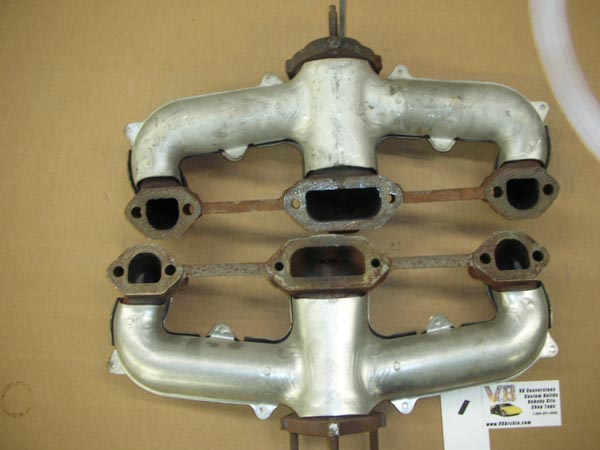

Headers

Racer

Joined: Feb 2006
Posts: 269
Likes: 0
From: Vancouver B.C.

You will have a problem with the new paint holding up if the existing paint on those headers is not heat paint.
If that's the case, you'd need to strip them before re-painting them. And you'll NOT want primer under the new paint either, or it'll burn off as well.
The dealer labor rates around here are around 50% higher than good local repair shops. I'd suggest going to a local shop to save some money.
Best of luck.
If that's the case, you'd need to strip them before re-painting them. And you'll NOT want primer under the new paint either, or it'll burn off as well.
The dealer labor rates around here are around 50% higher than good local repair shops. I'd suggest going to a local shop to save some money.
Best of luck.
Thread Starter
Melting Slicks

Joined: Jul 2006
Posts: 2,151
Likes: 0
From: Strongsville Ohio
wow, love the info, thanks alot....i will check to see what type of paint is on there now, so i should strip the paint off...sounds good...ill let u guys knwo whats up ...thanks alot

Racer
Joined: Sep 2005
Posts: 484
Likes: 0
From: Redwood City CA
 .....There are shops around that will do a better/cheaper job.... Don't play games, if you dont like the price be straight up about it, chances are they will come down, if not then that's not the shop for YOU.........

Le Mans Master


Joined: Oct 2004
Posts: 7,706
Likes: 485
From: Everett WA
C4 of Year Finalist (appearance mods) 2019
Go with the shorty's since you already have em' its the easiest and truthfully, anythings better than stock!! you will have better sound and you will have "braggin rights"!!
There are, to my knowledge, no inexpensive ways to gain significant performance increases on an LT1 other than changing the rearend ratio.
If you use the search function you will find dozens of posts on which are the best Long Tube Headers should you choose to go that route.
With long tube headers, Hi flow cats, stock exhaust & LT4 Hotcam my otherwise stock 95A4 puts 291RWHP on a mustang dyno ... and while I am really happy with these changes to my daily driver ... These parts are not inexpensive. Perhaps however if I go out and add the air foil & the 160 thermostat I might gain another 40 HP or so.
PS You don't gain any braging rights by bolting on a shorty header.

Last edited by Mr. Peabody; May 22, 2007 at 03:48 PM.
Thread Starter
Melting Slicks
Joined: Jul 2006
Posts: 2,151
Likes: 0
From: Strongsville Ohio
well relax a little bit guy, i understand what u mean, but for the most of us, im speaking for people the drive these things daily and dont run into wrench heads all part of the day, just wanna bolt on something and feel special, like me. everyone i know has an intake or an exhaust, no one has headers, i know they arent a big deal to you maybe dude, but its big news to me....but anyways.......
Corvette Stories
The Best of Corvette for Corvette Enthusiasts

5 Best & 5 Worst Corvette Daily Drivers
Joe Kucinski
The Headlights of Every Corvette Generation Explained
Joe Kucinski
5 Best & 5 Most Overrated Corvette Track Packages of All Time!
Joe Kucinski
Every 2027 Corvette Engine Explained
Joe Kucinski
Designer Imagines A Corvette That Looks More Like a Corvette Than the Corvette
Verdad Gallardo
10 Ugly Corvettes That We Still Kinda Love
Joe Kucinski
Top 10 Most Expensive Corvettes Ever Sold on Bring A Trailer
Brett Foote
10 Things Every Corvette Owner Needs (2026 Edition)
Michael S. Palmer
8 Most "Only Corvette Owners Understand" Quirks and Problems
Pouria Savadkouei
Safety Car


Joined: May 2002
Posts: 4,659
Likes: 82
From: Toronto ontario
You are wasting your time and money on shorty headers. Non coated headers will rust and look ugly. They will make more noise and more heat in the engine bay. They will provide almost no performance gain on a stock exhaust and motor. People who work at dealers are mostly morrons and will most likely screw up a lot of stuff and break parts requiring more parts for the install.
A shorty header will almost make no audible difference compared to an aftermarket exhaust system.
A shorty header will almost make no audible difference compared to an aftermarket exhaust system.

Race Director


Joined: Sep 2000
Posts: 17,298
Likes: 33
From: The Top of Utah

You will see little to no gain from those shorty headers. That makes their cheap price, very expensive per unit of performance gain.
The highest temperature high heat paints will last hundreds of times longer than conventional paint. That means, rather than burning off in 1 to 30 minutes, the high heat paint may go a hour or two.
Originally Posted by derekguzz
just wanna bolt on something and feel special, like me. everyone i know has an intake or an exhaust, no one has headers,
RACE ON!!!
PS. Capital letters and punctuation can be your friend.

Burning Brakes

Joined: Nov 2005
Posts: 797
Likes: 0
From: Bedford Ma.
If you`re going to use these headers at least get them coated.I just had ceramic coated shorties installed on my `96,and while they look really nice,you should be aware of the fact that ithey will make working on the engine somewhat more difficult.I haven`t started the car yet so I can`t comment about the sound.

Advanced

Joined: Dec 2006
Posts: 97
Likes: 0
From: PA
go with the consensus on this one and take back those headers. be patient, save some money and get a pair of long tubes that'll at least give you a decent hp gain. or if you say your mainly concerned about sound go with a catback system that could give you lil boost and a deeper sound that stock. even longtube headers would just amplify your stock mufflers
Race Director
Joined: Sep 2000
Posts: 17,298
Likes: 33
From: The Top of Utah
Originally Posted by bill83c4
or if you say your mainly concerned about sound go with...
Originally Posted by derekguzz
just wanna bolt on something and feel special, like me. everyone i know has an intake or an exhaust, no one has headers, i know they arent a big deal to you maybe dude, but its big news to me....but anyways.......
RACE ON!!!

Drifting


Joined: Feb 2003
Posts: 1,978
Likes: 2
From: San Antonio Texas
That's the way to go; Longtubes, if you want some additional power, and not just better sound. Since it sounds like you're not going to do the job yourself, I would suggest having a Muffler Shop do the install. There will be some pipe bending and fabrication needed. It'll still probably be cheaper than a Dealership. Those guys will "eat your lunch".
We love you too Derek

We love you too Derek

Burning Brakes
Joined: Jul 2005
Posts: 758
Likes: 6
From: Gainesville, FL
Here is an overview of the Stainless Works Long Tube Header installation I just completed. Since each system and car have their own variations and differences (most I am not aware of) it is meant to be a guideline and not a definitive write-up. Keep in mind that I may not have listed every item that needs to be addressed and this is strictly my experience installing these headers on a ’95 LT1.
[All of the images are in thumbnail format and clicking them will link to the larger image]
First I’d like to mention some of my personal gains from installing these headers… The only other real modifications that I had made prior the headers was FlowMaster Super 40 mufflers, X-pipe (fabricated from the 3” magnaflow x-pipe), and gutted cats. The gutted cats caused the car to backfire under deceleration and the x-pipe + mufflers caused the car to have an obnoxious resonance/drone at around 1800 rpm (6th gear on the highway). After installing the headers and completely removing the cats I now have absolutely no backfire. What I didn’t expect was that ALL resonance and drone is completely gone. The car sounds amazing and is deeper and louder, but is actually much quieter now on the highway in 6th gear (I used to often put it in 5th to kill the annoying drone – in this case gas mileage is up to ~27-29mpg on the highway). And the performance gain is very noticeable from ~2500 rpm and up. – Weight reduction wise I meant to weigh the new stuff before it went in, but forgot… the old stuff weighed in at ~55lbs (if I still had cat guts it would have been more). The UPS package said 39lbs total so I figure the drop was around 20lbs.
Now for the process I went through… This is for the CATLESS (OFFROAD) set-up shown in pieces below:


I strongly suggest disconnecting the battery before you do any work on the car.
First I unplugged/unbolted the ASR and moved it out of the way (the middle inner fender panel will also need to be removed).

The EGR (air) tubes will need to be screwed off of the manifolds (this picture also shows the first bracket removed from the alternator).

To remove the A/C (and get to the last brace) you’ll need to unbolt the 3rd header bolt, the 4 bolts on the compressor, and loosen the serpentine belt (the engine bay has the diagram for this).

You will need to remove the spark plug wires, oil dipstick (it can be seen easily from under the car and just twists out), spark plugs and the connector attached to the engine that I smashed off from overlooking it (in pic) – I’m not certain what it does (and wouldn’t mind being clued in)… I also removed my loom brackets and have since used tie wraps to hold the wires out of the way – this may not be 100% necessary, but it does make it easier to work.

To remove the old manifolds and piping I first unbolted the manifolds from the engine then from the collectors… (pic of one of the collectors from under the car)

((Make sure you have at least disconnected or completely removed the O2 sensors at this point.))
Then I cut (with a Sawzall) the exhaust pipes right behind the factory hangers…

I had already installed an x-pipe in place of the resonator…
After that both cats are held on by brackets… on the passenger side there are two easy bolts to get to…

– the remaining passenger side bracket needed to be moved a little with a hammer to make way for the new headers…
The driver’s side is a bit more difficult… The 3 bolt connector after the cat will need to be removed with the studs (the studs can be pulled by piggy-backing nuts together and twisting the studs out) – the remaining bracket needed to be removed and the top bolt seems nearly impossible to get to…

So with a vise-grips it can be yanked back and forth until it breaks (but it is VERY strong – of course other methods will work as well)…
By now the manifolds and piping could be removed (cutting the brace connecting the factory hangers will help).
Now for installing the new headers… First I have to say that you will either need to modify some of the factory bolts or use shorter aftermarket bolts – you’ll notice from my photos that I used allan head bolts as well to make thing easier.
Anyway… you’ll want to temporarily screw in a couple bolts to hold up your new gaskets…

Then you can pass the headers up from the bottom of the car… the SW installation sheet mentions that you may have to remove the starter, but it wasn’t anywhere near being an issue (plenty of clearance)… -- This is easy to do by yourself as the headers are real light and can hold themselves up in the bay for you to continue from up top…

Bolting the new headers on may be a bit tricky, but it really depends upon what bolts you have available – my combination of allan head bolts and shorter bolts was helpful. Of course you will be reusing the two factory stuff bolts that hold the oil dipstick and A/C braces… for these Stainless Works supplies two cheap, crudely hand cut, stainless spacer tubes… -- on the passenger side all I had to do was grind the lips off of the bolt and nut and they fit just fine (but the oil dipstick bracket will need to be altered a bit). On the driver stud bolt I ground the lip off and it wouldn’t fit.. then I belt sanded the head down the a ½” and it still didn’t fit… for me the tube needed to be hit a bit with a hammer to make clearance for the stud bolt and the A/C bracket (which were belt sanded down as well). In this picture you can also see where the cheap sleeve busted…

(I suggest replacing the spark plugs and such before you re-install the A/C braces, compressor etc. etc.)
From what I have read – not everyone has this problem with SWs headers, but it is easy to overcome.
After the headers were in place I mocked up the new 3” exhaust piping and made marks accordingly so that the rest of the exhaust system could be removed, cut, and welded to the 3-2.5” steps and later slipped back onto the new 3” piping (making sure all the clamps were loosely in place). The SWs instructions say to go to an exhaust shop to have the piping resized for clamping and of course that is an option as well…
This is where I ended up… (clamps are loose in the first picture)


(If you have clearance issues you’ll really want to pay more attention to getting the whole clamp out of the way -- I later loosened mine and got them up out of the way).
By now you can re-install the EGR (air) tubes as well as the spark plugs and wires… For the most part the plugs are MUCH easier to do than before with the old manifolds… but the front-most plugs are tight. I found that I could get a socket on the drivers side by temporarily removing the sleeve tip (the socket I used had nut-like facets on the end and I could then use a wrench to tighten) – the passenger side however was too tight for a socket, but there is plenty of room to use a box end wrench on it…
As for replacing the O2 sensors.. for a 95 you can re-use the original O2 sensors (95s come with heated O2s) and there is NO reason to use a simulator on the rear O2 – it can remain completely disconnected. I understand that some other years may need to switch to heated O2s or use simulators – I suggest researching the year of your Vette before getting stuck at this point…
Now you can also re-install the rear A/C brace followed by the compressor and the top A/C brace. The alternator bracket will need washers or a spacer behind where the old brace was that cannot be used with the new headers. The 3 washers that SWs provided did not have a large enough ID to accommodate the factory bolt.
Don’t forget to re-install the serpentine belt…
In the end I used tie-wraps to tie the O2 sensor wiring away from the header pipes along with the spark plug wires and one other shielded hose that would have been resting on the headers on the driver’s side (I’d advise looking near the pipes thoroughly for anything else that may be touching before running the car).
This is pretty much it – as the SW instructions mention you’ll eventually want to make sure your bolts don’t need to be retightened after some driving (they suggest 20-30min and then let it cool completely)…
GOOD RIDDANCE!


Here are some additional photos:


And for whatever reason I like this somewhat abstract photo of my car… (In higher resolution it has been my desktop background since I took it)

I hope this has been helpful to anyone that is considering Stainless Works headers and wanted to get an idea of what kind of project they’d be getting into (or those who were seeking guidelines). It may not be perfect, but it is a far better write-up than what is provided by Stainless Works. Again, feel free to use this as a guideline, but please do some research on your specific model and make sure you know you can complete the job on your own before getting stuck or damaging your vehicle. Best regards – Greg Jones
Burning Brakes
Joined: Jul 2005
Posts: 758
Likes: 6
From: Gainesville, FL
On a dyno, there will be a small gain, but shorties aren't going to be enough to let you feel a performance gain. Even longtubes don't offer a major difference, but they are just within the realm of noticing them. Plus, I don't even notice anything different about the look (over stock) with my stainless longtubes unless I pay specific attention to them. The question is, is it worth all that effort for something you won't even notice? If you are going to do all that work anyway, you may end up being upset that you didn't spend the extra money on longtubes in the first place.
Thread Starter
Melting Slicks
Joined: Jul 2006
Posts: 2,151
Likes: 0
From: Strongsville Ohio
The Verdict................Keep them, sand the paint off and spray them myself, OR return them and have nothing but muff elims as an exhaust?? HELP me Guys im stuck...long tubes are in the future, not right now