



Lets Paint the Vette
Thread Starter
Instructor


Joined: Jun 2007
Posts: 134
Likes: 1
From: TN
 Lets Paint the Vette
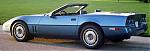
Ok guys I need some advice here. My 16 yr old son and I have an '87 vert that was in pretty rough shape when we got it. It has become our project! We have gutted the interior and have been sanding on the exterior. Now my question is, should we go back with base coat/clear coat or try epoxy enamel. Wouldn't the enamel be quicker/eaiser? Since we will be painting it ourselves which is more forgiving? The color is blue and it looks like it is metalic. I have done some painting in the past ...just bumpers and small items like that. Thanks guys 
Burning Brakes


Joined: Apr 2004
Posts: 1,042
Likes: 202
From: Atoka, TN
i really dig what this guy did.....
http://forums.corvetteforum.com/show...8&postcount=74
probably wouldn't look right on a vert. if it was me, i would go with base clear because it is easy to fix minor flaws after the clear cures. not to mention to get a nice layout of the metalic flakes in the base, you will want to fog your last coat of base. i don't have much experience with single stage paints.
chris
http://forums.corvetteforum.com/show...8&postcount=74
probably wouldn't look right on a vert. if it was me, i would go with base clear because it is easy to fix minor flaws after the clear cures. not to mention to get a nice layout of the metalic flakes in the base, you will want to fog your last coat of base. i don't have much experience with single stage paints.
chris

Racer

Joined: Sep 2007
Posts: 375
Likes: 18
From: Lawrenceville Georgia
Depending on your "skill" level and equipment will have a lot of bearing on choice. Dupli-Color has a new pre-mixed line of paint now that's looks like it might be worth considering. It is a lacquer 2 stage, and lacquer paint dries fast and is somewhat forgiving to runs,sags,etc. I haven't used any myself, only read a short ad a few weeks ago. I have seen it in several auto part stores. Check out their web site for more info.
Joel
Joel

Race Director


Joined: May 2006
Posts: 10,691
Likes: 71
From: Phoenix Arizona
Definately base/clear! It's easier (alot), and the results are better, especially if you color sand and buff, and don't have a paint booth. Plus it will stand the sun/UV's better. I personally really like that medium blue metallic they had in 87. If you are painting the whole car (not just the upper half above the molding) you might try Omni base and clear if you want to save about 50%. Otherwise go with the premium urethanes (especially the clear). I haven't shot lacquers on anything for years, and it's illegal in many places. (Definately only use catalyized primers, they don't shrink and dry faster with higher build and less waste)
Last edited by zr1fred; Feb 16, 2008 at 11:36 PM.
Drifting

Joined: Apr 2007
Posts: 1,339
Likes: 2
From: port charlotte fl
You have to go base/clear if your not well schooled in spray painting.Start with an epoxy primer after you have sanded the car as flat as you can get it.Just look at the panels with the light hitting it at an angle and it should be all dull.Any shiny spots sand again.400 wet and dry is fine.Use a rubber block with all the sanding except on the rounded edges.Just sand the primer enough to give a key and lay on three base colour coats leaving 20 minutes between each.Give it 24 hours and sand that flat using 400 then 800.Then do the same with the clear coat but 800/1200/1500/.Then hit it with the buffer and some clear coat polishing compound.
Doing it like this any orange peel or runs you take out at every step and you can get a real good looking professional finish if you take your time.And you will be amazed how quickly you learn to use a spray gun.
Doing it like this any orange peel or runs you take out at every step and you can get a real good looking professional finish if you take your time.And you will be amazed how quickly you learn to use a spray gun.
Race Director
Joined: May 2006
Posts: 10,691
Likes: 71
From: Phoenix Arizona
 Most bases don't sand well, and the idea with the base is to get even coverage. If you shoot within the recommended times you will get the best adhesion. Your gloss and depth are in the clear. It depends upon the brand/type of paint, follow the manufacturers recommendations. On the older systems we used to sand the base coats, but they were more top coats (single stages) that were clear coated.
Last edited by zr1fred; Feb 17, 2008 at 12:06 AM.

Racer
Joined: Sep 2007
Posts: 284
Likes: 0
From: Cerritos/L.A. California
without a doubt DO NOT sand the base before clearing. I shoot my clear on after my last coat of base kicks off, which is about fifteen minutes after the last base coat. Some guys let the base dry and then tack rag it or wet sand it. Wet sanding the base just makes more work and really is not worth it.
Corvette Stories
The Best of Corvette for Corvette Enthusiasts

Top 10 Most Expensive Corvettes Ever Sold on Bring A Trailer
Brett Foote
10 Things Every Corvette Owner Needs (2026 Edition)
Michael S. Palmer
8 Most "Only Corvette Owners Understand" Quirks and Problems
Pouria Savadkouei
10 Reasons the C6 Z06 is Still A Performance Benchmark After 20 Years
Joe Kucinski
How Much Horsepower Every Corvette Engine "LOST" in 1972
Joe Kucinski
Top 10 DOs and DON'Ts for Protecting Your Convertible Top!
Michael S. Palmer
Top 10 Most Explosive Corvettes Ever Made: Power-to-Weight Ratio Ranked!
Joe Kucinski
150 hp to 1,250 hp: Every Corvette Generation Compared by the Specs That Matter
Joe Kucinski
8 Coolest Corvette Pace Cars (and Replicas) of All Time
Verdad Gallardo
Thread Starter
Instructor
Joined: Jun 2007
Posts: 134
Likes: 1
From: TN
A lot of good info here guys!Thanks. I have been reading alot and watching videos over the last 6 months trying to prepare the best I can. Since I have never painted a whole car before maybe I should spend the night in a Holiday Inn Express!

Instructor
Joined: Feb 2008
Posts: 144
Likes: 0
LMAO!!! I have seen on tv that it will help, so it must be true...LOL
Instructor
Joined: Jan 2008
Posts: 145
Likes: 0
From: LINDEN MICHIGAN
WOW i can see there are not alot of painters among us DO NOT FOLLOW ANYBODYS ADVISE---i have been painting cars for about 30 yrs, before bccc even came out--now the ONLY WAY TO GO IS BCCC just get a good primber(i like feather fill for the first--high build NO SRINK) 1st sand the whole car with 180gt or corser after all body work has been done,1 nice coat of featherfill block with 180 gt after blocking primb with a standard laquar primber of a different color block again with 180 gt this will show all your low spots primb again with the standard primber let dry in the sun if possable,block with 400gt now your ready for color --spray the base very dry,light coats(15 min between coats) until covered wait 1 hr spray clear semi wet wait about 20min between coats ,you will need about 3 coats of clear
as for supplys go to a FINISHMASTER look it up on the web you will find them near you--also thet will give you directions with the paint and clear--the hardest thig is keeping dirt,dust out of paint also you must have filtered air
GOOD LUCK


as for supplys go to a FINISHMASTER look it up on the web you will find them near you--also thet will give you directions with the paint and clear--the hardest thig is keeping dirt,dust out of paint also you must have filtered air
GOOD LUCK

Safety Car

Joined: Oct 2007
Posts: 3,816
Likes: 0
From: :45 minutes from everywhere / E-I-E-I-O
WOW i can see there are not alot of painters among us DO NOT FOLLOW ANYBODYS ADVISE---i have been painting cars for about 30 yrs, before bccc even came out--now the ONLY WAY TO GO IS BCCC just get a good primber(i like feather fill for the first--high build NO SRINK) 1st sand the whole car with 180gt or corser after all body work has been done,1 nice coat of featherfill block with 180 gt after blocking primb with a standard laquar primber of a different color block again with 180 gt this will show all your low spots primb again with the standard primber let dry in the sun if possable,block with 400gt now your ready for color --spray the base very dry,light coats(15 min between coats) until covered wait 1 hr spray clear semi wet wait about 20min between coats ,you will need about 3 coats of clear
as for supplys go to a FINISHMASTER look it up on the web you will find them near you--also thet will give you directions with the paint and clear--the hardest thig is keeping dirt,dust out of paint also you must have filtered air
GOOD LUCK
as for supplys go to a FINISHMASTER look it up on the web you will find them near you--also thet will give you directions with the paint and clear--the hardest thig is keeping dirt,dust out of paint also you must have filtered air
GOOD LUCK
He said he's lookin' for a 'quick and easy' coatin'...


Drifting
Joined: Apr 2007
Posts: 1,339
Likes: 2
From: port charlotte fl
[QUOTE=robertallen;1564138004]WOW i can see there are not alot of painters among us DO NOT FOLLOW ANYBODYS ADVISE-
Is that including or excluding yours?
If you get runs in your base coat which first timers can easily accomplish do you just carry on and whack on the clear and hope nobody notices or do you flat it all out first?
Everyone has their own way of doing things and I was suggesting a method for the initiate which is foolproof and ends up with good results.
I've been painting cars for over 45 years and wouldn't make a statement like that.
Is that including or excluding yours?
If you get runs in your base coat which first timers can easily accomplish do you just carry on and whack on the clear and hope nobody notices or do you flat it all out first?
Everyone has their own way of doing things and I was suggesting a method for the initiate which is foolproof and ends up with good results.
I've been painting cars for over 45 years and wouldn't make a statement like that.
Instructor
Joined: Jan 2008
Posts: 145
Likes: 0
From: LINDEN MICHIGAN
You have to go base/clear if your not well schooled in spray painting.Start with an epoxy primer after you have sanded the car as flat as you can get it.Just look at the panels with the light hitting it at an angle and it should be all dull.Any shiny spots sand again.400 wet and dry is fine.Use a rubber block with all the sanding except on the rounded edges.Just sand the primer enough to give a key and lay on three base colour coats leaving 20 minutes between each.Give it 24 hours and sand that flat using 400 then 800.Then do the same with the clear coat but 800/1200/1500/.Then hit it with the buffer and some clear coat polishing compound.
Doing it like this any orange peel or runs you take out at every step and you can get a real good looking professional finish if you take your time.And you will be amazed how quickly you learn to use a spray gun.
Doing it like this any orange peel or runs you take out at every step and you can get a real good looking professional finish if you take your time.And you will be amazed how quickly you learn to use a spray gun.

after this advise i am not going there(i thought they used epoxy primber on boat trailers, car frames and such)
Race Director
Joined: May 2006
Posts: 10,691
Likes: 71
From: Phoenix Arizona
"Epoxy primers" is some what misleading. It now is used to describe most all catalized primers. In the old days primers were sprayed with solvents that then dried leaving the primer coating. Now nearly everybody uses primers that are catalized and thus "cure" rather than evaporate. The advantages are stated above.They are also very forgiving. Runs in clear coat can be sanded out, as can most dust and "orange peel". For a little bit of money (Under $40) you can get spray guns at Harbor Freight or similar that will enable you to do the job. The better you get, the more important the better guns are. I've painted lots of cars with cheap guns, though I don't do it for a living.The new systems are very forgiving, and with care, you should be able to get a very satisfactory job.
Burning Brakes
Joined: Apr 2004
Posts: 1,042
Likes: 202
From: Atoka, TN
epoxy primer is used on cars.... directly from the HOK website. this has been around for a while. any decent painter knows about it.
KP2CF Epoxy Primer Surfacer is designed to work over properly prepared bare aluminum, magnesium, fiberglass, steel galvanized, OE finishes and some woods and plastics. It may be applied to repair areas for fast fi lling of touch ups as well. KP2CF's good corrosion resistance, fl exibility, tenacious adhesion to substrates, fast build, and ease of sanding, wet or dry, makes it a logical choice for the foundation of a long lasting paint job. This is a two part kit, you will need to order one part A and one part B for a complete kit.
MIX RATIO 1:1 - Mix 1 part KP2
KP2CF Epoxy Primer Surfacer is designed to work over properly prepared bare aluminum, magnesium, fiberglass, steel galvanized, OE finishes and some woods and plastics. It may be applied to repair areas for fast fi lling of touch ups as well. KP2CF's good corrosion resistance, fl exibility, tenacious adhesion to substrates, fast build, and ease of sanding, wet or dry, makes it a logical choice for the foundation of a long lasting paint job. This is a two part kit, you will need to order one part A and one part B for a complete kit.
MIX RATIO 1:1 - Mix 1 part KP2
Instructor
Joined: Jan 2008
Posts: 145
Likes: 0
From: LINDEN MICHIGAN
iif yout talking about a automotive 2 part primber its alot different than epoxy--we use epoxy on machines bases so they wont rust
------------down below comes from a paint web site-------
----also anything that can be used for wood or cement will never touch one of my cars----
Their category comes under the different products that are separately designed to provide a variety of surface preparation functions.
Together, they can be classed as undercoats: those materials applied to auto body surfaces in preparation for paint applications.
These would also include:
Epoxy Primer
Primer (Primer-Surfacer)
Paint Sealer
Epoxy Primer - What is it used for?
Epoxy primers are used to waterproof and therefore protect bare metal from oxidation problems.
By mixing them with an appropriate hardener, according to what it says on the label, you would apply the catalyst-type epoxy primers using a paint spray gun. One to two coats would be all that's required.
Two Application Methods:
1. You would be wise to apply epoxy primer to bare metal (once the old paint and any rust has been removed) before you would apply any other product.
You would do this for two reasons:
Since they are waterproof, they protect the sheet metal.
Epoxy primers offer excellent adhesion to metal and serve as a perfect base for additional undercoat products and top coats (paint).
2. Another approach would be to apply body filler directly to the bare metal and then seal the repair area once coats of primer have been applied and sanded.
Advantages of using Epoxy Primer
Epoxy primer does not require sanding for most of the time after it's been applied and allowed to cure properly, unless runs or imperfections develop when you apply it. In this case, use a fine-grit sandpaper to smooth blemishes. Then touch-up spots with a new coat of material if required.
Each manufacturer offers its own epoxy primer and you are advised to only use those designed for the paint system you have chosen.
If you are living in a region with exceptionally harsh corrosion conditions (such as when during winter there is always plenty of salt put onto the roads) to maximize oxidation, rust and corrosion protection, apply catalyzed epoxy primers to bare metal and then do the same over any subsequent primer undercoats.
If you do live in an area like this, it may be a good idea also to consult with your nearest auto paint supply store and confirm with these people your intended application procedure for additional epoxy primer coats, just to be on the safe side.
Primer or Primer-Surfacer?
Before we begin, here in the UK 'primer-surfacer' is simply referred to as 'primer' whereas in the US 'primer-surfacer' is the common term used.
For the sake of ease writing this section, whenever 'primer' is written we indeed refer to 'primer-surfacer'.
When is Primer used?
After an auto body has had its sheet metal repaired and received its required coats of epoxy primer, minor blemishes might still remain, such as sanding scratches from earlier bodywork repair.
To cover them use primer products manufactured by the same company that produced the rest of the paint system you are using.
With primer having a high solid content, it covers these tiny surface imperfections and will allow you to sand the coated surfaces to smooth heaven!
Primer is NOT a substitute for filler.
Whatever you do, never confuse primer with body fillers. The materials used in body fillers offer a lot more strength and durability than primer will ever do.
Primer is only intended to be sprayed on surfaces to fill very slight sand scratches or other tiny surface blemishes.
Primer is the final undercoat product that is designed to be sanded and smoothed. Anything applied after them are simply used to seal based materials from absorbing paint solvents or to increase overall paint adhesion.
Therefore, you must make sure that your application of primer is uniform and all sanding be performed in a controlled and organized manner.
Increase Your Rate of Learning and Understanding Dramatically by watching real video footage showing full-time car painting professionals working on real customers vehicles demonstrating how to successfully accomplish all stages.
In How to Paint a Car - Part 1, an essential part of How to Paint a Car - The System we examine:
The Application of Primer Material.
The Application of Matte Black Spray Paint to Aid the Sanding Process.
Wet and Dry Sanding Down of Primer using 800-grit Flatting (Sanding) Paper.
How to Paint a Car - The System $97 $67.00
Take Action Today and SAVE $30!
How to Paint a Car - The System
Part 1 & 2 How to Paint a Car - The System
The Written Guide
These movies are essential for anyone wanting to understand more on working with primer.
How to avoid problems along the way.
Refrain from washing or driving your vehicle during periods of wet weather while your vehicle is displaying only a primer finish, this is because some types of primer can actually absorb water.
This water can unfortunately become trapped inside this permeable material and remain there after paint has been applied and cured.
At this point, the moisture would move in one of two directions or both:
Down - it would find its way to bare metal and start the process of corrosion or if epoxy primer stands in the way,
Up - travel toward the surface to cause problems with the newly applied paint finish.
Always read information sheets and application guides that come with the primer products you buy. Remember, you can always ask for extra guidance from your nearest auto paint supply store.
Purchase plenty of sandpaper of the proper grit for smoothing the primer down with after you've applied it.
The correct process when applying primer.
Apply 2-3 coats of primer, allowing sufficient time in between coats for it to cure properly,
Apply a guide coat of matte black spray paint to aid your sanding down progress,
Using 800-grit wet and dry sandpaper - flat down the finish until perfectly smooth.
Paint Sealer
The ultra simplistic definition of paint sealer is that it forms a sort of barrier between the undercoat and top coat (paint), it seals.
They really can be the difference between an adequate paint job and an excellent one.
In providing a little more detail, the purpose of sealers is:
To protect undercoats from the materials and solvents in subsequently applied paint top coats.
Add maximum adhesion capabilities for those top coats.
Ensure a uniform color match.
When applying new paint over an existing painted surface, you would be wise to consider the use of a sealer, especially when you aren't sure what type or brand of paint is currently on the finish of the vehicle.
Advantages of using Paint Sealer.
Sealers do not require sanding for most of the time after they've been applied and allowed to cure properly, unless runs or imperfections develop when you apply them. In this case, use a fine-grit sandpaper to smooth blemishes. Then touch-up spots with a new coat of material if required.
It would also be to your advantage to use sealers for jobs on which new paint will be applied over factory finishes that were baked on at temperatures around 450 degrees F.
New paint will have a difficult time penetrating the surface of these hard and durable paint finishes in order to achieve maximum adhesion.
Always remember to scuff or seal base surfaces. If you don't, the result of this can range from random paint flaking to paint being peeled off in sheets!
Safety Disclaimer: Always follow the recommendations of your nearest auto paint supply store or by referring to the manufacturer's application guides and information sheets when dealing with any type of auto paint product or piece of equipment.
Privacy Policy
Copyright © LearnAutoPainting.com 2007-2008. All Rights Reserved.
------------down below comes from a paint web site-------
----also anything that can be used for wood or cement will never touch one of my cars----
Their category comes under the different products that are separately designed to provide a variety of surface preparation functions.
Together, they can be classed as undercoats: those materials applied to auto body surfaces in preparation for paint applications.
These would also include:
Epoxy Primer
Primer (Primer-Surfacer)
Paint Sealer
Epoxy Primer - What is it used for?
Epoxy primers are used to waterproof and therefore protect bare metal from oxidation problems.
By mixing them with an appropriate hardener, according to what it says on the label, you would apply the catalyst-type epoxy primers using a paint spray gun. One to two coats would be all that's required.
Two Application Methods:
1. You would be wise to apply epoxy primer to bare metal (once the old paint and any rust has been removed) before you would apply any other product.
You would do this for two reasons:
Since they are waterproof, they protect the sheet metal.
Epoxy primers offer excellent adhesion to metal and serve as a perfect base for additional undercoat products and top coats (paint).
2. Another approach would be to apply body filler directly to the bare metal and then seal the repair area once coats of primer have been applied and sanded.
Advantages of using Epoxy Primer
Epoxy primer does not require sanding for most of the time after it's been applied and allowed to cure properly, unless runs or imperfections develop when you apply it. In this case, use a fine-grit sandpaper to smooth blemishes. Then touch-up spots with a new coat of material if required.
Each manufacturer offers its own epoxy primer and you are advised to only use those designed for the paint system you have chosen.
If you are living in a region with exceptionally harsh corrosion conditions (such as when during winter there is always plenty of salt put onto the roads) to maximize oxidation, rust and corrosion protection, apply catalyzed epoxy primers to bare metal and then do the same over any subsequent primer undercoats.
If you do live in an area like this, it may be a good idea also to consult with your nearest auto paint supply store and confirm with these people your intended application procedure for additional epoxy primer coats, just to be on the safe side.
Primer or Primer-Surfacer?
Before we begin, here in the UK 'primer-surfacer' is simply referred to as 'primer' whereas in the US 'primer-surfacer' is the common term used.
For the sake of ease writing this section, whenever 'primer' is written we indeed refer to 'primer-surfacer'.
When is Primer used?
After an auto body has had its sheet metal repaired and received its required coats of epoxy primer, minor blemishes might still remain, such as sanding scratches from earlier bodywork repair.
To cover them use primer products manufactured by the same company that produced the rest of the paint system you are using.
With primer having a high solid content, it covers these tiny surface imperfections and will allow you to sand the coated surfaces to smooth heaven!
Primer is NOT a substitute for filler.
Whatever you do, never confuse primer with body fillers. The materials used in body fillers offer a lot more strength and durability than primer will ever do.
Primer is only intended to be sprayed on surfaces to fill very slight sand scratches or other tiny surface blemishes.
Primer is the final undercoat product that is designed to be sanded and smoothed. Anything applied after them are simply used to seal based materials from absorbing paint solvents or to increase overall paint adhesion.
Therefore, you must make sure that your application of primer is uniform and all sanding be performed in a controlled and organized manner.
Increase Your Rate of Learning and Understanding Dramatically by watching real video footage showing full-time car painting professionals working on real customers vehicles demonstrating how to successfully accomplish all stages.
In How to Paint a Car - Part 1, an essential part of How to Paint a Car - The System we examine:
The Application of Primer Material.
The Application of Matte Black Spray Paint to Aid the Sanding Process.
Wet and Dry Sanding Down of Primer using 800-grit Flatting (Sanding) Paper.
How to Paint a Car - The System $97 $67.00
Take Action Today and SAVE $30!
How to Paint a Car - The System
Part 1 & 2 How to Paint a Car - The System
The Written Guide
These movies are essential for anyone wanting to understand more on working with primer.
How to avoid problems along the way.
Refrain from washing or driving your vehicle during periods of wet weather while your vehicle is displaying only a primer finish, this is because some types of primer can actually absorb water.
This water can unfortunately become trapped inside this permeable material and remain there after paint has been applied and cured.
At this point, the moisture would move in one of two directions or both:
Down - it would find its way to bare metal and start the process of corrosion or if epoxy primer stands in the way,
Up - travel toward the surface to cause problems with the newly applied paint finish.
Always read information sheets and application guides that come with the primer products you buy. Remember, you can always ask for extra guidance from your nearest auto paint supply store.
Purchase plenty of sandpaper of the proper grit for smoothing the primer down with after you've applied it.
The correct process when applying primer.
Apply 2-3 coats of primer, allowing sufficient time in between coats for it to cure properly,
Apply a guide coat of matte black spray paint to aid your sanding down progress,
Using 800-grit wet and dry sandpaper - flat down the finish until perfectly smooth.
Paint Sealer
The ultra simplistic definition of paint sealer is that it forms a sort of barrier between the undercoat and top coat (paint), it seals.
They really can be the difference between an adequate paint job and an excellent one.
In providing a little more detail, the purpose of sealers is:
To protect undercoats from the materials and solvents in subsequently applied paint top coats.
Add maximum adhesion capabilities for those top coats.
Ensure a uniform color match.
When applying new paint over an existing painted surface, you would be wise to consider the use of a sealer, especially when you aren't sure what type or brand of paint is currently on the finish of the vehicle.
Advantages of using Paint Sealer.
Sealers do not require sanding for most of the time after they've been applied and allowed to cure properly, unless runs or imperfections develop when you apply them. In this case, use a fine-grit sandpaper to smooth blemishes. Then touch-up spots with a new coat of material if required.
It would also be to your advantage to use sealers for jobs on which new paint will be applied over factory finishes that were baked on at temperatures around 450 degrees F.
New paint will have a difficult time penetrating the surface of these hard and durable paint finishes in order to achieve maximum adhesion.
Always remember to scuff or seal base surfaces. If you don't, the result of this can range from random paint flaking to paint being peeled off in sheets!
Safety Disclaimer: Always follow the recommendations of your nearest auto paint supply store or by referring to the manufacturer's application guides and information sheets when dealing with any type of auto paint product or piece of equipment.
Privacy Policy
Copyright © LearnAutoPainting.com 2007-2008. All Rights Reserved.
 LESS FILLING!

Instructor
Joined: Jun 2005
Posts: 223
Likes: 2
From: Lake Charles LA
I've painted a few cars in my garage using songle stage Omni paints- even 2 metallics- Tangerine Pearl and Pendleton Black Pearl (mitsubishi color).
Only reason I stayed away from BCCC is not having the correct breathing a[paratus- I understand the BC is not too bad, but the CC can kill you very quickly- and most of the canister face masks are not certified for CC- or the chemicals in them?
I know 3 packs of Lucky Strike's a day do wonders protecting your lungs, but not everybody smokes.
What do you use to protect your lungs in a garage environment because my beautiful Black 90 vert needs paint also, and I'd love to shoot some BCCC without dying.
Only reason I stayed away from BCCC is not having the correct breathing a[paratus- I understand the BC is not too bad, but the CC can kill you very quickly- and most of the canister face masks are not certified for CC- or the chemicals in them?
I know 3 packs of Lucky Strike's a day do wonders protecting your lungs, but not everybody smokes.
What do you use to protect your lungs in a garage environment because my beautiful Black 90 vert needs paint also, and I'd love to shoot some BCCC without dying.