


Surging Idle

Thread Starter
Racer


Joined: Sep 2005
Posts: 304
Likes: 1
From: Carson City Nevada
 Surging Idle
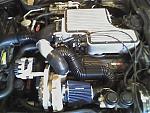
Hi all. Just got my car back from the shop with the super ram on it. Problem is, it don't idle anymore. It surges up and down and can't seem to find the right spot. I unpluf the MAF and it idles fine. Could changing intakes cause this problem? Bad MAF? The MAF is not throwing any codes. The shop says its the tune, but it didn't do this before the intake. Any thoughts?
Melting Slicks

Joined: Aug 2003
Posts: 3,420
Likes: 407
From: Lakeville MI
SR's can be finnicky and difficult to get a good idle.
The extra plenum volume seems to complicate things by adding some delay to the IAC and throttle response and possibly resonant effects.
Even if the IAC closes, there is still alot of air in the plenum, so it will take some extra time for the rpm to drop. The same is true for IAC opening, since it takes some time to fill the plenum before the rpm will rise.
The PID idle control gains could use some work to compensate.
By introducing an intentional vacuum leak, a few things are happening.
The mixture is getting leaner due to the unmetered air, the IAC also becomes less effective, since it is now only a small contributor to the total flow.
By disconnecting the MAF, you are also getting a more stable airflow signal compared with the actual MAF signal, since the calculated default airflow is based upon a fixed offset, tps and rpm and the IAC position. This also has a tendency to be a bit lean if the IAC is only partially open. With the IAC fully open, it may go a bit rich, since the IAC airflow gain factor is a little high for the actual flow/count.
Here's what we know so far: Leaner seems to be better, reduced IAC authority also seems to be better.
The tune and throttle opening and tps adjustment must all be adusted to accomplish both of these desired effects.
There's more to it of course, including spark advance vs rpm vs load and open loop enrichment vs load which may need to be stabilized in the tune for acceptable results.
Now would be good time to take up tuning.
The extra plenum volume seems to complicate things by adding some delay to the IAC and throttle response and possibly resonant effects.
Even if the IAC closes, there is still alot of air in the plenum, so it will take some extra time for the rpm to drop. The same is true for IAC opening, since it takes some time to fill the plenum before the rpm will rise.
The PID idle control gains could use some work to compensate.
By introducing an intentional vacuum leak, a few things are happening.
The mixture is getting leaner due to the unmetered air, the IAC also becomes less effective, since it is now only a small contributor to the total flow.
By disconnecting the MAF, you are also getting a more stable airflow signal compared with the actual MAF signal, since the calculated default airflow is based upon a fixed offset, tps and rpm and the IAC position. This also has a tendency to be a bit lean if the IAC is only partially open. With the IAC fully open, it may go a bit rich, since the IAC airflow gain factor is a little high for the actual flow/count.
Here's what we know so far: Leaner seems to be better, reduced IAC authority also seems to be better.
The tune and throttle opening and tps adjustment must all be adusted to accomplish both of these desired effects.
There's more to it of course, including spark advance vs rpm vs load and open loop enrichment vs load which may need to be stabilized in the tune for acceptable results.
Now would be good time to take up tuning.

Melting Slicks


Joined: Jan 2002
Posts: 2,238
Likes: 4
From: Milan
SR's can be finnicky and difficult to get a good idle.
The extra plenum volume seems to complicate things by adding some delay to the IAC and throttle response and possibly resonant effects.
Even if the IAC closes, there is still alot of air in the plenum, so it will take some extra time for the rpm to drop. The same is true for IAC opening, since it takes some time to fill the plenum before the rpm will rise.
The PID idle control gains could use some work to compensate.
By introducing an intentional vacuum leak, a few things are happening.
The mixture is getting leaner due to the unmetered air, the IAC also becomes less effective, since it is now only a small contributor to the total flow.
By disconnecting the MAF, you are also getting a more stable airflow signal compared with the actual MAF signal, since the calculated default airflow is based upon a fixed offset, tps and rpm and the IAC position. This also has a tendency to be a bit lean if the IAC is only partially open. With the IAC fully open, it may go a bit rich, since the IAC airflow gain factor is a little high for the actual flow/count.
Here's what we know so far: Leaner seems to be better, reduced IAC authority also seems to be better.
The tune and throttle opening and tps adjustment must all be adusted to accomplish both of these desired effects.
There's more to it of course, including spark advance vs rpm vs load and open loop enrichment vs load which may need to be stabilized in the tune for acceptable results.
Now would be good time to take up tuning.
The extra plenum volume seems to complicate things by adding some delay to the IAC and throttle response and possibly resonant effects.
Even if the IAC closes, there is still alot of air in the plenum, so it will take some extra time for the rpm to drop. The same is true for IAC opening, since it takes some time to fill the plenum before the rpm will rise.
The PID idle control gains could use some work to compensate.
By introducing an intentional vacuum leak, a few things are happening.
The mixture is getting leaner due to the unmetered air, the IAC also becomes less effective, since it is now only a small contributor to the total flow.
By disconnecting the MAF, you are also getting a more stable airflow signal compared with the actual MAF signal, since the calculated default airflow is based upon a fixed offset, tps and rpm and the IAC position. This also has a tendency to be a bit lean if the IAC is only partially open. With the IAC fully open, it may go a bit rich, since the IAC airflow gain factor is a little high for the actual flow/count.
Here's what we know so far: Leaner seems to be better, reduced IAC authority also seems to be better.
The tune and throttle opening and tps adjustment must all be adusted to accomplish both of these desired effects.
There's more to it of course, including spark advance vs rpm vs load and open loop enrichment vs load which may need to be stabilized in the tune for acceptable results.
Now would be good time to take up tuning.
Corvette Stories
The Best of Corvette for Corvette Enthusiasts

5 Best & 5 Worst Corvette Daily Drivers
Joe Kucinski
The Headlights of Every Corvette Generation Explained
Joe Kucinski
5 Best & 5 Most Overrated Corvette Track Packages of All Time!
Joe Kucinski
Every 2027 Corvette Engine Explained
Joe Kucinski
Designer Imagines A Corvette That Looks More Like a Corvette Than the Corvette
Verdad Gallardo
10 Ugly Corvettes That We Still Kinda Love
Joe Kucinski
Top 10 Most Expensive Corvettes Ever Sold on Bring A Trailer
Brett Foote
10 Things Every Corvette Owner Needs (2026 Edition)
Michael S. Palmer
8 Most "Only Corvette Owners Understand" Quirks and Problems
Pouria Savadkouei
Thread Starter
Racer
Joined: Sep 2005
Posts: 304
Likes: 1
From: Carson City Nevada
Melting Slicks
Joined: Aug 2003
Posts: 3,420
Likes: 407
From: Lakeville MI
You mentioned that its idling better with the MAF unplugged, and also with the MAF plugged in and the PCV pulled out of the valve cover. My impression was that both would result in a leaner mixture than "normal" with the MAF plugged in.
One thing to note, just plugging the MAF back in with the engine running may not have any effect unless the ign is cycled. It seems that the ecm stops reading/processing the MAF voltage once its unplugged during an ign cycle.
I was also thinking open loop idle. If it is getting into closed loop at idle and the blms and ints are within reason then the mixture should be fairly close. I'm used to seeing open loop idle most of the time in my car, so I was assuming open loop. Yours may indeed be different.
At idle with the MAF unplugged, the calculated default airflow should equal 4 grams/sec (closed throttle offset) + (IAC counts * 0.0820 gm/sec/count)
Since your closed throttle is likely flowing more than 4 gm/sec (since most will adjust the throttle opening in the event of idle trouble), the default airflow calc tends to be lean at lower IAC counts.
As the IAC opens the airflow calc will be increased accordingly and richen things up.
At 50 IAC counts the calculated airflow should be pretty close to actual with a calculated value of 8.1 gm/sec. This should be in the ballpark for idle airflow.
At 100 IAC counts, the calculated 12.2 gm/sec will likely be rather rich. It gets worse as the IAC counts climb.
Below 50 IAC counts it will tend to go a little lean, above 50 counts a little rich as a general rule with default settings.
Note: With the min air at 450 rpm, you may be pretty close to the 4 gm/sec offset with closed throttle, if that is the case, the default airflow calc will tend to be richer even at lower IAC counts since the stock IAC gain is about 50% too high for the actual flow.
I had assumed that the PVC line was open and introducing a vacuum leak into the intake and leaning things out. After re-reading your post, it sounds like the PCV valve is still plugged in, but removed from the valve cover. I don't understand why this would help??? Maybe the pcv valve is stuck open.
Hopefully this info helps clear things up somewhat.
One thing to note, just plugging the MAF back in with the engine running may not have any effect unless the ign is cycled. It seems that the ecm stops reading/processing the MAF voltage once its unplugged during an ign cycle.
I was also thinking open loop idle. If it is getting into closed loop at idle and the blms and ints are within reason then the mixture should be fairly close. I'm used to seeing open loop idle most of the time in my car, so I was assuming open loop. Yours may indeed be different.
At idle with the MAF unplugged, the calculated default airflow should equal 4 grams/sec (closed throttle offset) + (IAC counts * 0.0820 gm/sec/count)
Since your closed throttle is likely flowing more than 4 gm/sec (since most will adjust the throttle opening in the event of idle trouble), the default airflow calc tends to be lean at lower IAC counts.
As the IAC opens the airflow calc will be increased accordingly and richen things up.
At 50 IAC counts the calculated airflow should be pretty close to actual with a calculated value of 8.1 gm/sec. This should be in the ballpark for idle airflow.
At 100 IAC counts, the calculated 12.2 gm/sec will likely be rather rich. It gets worse as the IAC counts climb.
Below 50 IAC counts it will tend to go a little lean, above 50 counts a little rich as a general rule with default settings.
Note: With the min air at 450 rpm, you may be pretty close to the 4 gm/sec offset with closed throttle, if that is the case, the default airflow calc will tend to be richer even at lower IAC counts since the stock IAC gain is about 50% too high for the actual flow.
I had assumed that the PVC line was open and introducing a vacuum leak into the intake and leaning things out. After re-reading your post, it sounds like the PCV valve is still plugged in, but removed from the valve cover. I don't understand why this would help??? Maybe the pcv valve is stuck open.
Hopefully this info helps clear things up somewhat.
Melting Slicks
Joined: Aug 2003
Posts: 3,420
Likes: 407
From: Lakeville MI
You may see some benefit by resetting the min air to or slightly below your desired warm idle rpm.
Assuming its an auto and your in-gear warm idle is 550-600 rpm or so, you could increase the min air from 450 rpm up to say 550 rpm.
This will result in fewer IAC counts at idle and should never allow the IAC to really starve the engine for air.
If the desired idle rpm as been increased in the tune, then then adjust the min air accordingly to be close to the warm-target idle rpm.
You would then want to readjust the tps back down for proper voltage to avoid adding extra IAC counts due to excessive tps voltage.
This won't fix everything, but its a step in the right direction.
Also a little more spark advance at idle may help to improve the time response somewhat by increasing idle vacuum. Try 24-26 degrees in the vicinity of the idle rpm instead of 20, if you can.
Assuming its an auto and your in-gear warm idle is 550-600 rpm or so, you could increase the min air from 450 rpm up to say 550 rpm.
This will result in fewer IAC counts at idle and should never allow the IAC to really starve the engine for air.
If the desired idle rpm as been increased in the tune, then then adjust the min air accordingly to be close to the warm-target idle rpm.
You would then want to readjust the tps back down for proper voltage to avoid adding extra IAC counts due to excessive tps voltage.
This won't fix everything, but its a step in the right direction.
Also a little more spark advance at idle may help to improve the time response somewhat by increasing idle vacuum. Try 24-26 degrees in the vicinity of the idle rpm instead of 20, if you can.
Thread Starter
Racer
Joined: Sep 2005
Posts: 304
Likes: 1
From: Carson City Nevada
You may see some benefit by resetting the min air to or slightly below your desired warm idle rpm.
Assuming its an auto and your in-gear warm idle is 550-600 rpm or so, you could increase the min air from 450 rpm up to say 550 rpm.
This will result in fewer IAC counts at idle and should never allow the IAC to really starve the engine for air.
If the desired idle rpm as been increased in the tune, then then adjust the min air accordingly to be close to the warm-target idle rpm.
You would then want to readjust the tps back down for proper voltage to avoid adding extra IAC counts due to excessive tps voltage.
This won't fix everything, but its a step in the right direction.
Also a little more spark advance at idle may help to improve the time response somewhat by increasing idle vacuum. Try 24-26 degrees in the vicinity of the idle rpm instead of 20, if you can.
Assuming its an auto and your in-gear warm idle is 550-600 rpm or so, you could increase the min air from 450 rpm up to say 550 rpm.
This will result in fewer IAC counts at idle and should never allow the IAC to really starve the engine for air.
If the desired idle rpm as been increased in the tune, then then adjust the min air accordingly to be close to the warm-target idle rpm.
You would then want to readjust the tps back down for proper voltage to avoid adding extra IAC counts due to excessive tps voltage.
This won't fix everything, but its a step in the right direction.
Also a little more spark advance at idle may help to improve the time response somewhat by increasing idle vacuum. Try 24-26 degrees in the vicinity of the idle rpm instead of 20, if you can.

