


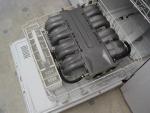

Problems, problems, problems......

Le Mans Master


Joined: Feb 2000
Posts: 9,715
Likes: 27
From: Kempner Texas

Thanks for the update. Now, doing the time you have to relax after your last round of work, here're somethings I came up with for us to chew on. Lifter Preload.
What I did last night was re-trace some of my steps, trying to see if there was something, some tell-tale condition that I over-looked or "saw" but "didn't see", if you get my meaning. So I re-read some of the posts I'd come across.
The ones on LS1Tech were intriguing since the preload numbers and lifter pushrod cup height numbers posted seemed to be all over the map and there seemed to be different preload recommendations, etc. No consensus.
In my re-reading, one response posted by 405HP Z06 jumped out. He simply asked something along the lines of "If you're not using XXX's hydraulic roller lifters why are you using their preload setting recommendation? With that, a light in my head came on.
So, since your were using GMPPs, not LS7s or Comp's or LT1s, etc., seemed like a logical question to address, especially since the preload recommendations did differ so widely. For example, once the EUREKA! light came on, I re-checked what GM recommends for the LT1 lifters in my 96 FSM.
When I drilled down in the FSM, I saw that GM recommends ONE FULLL TURN +/- 1/4 TURN! So, based on that, we'd be looking at anything from 3/4 TURN to 1-1/4 TURNS of Preload for GM's LT1 lifters. Yet CompCams lists 1/2-3/4 turn (.030" .040") of Preload. My current thinking is that Comp's recommendation is for THEIR lifters, not necessarily GM LT1s.
In other words, I asked myself: "Why would GM make THAT recommendation if it wasn't the best way to go!?"
So my up-dated thinking is to use the preload recommendation for the particular lifter being used and NOT take a "one-size-fits-all" approach. Since you're now moving to LS7 lifters, seems it would be best to use the preload procedure for those specific lifters.
It now becomes the task of finding out exactly what THOSE lifters call for in BOTH pushrod length AND preload. In doing that we'd need to VERIFY the pushrod cup heights to account for any difference in pushrod length selection.
Prior to your problems, I'd only paid cursory attention to LS7 lifters and somehow I came away with the idea that their cups sit LOWER, calling for a longer pushrod. Yet, in re-reading what one member posted, now it seems they may sit HIGHER. Seem like a good idea to verify what was posted against the lifters you receive - one less variable in the mix.
I'd go with what YOU measure rather than rely on the accuracy of what someone else posted. Call me ****, but it's time to eliminate any possible difference(s) between what was posted and what you measure.
One last point: There's a well respected member on a couple of Forums - SHOEBOX - whose information if have come to rely on. He's on CamaroZ28 and LS1LT1. In dealing with preload, he recently posted some actual numbers on what amount of "turns" results in what distance in inches. The amount differs based on the different thread counts on the studs; finer threads give a different reading than coarser threads. I've now got to go back and find that post to re-fresh my memory on what he posted.
Hopefully, soon we'll begin to see the light at the end of the tunnel.
Hope this helps.
Jake
West Point ROCKS! Nation's TOP COLLEGE per Forbes Magazine!! Graduation Day Parade 20 May 2010!!!
What I did last night was re-trace some of my steps, trying to see if there was something, some tell-tale condition that I over-looked or "saw" but "didn't see", if you get my meaning. So I re-read some of the posts I'd come across.
The ones on LS1Tech were intriguing since the preload numbers and lifter pushrod cup height numbers posted seemed to be all over the map and there seemed to be different preload recommendations, etc. No consensus.
In my re-reading, one response posted by 405HP Z06 jumped out. He simply asked something along the lines of "If you're not using XXX's hydraulic roller lifters why are you using their preload setting recommendation? With that, a light in my head came on.
So, since your were using GMPPs, not LS7s or Comp's or LT1s, etc., seemed like a logical question to address, especially since the preload recommendations did differ so widely. For example, once the EUREKA! light came on, I re-checked what GM recommends for the LT1 lifters in my 96 FSM.
When I drilled down in the FSM, I saw that GM recommends ONE FULLL TURN +/- 1/4 TURN! So, based on that, we'd be looking at anything from 3/4 TURN to 1-1/4 TURNS of Preload for GM's LT1 lifters. Yet CompCams lists 1/2-3/4 turn (.030" .040") of Preload. My current thinking is that Comp's recommendation is for THEIR lifters, not necessarily GM LT1s.
In other words, I asked myself: "Why would GM make THAT recommendation if it wasn't the best way to go!?"
So my up-dated thinking is to use the preload recommendation for the particular lifter being used and NOT take a "one-size-fits-all" approach. Since you're now moving to LS7 lifters, seems it would be best to use the preload procedure for those specific lifters.
It now becomes the task of finding out exactly what THOSE lifters call for in BOTH pushrod length AND preload. In doing that we'd need to VERIFY the pushrod cup heights to account for any difference in pushrod length selection.
Prior to your problems, I'd only paid cursory attention to LS7 lifters and somehow I came away with the idea that their cups sit LOWER, calling for a longer pushrod. Yet, in re-reading what one member posted, now it seems they may sit HIGHER. Seem like a good idea to verify what was posted against the lifters you receive - one less variable in the mix.
I'd go with what YOU measure rather than rely on the accuracy of what someone else posted. Call me ****, but it's time to eliminate any possible difference(s) between what was posted and what you measure.
One last point: There's a well respected member on a couple of Forums - SHOEBOX - whose information if have come to rely on. He's on CamaroZ28 and LS1LT1. In dealing with preload, he recently posted some actual numbers on what amount of "turns" results in what distance in inches. The amount differs based on the different thread counts on the studs; finer threads give a different reading than coarser threads. I've now got to go back and find that post to re-fresh my memory on what he posted.
Hopefully, soon we'll begin to see the light at the end of the tunnel.
Hope this helps.
Jake
West Point ROCKS! Nation's TOP COLLEGE per Forbes Magazine!! Graduation Day Parade 20 May 2010!!!

Race Director


Joined: Jan 2002
Posts: 12,261
Likes: 85
From: O'Fallon Missouri
You'll find very little if any difference in the GMPP guideplates compared to the TrickFlow's. Many have switched from the GMPP's to the TrickFlows because of hardening problems with the GMPP's.
Le Mans Master
Joined: Feb 2000
Posts: 9,715
Likes: 27
From: Kempner Texas
Essentially, since we don't know EXACTLY what's causing this, my approach now is to attack the PROBABLE causes, eliminating them one at a time. From that I suggest we'd attack POSSIBLE causes.
My thinking is to first attack anything that is the MOST LIKELY to be the cause and, from there, move to the LEAST LIKELY. That "one side rich" condition is definitely among them.
In my mind, I've separated this into Mechanical concerns and Tuning concerns. Once all the Mechanical conditions (like camshaft phasing) have been addressed and verified as being "right-on", we can then move to the Tuning concerns. This is sort of like a systematic approach, rather than just throwing a hand-full of darts at a board and seeing how many will stick.
If you, and others for that matter, come up with anything else, please feel free to share. I appreciate your feed-back. Hell, if I knew ALL the answers, I'd have solved this by now!
Jake
West Point ROCKS! Nation's TOP COLLEGE per Forbes Magazine!! Graduation Day Parade 20 May 2010!!!
Le Mans Master
Joined: Feb 2000
Posts: 9,715
Likes: 27
From: Kempner Texas
One member, on another Forum, posted about this. He was writing about equalizing the idle air bleed holes in the intake manifold.
I've never pulled the LT1 oil shield on the underside of the intake to have a look-see, but from what the poster wrote, there are (4?) pipe plugs under there and removing them allows access to tiny holes that allow idle air into the intake.
He found that one (or more) of his idle air holes were partially blocked with carbon build-up and that cleaning them helped cure his irratic idle problem.
The oil shield may be held in place by rivets, so, if that's the case, they'd have to be drilled out to access the plugs. Remounting the shield then becomes a REAL concern, because if screws are used (drill/tap/Lock-Tite) and one of them works loose over time, you'd be looking at screw(s) falling into the engine.
Screens expoxed to the lifter valley is one way many go to catch errant parts. So, special care would need to be given to prevent that from happening.
You wrote that your vacuum is at a steady 16, which is GOOD. So although it's POSSIBLE you have a vacuum leak under there, I wouldn't put it in the PROBABLE catagory. Yet since you've got to pull the intake anyway to change the lifters, you might as well touch that base; that's what I'd do.
One less variable eliminated to help you sleep better.
A more common problem, though, is how your reseal the intake when you're putting it back on. Many guys have screwed that up, resulting in both oil and vacuum leaks. When you get to that point, I have a *.doc file I can send you on how I do mine. 100% success rate after many years of trying different methods.
I even posted it as a STICKY on another Forum (tried but couldn't post it here - no one would show me how). Just let me know.
Jake
West Point ROCKS! Nation's TOP COLLEGE per Forbes Magazine!! Graduation Day Parade 20 May 2010!!!
Last edited by JAKE; Dec 11, 2009 at 11:26 AM.
Le Mans Master
Joined: Feb 2000
Posts: 9,715
Likes: 27
From: Kempner Texas
I've read that ISKY, and probably others, sell adjustable guide-plates to address this issue. Some guys have gone to the trouble of cutting apart and re-welding their guide plates to make the rockers sit straighter.
On a 434 I built, I went with off-set rockers AND off-set lifters to address the problem. That was on a shaft setup.
Jake
West Point ROCKS! Nation's TOP COLLEGE per Forbes Magazine!! Graduation Day Parade 20 May 2010!!!
Le Mans Master
Joined: Feb 2000
Posts: 9,715
Likes: 27
From: Kempner Texas
Jake
West Point ROCKS! Nation's TOP COLLEGE per Forbes Magazine!! Graduation Day Parade 20 May 2010!!!
Corvette Stories
The Best of Corvette for Corvette Enthusiasts

8 Coolest Corvette Pace Cars (and Replicas) of All Time
Verdad Gallardo
Top 10 Corvette Engines RANKED by Peak Torque (70+ Years of Muscle!)
Joe Kucinski
Corvette ZR1X Will Be Pacing the Indy 500, And Could Probably Race, Too!
Verdad Gallardo
Top 10 Corvettes Coming to Mecum Indy 2026!
Brett Foote
Top 10 C9 Corvette MUST-HAVES to Fix These C8 Generation Flaws!
Michael S. Palmer
10 Revolutionary 'Corvette Firsts' Most People Don't Know
Joe Kucinski
5 Reasons to Upgrade to an LS6-Powered Corvette; 5 Reasons to Stay LT2
Michael S. Palmer
2027 Corvette vs The World: Every C8 vs Its Closest Competitor
Joe Kucinski
10 Most Common Corvette Problems of the Last 20 Years!
Joe Kucinski
Race Director
Joined: Feb 2004
Posts: 12,517
Likes: 19
However, at this point there is no magic 8 ball spitting out solutions to the problem.

Thread Starter
Safety Car


Joined: Dec 2007
Posts: 3,616
Likes: 5
From: Sandhills of North Carolina
WOW! It's been a busy morning on CF........
I have to get back to work but I'd thought I'd throw this in from LE. Sounds like it might fit the bill in my situation. This is from an email. I had asked him to look at the same picture of the rr's I had posted here. In regards to their geometry.
If the PR's are bottoming out on the U in back og the guide plate, that will be some of the prob. Just slot them back more to make sure they are not gonna hit. When you pull the guide plates, you will be able to see a small scrape mark on the edge of u in the guide plate. It The PR contacts this at an angle and not flush against the guide plate so you will see the mark in one small area on the edge.
Hard top tell from that pic put if you lean down look at the rocker sitting on the valve tip and see how much valve tip is on either side of the roller on rocker tip. If they are not centered, this can cause some noise and valve trane problems also.
When changing to a higher lift cam, you have a better chance of the PR bottoming out on the back of the guide plate and the extra ramp speed of the cam and higher spring pressure will put more load on everything making any slight problem magnified.
I have to get back to work but I'd thought I'd throw this in from LE. Sounds like it might fit the bill in my situation. This is from an email. I had asked him to look at the same picture of the rr's I had posted here. In regards to their geometry.
If the PR's are bottoming out on the U in back og the guide plate, that will be some of the prob. Just slot them back more to make sure they are not gonna hit. When you pull the guide plates, you will be able to see a small scrape mark on the edge of u in the guide plate. It The PR contacts this at an angle and not flush against the guide plate so you will see the mark in one small area on the edge.
Hard top tell from that pic put if you lean down look at the rocker sitting on the valve tip and see how much valve tip is on either side of the roller on rocker tip. If they are not centered, this can cause some noise and valve trane problems also.
When changing to a higher lift cam, you have a better chance of the PR bottoming out on the back of the guide plate and the extra ramp speed of the cam and higher spring pressure will put more load on everything making any slight problem magnified.
Le Mans Master
Joined: Feb 2000
Posts: 9,715
Likes: 27
From: Kempner Texas
To me, as soon as one skips over something, assuming it's OKAY, what results is yet another variable getting introduced. Basically the reason why he tore into the engine to check the camshaft phasing; to eliminate that variable as the cause.
As I wrote before, at this stage, DON'T ASSUME.
Jake
West Point ROCKS! Nation's TOP COLLEGE per Forbes Magazine!! Graduation Day Parade 20 May 2010!!!

Race Director


Joined: Jun 2004
Posts: 13,943
Likes: 705
From: WI
Talking to weav's vette about lifters, data from gm parts direct on the kit he ordered:
12371042
http://www.gmpartsdirect.com/results.cfm
DESCRIPTION: LIFTER PKG
GM LIST: $249.60
OUR PRICE: $207.67
This roller lifter kit is used on all late model V8 blocks 1986 and newer. These second design lifters are used in late model 350 HO engines and use a higher checkball spring preload. This kit includes 16 of P/N 17120735 roller lifters, 8 of P/N 12550002 valve lifter guides, one of P/N 14101116 valve lifter guide retainers, 4 of P/N 24501365 retainer bolts, and 4 of P/N 120386 retainer washers. This kit plus pushrod kit P/N 12371041 and a roller tappet design camshaft will convert your engine to a roller lifters engine. Use kit items listed above for single service parts.
These are the ones I'm planning to order for my build:
12499225
GM PART # 12499225
CATEGORY: Engine Valve Lifter
PACK QTY: 1
CORE CHARGE: $0.00
GM LIST: $132.00
OUR PRICE: $109.82
DESCRIPTION: LIFTER
LS Series camshaft lifter kit
An inclusive set of 16 lifters for the LS Series engines.
Newly redesigned for high RPM LS7 engine usage.
12371042
http://www.gmpartsdirect.com/results.cfm
DESCRIPTION: LIFTER PKG
GM LIST: $249.60
OUR PRICE: $207.67
This roller lifter kit is used on all late model V8 blocks 1986 and newer. These second design lifters are used in late model 350 HO engines and use a higher checkball spring preload. This kit includes 16 of P/N 17120735 roller lifters, 8 of P/N 12550002 valve lifter guides, one of P/N 14101116 valve lifter guide retainers, 4 of P/N 24501365 retainer bolts, and 4 of P/N 120386 retainer washers. This kit plus pushrod kit P/N 12371041 and a roller tappet design camshaft will convert your engine to a roller lifters engine. Use kit items listed above for single service parts.
These are the ones I'm planning to order for my build:
12499225
GM PART # 12499225
CATEGORY: Engine Valve Lifter
PACK QTY: 1
CORE CHARGE: $0.00
GM LIST: $132.00
OUR PRICE: $109.82
DESCRIPTION: LIFTER
LS Series camshaft lifter kit
An inclusive set of 16 lifters for the LS Series engines.
Newly redesigned for high RPM LS7 engine usage.
Le Mans Master
Joined: Feb 2000
Posts: 9,715
Likes: 27
From: Kempner Texas
Good info, So, the lifter check ball spring sits HIGHER. Now we need to know by how much and how that'll impact on pushrod length. Trying to leave no stone unturned.
Jake
West Point ROCKS! Nation's TOP COLLEGE per Forbes Magazine!! Graduation Day Parade 20 May 2010!!!
Jake
West Point ROCKS! Nation's TOP COLLEGE per Forbes Magazine!! Graduation Day Parade 20 May 2010!!!
Race Director
Joined: Feb 2004
Posts: 12,517
Likes: 19
Mike already has a checker spring handy, so he will be able to figure it out easily.
Le Mans Master
Joined: Feb 2000
Posts: 9,715
Likes: 27
From: Kempner Texas
LOL. It never ceases to amaze me all the things some guys resort to in order to address the simplest issues. Let me share a few examples:
One guy posted that he was going to set his lifter preload using a DIAL INDICATOR!
Now let that sink in for second or two.
He's going to install, remove and re-install the dial indicator 16 times, each time making sure the D/I plunger is parallel to the pushrod travel and using a magnetic base D/I on aluminum heads no less. Think about what's entailed in going that route.
Then we have a guy who's going to disassemble his hydraulic lifter, install shims and washers to, effectively turn it into a solid lifter.
Then we have a guy who was going to buy a solid roller lifter to accomplish the same purpose.
Then we have a guy who's going to pull his stock valve spring and install a lighter spring in order to establish his correct pushrod length.
I mean, P L E A S E; where'd all this stuff come from anyway??
What amazes me almost as much is how no one seems to step up and say something like "Hey, man, what's up with THAT!? Bad information abounds!
Checking for correct pushrod length is a no-brainer and doesn't call for any of that stuff listed above. It's simple and quick and all that's needed is a Magic Marker and an adjustable pushrod - which might not even be needed if the current rods are of the correct length.
Oh well, like I always say, to each his own.
Jake
West Point ROCKS! Nation's TOP COLLEGE per Forbes Magazine!! Graduation Day Parade 20 May 2010!!!
One guy posted that he was going to set his lifter preload using a DIAL INDICATOR!
Now let that sink in for second or two.
He's going to install, remove and re-install the dial indicator 16 times, each time making sure the D/I plunger is parallel to the pushrod travel and using a magnetic base D/I on aluminum heads no less. Think about what's entailed in going that route.
Then we have a guy who's going to disassemble his hydraulic lifter, install shims and washers to, effectively turn it into a solid lifter.
Then we have a guy who was going to buy a solid roller lifter to accomplish the same purpose.
Then we have a guy who's going to pull his stock valve spring and install a lighter spring in order to establish his correct pushrod length.
I mean, P L E A S E; where'd all this stuff come from anyway??
What amazes me almost as much is how no one seems to step up and say something like "Hey, man, what's up with THAT!? Bad information abounds!
Checking for correct pushrod length is a no-brainer and doesn't call for any of that stuff listed above. It's simple and quick and all that's needed is a Magic Marker and an adjustable pushrod - which might not even be needed if the current rods are of the correct length.
Oh well, like I always say, to each his own.
Jake
West Point ROCKS! Nation's TOP COLLEGE per Forbes Magazine!! Graduation Day Parade 20 May 2010!!!
Thread Starter
Safety Car
Joined: Dec 2007
Posts: 3,616
Likes: 5
From: Sandhills of North Carolina
If I can get off the lifter issue for a moment.......I need another answer..........I thought I knew the answer but now once again I'm confused. I know the LT4 and LT1 knock modules are different animals. What about the sensors? I thought the LT4/LT1 sensors were the same animal. This is from another email from LE.
I do not know for sure but you can probably find the info on line about the knock sensor and knock module. I "believe" that they work on way different frequencies (one being 10-30 ohm and the other being 400-1000 ohm for example) and if using the LT1/LT4 parts together, you end up with the sensor pulling ALL Of the timing or cam or NOTHING at all.
So are there LT4 sensors I need to get also to accompany the LT4 module?
I do not know for sure but you can probably find the info on line about the knock sensor and knock module. I "believe" that they work on way different frequencies (one being 10-30 ohm and the other being 400-1000 ohm for example) and if using the LT1/LT4 parts together, you end up with the sensor pulling ALL Of the timing or cam or NOTHING at all.
So are there LT4 sensors I need to get also to accompany the LT4 module?

Thread Starter
Safety Car
Joined: Dec 2007
Posts: 3,616
Likes: 5
From: Sandhills of North Carolina
Got the intake off and took a look at the holes under the casting plugs. All appear very clean. There is one hole in the picture that is smaller than all the rest, WHY? This in on cyl #1.
I know this has nothing to do with the problem I'm having. I just wanted to check it out.
Anyone got an intake they can look at to see if this is on purpose or a casting mistake?
I know this has nothing to do with the problem I'm having. I just wanted to check it out.
Anyone got an intake they can look at to see if this is on purpose or a casting mistake?
Last edited by Weav's Vet; Dec 22, 2013 at 01:22 PM.

Le Mans Master

Joined: Feb 1999
Posts: 9,916
Likes: 38
From: South Carolina
St. Jude Donor '03 & '05
Got the intake off and took a look at the holes under the casting plugs. All appear very clean. There is one hole in the picture that is smaller than all the rest, WHY? This in on cyl #1.
I know this has nothing to do with the problem I'm having. I just wanted to check it out.
Anyone got an intake they can look at to see if this is on purpose or a casting mistake?
I know this has nothing to do with the problem I'm having. I just wanted to check it out.
Anyone got an intake they can look at to see if this is on purpose or a casting mistake?
""Also, another thing that's worth mentioning that some still don't know about.... "IF" your interested in getting the nicest possible idle out of a cammed LT-X set-up (if you haven't done it already).......Next time you have the LT intake manifold off the car.....flip it over, and remove the bottom (metal cover with the 4 bolts)......then remove ALL of the large Allen type pipe plugs that are under it......By removing the large pipe plugs, you'll gain access to the individual IAC port holes that go out to "each" manifold runner (there are two under "each" plug)..........From the factory, these holes are not perfectly even (size wise) from hole to hole like they should be.....And (very commonly) one of them is usually REALLY bad (small)......Many of them also have thick aluminum burrs partially blocking the passages due to a sloppy factory drill job......Take your largest hole out of the bunch (verified by sliding drill bits in them), then once you get the drill bit for the largest one....Drill the rest out to match.....Then RE-install your pipe plugs with some permatex #2 (the non-hardening sealant), and ofcourse loc-tite your metal splash cover back on.........This process also made a noticeable difference on mine, and is something that I always do on ALL of the LT-X engine's that I do Heads & Cam packages on.......The end-result is Not as drastic as the IAC hole being sized properly, but it's a nice difference none the less."