


More Problems - L98 Running Hot

Thread Starter
Instructor

Joined: May 2011
Posts: 213
Likes: 0
From: Miramar Florida
 More Problems - L98 Running Hot
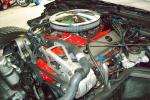
Can anyone please help. My problem was that my '84 w/ '86L98 engine was running hot. I found that I had a blown head gasket. It was replaced, along with the water pump and thermostat. After reassembly, the engine is still running hot. I removed the thermsostat and it ran hot again. Any suggestions.
Melting Slicks


Joined: Dec 2009
Posts: 2,241
Likes: 290
What is the temp going down the road?
What is the temp idling w/ the cooling fan running?
Make sure the air dam is in place, clean out the leaves between the rad & condensor. Make sure the air is out of the cooling system. Is the gauge acurate?
What is the temp idling w/ the cooling fan running?
Make sure the air dam is in place, clean out the leaves between the rad & condensor. Make sure the air is out of the cooling system. Is the gauge acurate?
Thread Starter
Instructor
Joined: May 2011
Posts: 213
Likes: 0
From: Miramar Florida
I haven't done a road test since the head gasket has been replaced. It is running hot at idle. I don't think my guage is acurate. Looking at it is show 206 degrees when the fan comes on. Air out of the cooling system? What do you mean?

Burning Brakes

Joined: May 2011
Posts: 838
Likes: 2
From: Louisville Ky
never would have believed that air could casue more than a slighly low coolant condition. someone with the experience will come in.
saludos, and glad you got it running. a lot of wrenchin'.
joe
Melting Slicks
Joined: Dec 2009
Posts: 2,241
Likes: 290
When theres air in the cooling system, & when the air gets hot it expands like 10 times. Thats what causes the system to overflow the side tank
The fan should normally come on at 225-230*, so at 206* its cooling earlier then a stock one. When the fan comes on does it cool below 206*?
The fan should normally come on at 225-230*, so at 206* its cooling earlier then a stock one. When the fan comes on does it cool below 206*?

Team Owner


Joined: Jan 2003
Posts: 20,333
Likes: 263
From: Summerland B.C. Canada
You may have an air lock.
Turn the heater to full hot and remove rad cap. If the stat is open, you should see coolant moving when looking into rad. Give the motor a few revs and monitor coolant level. It may take time and multiple engine revs to get the lock out.
Turn the heater to full hot and remove rad cap. If the stat is open, you should see coolant moving when looking into rad. Give the motor a few revs and monitor coolant level. It may take time and multiple engine revs to get the lock out.

Race Director

Joined: Apr 2002
Posts: 10,036
Likes: 346
From: Anaheim CA
The problem with these cooling systems is that the radiator filler neck is lower than the upper part of the cooling passages in the engine. When you fill the radiator up with water, there will be a lot of air in the engine in the area around the thermostat and the upper parts of the heads. On later years GM added a "burp" valve in the thermostat housing to release this air. The '86 engines do not have this valve.
The quickest way to solve this problem is to let the engine warm up (so that the thermostat opens) with the radiator cap off. Rev the engine to about 3000 RPM. If you have air in the system the water level in the radiator will drop quite a bit. Keeping the engine at 3000 RPM, add water until the radiator is full. Put on the cap. This technique is known as "packing" the cooling system.
If you just drive the car, the air will eventually work itself out of the system through the overflow tank. It takes several heat up/cool down cycles for this to work. If you let the overflow tank go dry (it sucks up the water in the overflow tank to replace the air), you have to start all over again, so watch the coolant level in the overflow tank.
The quickest way to solve this problem is to let the engine warm up (so that the thermostat opens) with the radiator cap off. Rev the engine to about 3000 RPM. If you have air in the system the water level in the radiator will drop quite a bit. Keeping the engine at 3000 RPM, add water until the radiator is full. Put on the cap. This technique is known as "packing" the cooling system.
If you just drive the car, the air will eventually work itself out of the system through the overflow tank. It takes several heat up/cool down cycles for this to work. If you let the overflow tank go dry (it sucks up the water in the overflow tank to replace the air), you have to start all over again, so watch the coolant level in the overflow tank.
Corvette Stories
The Best of Corvette for Corvette Enthusiasts

Every 2027 Corvette Engine Explained
Joe Kucinski
Designer Imagines A Corvette That Looks More Like a Corvette Than the Corvette
Verdad Gallardo
10 Ugly Corvettes That We Still Kinda Love
Joe Kucinski
Top 10 Most Expensive Corvettes Ever Sold on Bring A Trailer
Brett Foote
10 Things Every Corvette Owner Needs (2026 Edition)
Michael S. Palmer
8 Most "Only Corvette Owners Understand" Quirks and Problems
Pouria Savadkouei
10 Reasons the C6 Z06 is Still A Performance Benchmark After 20 Years
Joe Kucinski
How Much Horsepower Every Corvette Engine "LOST" in 1972
Joe Kucinski
Top 10 DOs and DON'Ts for Protecting Your Convertible Top!
Michael S. Palmer
Thread Starter
Instructor
Joined: May 2011
Posts: 213
Likes: 0
From: Miramar Florida
This may be my problem. When I removed the thermostat, it looked like the top of it was completely dry as well as the fitting and hose. I don't think my gauge is reading correctly, even when the engine starts to overheat it still shows like 209. Part of my digital cluster is cracked so it may be affecting that display. I'll try your suggestions today. Thanks.

Burning Brakes
Joined: Aug 2003
Posts: 944
Likes: 0
From: Mesa Az
The problem with these cooling systems is that the radiator filler neck is lower than the upper part of the cooling passages in the engine. When you fill the radiator up with water, there will be a lot of air in the engine in the area around the thermostat and the upper parts of the heads. On later years GM added a "burp" valve in the thermostat housing to release this air. The '86 engines do not have this valve.
The quickest way to solve this problem is to let the engine warm up (so that the thermostat opens) with the radiator cap off. Rev the engine to about 3000 RPM. If you have air in the system the water level in the radiator will drop quite a bit. Keeping the engine at 3000 RPM, add water until the radiator is full. Put on the cap. This technique is known as "packing" the cooling system.
If you just drive the car, the air will eventually work itself out of the system through the overflow tank. It takes several heat up/cool down cycles for this to work. If you let the overflow tank go dry (it sucks up the water in the overflow tank to replace the air), you have to start all over again, so watch the coolant level in the overflow tank.
The quickest way to solve this problem is to let the engine warm up (so that the thermostat opens) with the radiator cap off. Rev the engine to about 3000 RPM. If you have air in the system the water level in the radiator will drop quite a bit. Keeping the engine at 3000 RPM, add water until the radiator is full. Put on the cap. This technique is known as "packing" the cooling system.
If you just drive the car, the air will eventually work itself out of the system through the overflow tank. It takes several heat up/cool down cycles for this to work. If you let the overflow tank go dry (it sucks up the water in the overflow tank to replace the air), you have to start all over again, so watch the coolant level in the overflow tank.
Thread Starter
Instructor
Joined: May 2011
Posts: 213
Likes: 0
From: Miramar Florida
OK, I tried adding water to the radiator and then ran it with the cap off. I ran it until I saw water start to flow out and then I filled the radiator and put the cap on. I continue to let it idle and it did not run hot, the fan did come and cycle. However I tried driving it around the neighborhood and it never overheated enough to boil over, but when I turned the car off I could hear the water boiling in the radiator. My temperature guage is broken however it appeared the the fan was coming on around 226 and shutting off around 217. Any idea why it may boil in the radiator but not run over. Do you think it was still air in the system and not enough water. Any more suggestions.
Safety Car


Joined: Apr 2011
Posts: 3,660
Likes: 22
Thats normal for the stock fan temps and stock T-stat. At 226 thats boiling temp but it cannot since its under pressure. The fans keep it there or less and as long as the coolant flows its getting cooled. As soon as you shut down if it was running in the 220s it will GAIN heat because the exchange has stopped as well as the circulation. If its near or at boiling, it will try to boil. This will stop the instant you start up and water circulates again..
Try adding water wetter to help, get the radiator replaced or cleaned. Cooling on Vettes is critical and a delicate balance of enough heat to perform well and cool enough to run right and last. A window of maybe 15-20 degrees.
Add a 180 T-stat, make certain that your radiator/condensor gap space is not full of debris by pulling the top shroud, and repair/replace the air dam so it can get fresh air to the radiator.
Better radiators are available for $200. Get your gauges fixed. As hot as these run, it only takes a few seconds of overheated to ruin a motor.
" Do you think it was still air in the system and not enough water. Any more suggestions. "
You ARE running a mix of water/coolant, right? straight water will boil too soon and destroy the aluminum in the engine. You must run the 50/50 mix.
Try adding water wetter to help, get the radiator replaced or cleaned. Cooling on Vettes is critical and a delicate balance of enough heat to perform well and cool enough to run right and last. A window of maybe 15-20 degrees.
Add a 180 T-stat, make certain that your radiator/condensor gap space is not full of debris by pulling the top shroud, and repair/replace the air dam so it can get fresh air to the radiator.
Better radiators are available for $200. Get your gauges fixed. As hot as these run, it only takes a few seconds of overheated to ruin a motor.
" Do you think it was still air in the system and not enough water. Any more suggestions. "
You ARE running a mix of water/coolant, right? straight water will boil too soon and destroy the aluminum in the engine. You must run the 50/50 mix.
Last edited by leesvet; Sep 8, 2011 at 08:24 PM.
Thread Starter
Instructor
Joined: May 2011
Posts: 213
Likes: 0
From: Miramar Florida
I was running a flush on the radiator after replacing he head gaskets. I drained the system and added water to finish flushing the system so there is some coolant but mostly water. What do you think, do you think it will be OK if I make it 50/50 mix on the coolant?
Safety Car
Joined: Apr 2011
Posts: 3,660
Likes: 22
When the system is clean, air flow unobstructed and fans work, it should run in 85-100 degree ambient temps at a normal op temp of between 210 and 230. maybe a little less on the freeway cruising. If thats TOO hot for your taste, (and it is according to most) get the 160 or 180 stat, get the fans on sooner with a switch or kit, and that will get it down maybe 10-15 degrees. For more stable cooling and more efficient cooling a better radiator is required. The stock unit is not enough for a honda civic much less a 350ci V8 engine without a frontal area for fresh air to enter...it has to be near perfect in order to be effective.
The anti-freeze also raises the boiling point of the water/coolant mix.
Burning Brakes
Joined: May 2011
Posts: 838
Likes: 2
From: Louisville Ky
short of rad being partially clogged, don't know why the engine would overheat so quickly. my 91 never has, even with the 195 stat. of course, if it isn't moving, like inside the garage, it will turn on fans....
joe
Thread Starter
Instructor
Joined: May 2011
Posts: 213
Likes: 0
From: Miramar Florida
Ok, here's my plan. I'm going drain & flush my cooling system. I'm going to reinstall the thermostat, add 50/50 coolant mix, and replace the radiator cap. Also I'm going to install a working temp gauge. Is there anything else you suggest for this problem?
Safety Car
Joined: Apr 2011
Posts: 3,660
Likes: 22
Make sure that area between condensor and radiator is clean. you MUST take the top shroud off to see and do this. The problem area cannot be seen or accessed any other way. Open it and wash out the dirt in the con and rad and remove the trash. Get a fin comb to fix large areas of folded fins on the coils.

Drifting

Joined: May 2006
Posts: 1,428
Likes: 7
From: Chewelah Wa
I agree with every suggestion that has been posted. IMO the weak point of the cooling system is the radiator. It must be perfectly clean inside and out. You might try "backflushing" the radiator. Clamp a bicycle tube to a garden hose and the lower radiator outlet and let the water run for awhile under full pressure. I have a tool that hooks to the hose with a schrader valve that introduces compressed air while flushing. This can be made by screwing a shrader valve into a garden hose nozzle or valve. You can gently pressure wash the fins from the outside. I did this on mine and could not believe all the sand and dog hair that came out. Also, make sure the small spoiler that directs air to the radiator is in good shape. I had to do all these things to keep my vette from overheating. You can check radiator efficiency with a laser temp gun by aiming it at various parts of the radiator, temps should be within 10-30 degrees of each other or better.
Last edited by powerpigz-51; Sep 9, 2011 at 01:31 PM.

Melting Slicks
Joined: May 2010
Posts: 2,082
Likes: 3
From: Conowingo Maryland
you said a couple of times your temps were 206 this is not even close to overheating in fact these are better then normal. If you are saying it is overheating because you are building pressure and it is blowing into the overflow you might want to check for cracked head or gaskets installed wrong. Also in another post you state that the cooling fan is coming on at 226 and cutting off at 217 another indicator that the rad, waterpump have the ability to flow the cooleant and air nessarry to keep the temps normal and by what you are saying the temps are normal.