




Chrysler tech needs help diagnosing possible opti-spark issues

Thread Starter
Cruising

Joined: Oct 2011
Posts: 10
Likes: 1
 Chrysler tech needs help diagnosing possible opti-spark issues
1994 Corvette LT1
The car was towed to my house (side job) yesterday for a sudden no start with no prior issues. Fuel pressure is good, no codes, no spark out of the coil and appears mechanically sound. I havent checked injector pulse yet. I have never had to diagnose an opti-spark ignition issue before but I'm a little familiar with the headaches they cause. I'll start the full diagnosis this afternoon.
Correct me if i'm wrong or please add to this if there are any other tricks, these are tips i've gathered from buddies:
First
-Connect test light from B+ to dark green wire at coil while cranking, should blink.
-If no blinking, (no scope available, but) check for 12v square wave signal at the white wire on the ignition control module while cranking. If tests ok replace module. Is testing possible with a multimeter?
Second
-Disconnnect plug at distrubuter and test for 5v on both low res black/red and high res purple/white wires with ignition on as well as good B+ voltage at the yellow wire and ground at the black/pink wire.
-Re-connect and check for good square patterns while cranking on both high/low res wires. I'm told that a volt meter can be used instead of a scope looking for about 1v on low res and about 2.5v on high res while cranking.
-If signals are erratic, 0v or 5v replace the distributor.
The car was towed to my house (side job) yesterday for a sudden no start with no prior issues. Fuel pressure is good, no codes, no spark out of the coil and appears mechanically sound. I havent checked injector pulse yet. I have never had to diagnose an opti-spark ignition issue before but I'm a little familiar with the headaches they cause. I'll start the full diagnosis this afternoon.
Correct me if i'm wrong or please add to this if there are any other tricks, these are tips i've gathered from buddies:
First
-Connect test light from B+ to dark green wire at coil while cranking, should blink.
-If no blinking, (no scope available, but) check for 12v square wave signal at the white wire on the ignition control module while cranking. If tests ok replace module. Is testing possible with a multimeter?
Second
-Disconnnect plug at distrubuter and test for 5v on both low res black/red and high res purple/white wires with ignition on as well as good B+ voltage at the yellow wire and ground at the black/pink wire.
-Re-connect and check for good square patterns while cranking on both high/low res wires. I'm told that a volt meter can be used instead of a scope looking for about 1v on low res and about 2.5v on high res while cranking.
-If signals are erratic, 0v or 5v replace the distributor.
Last edited by ProStreetC10; Mar 20, 2017 at 01:51 PM.
Thread Starter
Cruising
Joined: Oct 2011
Posts: 10
Likes: 1
To check voltage at the purple/white and red/black wires while cranking as well as disconnected, is there an easier way to probe these circuits at the pcm or anywhere else? Its hard enough reaching the plug to disconnect it, much harder to operate probes correctly.

Drifting


Joined: Dec 2007
Posts: 1,647
Likes: 4
From: Argillite KY
You sound like you know what's happening so here is some info that I use to help with the troubleshooting. It should get you to a conclusion. If not keep us posted. We can get you there.
The opti has two functions in the spark process. The first thing that happens is as the cam turns, the optical section of the optispark picks up the signals by the rotation of the shutter wheel. The pulses are sent to the PCM via the optispark electrical harness. The PCM processes the signals along with other sensor input and determines the proper time for the coil to fire. The PCM sends a signal to the Ignition Control Module (ICM) and it, in turn, causes the coil to fire. The spark from the coil travels through the coil wire back to the secondary ignition section of the optispark (cap and rotor), to be distributed to the proper cylinder.
If the opti is never sending the signal to the PCM, the PCM will never send a signal to fire the coil.
Here is some testing you can do. Refer to this diagram.
Disconnect the ICM connector. Leave coil connected.
Turn key to ON.
Check for dc voltage with a digital meter at harness terminal "A" to ground and and also "D" to ground. Note: Use a modern digital meter with at least 10 megohm impedance to protect the PCM (in case you measure anything in that direction).
Result should be 10v dc or more on both terminals. If you get no voltage, use the diagram and chase back toward the coil and the ignition fuse. Power for the ICM comes from the ignition fuse and through the coil, so any of that could be bad.
If you have good voltage, switch the meter to ac scale and connect test leads to terminal "B" and to ground. Observe meter while cranking the engine. You should see between 1 and 4 volts ac (those are the pulses that trigger the coil to fire).
If you don't see the proper ac voltage the problem could be the optispark, the harness to the optispark, the PCM (not common) or any of the wiring in between. Visually inspect all the connections you can get to for poor contact or corrosion.
At the end of the optispark harness (disconnected from the opti) with the key ON, you should see:
A = ~5vdc
B = ~5vdc
C = 12vdc or system voltage
D = ~0 - 0.2 ohms ground

The opti has two functions in the spark process. The first thing that happens is as the cam turns, the optical section of the optispark picks up the signals by the rotation of the shutter wheel. The pulses are sent to the PCM via the optispark electrical harness. The PCM processes the signals along with other sensor input and determines the proper time for the coil to fire. The PCM sends a signal to the Ignition Control Module (ICM) and it, in turn, causes the coil to fire. The spark from the coil travels through the coil wire back to the secondary ignition section of the optispark (cap and rotor), to be distributed to the proper cylinder.
If the opti is never sending the signal to the PCM, the PCM will never send a signal to fire the coil.
Here is some testing you can do. Refer to this diagram.
Disconnect the ICM connector. Leave coil connected.
Turn key to ON.
Check for dc voltage with a digital meter at harness terminal "A" to ground and and also "D" to ground. Note: Use a modern digital meter with at least 10 megohm impedance to protect the PCM (in case you measure anything in that direction).
Result should be 10v dc or more on both terminals. If you get no voltage, use the diagram and chase back toward the coil and the ignition fuse. Power for the ICM comes from the ignition fuse and through the coil, so any of that could be bad.
If you have good voltage, switch the meter to ac scale and connect test leads to terminal "B" and to ground. Observe meter while cranking the engine. You should see between 1 and 4 volts ac (those are the pulses that trigger the coil to fire).
If you don't see the proper ac voltage the problem could be the optispark, the harness to the optispark, the PCM (not common) or any of the wiring in between. Visually inspect all the connections you can get to for poor contact or corrosion.
At the end of the optispark harness (disconnected from the opti) with the key ON, you should see:
A = ~5vdc
B = ~5vdc
C = 12vdc or system voltage
D = ~0 - 0.2 ohms ground
Thread Starter
Cruising
Joined: Oct 2011
Posts: 10
Likes: 1
The opti spark harness tested perfectly. The ICM is waht I believe to be the partially aluminum piece w/ heatsink in front of the right head. The wire colors are different (as well as the colors of the coil connectors), but following your instructions and using the terminal designation on the connector the only test it failed was testing for AC voltage while cranking.
ICM wire colors are
A-Pink/Black
B-White(ish)
C-Black/White
D-Green
I assume this isnt a big deal, i run into small differance with Chrysler stuff all the time. It looks like the optispark following your guidlines. Should I replace the ICM for good measure?
ICM wire colors are
A-Pink/Black
B-White(ish)
C-Black/White
D-Green
I assume this isnt a big deal, i run into small differance with Chrysler stuff all the time. It looks like the optispark following your guidlines. Should I replace the ICM for good measure?
Le Mans Master


Joined: Jan 2006
Posts: 5,621
Likes: 206
From: Orlando FL
1963SS has laid out a lot of good information.
If you don’t have the A/C voltage at pin B of the ICM from B5 of the PCM, then you can almost forget about the ICM causing the problem. You have to get drive to the ICM before you can make a final determination for it.
With no drive out of the PCM either the PCM, opti or poor connections can be the problem. The PCMs are a good unit and would put it last on the list of possibilities. You need the low resolution pulse to make it all happen and have the engine running. It clocks the injector pulses and the drive for the ICM thru the PCM. Just making a DC measurement will not tell you if the opti is good but is OK for a start.
The DC voltages are developed and supplied from the PCM for the opti. So having those voltages there means the PMC is doing something good.
You need to check the low resolution pulse with a scope while the engine is cranking. The square wave pulses are of different widths and while cranking the whole waveform is a low frequency. When checking you will either see pulses and hard to sync in or it will be flat. Pretty pulses and edges are not important but having something to see is.
If the DC is there on the opti and there is no pulses, then it can be assumed the opti is no good excluding any bad connector and pin connections. You can also check the injector pulses (drive) with a noid light. If there are no pulses, that might also indicate there is no drive from the opti for the PCM the make the injector drive.
If you don’t have the A/C voltage at pin B of the ICM from B5 of the PCM, then you can almost forget about the ICM causing the problem. You have to get drive to the ICM before you can make a final determination for it.
With no drive out of the PCM either the PCM, opti or poor connections can be the problem. The PCMs are a good unit and would put it last on the list of possibilities. You need the low resolution pulse to make it all happen and have the engine running. It clocks the injector pulses and the drive for the ICM thru the PCM. Just making a DC measurement will not tell you if the opti is good but is OK for a start.
The DC voltages are developed and supplied from the PCM for the opti. So having those voltages there means the PMC is doing something good.
You need to check the low resolution pulse with a scope while the engine is cranking. The square wave pulses are of different widths and while cranking the whole waveform is a low frequency. When checking you will either see pulses and hard to sync in or it will be flat. Pretty pulses and edges are not important but having something to see is.
If the DC is there on the opti and there is no pulses, then it can be assumed the opti is no good excluding any bad connector and pin connections. You can also check the injector pulses (drive) with a noid light. If there are no pulses, that might also indicate there is no drive from the opti for the PCM the make the injector drive.
Thread Starter
Cruising
Joined: Oct 2011
Posts: 10
Likes: 1
pcolt94
I checked the injectors with my noid light today at lunch and got nothing. I havent done the research on the fuel aspect of things but it seemed logical to thing the opti would be the sensor of choice for the PCM to determine injector pulse widths. So it's safe to say that the lack of injector pulses puts another nail in the opti's coffin?
I wish I could rob a scope from the shop and take it home with me but all the expensive diag tools have a close eye on them.
I checked the injectors with my noid light today at lunch and got nothing. I havent done the research on the fuel aspect of things but it seemed logical to thing the opti would be the sensor of choice for the PCM to determine injector pulse widths. So it's safe to say that the lack of injector pulses puts another nail in the opti's coffin?
I wish I could rob a scope from the shop and take it home with me but all the expensive diag tools have a close eye on them.
Corvette Stories
The Best of Corvette for Corvette Enthusiasts

Top 10 Most Expensive Corvettes Ever Sold on Bring A Trailer
Brett Foote
10 Things Every Corvette Owner Needs (2026 Edition)
Michael S. Palmer
8 Most "Only Corvette Owners Understand" Quirks and Problems
Pouria Savadkouei
10 Reasons the C6 Z06 is Still A Performance Benchmark After 20 Years
Joe Kucinski
How Much Horsepower Every Corvette Engine "LOST" in 1972
Joe Kucinski
Top 10 DOs and DON'Ts for Protecting Your Convertible Top!
Michael S. Palmer
Top 10 Most Explosive Corvettes Ever Made: Power-to-Weight Ratio Ranked!
Joe Kucinski
150 hp to 1,250 hp: Every Corvette Generation Compared by the Specs That Matter
Joe Kucinski
8 Coolest Corvette Pace Cars (and Replicas) of All Time
Verdad Gallardo
Le Mans Master
Joined: Jan 2006
Posts: 5,621
Likes: 206
From: Orlando FL
You have the pin outs from the diagram in post 3. All the "B" pins are in the Black connector on the PCM (you have 4 different color connectors). Be real careful with the locking tabs for the car is 17 years old and plastic gets brittle. You might break some even with care.
Remove a battery cable before removing any connectors or making any resistance readings.
Lets not take any steps backwards.
Remove a battery cable before removing any connectors or making any resistance readings.
Lets not take any steps backwards.
Le Mans Master

Joined: Mar 2001
Posts: 7,999
Likes: 14
From: Life is just one big track event. Everything before and after is prep and warm-up and cool-down laps
Cruise-In III Veteran
Cruise-In IV Veteran
St. Jude Donor '12
If the noid light isn't blinking check the simple stuff first - INJ 1 and INJ 2 fuses.
Also all the troubleshooting advice you got above is spot on.
You'll get it running!
Also all the troubleshooting advice you got above is spot on.
You'll get it running!
Race Director


Joined: Feb 2003
Posts: 11,672
Likes: 20
From: Lake Wylie SC
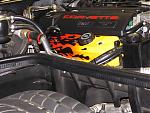
Just currious, did you open up the opti yet? Was the water pump leaking at all? There is a weep hole under the water pump right above the opti and it has been known to take an opti out. Also there are differences between optis. AC Delco is the OEM opti. Then there is MSD and others. Just as a note, some of us have switched to electric driven water pumps to avoid the weep hole dripping on the opti problem.
Drifting
Joined: Dec 2007
Posts: 1,647
Likes: 4
From: Argillite KY
New GM water pump and opti on the way!
some of us have switched to electric driven water pumps to avoid the weep hole dripping on the opti problem.
The next time the W/P decides to pee on the Opti parade, the water will fall harmlessly to the ground 3 feet from the Opti. Problem solved.
Anyone that has an LT1 needs to get two water pump gaskets and do this. The Opti's will last virtually forever.

Thread Starter
Cruising
Joined: Oct 2011
Posts: 10
Likes: 1
A new opti fixed it. I got a rebuilt delco unit from our GM dealer as well as a new GM pump. The weep hole was stained and the opti was wet and dirty inside. FYI with my employee discount I got the Opti for $410 and the pump was $240.
I wasnt expecting the balancer to be mounted to a hub which was a relief. I wasnt looking forward to using a puller in that tigh space.
Thanks for the help guys!
I wasnt expecting the balancer to be mounted to a hub which was a relief. I wasnt looking forward to using a puller in that tigh space.
Thanks for the help guys!
